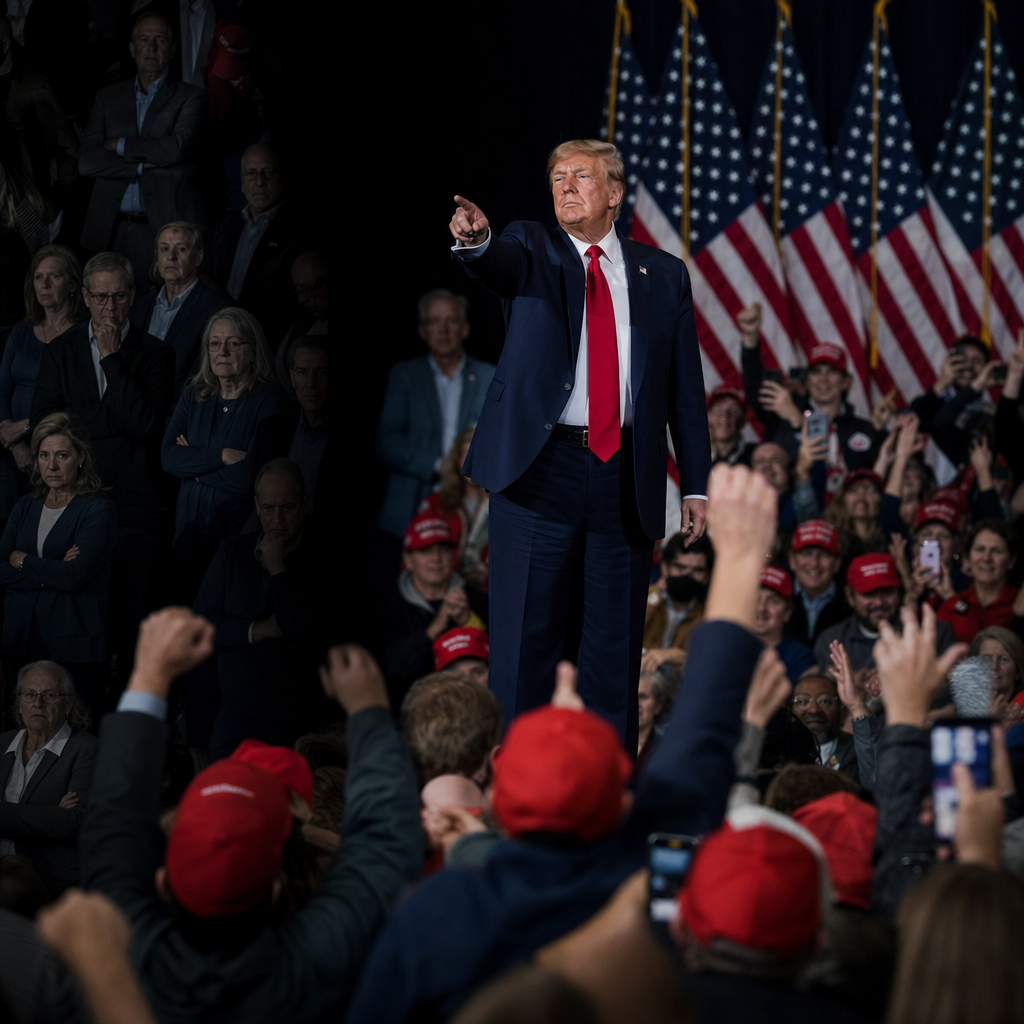
Trump’s GOP Primary Grip Masks a Fall Problem
Trump still dominates Republican primaries, but polling shows a weaker brand with independents and a midterm electorate that will punish the party’s narrow base.
Trump’s edge is real in primaries, but it does not travel well to November. The Hill reports that candidates backed by the president kept winning or advancing in Republican contests in Indiana, Kentucky, Louisiana and six states on Tuesday night, even as a New York Times/Siena poll found that 37 percent of Republicans want the next nominee to take a different direction and Trump’s job approval has slipped to 37 percent, down from 40 percent earlier this year ( The Hill;
  The New York Times). For readers tracking the larger terrain, this is the kind of split that matters most in
  United States politics: nomination fights reward loyalty; general elections punish it.
Primaries are still Trump’s terrain
Trump’s leverage comes from a simple fact: Republican primary electorates are smaller, more ideological, and more dependent on his endorsement than the November coalition. The Hill cites a consultant saying a Trump endorsement can still add 35 to 40 points in a primary, which explains why officeholders who crossed him in places like Indiana and Louisiana are being pushed out (The Hill). That is not just personality politics. It is candidate selection. Trump can force the GOP to nominate people who sound like him, vote like him, and owe him their careers.
That helps him keep the party disciplined. It also narrows the pool. Candidates chosen for maximal loyalty in a low-turnout primary often have a harder time with suburban voters, college-educated independents, and soft Republicans in the general election. The Hill’s own analysis points to that disconnect: Trump’s power inside the party may be strongest precisely where it matters least in November (The Hill).
The fall electorate is broader and less forgiving
That is where the vulnerability opens. The New York Times/Siena polling cited by The Hill shows Trump at 37 percent approval nationally, with more than a third of Republican voters looking for a new direction and 37 percent wanting the next nominee to depart from Trump’s approach (The New York Times; The New York Times). CNN’s polling points in the same direction: 77 percent of Americans say Trump’s policies have increased the cost of living in their communities, and his approval on the economy has fallen to 30 percent, a career low in that survey ( CNN). That is a dangerous combination for Republicans because the midterms will not be decided by Trump loyalists alone.
The structural problem is bigger than Trump’s personal numbers. The Hill notes that Decision Desk HQ has Republicans 16 points underwater on favorability, while Democrats are also weak but not enough to erase the GOP’s problem (The Hill). The generic congressional ballot is running close to a 7-point Democratic advantage, which is exactly the kind of margin that turns a presidential backlash into House losses (The Hill). In other words: Trump can still pick winners in primaries, but he cannot single-handedly manufacture a favorable electorate.
What to watch next
The next test is whether Republicans can separate candidate quality from Trump loyalty before the fall ballot hardens. Watch the party’s House candidates in competitive districts, especially whether they can localize races away from Trump’s economy-and-war brand. Also watch redistricting: The Hill says recent court rulings in Supreme Court and Virginia litigation could improve the GOP’s map, giving the party some cushion if the national environment stays weak (The Hill). If that does not offset the national drag, Trump’s grip on the nomination process will look like power — right up until Election Day.