Trump's Freedom Plan
A brief US Navy operation reshapes Gulf dynamics.
Model Diplomat8 min readMiddle East
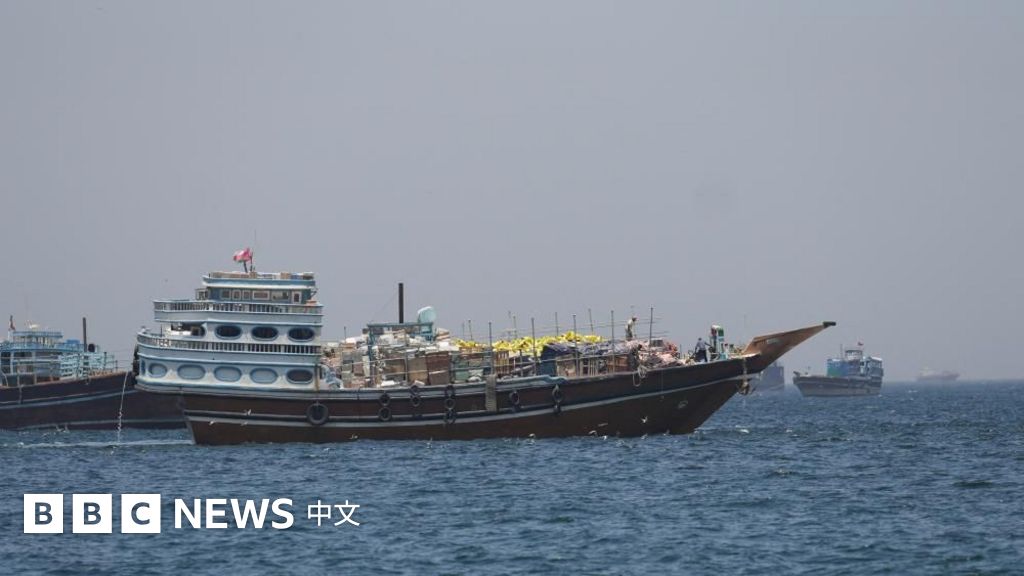
Trump's Freedom Plan: How 50 Hours in Hormuz Rewrote the Gulf
Trump's Project Freedom lasted two days in the Strait of Hormuz — but it forced the US-Iran deal that reopened the strait on Iran's terms, not Washington's.
Donald Trump's "Project Freedom" — the US Navy operation launched on May 4, 2026 to escort stranded ships out of the Strait of Hormuz — collapsed after exactly 50 hours, one French container-ship strike, and two US-flagged merchant transits. It was designed to break Iran's stranglehold on the world's most important oil chokepoint. Instead, it accelerated a memorandum of understanding, signed at Versailles on June 17, that formally accepts Iranian regulation of the strait for the first time in the waterway's modern history. The clearest winner of Trump's Freedom Plan is Tehran, which now controls Hormuz with American consent.
What Project Freedom actually was
By the time Trump announced the operation on Truth Social on May 3, the Strait of Hormuz had been effectively closed for nine weeks. Iran's Islamic Revolutionary Guard Corps was firing on any vessel that transited without its authorisation, and the US had responded on April 13 with a naval blockade of Iranian ports. According to CENTCOM figures cited by the BBC, 22,500 mariners were stranded on 1,550 commercial vessels in the Gulf.
Trump framed the operation as a "humanitarian gesture … meant to free up people, companies, and Countries that have done absolutely nothing wrong." At a Pentagon briefing the following day, Secretary of War Pete Hegseth described the effort in narrower terms. "Project Freedom is defensive in nature, focused in scope and temporary in duration, with one mission: protecting innocent commercial shipping from Iranian aggression," he said, according to the Department of War transcript. CENTCOM committed 15,000 service members, more than 100 land- and sea-based aircraft, and guided-missile destroyers to what Chairman of the Joint Chiefs Gen. Dan Caine called an "enhanced security area" on the southern side of the strait.
The kinetic reality outpaced the defensive framing within hours. On the operation's first day, US attack helicopters sank six Iranian fast-attack craft; Iran fired cruise missiles at both US warships and US-flagged commercial vessels, launched drones at an ADNOC-affiliated tanker, and struck a UAE oil terminal that saw output plummet, according to NPR. The Iranian Tasnim news agency reported five civilian dead on two small vessels hit by US fire — a claim CENTCOM disputed.
Why it collapsed in 50 hours
Three factors killed Project Freedom before it delivered any meaningful shipping restart.
The first was insurance. Ship owners and underwriters told Lloyd's List the operation had not given them "sufficient clarity or credible protection to justify resuming transits." Only two US-flagged merchant ships passed under escort in the first 48 hours. When the CMA CGM San Antonio was hit in the strait around four hours before Trump paused the operation — injuring crew and damaging the vessel, according to
Al Jazeera — the commercial case for continuing evaporated.
The second was the ceasefire architecture itself. Caine acknowledged that since the April 8 truce, Iran had fired at commercial vessels nine times, seized two container ships and attacked US forces on ten separate occasions — all "below the threshold of restarting major combat operations," in his phrase. Project Freedom was pushing that threshold hard, and both sides knew it. NPR reported that even the Israeli government was not warned before Trump paused, and had been preparing for escalation.
The third — and this is the piece that reframes the story — was mediator pressure. Trump said publicly the pause came "on the request of Pakistan and other Countries." The Financial Times reported that Saudi Crown Prince Mohammed bin Salman personally asked for the halt. NPR's Aya Batrawy noted that Prime Minister Shehbaz Sharif publicly thanked Trump and said he and MBS had jointly urged reconciliation. The two Sunni powers most exposed to Iranian retaliation — not the White House — chose the off-ramp.
The Council on Foreign Relations' Max Boot had called the operation, on the day it launched, "another improvised half-measure in a conflict that has lurched from misstep to misstep" in a CFR analysis. Fifty hours later, that reading looked correct.
The deal Project Freedom produced
The point is not that Project Freedom failed. It is what the failure forced. Six weeks after the pause, Trump and Iranian President Masoud Pezeshkian signed a 14-point memorandum of understanding brokered by Pakistan and Qatar. The full text, published by the BBC, formally ends major hostilities, unfreezes $24 billion in Iranian assets during a 60-day negotiating window, and — critically — assigns Iran the authority to regulate transit in the strait.
Point 5 of the MoU commits Iran only to use "best efforts" for safe passage of commercial vessels "with no charge for 60 days," and instructs Tehran to "conduct dialog with the Sultanate of Oman to define the future administration and maritime services in the Strait of Hormuz." That is a diplomatic euphemism with enormous consequence. The Persian Gulf Strait Authority — a body Iran created during the war to issue passage permits and collect what CNAS legal scholar Jonathan Bellish, in a Just Security-linked commentary, called an illegal "Tehran toll booth" of up to $2 million per ship — has not been dismantled. It has been left standing under Article 5 to negotiate "services fees" with Oman.
That is a rewrite of customary international law. Under UN Security Council Resolution 2817, adopted March 11, 2026 and analysed by Israel's Institute for National Security Studies, any Iranian action that obstructs transit passage "constitutes a serious threat to international peace and security." The prevailing view among law-of-the-sea scholars, as summarised by a June 2026
Japan Institute of International Affairs briefing, is that transit passage in international straits is non-suspendable — a customary rule crystallised in the ICJ's 1949 Corfu Channel judgment. The MoU quietly concedes the point Iran has argued since 1982: that Hormuz is governed by innocent passage, "which may be conditioned, regulated, and suspended."
Bruce Jones of the Brookings Institution put it plainly in a June 2026 analysis: "Iran has been able to withstand this American military barrage and come out with its capacity to threaten the straits essentially undiminished. And that I think puts Iran in a stronger position than we went in."
Who benefits, who pays
Two months after the MoU was signed, the strait is open — partially. According to Al Jazeera's July 6, 2026 reporting on OPEC+, MarineTraffic recorded 38 transits on July 2 and 48 on July 1, against a pre-war baseline of roughly 130 daily crossings. Brent crude, which topped $126 a barrel in April, has fallen back to pre-war levels. Seven OPEC+ producers — Saudi Arabia, Russia, Iraq, Kuwait, Kazakhstan, Algeria and Oman — will lift output by 188,000 barrels per day in August.
But the traffic is flowing along Iran's northern route, through Iranian territorial waters, rather than the US-recommended southern corridor along Oman. BBC Verify reported that at least 30 tankers laden with Iranian oil and petrochemicals departed the Gulf in the first six days after the deal, several of them previously US-sanctioned. Iran is the immediate commercial winner: it has moved close to 50 million barrels since the naval blockade lifted, according to commodities analyst Sparta.
The losers are visible too. Shipping insurers are still refusing pre-war war-risk premiums; the Joint Maritime Information Center has warned that Iranian mines remain in the internationally recognised central shipping lane, with clearance expected to take up to six months. Iran's chief negotiator, Parliament Speaker Mohammad Bagher Ghalibaf, told reporters on June 17, in remarks carried by Al Jazeera, that "the Strait of Hormuz will not return to pre-war conditions" and that Iran will "receive a fee for services" from shipping.
That is the durable second-order effect. Bruegel's April 2026 analysis of a Hormuz toll found that Gulf states would absorb roughly 85% of any transit charge, with the rest of the world bearing only a small fraction — a distribution that removes the diplomatic urgency for European or Asian powers to push back hard. The precedent, however, matters far beyond Hormuz. As Bruegel warned, Iran "has shown to the world the power of asymmetric warfare at chokepoints, inviting others, including non-state actors, to imitate."
The Article 5 problem
The MoU is already fraying on the point Project Freedom was meant to settle. On June 26, the US struck Iranian missile, drone and radar sites in retaliation for a drone attack on a cargo ship in the strait — the first exchange of fire since the deal was signed. Iran's Foreign Ministry called the strikes a "blatant violation" of Paragraph 1 of the MoU, according to Al Jazeera. Tehran maintains that Article 5 gives it the authority to regulate maritime traffic during the 60-day negotiating period. Washington disagrees.
The dispute is not academic. Traffic in the strait dropped from a post-war peak of more than 70 transits on June 24 to a trickle over the following weekend after two ships were attacked. Doha talks on July 1 produced only an agreement to establish a "communication channel" to report MoU breaches — the IRGC publicly repudiated the channel the same day.
What to watch
- Mid-August 2026: The 60-day "best efforts" no-charge transit window under MoU Article 5 begins to expire. Iran has signalled it will start charging service fees; the US and GCC have said any toll violates freedom of navigation. This is the first hard test of whether the deal holds.
- Iran-Oman administration talks: The MoU tasks Tehran and Muscat with defining the "future administration and maritime services" of the strait. Any bilateral framework — modelled by some analysts on the 1857 Copenhagen Convention or a "Hormuz Declaration" — would formalise Iranian regulatory authority under international law. Watch for a joint communiqué.
- The final 60-day nuclear deadline: Under the MoU, a full agreement on Iran's nuclear programme is due by mid-August. Failure triggers a return to what Trump has called "bombing … at a much higher level and intensity than it was before."
- September 2026 mine clearance: The IMO estimates full de-mining of the central shipping lane will take up to six months from June 17. Until then, insurance underwriters will not restore pre-war war-risk premiums, and daily transits will remain below the 130-ship baseline.
The Bottom Line
Trump's Freedom Plan was launched to break Iran's grip on the Strait of Hormuz and lasted 50 hours before Saudi and Pakistani mediators pulled it off the board. The memorandum of understanding it produced ended the war but formalised the very Iranian regulatory authority the operation was meant to destroy — the Persian Gulf Strait Authority is intact, Iran controls the transit route commercial ships are actually using, and Tehran has US consent, on paper, to charge "service fees" once the 60-day grace period ends. Project Freedom's real legacy is not the two ships it escorted; it is the precedent that a mid-sized power can close a global chokepoint, absorb an American military response, and be paid to reopen it.
Discover more
Conflict & Security
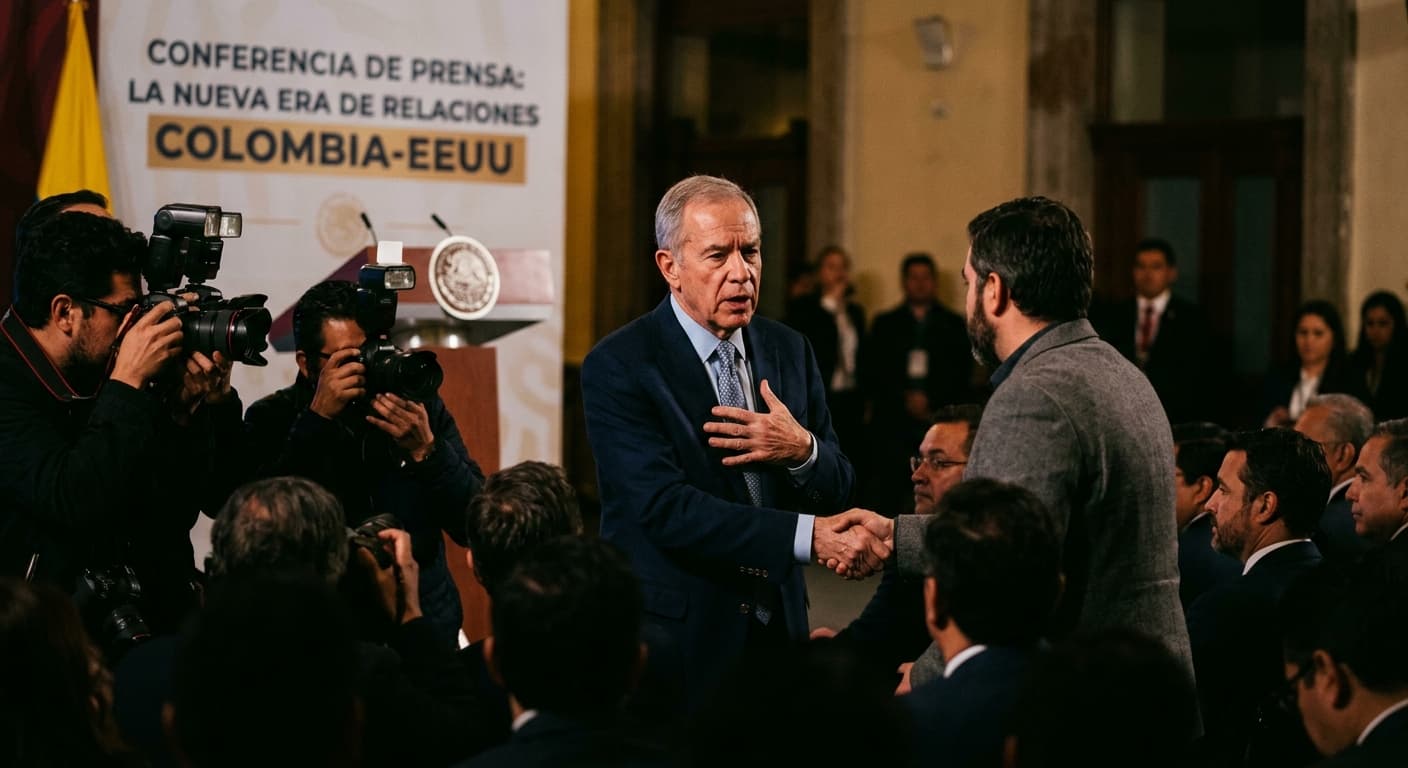
De la Espriella's Razor Win Resets US-Colomb
De la Espriella's razor-thin election win signals a reset in US-Colombia relations, reshaping security ties and the agenda under a Trump-aligned approach.
International Relations
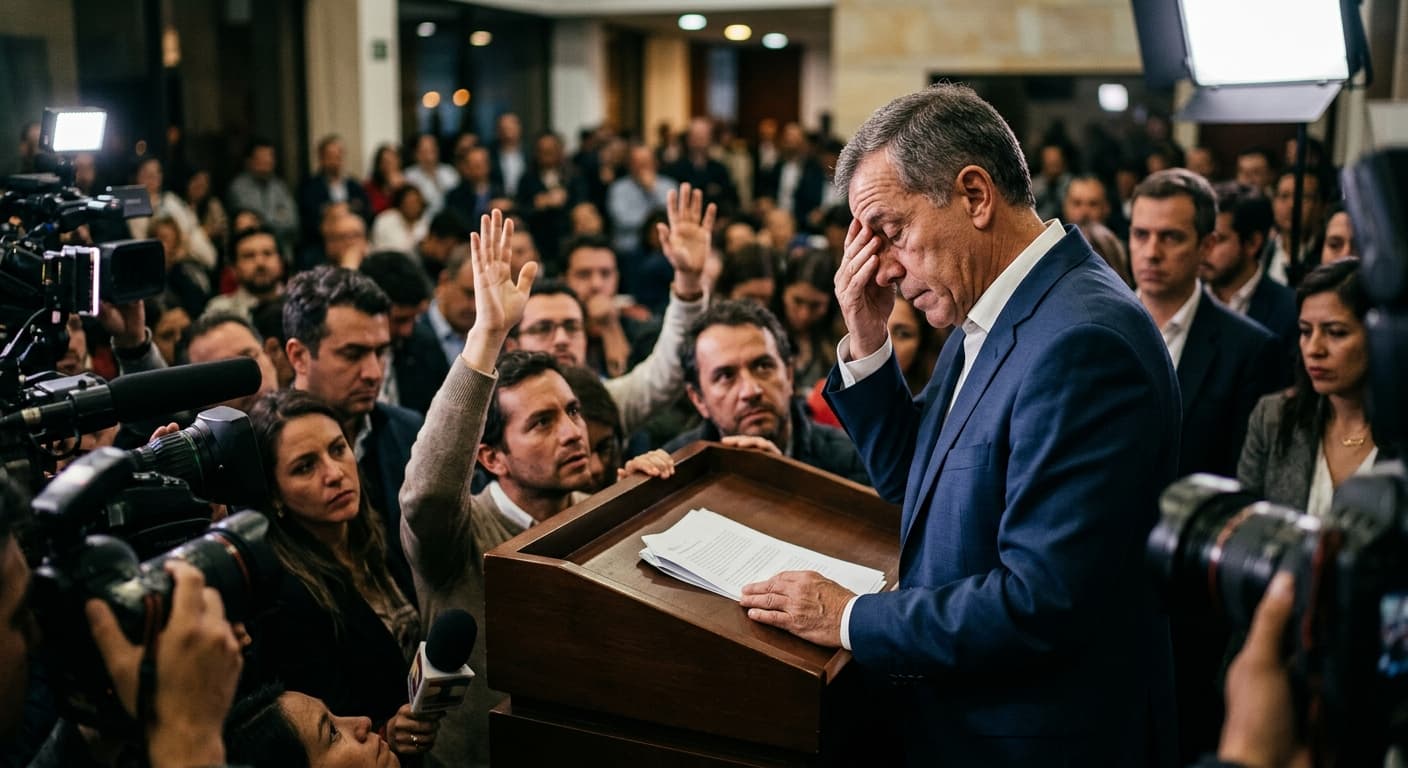
Colombia's Razor-Thin Rightward Pivot
Colombia swings right as Abelardo de la Espriella narrowly wins the presidential runoff by under one percent, exposing a deeply divided and polarized nation.
Global Politics
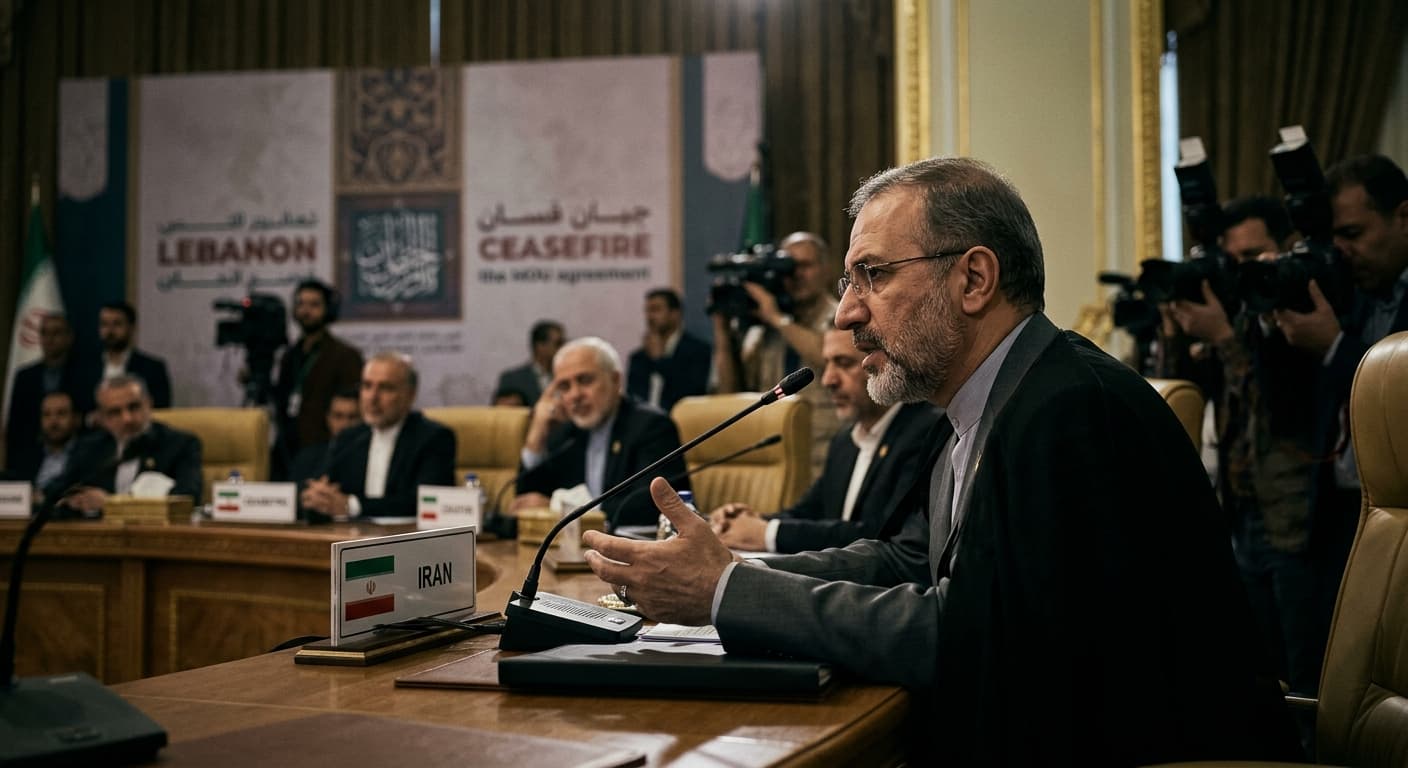
Iran Demands US Enforce Ceasefire
Iran insists the United States must enforce a ceasefire in Lebanon to uphold the memorandum of understanding, raising pressure on Washington and Netanyahu.

Conflict & Security
Trump's Iran Deal Faces Bipartisan Backlash
Trump's Iran deal draws fierce criticism from both Republicans and Democrats, exposing deep political divides over the ceasefire and the terms of the agreement.