Trump Trades Climate Rules for Short-Term Grocery Relief
EPA is delaying refrigerant phase-outs for grocers and transport firms, a cost play that softens Biden-era climate rules but likely won’t cut prices.
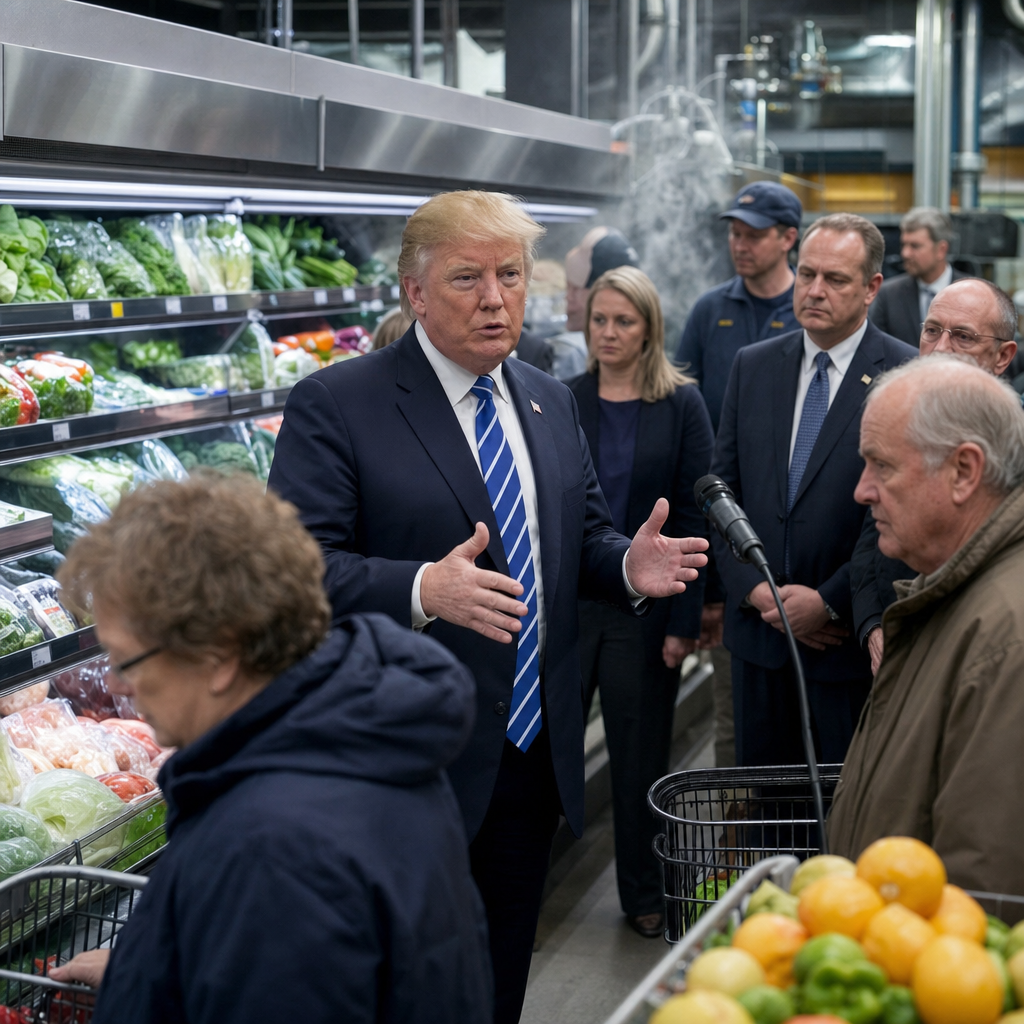
President Trump on Thursday moved to loosen limits on hydrofluorocarbons, the super-polluting gases used in refrigerators and air conditioners, saying his administration was ending Biden-era requirements that forced a faster phase-down in commercial refrigeration. The White House said the EPA will issue a final rule giving companies, including grocery stores, more time to comply, while also proposing changes to exempt the transportation sector from leak requirements for refrigerant systems. Trump framed the shift as relief for families and businesses, and the administration says the package will save more than $2.4 billion.  The Hill
  CNN Politics
Why this is a political play, not just an energy rule
The leverage here is political, not technical. Trump is trying to turn a complex climate standard into a simple affordability message: lower compliance costs, lower grocery prices, lower voter anger. That is why the White House is pairing the announcement with grocery executives and EPA Administrator Lee Zeldin. But CNN reports the economics do not line up neatly with the claim. Supermarkets run on thin margins, many have already bought compliant equipment, and the rollback is unlikely to move shelf prices in any visible way. CNN Politics
The split is between firms that still face replacement costs and those that already paid them. The Food Industry Association says switching away from HFCs can cost about $1 million per store, which gives Trump a business-friendly talking point. Refrigeration makers disagree. The Air-Conditioning, Heating, and Refrigeration Institute argues the delay will keep demand high for older refrigerants while supply falls under the AIM Act, pushing prices and service costs up instead. CNN Politics That makes the winners clear: grocery chains and transport operators that can postpone capital spending. The losers are manufacturers that already invested in lower-emission systems, and the climate regulators trying to force an orderly transition. For the broader domestic fight over regulation, see  US Politics.
The deeper cost is policy inconsistency
This rollback also exposes a familiar Trump problem for business: regulatory relief today can mean uncertainty tomorrow. The standards Trump is easing were built on a bipartisan law he signed in his first term, and the Biden administration turned that statute into tighter phase-down rules for grocery stores, air-conditioning companies, semiconductor plants and others.  The New York Times CNN Politics Now the federal government is signaling one compliance path while states such as California keep moving ahead with tougher rules of their own. CNN Politics That leaves manufacturers and retailers juggling a patchwork of deadlines, which is usually what raises costs over time rather than lowers them.
What to watch next
The next decision point is the EPA’s final rule and whether the White House can show any consumer savings before the fight hardens into another Washington-versus-states split. If the administration cannot point to lower prices, this will read less like inflation relief than a delay that benefits industry now and shifts the climate bill later. The Hill CNN Politics