Trump Pushes IVF Into Employer Benefits
The White House is widening a legal lane for fertility coverage, betting employers will adopt it — but the gap between large firms and everyone else remains the real bottleneck.
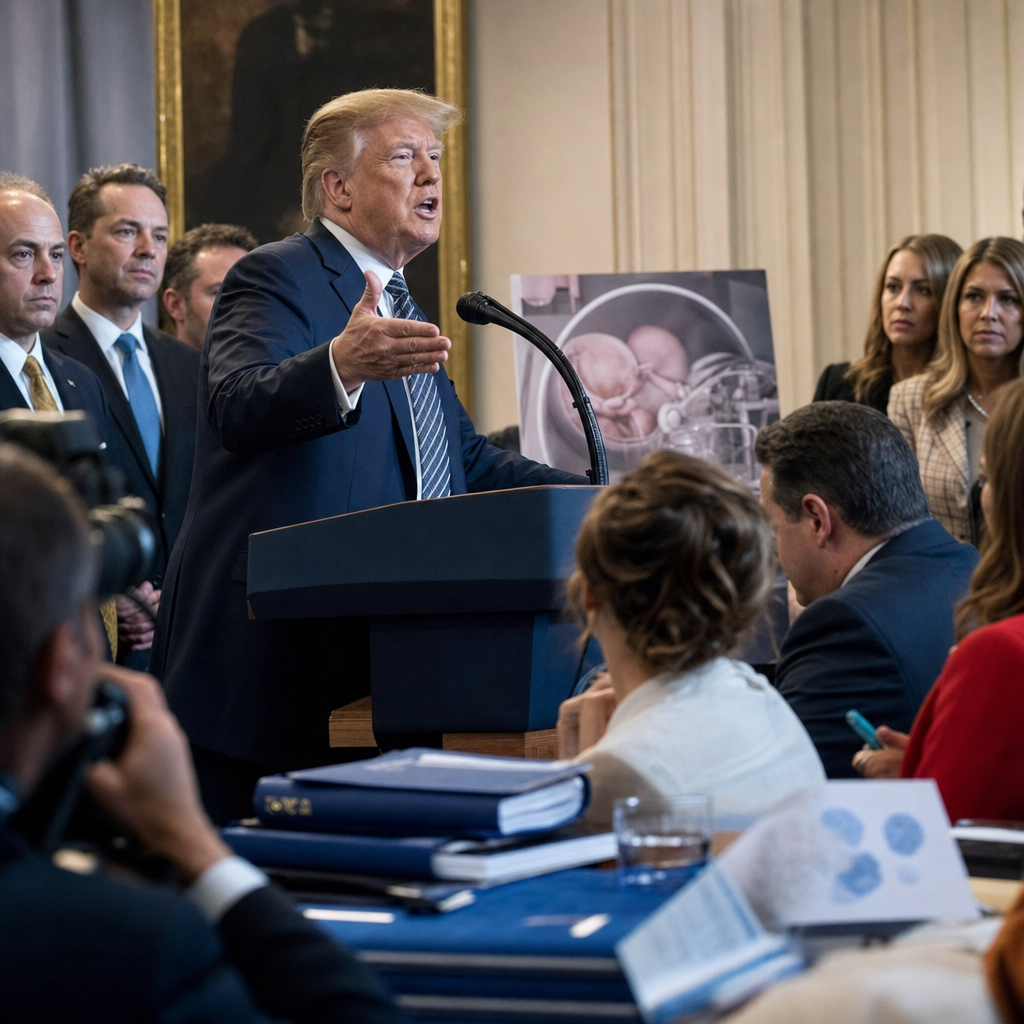
The Trump administration on Sunday proposed a rule that would let employers offer fertility coverage, including IVF, through a new category of “limited excepted benefits,” a move the Labor Department says is meant to expand access without rewriting the whole health insurance system  U.S. Department of Labor. The package would cap the combined lifetime benefit at up to $120,000, require a clearer notice to workers, and apply to benefits primarily used for infertility diagnosis or treatment U.S. Department of Labor. The Washington Post reported that the administration is framing the change as an easier path for employers to offer IVF services and related fertility support
  The Washington Post.
Who gains leverage
Employers gain the most immediate leverage here. The rule is built to make fertility benefits a voluntary add-on, not a federal mandate, which means the administration is trying to move the market rather than order it U.S. Department of Labor. That matters because most working-age Americans still get insurance through their jobs, but fertility coverage remains patchy — especially outside the largest firms  CNN.
CNN.
That leaves a clear winner set: large employers competing for talent, especially in high-wage sectors where fertility benefits already function as a recruiting tool CNN. The losers are smaller companies, workers in lower-wage jobs, and anyone whose access depends on state insurance markets rather than employer plans. This is the structural limit of the administration’s approach: it can make IVF easier to package, but not universally available.
Why this is politically useful
The White House is also consolidating a broader family-policy message. The Labor Department said the proposal builds on President Trump’s February executive order on “Expanding Access to In Vitro Fertilization,” which directed his team to reduce regulatory barriers and improve affordability U.S. Department of Labor. That lets Trump claim action on a culturally potent issue without forcing a direct confrontation over a national insurance mandate.
That political design explains the policy’s appeal. It is visible, pro-family, and cheap compared with a federal coverage requirement. But it is also narrower than the campaign rhetoric that suggested universal or government-backed IVF coverage CNN. For Republicans, that is the point: preserve the message, avoid the mandate. For fertility advocates, it is a partial win at best.
What to watch next
The next decision point is the comment period. The proposed rule will be open for public comment 60 days after publication in the Federal Register, and the final shape will tell you whether the administration is serious about broad take-up or just scoring a headline U.S. Department of Labor. Watch three things: whether employers actually adopt the new benefit; whether large insurers repackage IVF as a stand-alone option; and whether critics push for a harder federal standard after this softer approach.
For  US Politics, this is the familiar Trump formula: use executive power to bend incentives, not to create a new entitlement. In United States policy terms, the question is not whether IVF becomes a campaign issue again — it already is — but whether this rule changes access beyond the biggest employers.