Trinidad Gay Sex Ban Appeal Tests Colonialism
Privy Council hears final appeal on gay sex laws.
Model Diplomat8 min readCaribbean
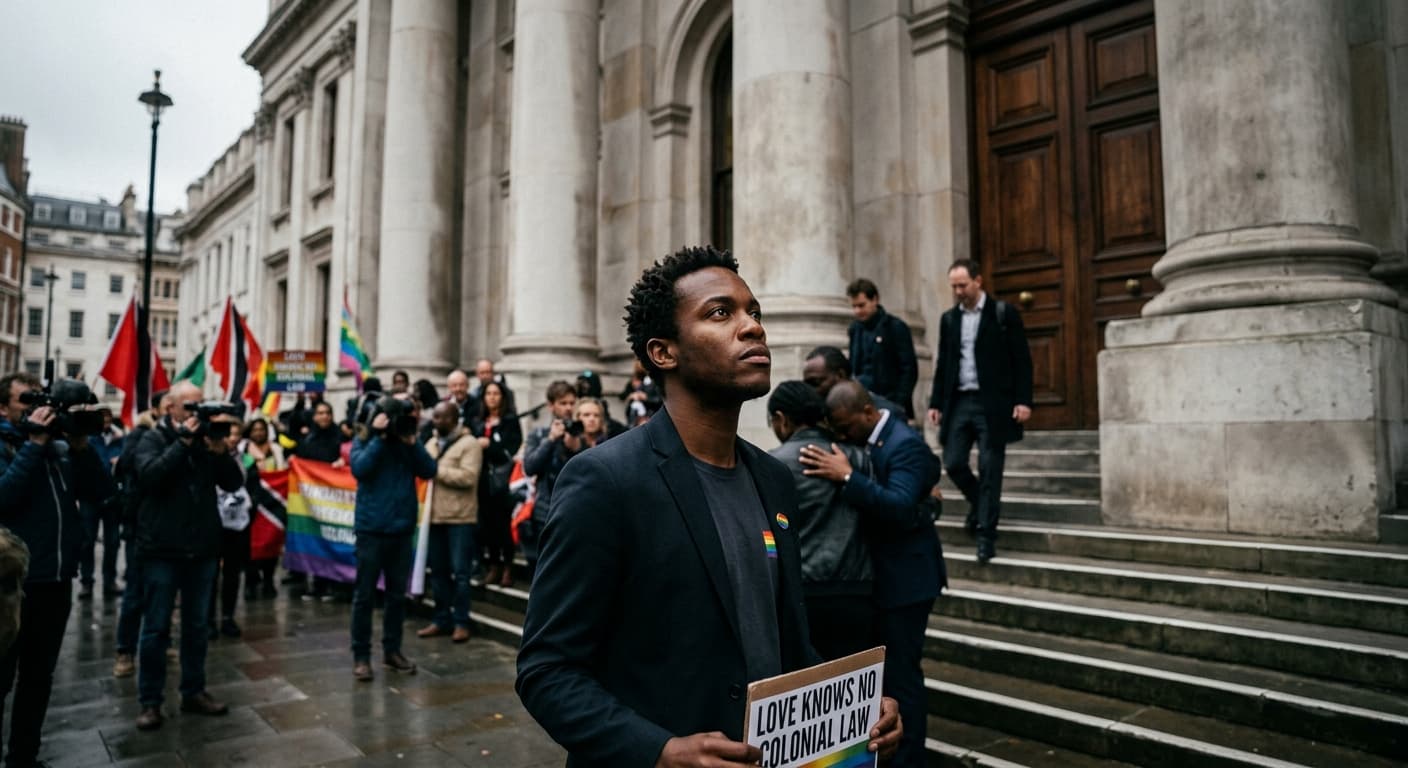
Privy Council Hearing on Trinidad Gay Sex Ban Tests Colonial Savings Clause
London judges heard Jason Jones's final appeal on July 8, 2026. The ruling will decide whether five Caribbean states can still shield colonial-era laws from constitutional review.
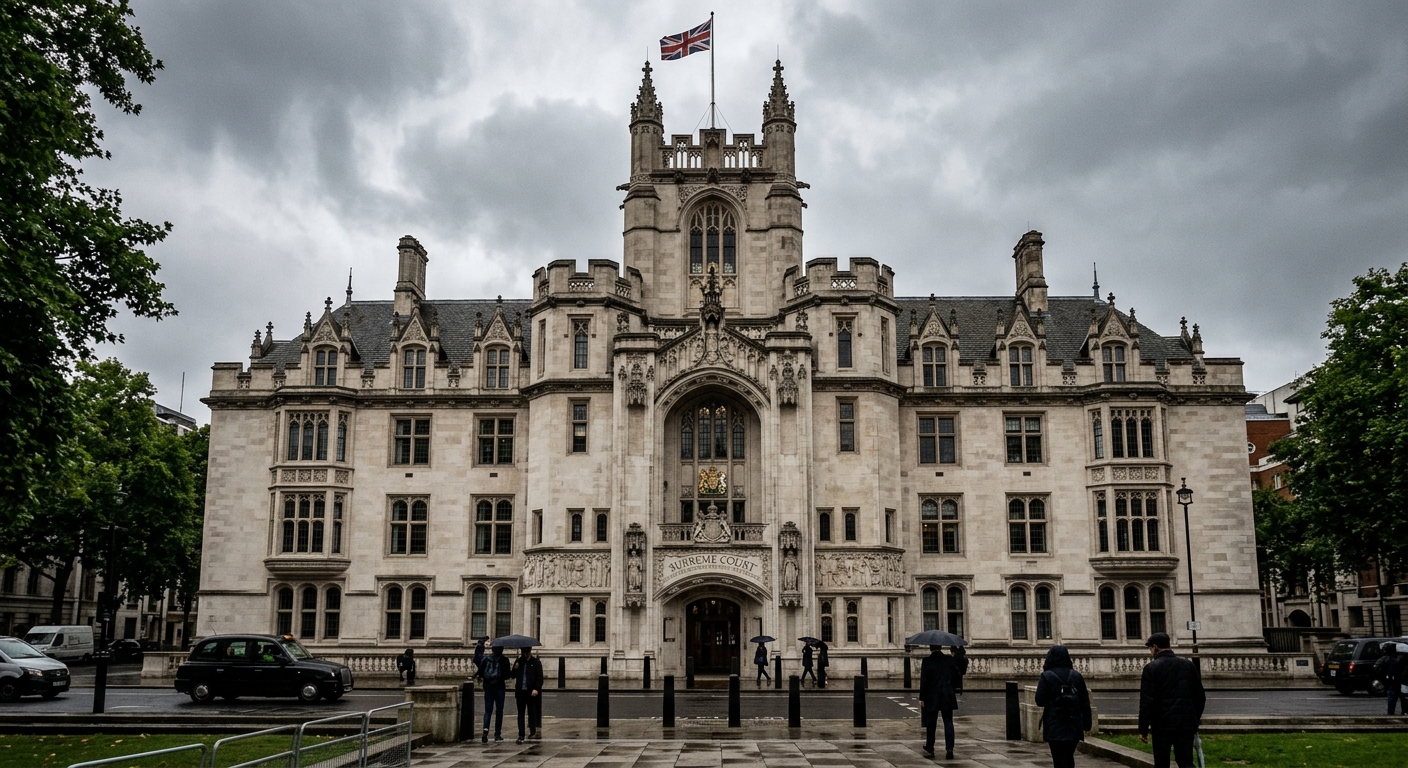
Five judges of the Judicial Committee of the Privy Council in London on July 8, 2026 heard the final appeal in Attorney General of Trinidad and Tobago v. Jason Jones, a case that will settle far more than whether consensual gay sex is a crime in a nation of 1.4 million people. At stake is the "savings clause" — a provision in the 1976 Trinidad and Tobago Constitution, and in most Anglophone Caribbean charters, that immunises pre-independence laws from human-rights challenge. If the JCPC narrows the doctrine, the last five Caribbean holdouts on same-sex criminalisation lose their principal legal firewall. If it upholds it, the region's LGBT decriminalisation wave — which since 2016 has swept Belize, Antigua and Barbuda, Saint Kitts and Nevis, Barbados, Dominica and Saint Lucia — stops at the water's edge of Trinidad, Jamaica, Guyana, Grenada and Saint Vincent.
The hearing is listed on the JCPC docket as case JCPC/2025/0095, with the tribunal now "awaiting judgment." No delivery date has been set.
What the appeal actually asks
The three questions certified to the JCPC are narrow but load-bearing. According to the Judicial Committee of the Privy Council case summary, the judges must decide whether Sections 13 and 16 of Trinidad and Tobago's Sexual Offences Act 1986 "repeal and re-enact" earlier colonial provisions — Sections 59, 60 and 61 of the Offences Against the Person Act 1925 — and therefore fall within Section 6 of the Constitution, the savings clause. Only if the answer is no do the judges reach the merits: whether the provisions infringe Section 4 rights, and whether they are "reasonably justifiable" in a rights-respecting society.
That framing is the government's terrain. Section 13 punishes "buggery" and Section 16 penalises "serious indecency" between persons of the same sex. Trinidad's original colonial provisions carried a five-year maximum. The 1986 Act raised the ceiling for buggery to 25 years. The Court of Appeal held on March 25, 2025 that despite the increase, the 1986 statute merely re-enacted the substance of the earlier law and was therefore saved. It reinstated Section 13 with a maximum of five years and revived gross-indecency provisions under the older statute, according to the Legal Information Institute at Cornell.
The practical result: consensual same-sex conduct became a crime again in Trinidad and Tobago in March 2025, with reduced penalties. The 2018 High Court judgment — which Justice Devindra Rampersad grounded in dignity, privacy and equality, and which Human Rights Watch at the time called a regional watershed — was hollowed out.
Why the savings clause is the real defendant
The savings clause is the peculiar legal instrument that binds this case to a much larger regional problem. It was inserted into most Commonwealth Caribbean independence constitutions to prevent judicial review from overturning inherited British colonial law overnight. In Trinidad's Section 6, "nothing" in a pre-1976 written law "shall be held to be inconsistent with or in contravention of" the fundamental-rights guarantees added at independence.
The Judicial Committee has applied that doctrine ruthlessly, and recently. In 2022, in Chandler v The State, the JCPC upheld Trinidad's mandatory death penalty for the same reason. Lord Hodge accepted that the sentence "is recognised internationally as cruel and unusual punishment" and that the state "does not dispute that characterisation," yet ruled that "the 1976 Constitution saves existing laws, including the mandatory death penalty, from constitutional challenge," according to the BBC. Reform, he said, was Parliament's job, not the court's.
That precedent hangs over Jones. If Lord Hodge's reasoning holds, the JCPC has already telegraphed that the buggery law — colonial in origin, re-enacted with harsher penalties in 1986 — is exactly the type of statute the clause was drafted to preserve.
The Caribbean Court of Justice, which serves as final appellate court for Guyana, Belize, Dominica and Barbados, has taken the opposite approach. In McEwan v Attorney General of Guyana (November 13, 2018), the CCJ struck down a colonial cross-dressing law and, in the process, "limited the extent to which the colonial 'savings clause' present in the constitutions of the Commonwealth Caribbean countries limits the Court's judicial review powers," per an International Legal Materials summary. The doctrinal split between the two apex courts is now the region's central constitutional-law problem, and Jones puts it directly to the London bench.
The regional balance sheet
The pattern of the last decade cuts one way. The Belize Supreme Court struck down Section 53 of its Criminal Code on August 10, 2016. Trinidad's High Court followed on April 12, 2018. Antigua and Barbuda, Saint Kitts and Nevis, and Barbados fell in 2022. Dominica followed on April 22, 2024, per the BBC. Saint Lucia's High Court decriminalised on July 31, 2025,
Human Rights Watch reported — leaving just five Anglophone Caribbean states criminalising same-sex conduct.
The share of Caribbean countries criminalising same-sex sex has fallen from 71 percent in 2017 to 43 percent today, according to a 2024 study in the Journal of Law, Medicine & Ethics. The Caribbean is now the world's fastest-moving decriminalising region.
But the wave has hit two walls. Trinidad's Court of Appeal reversed Jones in March 2025. Saint Vincent and the Grenadines' High Court dismissed a parallel constitutional challenge in the same period, per Human Rights Watch. Both used savings-clause reasoning. Both are subject to appeal — Trinidad to the JCPC, Saint Vincent likely to the same court, given its final appellate arrangement. A pro-government ruling in Jones will pattern that outcome across the region's remaining holdouts.
Who is defending the law, and why
Trinidad's Attorney General is joined by the Trinidad and Tobago Council of Evangelical Churches and the Sanatan Dharma Maha Sabha, the country's principal Hindu body, as interested parties. Both intervened at the Court of Appeal in defence of Sections 13 and 16. Their arguments track a familiar template used across the region: that decriminalisation cases are foreign impositions on domestic moral orders.
The intellectual weakness of that framing is now well-documented. According to an SSRN comparative study of Global South decriminalisation jurisprudence, courts in Belize, Botswana, India, Fiji, South Africa and Trinidad have framed their repudiation of "sodomy" bans as acts of anticolonialism — not Westernisation. Justice Rampersad's 2018 opinion cited South African, Nepali, Fijian and Belizean judgments; it was in turn twice cited by the Indian Supreme Court in Navtej Singh Johar six months later, according to
SOAS University of London. The government's position is that Parliament, not the courts, should decide. Its problem is that Parliament has not moved in 40 years, and shows no sign of doing so.
Jones himself has framed the case in resolutely constitutional, not activist, terms. In a 2024 BBC interview with Allan Little, he described the litigation as an attempt to force cultural change through the vehicle of enforceable rights.
The second-order effects
Three consequences follow from any JCPC decision, in either direction.
First, if the JCPC allows Jones's appeal by reading the savings clause narrowly — treating the 1986 Act as substantively new law rather than a re-enactment — the doctrinal effect ripples immediately to Jamaica, Grenada and Saint Vincent and the Grenadines, all of which retain JCPC final jurisdiction. Jamaica's Tomlinson challenges to the Offences Against the Person Act have stalled for years partly on savings-clause grounds. A narrow reading of Section 6 would restart them.
Second, if the JCPC dismisses the appeal on savings-clause grounds — the Lord Hodge trajectory — it hardens a two-track Caribbean human-rights regime: CCJ jurisdictions can strike colonial laws; JCPC jurisdictions cannot. That deepens political pressure to abandon the JCPC. Trinidad's political class has debated leaving the London court for two decades; a Jones defeat would give the debate new energy, particularly on the political left.
Third, whatever the JCPC decides, the direction of Caribbean public-order enforcement is one-way. The Journal of Law, Medicine & Ethics analysis found that every country that has decriminalised since 2017 previously operated a de facto policy of non-enforcement — meaning the criminal statutes, though on the books, functioned mainly as licence for discrimination rather than prosecution. Trinidad's authorities have not, in living memory, prosecuted an adult under Section 13 for consensual private conduct. The law's harm is expressive, not punitive.
That is the point the 2018 High Court made in the passage most often quoted from the record. Justice Rampersad, striking down the statute, wrote:
"This is a case about the dignity of the person and not about the will of the majority or any religious debate."
The Court of Appeal did not overturn that reasoning on its merits. It ruled that the reasoning was irrelevant, because the savings clause put the statute beyond the courts' reach. The JCPC now decides whether that answer holds.
The politics behind the bench
The Judicial Committee has been thinning its Caribbean docket for years. Barbados, Guyana, Belize and Dominica now use the CCJ as final court. Trinidad and Tobago has repeatedly signalled that it, too, will move — but political consensus has never materialised. The Kamla Persad-Bissessar government, returned to office in 2025, has not indicated a change of position.
For Britain's most senior judges, the case sits inside a broader question about the JCPC's role as a rights court for former colonies. The London judges are, in effect, being asked to police the human-rights performance of a state whose constitution was drafted to prevent exactly that. A comparative study in the Modern Law Review framed the JCPC as "a supranational court in flux," ruling on constitutions its jurisdiction is "petering out yet remains."
That flux is now doing real work. The judges in London have the choice of aligning with the CCJ's rights-forward reading in McEwan — or entrenching the Chandler line of savings-clause deference. There is no unwritten middle path.
What to watch
- JCPC judgment in Jason Jones v Attorney General (JCPC/2025/0095). No date is set. Reserved judgments from the Committee typically arrive within three to nine months of hearing; a ruling by early 2027 is a realistic window.
- The parallel appeal in Saint Vincent and the Grenadines. The High Court there dismissed a similar constitutional challenge in 2025; an appeal to the Eastern Caribbean Court of Appeal, and potentially the JCPC, will test whether the same doctrine holds across jurisdictions.
- Trinidad and Tobago Parliament. The 2022 Chandler judgment told Trinidad's legislature to reform the death penalty. It did not. Any JCPC dismissal in Jones will contain a similar exhortation on the buggery statute. Whether the Persad-Bissessar government or its opposition acts is the next domestic milestone.
The Bottom Line
The Privy Council is not ruling on gay rights. It is ruling on whether a 50-year-old savings clause can indefinitely shield colonial-era criminal statutes from constitutional review — and that answer decides the legal fate of LGBT criminalisation in five Anglophone Caribbean states at once. A win for Jason Jones cracks the region's last constitutional firewall; a loss makes London the guarantor of laws Britain itself repealed in 1967.
Discover more

US Politics
White House Pressures Congress for Crypto Leg
The Trump administration's push for the CLARITY Act aims to reshape crypto regulation, impacting trillions in market value and the Trump family's wealth.
Global Politics
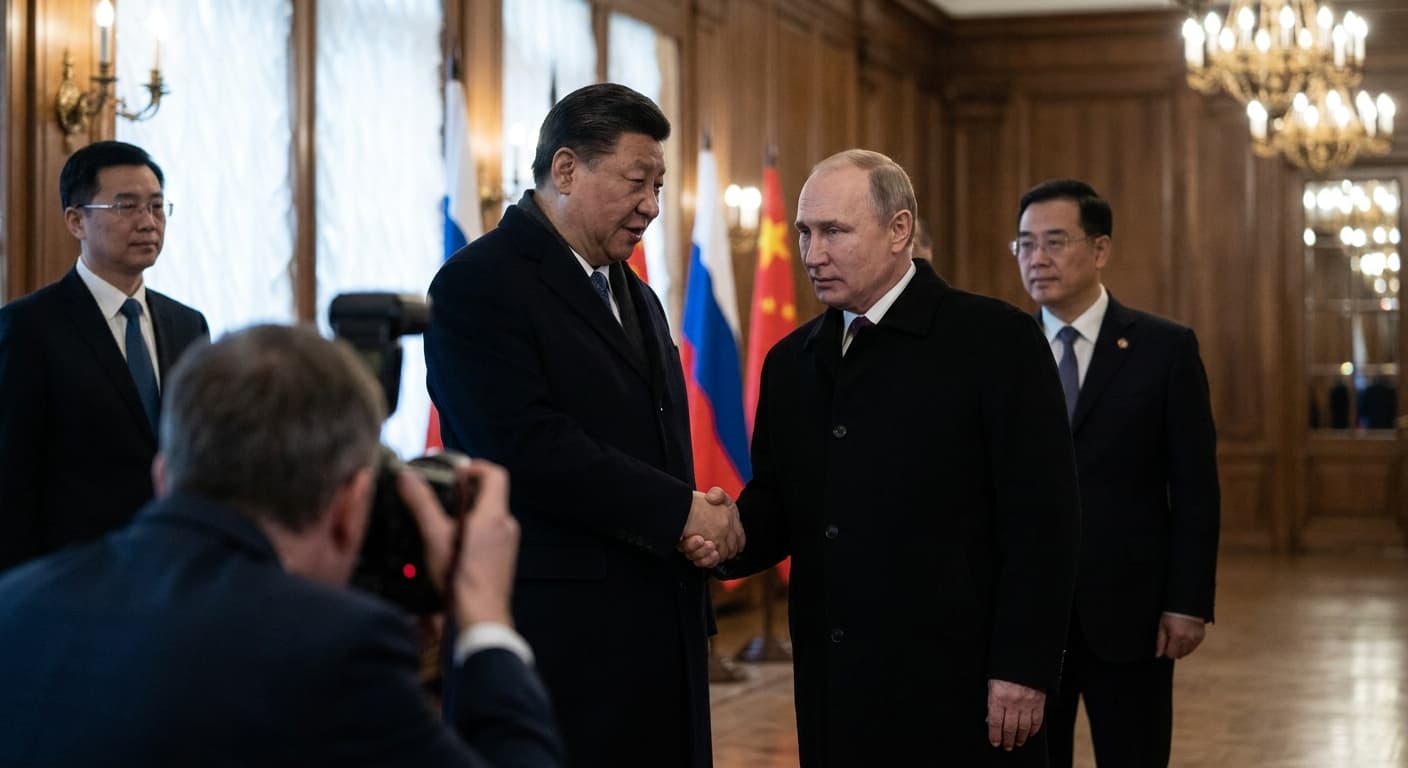
Xi Jinping Calls China-Russia Ties 'Precious'
Xi Jinping's description of China-Russia ties as 'precious' reflects a strategic imbalance, with Beijing dictating terms in the partnership.
US Politics
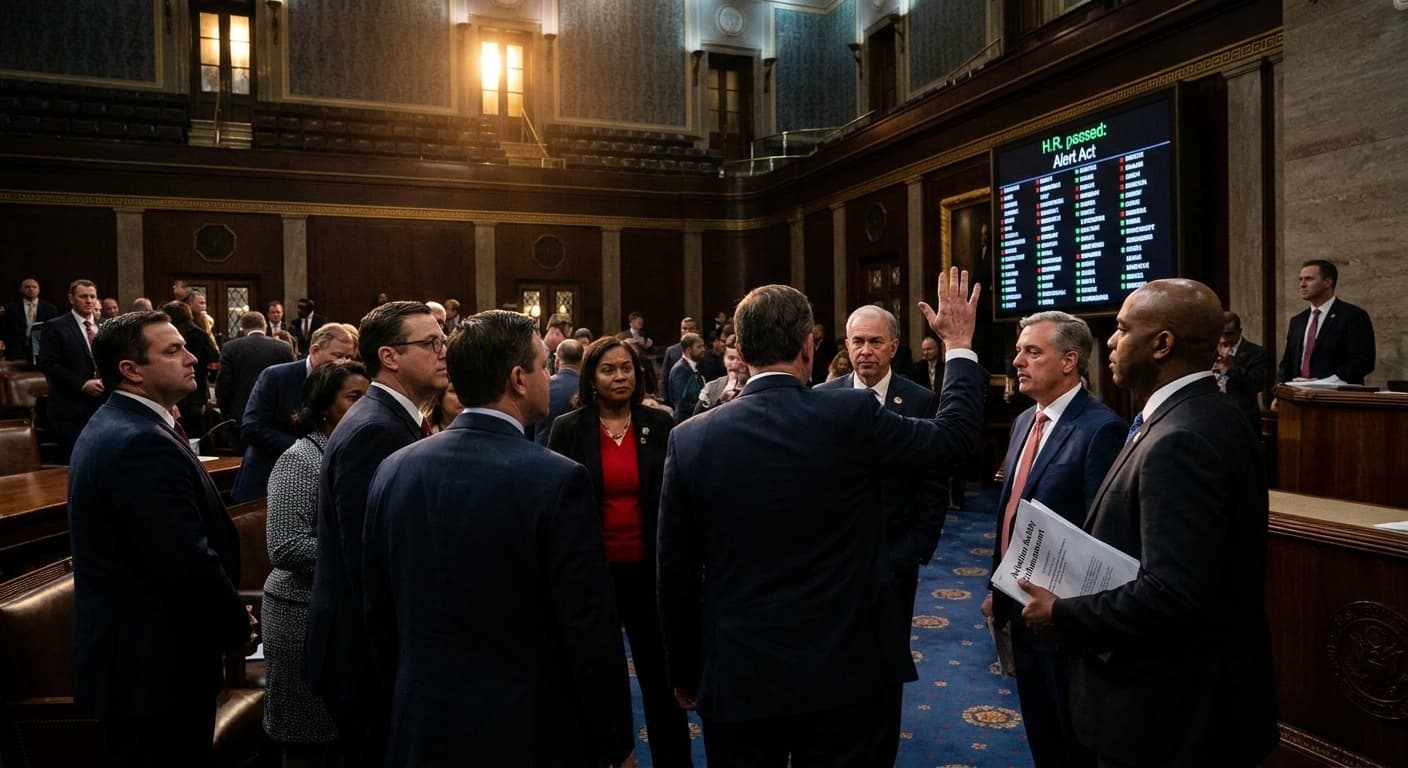
U.S. House Passes Alert Act for Aviation
The House passed the ALERT Act 396–10, replacing the ROTOR Act after Pentagon intervention, impacting aviation safety regulations.

Conflict & Security
Drone Warfare Killing Aid Workers at Unprec
Over 1,000 humanitarian workers killed in three years as cheap armed drones collapse legal protections. Gaza, Sudan, Ukraine, and DRC see deliberate targeting of aid convoys and hospitals with zero prosecutions.