Tamil Nadu’s Vijay Makes Law-and-Order His First Test
The new chief minister moved first on policing, women’s safety and drugs, signaling control of the state before the confidence vote.
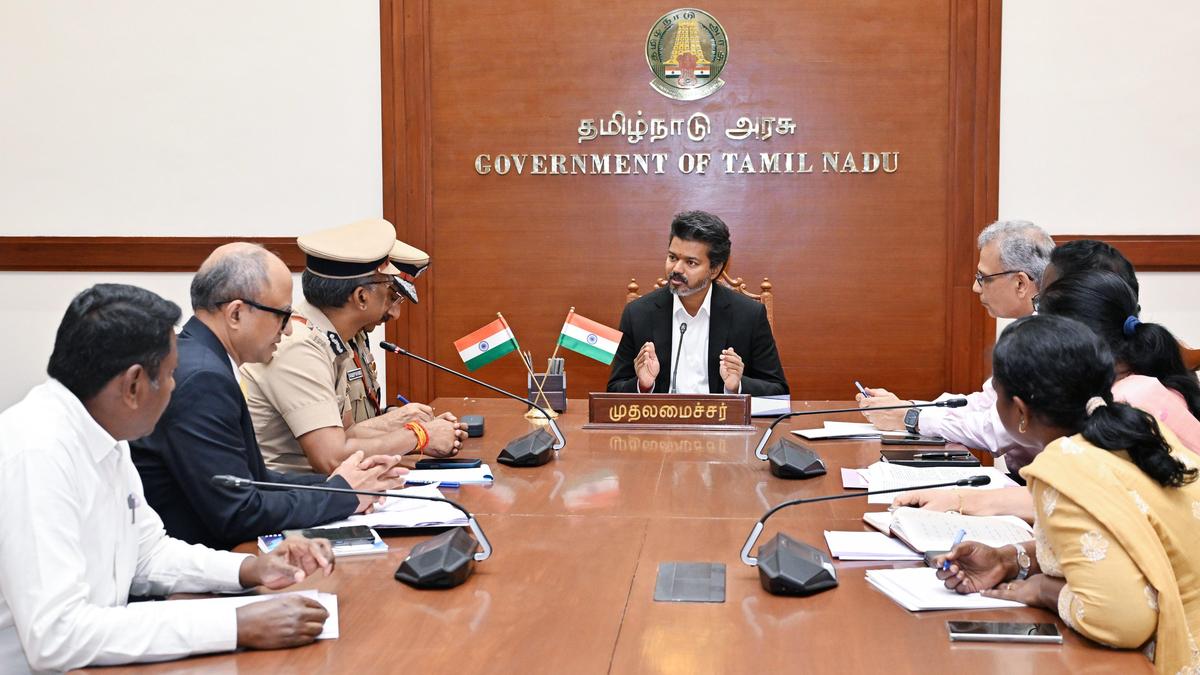
Chief Minister C. Joseph Vijay spent his first full day in office on law and order, chairing a review with Chief Secretary M. Sai Kumar, Director-General of Police Sandeep Rai Rathore and senior officials in Chennai, while also checking steps on women’s safety and offences involving illegal drugs and psychotropic substances, according to  The Hindu. That is the political message: before the new government is judged on economics or delivery, Vijay is trying to be seen as the person in command of the coercive machinery of the state.
A first-day show of authority
The sequence matters. The Hindu reported that Vijay signed files soon after entering the Secretariat, then moved quickly into a security review;  The Hindu BusinessLine said those first files included 200 units of free electricity for eligible domestic consumers, a women’s protection force and an anti-narcotics task force. In
  India, new governments often try to define themselves in the first 24 hours; Vijay is doing it with a mix of welfare, policing and administrative symbolism.
This is also why the law-and-order meeting is more than routine. By putting the police chief and top bureaucracy in the room on day one, Vijay is telling the state machinery that he intends to run a centralized government.  The New Indian Express reported that he warned there would be “no multiple power centres” in his administration and that he would not allow his council of ministers to err. That is classic consolidation language: the chief minister is trying to prevent rivals inside his own coalition from shaping the agenda before he does.
Why this matters
The leverage here sits with Vijay, not his coalition partners. The Hindu reported that TVK formed the government after winning 108 of 234 seats and securing support from Congress, CPI, CPI(M), VCK and IUML, with the Governor directing him to seek a vote of confidence by May 13. That deadline makes speed politically valuable: if Vijay can project order, discipline and administrative competence before then, he strengthens his hand inside a still-new and ideologically mixed coalition.
The beneficiaries are obvious. His government gets to frame itself around women’s safety and anti-drug enforcement rather than around inexperience. The police and bureaucracy get clear signals about priorities. Voters who backed TVK on change get an immediate demonstration that the party can govern, not just campaign. The losers are equally clear: the DMK opposition loses space to portray the new administration as rudderless if Vijay keeps dominating the news cycle with executive action.
What to watch next
The next real test is whether today’s optics turn into machinery: the structure, staffing and mandate of the women’s safety force and anti-narcotics unit, plus the promised white paper on state finances. The Hindu BusinessLine said Vijay has already flagged a debt burden of nearly ₹10 lakh crore, so the fiscal message will matter as much as the policing one. The date that matters is May 13: if Vijay clears the confidence vote and keeps the coalition aligned, this first-day law-and-order review will look like the opening move in a centralized, high-discipline government. If not, it will read as a performance before the first real contest.