Taliban Drone Strikes Escalate Tensions with
Taliban retaliates with drone strikes after Pakistani airstrikes.
Model Diplomat3 min readSouth Asia
Afghanistan's Taliban Answers Pakistan's Strikes With Drones — the Tit-for-Tat Escalation Is Now Airborne
Taliban drone incursions into Balochistan mark Kabul's latest retaliation in a cycle that has killed hundreds of civilians this year and shattered the October 2025 ceasefire.
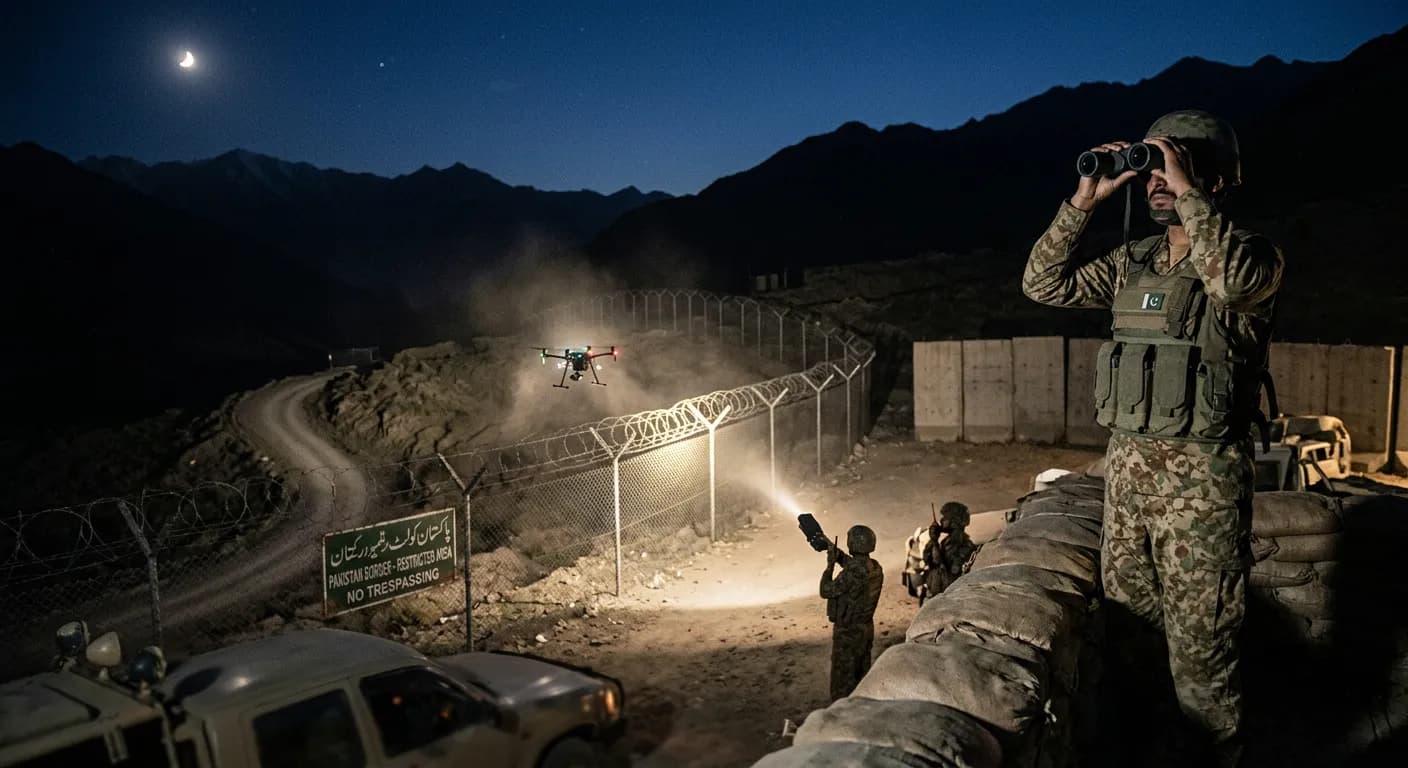
Afghanistan's Taliban regime launched four drones across the border into Pakistan's Balochistan province on June 30, hours after Pakistani airstrikes killed at least 28 civilians in Afghan territory, according to the UN. Pakistan's military said it shot down all four — which it described as "rudimentary" — and warned that any further provocation "would receive a befitting response." BBC News
The sequence is now unmistakable: Pakistan struck first on Sunday, hitting what it called militant hideouts in Paktia, Paktika, and Kunar provinces and claiming 29 fighters killed. The Taliban responded within 24 hours with drones — unsophisticated but symbolically significant — and claimed they hit targets inside Pakistan. The BBC could not independently confirm the Afghan strikes landed.
This is no longer a border skirmish. It is a retaliatory rhythm that neither side seems able or willing to break.
The immediate trigger was a militant attack on a paramilitary Rangers headquarters in Karachi on June 28 that killed three Pakistani soldiers. Jamaat-ul-Ahrar, a faction of the Pakistani Taliban (TTP), claimed responsibility. Islamabad says it identified one of the attackers as an Afghan national. Al Jazeera Pakistan's retaliation came within 48 hours — a pattern that has held since February, when the defence minister in Islamabad declared the country in "open war" with Afghanistan.
BBC News
The civilian toll is staggering and politically corrosive. The UN reported that cross-border fighting killed at least 372 Afghan civilians and wounded 397 in the first three months of 2026 alone. Al Jazeera Kabul put the civilian toll from Sunday's Pakistani strikes at 36 dead and over 160 injured. The March 16 Pakistani strike on the Omid Drug Rehabilitation Hospital in Kabul killed at least 269 people — the deadliest single attack in Afghanistan in two decades. These numbers have obliterated any diplomatic cover for restraint.
Why the Taliban is risking drone escalation
The Taliban's drone capacity is limited — quadcopters and modified commercial platforms, not armed Reapers — but the political calculus is clear. After absorbing months of Pakistani airstrikes with only diplomatic condemnation, Kabul has concluded that demonstrating a willingness to strike back is the only way to impose costs on Islamabad. The Taliban's defence ministry framed the June 19 strikes as targeting bases used by "hostile intelligence circles" — a thinly veiled reference to Pakistani intelligence — and claimed "the strikes successfully hit designated targets." Modern Diplomacy
Pakistan, for its part, dismisses these claims as propaganda. The ISPR statement on June 30 called the drone incursions "gimmicks" aimed at misleading the Afghan population and insisted the drones were neutralized "using sophisticated countermeasures" before reaching their targets. UrduPoint
The credibility gap is the story. Both sides issue casualty figures and operational claims that are unverifiable and contradictory. Pakistan says it kills militants; the Taliban says they are civilians. Without independent verification, each strike becomes both a military operation and a propaganda weapon — and that dual function makes de-escalation harder, because neither side can afford to be seen backing down.
What to watch next
The immediate question is whether Pakistan retaliates for the June 30 drone incursions. Islamabad has promised a "befitting response" — language that, in this conflict, has reliably preceded further strikes. If Pakistan hits back, the cycle will have compressed to hours rather than weeks.
The deeper worry is that the two-front threat Pakistan's military planners have long dreaded is materializing. India's Operation Sindoor in May 2025 tested Pakistan's eastern air defences. Now Taliban drones — however rudimentary — are coming from the west. A senior analyst at Singapore's ICPVTR told Al Jazeera in March that the escalation is "dangerous in both its horizontal and vertical dimensions," with urban centres like Rawalpindi now within reach. Al Jazeera
The China-mediated ceasefire of October 2025 is dead in all but name. The next diplomatic offramp will require Beijing or another external broker to offer both sides something they cannot achieve militarily — and neither Kabul nor Islamabad appears ready to ask.
Discover more

Global Politics
Xi Jinping Calls China-Russia Ties 'Precious'
Xi Jinping's description of China-Russia ties as 'precious' reflects a strategic imbalance, with Beijing dictating terms in the partnership.

US Politics
US Launches $166B Tariff Refund Portal
The US is launching a $166 billion tariff refund portal to aid importers hit by Trump-era tariffs, with major implications for trade and supply costs.

US Politics
Virginia GOP Rallies Rural Voters Against Red
Virginia Republicans are mobilizing rural voters against a Democratic-led redistricting referendum, a fight seen as pivotal to control in the 2026 midterms.

Economics
Fed's Amex AML order puts correspondent banking on notice
Federal Reserve's Amex AML order requires board-level controls and a 90-day plan; OCC fined the bank $350 million over enterprise-wide deficiencies.