Supreme Court Empowers Federal Arbitration
Court ruling reshapes arbitration award enforcement landscape
Model Diplomat7 min readNorth America
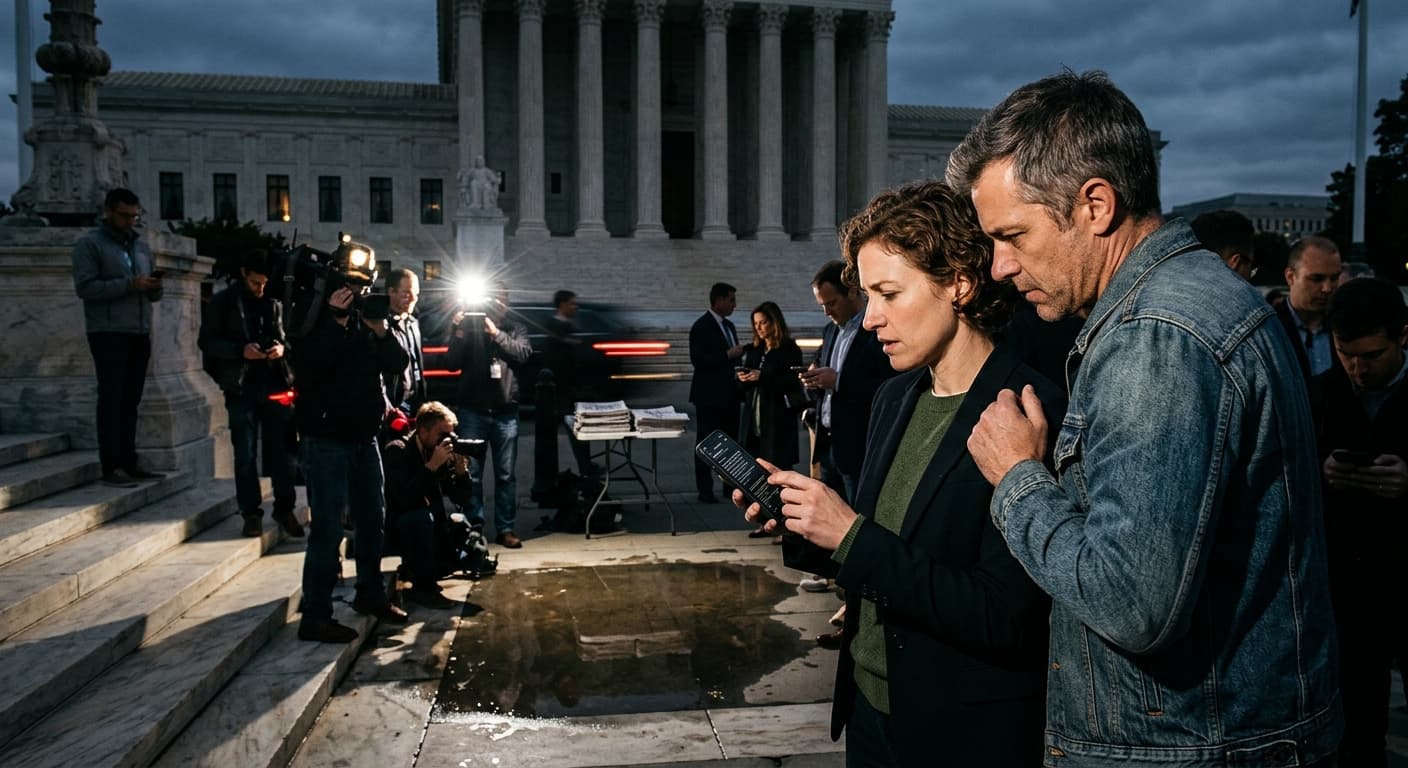
Supreme Court Hands Employers a Federal Forum for Arbitration Awards
The unanimous May 14, 2026 ruling in Jules v. Andre Balazs Properties lets federal courts confirm or vacate arbitration awards without a new jurisdictional basis — reshaping where FINRA, NFA and employment awards get enforced.
The U.S. Supreme Court's unanimous May 14, 2026 decision in Jules v. Andre Balazs Properties, No. 25-83, quietly re-routes tens of thousands of arbitration awards toward the more employer- and industry-friendly federal system: a federal court that stays a suit under Section 3 of the Federal Arbitration Act keeps jurisdiction to confirm or vacate the resulting award, even when the post-award motion itself has no independent hook into federal court. The practical winners are repeat-player defendants — hotel chains, broker-dealers, futures commission merchants — who can now lock in a federal forum for enforcement at the outset of a case, exploiting a proven ~90% federal confirmation rate that state courts do not match. The loser is the individual claimant who arbitrated a federal statutory claim and hoped state-court review might improve the odds of vacatur.
What the Court actually held
Justice Sonia Sotomayor, writing for a unanimous Court, framed the question narrowly. Because a federal court "has jurisdiction over the original claims and does not lose that jurisdiction while the case is stayed pending arbitration, it retains jurisdiction to determine whether the arbitral award resolving those claims is valid and should be confirmed," the slip opinion states. Judgment of the Second Circuit affirmed.
The facts are ordinary. Adrian Jules worked at Andre Balazs's Chateau Marmont hotel in Los Angeles between 2017 and 2020, sued in the Southern District of New York for federal and state discrimination after his termination, and was ordered to arbitration under an employment agreement. The arbitrator ruled against him and imposed roughly $34,500 in sanctions. When respondents returned to the same district court to confirm the award under FAA § 9, Jules invoked Badgerow v. Walters and argued the court now lacked jurisdiction. It did not, the Court said. As the Cornell Legal Information Institute's reporter summarizes the holding, "nothing in the FAA precludes the normal operation of federal jurisdiction regarding live claims pending before a federal court."
Why Badgerow left this door open
To see why Jules matters, look at what Badgerow v. Walters, 596 U.S. 1 (2022), did four years ago. That ruling held that the "look-through" jurisdictional test from Vaden v. Discover Bank does not extend to Sections 9 and 10 of the FAA. A freestanding petition to confirm or vacate an award had to show an independent federal jurisdictional basis — federal question or diversity — on its face, or it belonged in state court. As Justice Elena Kagan wrote for the Court, the FAA's "authorization of a petition does not itself create jurisdiction"; a court must have "an 'independent jurisdictional basis' to do so," per the Badgerow opinion.
Badgerow was celebrated as a bright-line textualist ruling. It also generated what one law review article called a "muddy mess": lower courts split over what happens when a federal case is stayed rather than dismissed, and the parties come back with §§ 9 or 10 motions. A 2023 SSRN paper by Professor Michael Green predicted "years of litigation on arbitration matters — matters that should otherwise be resolved simply and efficiently."
By certiorari in Jules, seven circuits had adopted the "jurisdictional anchor" theory — that a preexisting federal suit supplies the jurisdictional basis for a later § 9 or § 10 motion in the same case — while the Fourth Circuit alone rejected it in SmartSky Networks, LLC v. DAG Wireless, Ltd., 93 F.4th 175 (4th Cir. 2024). Petitioner's reply brief framed the split as 7–1 counting pre-Badgerow circuit precedent that remained binding.
The angle the wire coverage missed: this is a forum-shopping ruling, dressed as a jurisdictional one
The Court's own opinion, and the briefing that preceded it, dismissed forum-shopping fears as "hypothetical." Respondents' brief in opposition argued that "there is no epidemic of parties filing pre-arbitration 'anchor' suits in order to secure a federal forum post-arbitration," and the Chamber of Commerce echoed the point at oral argument.
That reassurance sits uneasily against the empirical record. In the largest recent study of the question, Professor Michael LeRoy found federal district judges confirmed 92.7% of arbitrator awards in employment disputes over three decades, versus 78.8% in state courts, and federal appeals courts confirmed 87.7% versus 71.4% in state appeals courts — a spread the study calls statistically significant. A newer international-award dataset of 9,601 federal petitions filed 2011–2019, by Professors S.I. Strong and Susan Franck, found that U.S. federal courts declined to give effect to only 5.7% of contested petitions — an enforcement rate of roughly 94%, per the
Virginia Journal of International Law study.
Put the numbers next to the doctrine and the incentive is unmistakable. A party that expects to win in arbitration and defend an award — the position occupied, across most disputes, by the drafter of the arbitration clause — now has a clean path to lock in the federal forum with the higher confirmation rate: file (or remove to) federal court first, get a § 3 stay, arbitrate, come back. The party more likely to seek vacatur — typically the employee or retail investor — cannot escape to state court unless it can defeat federal jurisdiction over the underlying claim itself.
Who this hits: FINRA and NFA arbitrations
The category of case where Jules bites hardest is not the discrimination suit at issue. It is securities and commodities arbitration. Broker-dealer disputes at FINRA and commodities disputes at the National Futures Association routinely involve state-law claims that begin in state court and are removed or compelled into federal court under contractual arbitration clauses. Analysts at Katten Muchin Rosenman, writing for the National Law Review, spell out the strategic consequence: Jules "incentivizes parties who wish to adjudicate any such post-arbitration proceedings in federal court to either file suit there or, if defending, remove a state court case to federal court before compelling arbitration and seeking a stay."
Translation for the sell side: the playbook for a broker-dealer facing a customer arbitration claim in state court is to remove first, arbitrate second, and enforce the award back in the federal court that granted the stay — never touching a state judge who might apply a more searching vacatur standard under the Revised Uniform Arbitration Act. That path is now doctrinally clean under Jules.
The efficiency case, and its limits
The Court's stated rationale is efficiency, and it is not weak. Justice Sotomayor emphasized that requiring a fresh state-court proceeding on every § 9 or § 10 motion would force parties to litigate arbitrability in federal appeals court while, simultaneously, confirmation played out in state court — the kind of "wasteful, bifurcated, and possibly inconsistent proceedings" Congress could not plausibly have intended, per the slip opinion. The ruling also fits comfortably with Smith v. Spizzirri, 601 U.S. 472 (2024), where the Court held that § 3 requires a stay rather than dismissal so that the federal court can "superintend the arbitration to the end."
What Jules does not do is expand grounds to vacate. FAA § 10 still permits vacatur only in narrow circumstances — arbitrator corruption, evident partiality, refusal to hear material evidence, exceeding powers. Confirmation remains the default. Federal courts vacate a small fraction of contested awards; a 2008 LeRoy dataset found vacatur in 4.3% of 162 contested federal awards, comparable to studies of Title VII employment disputes, per the SSRN paper.
The primary document to read alongside the opinion is respondents' merits brief, which lays out the § 1367 supplemental-jurisdiction theory the Court effectively endorsed: "any FAA motion falls squarely within a court's supplemental jurisdiction (if extra jurisdiction is even necessary)," the brief for respondents argues.
What to watch
- Fourth Circuit response. The Fourth Circuit's SmartSky Networks decision is now effectively overruled. Watch for the first post-Jules Fourth Circuit case cleaning up the doctrine, and for pending district-court motions in Maryland, Virginia and the Carolinas where confirmation had been dismissed for want of jurisdiction.
- Removal patterns. Track whether removal filings in state-court FINRA and NFA enforcement disputes rise measurably in the 12 months after Jules. Katten's advisory anticipates the shift; empirical proof will follow in PACER data.
- The next FAA case at One First Street. The Court has been steadily rebuilding FAA doctrine — Coinbase v. Bielski (2023), Smith v. Spizzirri (2024), now Jules. The open question left dangling: what happens when the same court that stayed the case is asked to modify an award under § 11, on the same theory. Expect a cert petition inside 18 months.
The Bottom Line
Jules v. Andre Balazs Properties is not really about jurisdiction — it is about which courtroom decides whether an arbitration award stands. By letting federal courts finish what they started, the Supreme Court has channelled the most consequential arbitration disputes into the forum with the highest confirmation rate. The parties who benefit are the ones who wrote the arbitration clauses; the parties who lose leverage are the ones who signed them.
Discover more
US Politics
SNAP Food Assistance Faces Legal Challenges
In 2026, SNAP faces stricter eligibility rules and mounting legal challenges, threatening food assistance for the millions of Americans who rely on the program.
US Politics
Congress Targets AI Chatbot Access for Terror
The House passed the Generative AI Terrorism Risk Assessment Act, focusing on AI's role in terrorism and potential surveillance implications.

India
India-South Korea $50B Trade Expansion Plan
India and South Korea target $50 billion in bilateral trade by 2030, focusing on industrial cooperation and strategic alignment amid US pressures.

Economics
Fed's Amex AML order puts correspondent banking on notice
Federal Reserve's Amex AML order requires board-level controls and a 90-day plan; OCC fined the bank $350 million over enterprise-wide deficiencies.