Sudan's Drone War: 330 Children Casualties
UNICEF reports alarming child casualties in Sudan's drone conflict.
Model Diplomat9 min readAfrica
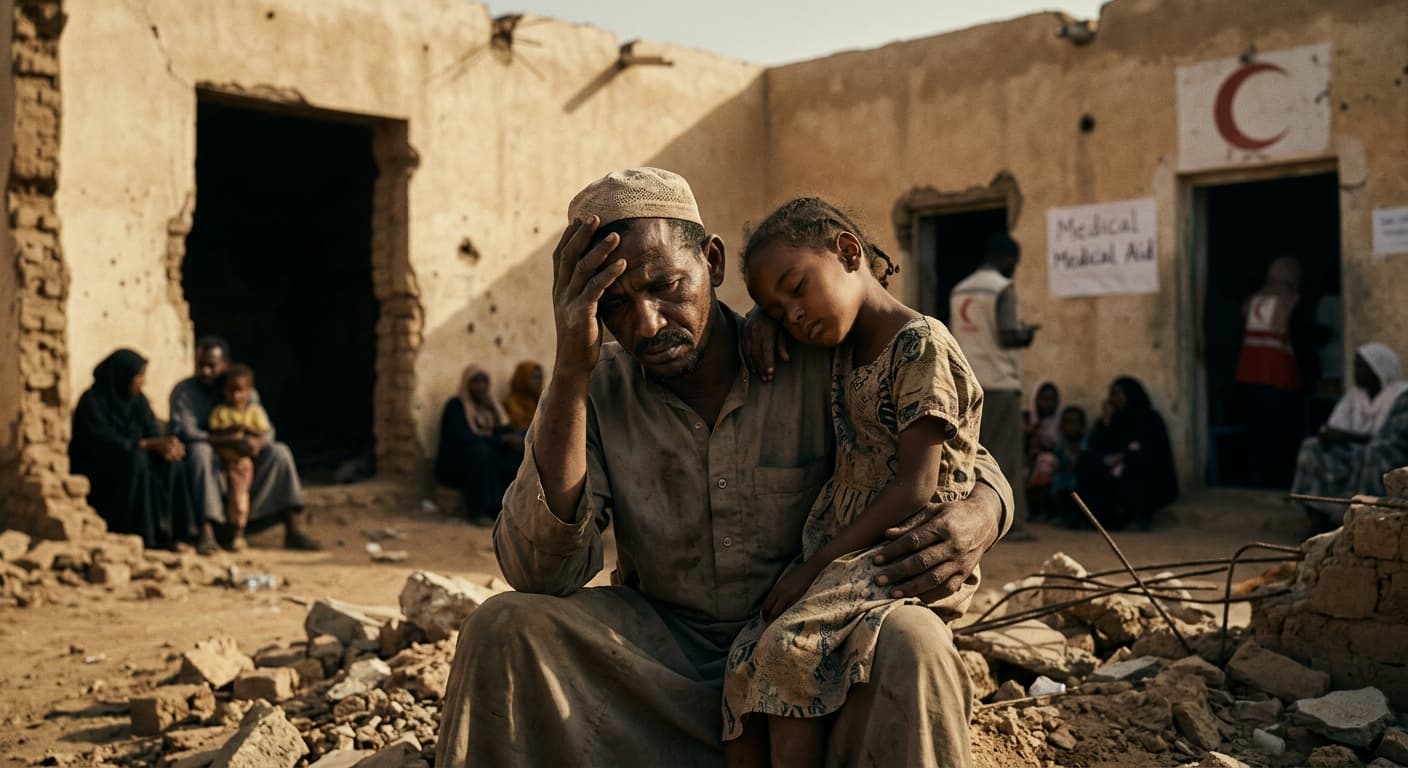
Sudan's Drone War Is a War on Children — 330 Casualties in Six Months
UNICEF says 330 children were killed or injured in Sudan in the first half of 2026, with drones causing 60% — as el-Obeid faces atrocity risk.
Sudan's war has quietly mutated into the world's first sustained drone conflict against civilians, and the load is falling almost entirely on children: at least 330 children were killed or injured in the first six months of 2026, with drones responsible for 60% of those casualties, according to UNICEF. That number is the tip of a larger fact — the war Sudan is fighting today is no longer the infantry war of April 2023, and the international response, still calibrated to that earlier conflict, is failing children in a way that has a concrete address and a concrete supplier list.
The thesis of this story: the drone-ification of Sudan's civil war has collapsed the traditional distinction between front line and civilian rear, and the humanitarian architecture — arms embargoes limited to Darfur, aid plans 28% funded, mediation venues stalled — is structurally incapable of responding. Until the UAE-China-Turkey-Iran supply chain is squeezed, UNICEF's casualty ledger will keep growing.
The numbers that reframe the war
The scale of the shift is easier to see in ratios than in absolute figures. In the first three months of 2026, UNICEF documented 160 children killed and 85 maimed — a 50% jump on the same quarter of 2025, with drones responsible for 78% of casualties. By 6 July, UN Children's Fund representative Sheldon Yett was warning that "for many children, there is no safe place left," describing a pattern in which children are killed "in their homes, on the roads, in markets and while attempting to access essential services such as education and healthcare."
Zoom out and the war-wide picture is starker. Since April 2023, more than 5,700 grave violations against children have been verified across Sudan, affecting at least 5,100 children — more than 4,300 killed or maimed — according to the Office of the Special Representative of the Secretary-General for Children and Armed Conflict. In el-Fasher alone, before its October 2025 fall to the Rapid Support Forces (RSF), the UN verified
1,500 grave violations, with more than 1,300 children killed or maimed — many, UNICEF said, by "explosive weapons and drones."
The technology change tracks the casualty change. Al Jazeera's analysis of Armed Conflict Location and Event Data Project data logged 1,003 drone strikes from the war's first day to 23 January 2026, and CSIS puts the running total at more than
3,000 air and drone strikes causing at least 9,000 deaths. In the first two months of 2026 alone, ACLED recorded 198 strikes by both sides; UN High Commissioner for Human Rights Volker Türk reported in June that
over 1,000 civilians had been killed in drone attacks in the first five months of the year.
The load-bearing question: who supplies the drones
Every child killed in a Kordofan market by a Norinco GB50A guided bomb is a data point in a supply chain that begins outside Sudan. This is where the "international humanitarian response" story stops being about aid convoys and starts being about export controls.
On the RSF side, Amnesty International's May 2025 investigation identified Chinese GB50A guided bombs and 155mm AH-4 howitzers — weapons the UAE is the only recorded importer of — in active use by the RSF, "almost certainly re-exported to Sudan by the UAE." The bombs are droppable from Wing Loong II and FH-95 drones, both operated exclusively by the RSF and provided, per Amnesty, by Abu Dhabi. The BBC has separately reported the RSF's use of
Chinese long-range CH-95 drones supplied by the UAE, which the UAE denies.
On the SAF side, the supply chain runs through Ankara, Tehran and Cairo. AEI's arms-tracing analysis found that Egypt first delivered Turkish-made Bayraktar TB2 drones to the Sudanese army in September 2023, later augmented with more advanced Akinci models. Iran has supplied Ababil-family systems, with the SAF's Zajil-3 first deployed in January 2024. Human Rights Watch geolocated and verified
two videos showing SAF-affiliated drones dropping mortars on unarmed civilians in Bahri, north of Khartoum, in strikes it said "may amount to war crimes."
The critical policy failure sits at the UN Security Council. The existing arms embargo covers Darfur only — an artefact of the pre-2023 conflict — while the drone war has migrated to Kordofan and Blue Nile. Human Rights Watch has flagged this mismatch explicitly, documenting the use of "newly acquired foreign-made equipment — including armed drones" outside Darfur and calling the geographically limited embargo inadequate. That structural gap is why Amnesty is running a global petition to extend the embargo to all of Sudan, and why the UAE — a Council partner of Washington's — has not paid a material price for what UN Panels of Experts and NGOs have repeatedly documented.
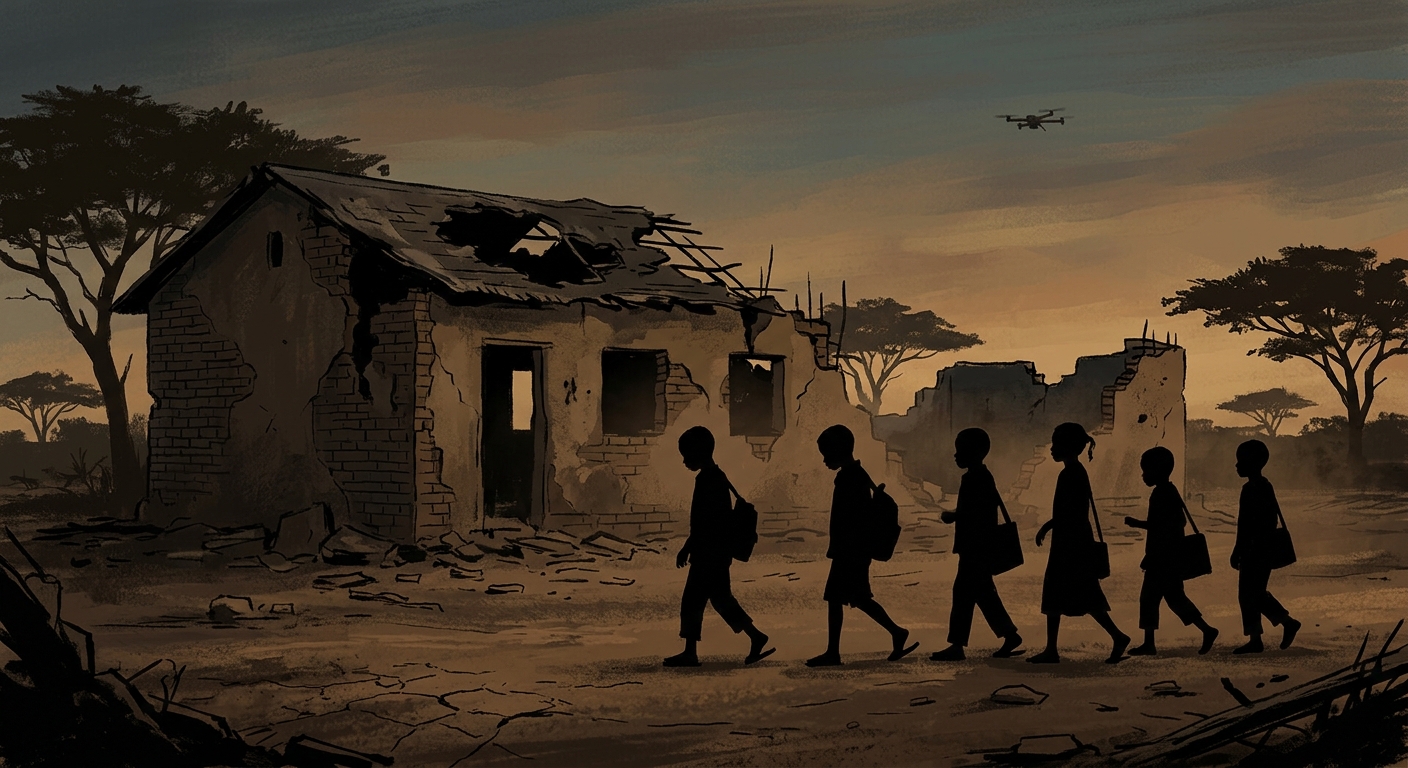
El-Obeid: the next el-Fasher, in real time
The immediate reason today's UNICEF statement lands with particular weight is that the war's centre of gravity has moved to a city of half a million people. El-Obeid, capital of North Kordofan, sits on the highway linking RSF-held Darfur to army-controlled eastern Sudan. It has been under siege-like conditions for 18 months. Between 6 and 28 June 2026, the UN human rights office logged 45 people killed and 41 injured in 15 drone attacks in el-Obeid and its surroundings.
On 3 July, Türk told the Human Rights Council in Geneva:
"The signs from el-Obeid are clear and unmistakable: Another human rights catastrophe is unfolding in Sudan, this time in the capital of the strategic state of North Kordofan. This is not a drill. It is a red alert that needs to land on the desks of heads of state and government around the world."
That warning is not rhetorical. On 6 July — the same day UNICEF released its H1 casualty count — the Human Rights Council adopted a resolution mandating an urgent inquiry into el-Obeid, following an emergency debate requested by
Germany, Ireland, the Netherlands, Norway and the United Kingdom warning that some 500,000 civilians face "large-scale atrocities." The US State Department, in a 22 June statement, said the RSF was "massing forces" around the city and that
mass atrocities could be imminent.
The historical parallel is not academic. El-Fasher's 18-month siege ended in October 2025 with what UN officials called an assault bearing "hallmarks of genocide"; 20 doctors, including four women, have not been heard from since the RSF overran the city. Türk's phrase was blunter: "We have seen this playbook before." The novel element in el-Obeid is that the pre-assault phase of the playbook — attritional drone strikes on power stations, fuel depots, water pumps and residential blocks — is doing the demographic and humanitarian damage that ground fighting used to require weeks to achieve.
Second-order effects: hunger, disease, a lost generation
The under-appreciated point is what drones do between strikes. Repeated attacks on markets, aid convoys and health infrastructure produce cascading failures that hit children hardest. UNICEF Sudan representative Sheldon Yett has described how "markets are being hit, schools are being hit, health centres are being hit, trucks carrying our urgently required, needed humanitarian supplies are being hit," despite convoys being well-marked and pre-notified to all parties.
The downstream numbers are catastrophic. UNICEF estimates 4.2 million children will suffer acute malnutrition in 2026, including more than 825,000 severe cases. Famine has been confirmed in el-Fasher and Kadugli. Over one-third of Sudan's schools are closed and another 11% are being used as shelters or occupied by warring parties; at least 8 million children are out of school. In West Kordofan, WHO reports that
conflict is fuelling a cholera outbreak — 838 suspected cases and 117 deaths as of 20 June — because drone strikes have disrupted the water and sanitation systems that would otherwise contain it.
The funding response has not kept up. The Sudan Humanitarian Needs and Response Plan 2026 requires $2.87 billion and is 28% funded as of late June, according to OCHA's Financial Tracking Service. UNICEF's own $62.9 million children-focused appeal was 16% funded in April. UN relief chief Tom Fletcher, marking the war's third anniversary in Berlin on 14 April 2026, called Sudan
"a test the world is failing" — noting that aid agencies aim to reach 20 million people this year but the response is "critically underfunded."
Who benefits, who loses
The winners of Sudan's drone war are legible. The UAE has entrenched RSF leader Mohamed Hamdan Dagalo as a client controlling gold-producing Darfur and now much of the Kordofan corridor, at a cost Abu Dhabi denies paying. Turkey's Baykar has secured a live-fire showcase for Akinci and TB2 systems across a country the size of western Europe. Iran has repositioned itself as a decisive military partner to Port Sudan, keeping alive the prospect of a Red Sea naval facility. China's state-owned Norinco and its drone manufacturers have seen their platforms operationally validated on both sides simultaneously — a commercial coup, however deniable.
The losers are equally specific. The UN arms-embargo architecture is exposed as geographically incoherent — Darfur-only in a war that has moved east. The African Union–IGAD mediation track has been sidelined by a US envoy-led process (Massad Boulos's Ramadan truce push collapsed in February). And a generation of Sudanese children — 5 million displaced, 8 million out of school, 4.2 million acutely malnourished — will carry the consequences into the 2040s regardless of when the war ends.
What to watch next
- UNHRC resolution follow-through (July–September 2026): whether the urgent inquiry mandated on 6 July secures access to el-Obeid, and whether the September session hears a substantive report or a stalled one.
- UN Security Council arms-embargo vote: any move to extend the Darfur-only embargo to all of Sudan would signal the UAE has finally paid a diplomatic price. Absence of such a move confirms it has not.
- El-Obeid siege trajectory: a full RSF assault would repeat el-Fasher within eight months. A negotiated de-escalation, however unlikely, would be the first meaningful humanitarian win of 2026.
- September 2026 Fact-Finding Mission report: the
Independent International Fact-Finding Mission for the Sudan is due to present its comprehensive report at HRC's 63rd session, providing the evidentiary base for any future accountability.
Diplomat View
The 330-children figure is not a humanitarian statistic; it is an indictment of an arms-control regime that has not caught up to the weapon killing them. Sudan's drone war will not be ended by another envoy, another Geneva session, or another appeal — it will be ended, if at all, when the marginal cost of supplying Wing Loongs, Akincis and Ababils rises above the strategic returns Abu Dhabi, Ankara and Tehran currently extract. That means secondary sanctions on re-exporters, an embargo extension beyond Darfur, and Council members willing to name the UAE. Absent those three moves before the September HRC session, expect the H2 2026 child-casualty count to exceed H1's, expect el-Obeid to look like el-Fasher by year-end, and expect the 2027 UNICEF appeal to arrive with a larger number, less funding and the same warning. The forecast revises only if the Security Council extends the embargo, or if a Gulf-brokered ceasefire trades RSF territorial gains for a genuine drone stand-down — neither of which is currently on any agenda in Geneva, New York or Washington.
The Bottom Line
Sudan's war is now a drone war fought over civilian infrastructure, and children are its primary casualty because the weapon of choice deliberately erases the distinction between front and rear. The 330 UNICEF documented in six months is the visible edge of a supply chain running through the UAE, Turkey, Iran and China — one the existing Darfur-only arms embargo was not built to touch. Until that changes, el-Obeid will follow el-Fasher, and the H2 numbers will make H1 look mild.
Read today's full | Related: Conflict coverage
Discover more

US Politics
White House Pressures Congress for Crypto Leg
The Trump administration's push for the CLARITY Act aims to reshape crypto regulation, impacting trillions in market value and the Trump family's wealth.

US Politics
SNAP Food Assistance Faces Legal Challenges
In 2026, SNAP faces stricter eligibility rules and mounting legal challenges, threatening food assistance for the millions of Americans who rely on the program.
US Politics
U.S. House Passes Alert Act for Aviation
The House passed the ALERT Act 396–10, replacing the ROTOR Act after Pentagon intervention, impacting aviation safety regulations.

Conflict & Security
Drone Warfare Killing Aid Workers at Unprec
Over 1,000 humanitarian workers killed in three years as cheap armed drones collapse legal protections. Gaza, Sudan, Ukraine, and DRC see deliberate targeting of aid convoys and hospitals with zero prosecutions.