Russia Challenges Norway's Svalbard Control
The Arctic's quietest flashpoint heats up amid treaty disputes.
Model Diplomat4 min readeurope
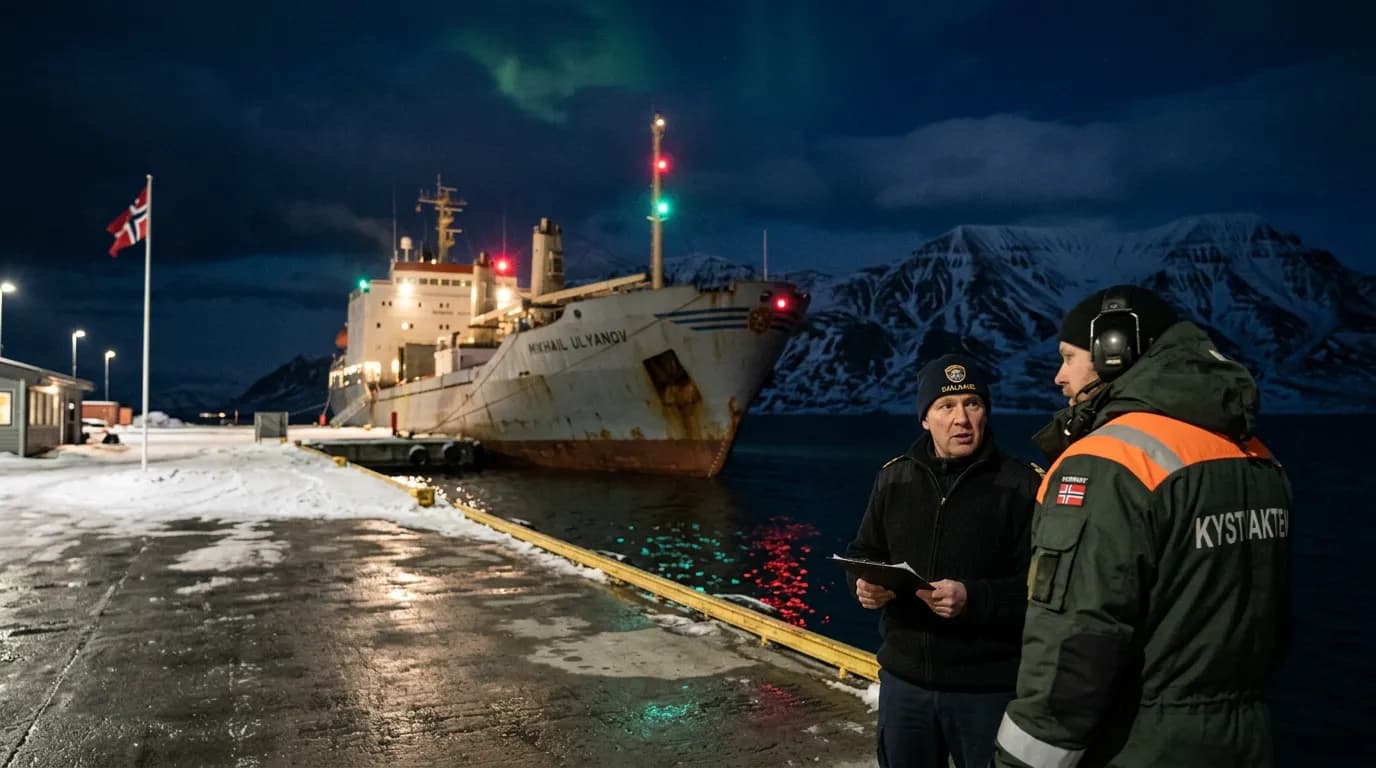
Russia Tests Norway's Grip on Svalbard — Why the Arctic's Quietest Flashpoint Is Heating Up
As melting ice reshapes the Arctic, Russia is leveraging century-old treaty ambiguities to challenge Norwegian sovereignty over Svalbard — and NATO has no clear answer on whether Article 5 applies.
The Spitsbergen Treaty turned 100 in August 2025, and Russia marked the occasion not with congratulations but with accusations. Moscow formally charged Norway with "deliberately abusing its sovereignty" over the Svalbard archipelago, claiming Oslo was introducing new restrictions "to the detriment of Russian interests" — a rhetorical escalation that intelligence officials and analysts now read as a deliberate pressure campaign SeaWaves Magazine.
The flashpoint is no longer hypothetical. In February 2024, Russian Deputy Prime Minister Yury Trutnev warned Moscow would fight for its "rights" in Svalbard, invoking "sovereignty" in language that echoed the justifications used for the war in Ukraine. He repeated the message in November 2024 Yahoo News / RFI. By March 2025, Vladimir Putin himself accused NATO of "wanting to militarise the Arctic" from a stage in Murmansk, while alleging that Norway was making military use of Svalbard in breach of the treaty
The Economist.
The Treaty Trap
Svalbard's vulnerability is structural. The 1920 Spitsbergen Treaty grants Norway "full and absolute sovereignty" — then immediately qualifies it. Nationals of nearly 40 signatory states, including Russia, China, and North Korea, enjoy equal rights of access, residence, and commercial activity without a visa. Article 9, a single sentence, prohibits "warlike purposes" and the construction of naval bases or fortifications — language broad enough to fuel permanent dispute over what Norway's coast guard patrols and naval frigate visits actually constitute CSIS.
This ambiguity is Moscow's instrument. Russia maintains two settlements — Barentsburg, a functioning company town run by state mining firm Arktikugol, and Pyramiden, a Soviet-era relic where the mine closed in the 1990s. The coal is economically irrelevant. The foothold is not. Since 2022, Russian military parades have become more overtly militaristic in Barentsburg, Soviet flags have been painted on infrastructure, and Norwegian officials now discourage tourists from visiting The Economist.
The geography compounds the problem. Svalbard sits directly astride the path Russia's Northern Fleet must traverse from its nuclear submarine base at Severomorsk on the Kola Peninsula to reach the North Atlantic. Six of Russia's twelve nuclear submarines, plus land-based missiles and nuclear-capable aircraft, are concentrated there. The Bear Gap — the 400-mile corridor between Svalbard's Bear Island and mainland Norway — is the fleet's only exit to open ocean Al Jazeera. In June 2026, Norwegian Defence Minister Tore Sandvik warned that Russian control of this chokepoint would give Moscow capacity to "deploy submarines and weapons" that could strike across northern Europe
Al Jazeera.
The Gray-Zone Campaign
The playbook extends beyond rhetoric. In 2022, Russian trawlers were tracked criss-crossing a subsea communications cable connecting mainland Norway to Svalbard; the cable was subsequently severed near the archipelago CSIS. Norway's Police Security Service (PST) warned in its most recent annual threat assessment that Svalbard and the Finnmark region are of "particular interest" to Russian intelligence and "highly exposed to intelligence and influence activities"
Ara.cat. GPS jamming affecting commercial aviation near Svalbard has been reported as recently as July 2025
The Economist.
China operates a research station in Ny-Ålesund, established in 2004, which Norwegian officials increasingly suspect serves dual-purpose intelligence functions BBC. Local mayor Terje Aunevik told the BBC it would be "naïve to suggest there was no intelligence-gathering going on in the different countries' research centres."
Norway has responded with calibrated assertiveness. King Harald V visited Svalbard in June 2025 — his first visit in 30 years. Oslo has restricted local voting rights to foreigners who have lived several years on mainland Norway, banned land sales to non-Norwegians, tightened supervision of foreign research projects, and increased coast guard patrols Yahoo News / RFI. The UK foreign secretary visited in May 2025 to signal allied solidarity.
What to Watch
The unresolved question is Article 5. Norway and the United States maintain that Svalbard, as undisputed Norwegian territory, is covered by NATO's collective defence clause. But the treaty's demilitarisation provision creates legal ambiguity no ally has formally resolved. Norway has hosted NATO parliamentary assembly delegations on the archipelago without ever securing a binding guarantee
Financial Times.
The Trump administration's claims on Greenland have compounded the uncertainty. If Washington rewrites the rules on Arctic sovereignty, the precedent weakens Norway's position — a dynamic Moscow is watching closely. The next decision point is whether Norway pushes NATO to clarify Article 5's applicability to Svalbard before the alliance's next summit, or continues its current strategy of enforcing sovereignty incrementally without forcing the question. Either way, the century-old treaty that made Svalbard a laboratory of Global Politics cooperation is now the very instrument being weaponised against it.
Discover more

US Politics
SNAP Food Assistance Faces Legal Challenges
In 2026, SNAP faces stricter eligibility rules and mounting legal challenges, threatening food assistance for the millions of Americans who rely on the program.
Global Politics
Trump's Conflicting Messages on Iran War
Trump's mixed messages on Iran reflect a strategy of audience management, benefiting Tehran amid a complex geopolitical landscape.

Global Politics
US Proposes Pakistan for Iran Talks Amid Ties
The US-Iran negotiations are now mediated by Pakistan, highlighting Islamabad's strategic role and the implications for regional diplomacy.

Conflict & Security
Drone Warfare Killing Aid Workers at Unprec
Over 1,000 humanitarian workers killed in three years as cheap armed drones collapse legal protections. Gaza, Sudan, Ukraine, and DRC see deliberate targeting of aid convoys and hospitals with zero prosecutions.