Sitharaman’s FX Warning Shows India’s External Squeeze
Crude, fertiliser and gold are now the pressure points on India’s external account, and New Delhi is trying to slow demand before the rupee and reserves absorb more damage.
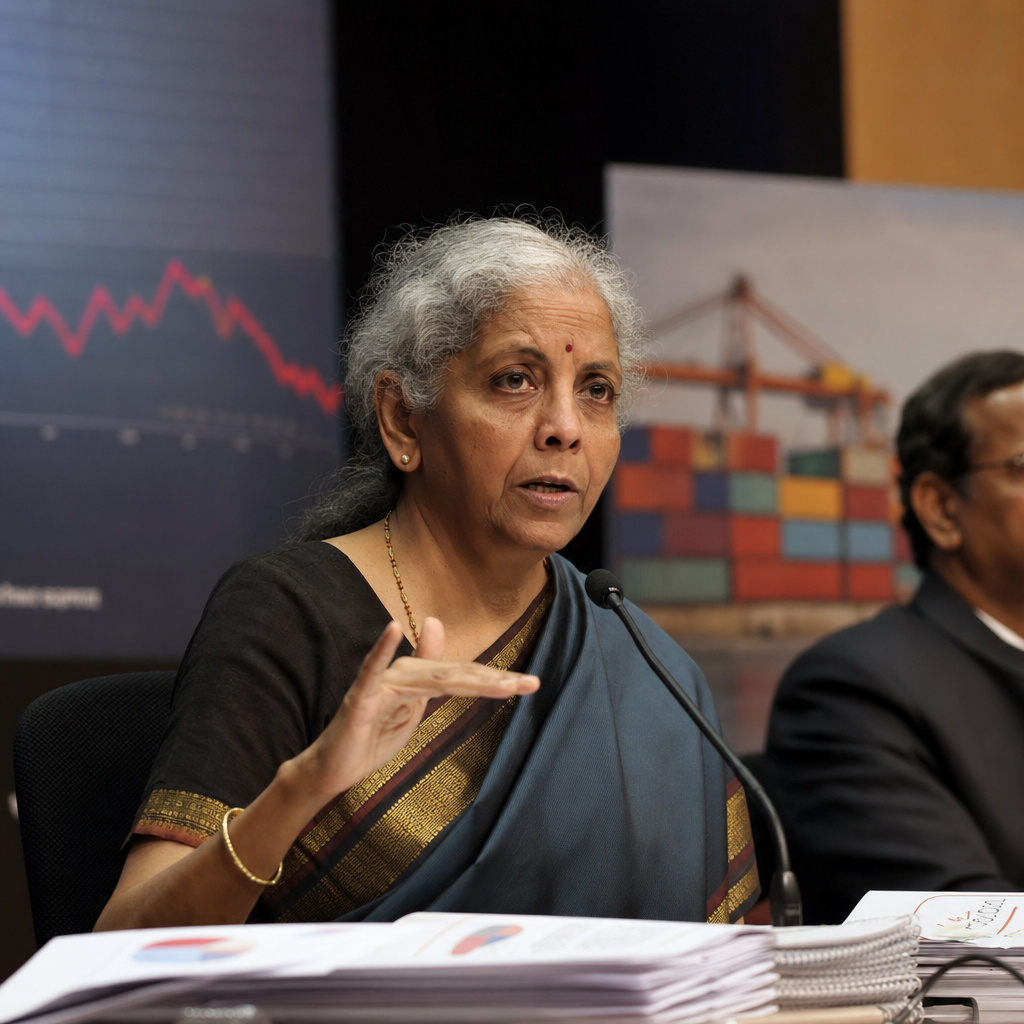
Finance Minister Nirmala Sitharaman is doing one thing very clearly: recasting a currency problem as a household spending problem. At a SIDBI event in Mumbai, she said high and volatile crude prices, an “unimaginable” rise in fertiliser prices and expensive gold were creating “some challenges on the external front,” and argued that the criticism of the economy was a “cynical narrative” and “fear-mongering” ( The Indian Express). Her message was that India’s domestic economy remains resilient, but the foreign-exchange squeeze is real.
The leverage is outside India
The government does not control global crude or gold prices, and that is the core constraint. What it can do is reduce demand for imports, protect reserves and try to slow the rupee’s slide. The article notes that the government has already raised import duty on gold, silver and platinum, restricted some duty-free gold imports, and lifted retail fuel prices several times (The Indian Express). That tells you where policy is headed: tighter import management, not a broad admission of crisis.
The scale of the pressure is what makes the finance minister’s tone notable. The rupee had fallen nearly 5% since late February and was quoted at 95.23 to the dollar on Monday, while reserves were down about $40 billion from pre-war levels, according to the same report (The Indian Express). That is why Modi’s earlier appeal to conserve foreign exchange — by avoiding non-essential foreign travel, limiting gold purchases and favouring local goods — was not just rhetoric. It was an effort to compress imports before the market does it for him.
The losers are obvious: jewellery buyers, fuel consumers, fertiliser users and import-dependent firms. The immediate beneficiaries are the finance ministry and the RBI, which gain time if households and firms accept higher prices and lower consumption.
Markets are already pricing in more pain
This is not a purely domestic story. Reuters reported in April that foreign investors had sold about $38 billion of Indian shares since the start of 2025, with outflows worsening as oil prices climbed and the rupee weakened ( CNA/Reuters). The same report said RBI measures to steady the rupee had made hedging more expensive for foreign bond investors, adding another drag on capital inflows (CNA/Reuters). In other words, the external account is being squeezed from both ends: import costs are up, and foreign money is more cautious.
That is why Sitharaman’s comments matter. They are a signal that policy is now being written around external fragility, not just growth. If crude stays elevated and gold demand remains strong, the government will keep leaning on import compression, fuel-price pass-through and moral suasion on consumers rather than risk a sharper hit to reserves.
What to watch next
The next decision point is the RBI’s June 3-5 policy meeting. If the rupee stays weak and oil stays firm, the central bank will face a harder choice between supporting growth and defending currency stability. Watch for any further gold-import curbs, fuel-price adjustments or sharper messaging on foreign-exchange discipline in the days before that meeting.