Singapore's 100x100 Bets $100M on India
A contrarian move in climate-tech funding
Model Diplomat3 min readAsia

Why Singapore's 100x100 Is Betting $100M on India's Climate Founders — Even as the Sector Cools
Singapore-based climate venture builder 100x100 is launching its second fund, targeting India's high-emissions economy and deep founder pool — a contrarian bet as global climate-tech funding retreats.
Singapore-based climate venture builder 100x100 is scaling its bet on India with a new $100 million fund — even as the broader climate-tech investment cycle shows signs of fatigue. The firm, which rebranded from Wavemaker Impact in late 2024, plans to co-found 50 new companies across India and Southeast Asia, targeting sectors where India's emissions profile doubles as a market opportunity: agriculture, energy, industrial supply chains, and materials. Mint
The move is deliberately contrarian. Climate-tech funding globally has entered a cooling phase, with investors pulling back from capital-intensive, hardware-heavy decarbonisation plays that lack clear near-term paths to profitability. 100x100 partner Subhadeep Sanyal told Mint that India's fundamentals cut through the noise: "We're seeing a lot of people who want to solve problems. Conversations are coming back around food security and climate change." The firm's calculus rests on three Indian advantages: the country's massive emissions footprint, a deep pool of experienced founders who have exited previous ventures, and better access to late-stage capital than many Southeast Asian markets.
The model is the differentiator. Unlike traditional venture capital, 100x100 doesn't invest in existing startups — it sources seasoned operators and co-founds companies from scratch, taking larger equity stakes and embedding operational playbooks from day one. Every company is designed to hit a dual target: $100 million in annual revenue and 100 million metric tonnes of carbon dioxide abatement. e27 Founding partner Marie Cheong framed it bluntly: "We believe that solving the world's most pressing emissions challenges also represents a significant economic opportunity. With Fund II, we are doubling down on a demonstrated strategy."
DealStreetAsia
The track record — and the early casualties
Fund I gives the strategy real-world ballast. That $60 million vehicle, which hit its hard cap in 2023, attracted institutional backing from the US International Development Finance Corporation, British International Investment, and the Singapore Economic Development Board, along with Triple Jump and Japan's Kajima Corporation. VCCircle The first fund has co-founded 27 companies across eight countries, with a portfolio survival rate the firm claims is nearly double the median venture capital average and capital efficiency roughly 1.5 times higher than typical VC-backed startups.
But the India entry has already drawn blood. Of four investments made since the second half of 2024, Elevate Foods — a farm-gate processing startup — has already failed, a reminder that the venture-building model does not immunise against market risk. The surviving India portfolio companies include Biora (biomass fuel) and Ecomet Logistics (rail-based freight), with the firm targeting 40-50 startups across the broader India-Southeast Asia corridor from the new fund.
The numbers signal something else: capital efficiency is being priced in at the design stage. 100x100's firms operate on leaner cost structures than conventional VC-backed peers, and the firm's in-house operational support — sector playbooks, embedded supply-chain partnerships, and a disciplined "white space" identification process that screens over 1,000 experienced founders annually — is engineered to compress the valley of death that kills most climate hardware startups.
What to watch next
The firm has not disclosed whether it has secured commitments for Fund II or set a timeline for its final close. DealStreetAsia The real test will be whether 100x100 can convert its early-stage venture-building playbook into a repeatable engine at scale — producing not just companies that survive, but companies that genuinely hit the $100 million revenue and 100 million tonne abatement targets across 50 ventures simultaneously.
For India, the 100x100 bet is a data point in a larger realignment: as global climate finance retreats from speculative cleantech toward proven commercial models, the country's emissions-intensive agriculture, energy, and logistics sectors are being reframed not as liabilities but as the world's largest addressable market for decarbonisation. Whether that thesis holds will be measured in the survival rate of the next 50 companies — not the press releases announcing them.
Discover more
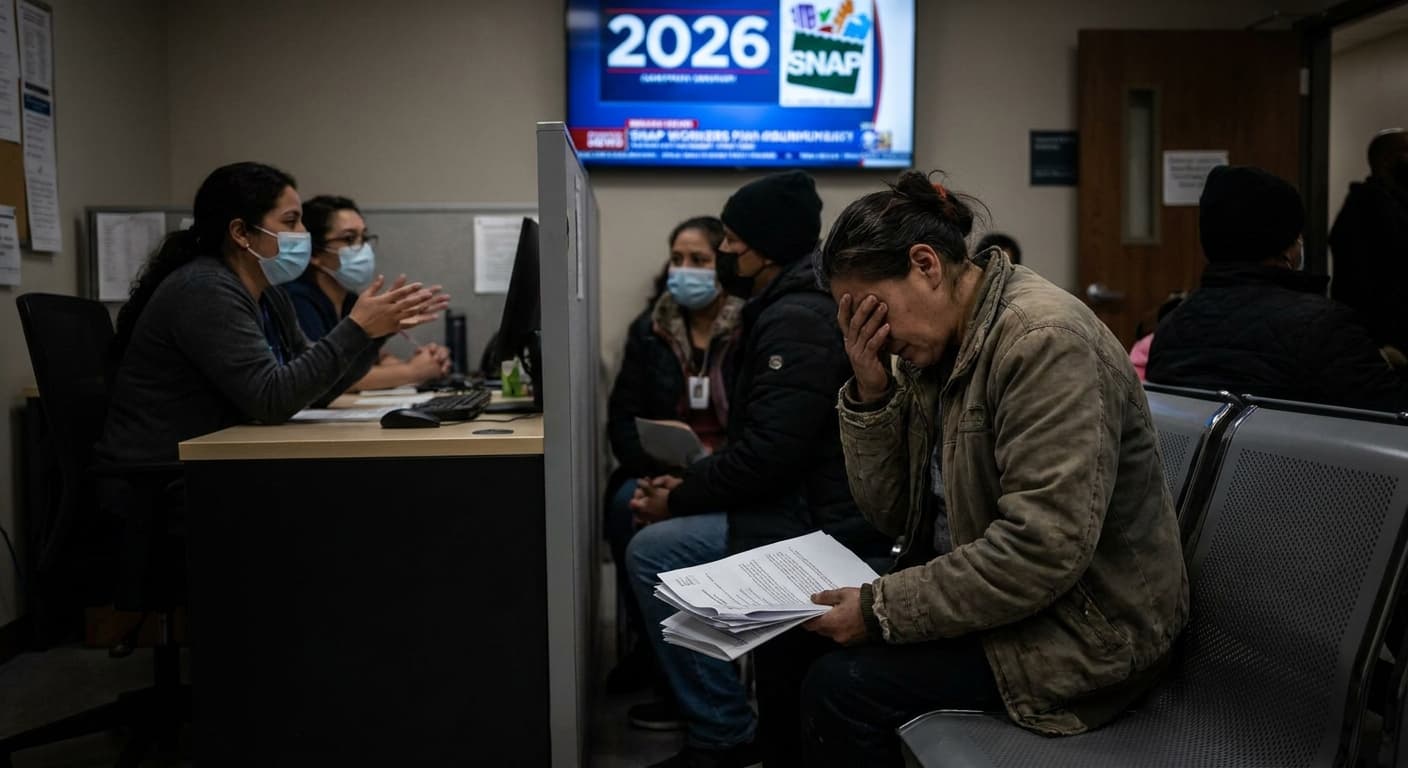
US Politics
SNAP Food Assistance Faces Legal Challenges
In 2026, SNAP faces stricter eligibility rules and mounting legal challenges, threatening food assistance for the millions of Americans who rely on the program.
Global Politics
Trump's Conflicting Messages on Iran War
Trump's mixed messages on Iran reflect a strategy of audience management, benefiting Tehran amid a complex geopolitical landscape.
US Politics
Congress Targets AI Chatbot Access for Terror
The House passed the Generative AI Terrorism Risk Assessment Act, focusing on AI's role in terrorism and potential surveillance implications.

Conflict & Security
Drone Warfare Killing Aid Workers at Unprec
Over 1,000 humanitarian workers killed in three years as cheap armed drones collapse legal protections. Gaza, Sudan, Ukraine, and DRC see deliberate targeting of aid convoys and hospitals with zero prosecutions.