Settler Violence Fuels West Bank Health Crisi
Escalating violence and checkpoints threaten healthcare access.
Model Diplomat8 min readMiddle East
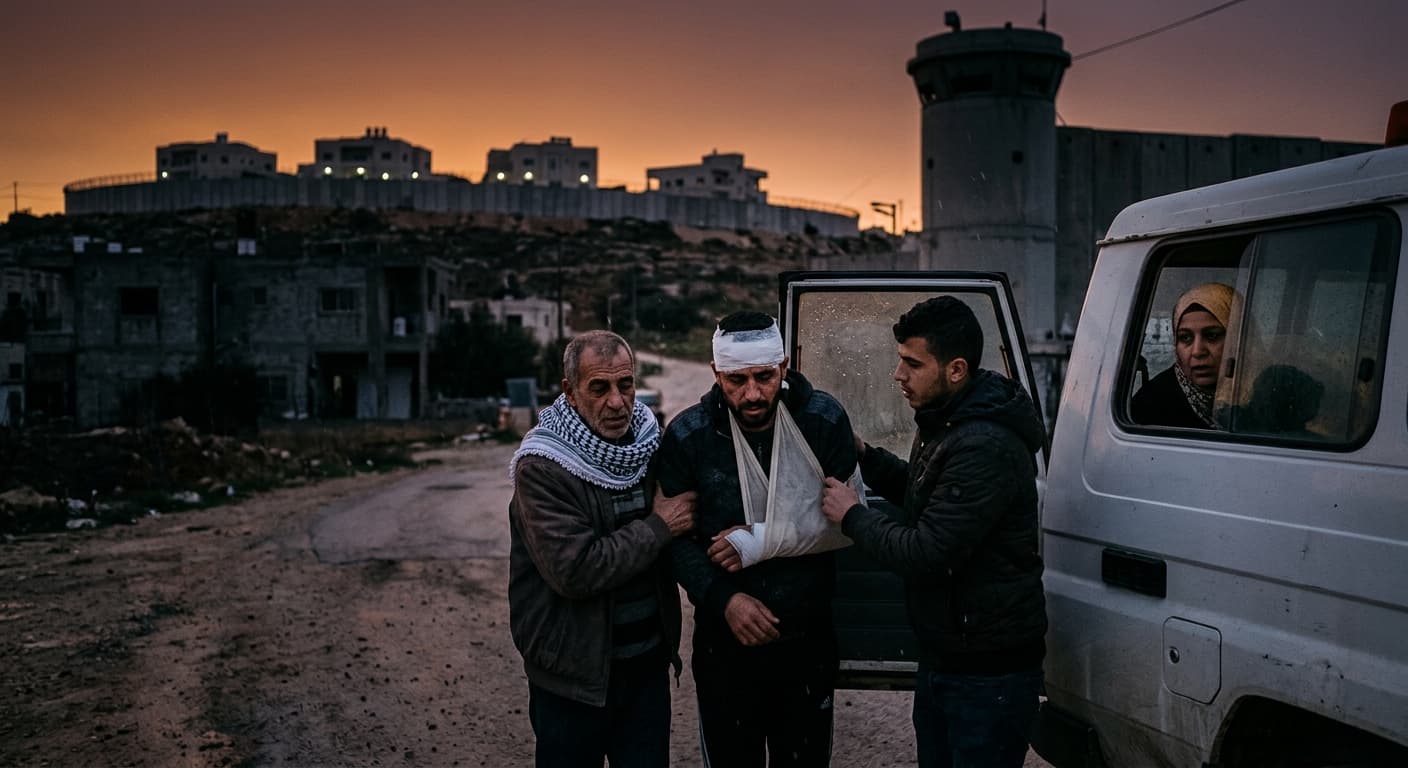
oPt: Held at gunpoint — settler violence deepens West Bank health crisis
Israeli state-backed settler violence and checkpoint obstruction pushed West Bank healthcare into system failure in 2025, with WHO verifying 233 attacks — 84% involving blocked access.
A four-month-old Palestinian boy, Ahmad Marouf Zeid, died on July 5, 2026 after Israeli soldiers held his ambulance at the Deir Ammar checkpoint west of Ramallah for more than an hour, firing tear gas at families who tried to force a passage, according to Al Jazeera, citing the governor of Ramallah and el-Bireh. His death is not an anomaly but the arithmetic outcome of a system: in 2025 the World Health Organization verified 233 attacks on healthcare in the West Bank, and 84% of them — 196 incidents — involved obstructed access rather than shots fired, per the
OCHA Movement and Access factsheet of April 2026. The thesis of this story is that settler violence in the West Bank is now functionally a healthcare weapon — enabled by an Israeli state architecture of checkpoints, permit denials and IDF acquiescence — and that a full year after the International Court of Justice declared the occupation unlawful, third states have narrowed the accountability gap to two sanctioned ministers while a 60% surge in movement obstacles quietly runs in the other direction.
The 2025–2026 numbers show system failure, not incidents
The West Bank's health system did not crack under a single event; it was ground down by daily obstruction. The WHO's 2025 oPt response report documents 928 attacks on health care, personnel and transport in 2025 alone, with 269 Palestinians killed and 4,081 injured across the year. Only 63% of primary healthcare centres were partially functional, "many operating just one day per week compared to six days prior to 2023." Hospitals ran below capacity because of Palestinian Authority salary crises and stockouts.
The obstruction pattern is the point. WHO's finding that 84% of attacks on care involved obstructed access — checkpoint delays, searches, harassment of medical staff, and ambulance restrictions — reframes settler violence as a service-denial system rather than a series of ambushes. That is corroborated on the ground by testimony collected by the BBC after the April 2026 killing of Alaa Khalid Subeih in Tayasir: a Palestine Red Crescent Society ambulance crew told the broadcaster they were denied village access by Israeli soldiers who "claimed no-one was injured and confiscated their phones and ID cards for seven hours until the early hours of Thursday morning."
The permit regime turns the obstruction into a bureaucracy. OCHA reports that 36% of 87,427 patient permit applications for East Jerusalem and Israeli hospitals were denied or left pending in 2025, up from 18% in 2022 — doubling in three years. In the same period, OCHA's December 2025 field survey counted 925 physical movement obstacles across the West Bank, 43% above the 20-year average and the highest since monitoring began, per the 23 April 2026 OCHA sitrep.
Settlers as state agents, not "rogue actors"
The legal register shifted in June 2026. Amnesty International concluded in a report published June 10 that "the [displacement] campaign is not the product of 'rogue' settlers, settlers' organizations or 'extremist' government ministers … settler violence is not an aberration but an integral part of an organized state policy." Amnesty counted 5,910 Palestinians forced from 117 communities between January 2023 and December 2025, with 45 emptied entirely.
The same conclusion runs through the UN Human Rights Council's report on Israeli settlements, A/HRC/61/70, which concludes:
"The systematic failure by Israel to prevent or punish settler attacks was a key driver of the worsening coercive environment of violence, discrimination and oppression. The failure of Israeli security forces to act in relation to, and the apparent involvement of its officials in, settler violence amounts to a violation of the obligations of Israel as an occupying Power to protect the inhabitants of the occupied territory from all acts and threats of violence and to ensure public order and safety."
Two of Israel's own former security chiefs have said the quiet part out loud. In a letter published in Israeli media in April 2026 and reported by the BBC, former heads of Shin Bet, Mossad and the IDF told Prime Minister Benjamin Netanyahu that "government-sponsored Jewish terrorism" was "running wild" in the West Bank. Days later, IDF Chief of Staff Lt Gen Eyal Zamir called settler violence "morally and ethically unacceptable." The context: Finance Minister Bezalel Smotrich — himself a settler and holder of civilian authority over West Bank governance transferred from the military — has approved or retroactively authorised 69 new settlements, according to
BBC reporting, and told a settlement inauguration his aim is to "completely destroy the idea of a Palestinian state." Al Jazeera's
June 11 investigation documented how outposts founded by figures such as Neria Ben Pazi have now expanded from Area C into privately titled land in Areas A and B — precisely where residents had believed Palestinian civil authority and land deeds offered protection.
The healthcare implication is direct. When the March 22, 2026 mass attacks on villages south of Nablus rolled through Jalud, Qaryut and Burqa, Al Jazeera reported settlers "attempted to burn a medical clinic in Burqa — only narrowly stopped by Palestinian residents who intervened," while Route 60 was closed to all Palestinian traffic except "ambulances with prior coordination." Prior coordination, in practice, is the checkpoint discretion that killed Ahmad Marouf Zeid.
The legal architecture is in place — the enforcement is not
The doctrinal ground shifted a year before the current escalation. On July 19, 2024, in Legal Consequences Arising from the Policies and Practices of Israel in the Occupied Palestinian Territory, the International Court of Justice found Israel's continued presence in the occupied territories unlawful in its entirety, based on sustained violations of the right to self-determination and the prohibition on the acquisition of territory by force. The advisory opinion identified obligations on all states not to render aid or assistance to the maintenance of the unlawful situation.
Layered on top: the January 2026 OHCHR thematic report, summarised in the OCHA access factsheet, documents "two distinct bodies of law for Palestinians and Israeli settlers" and concludes that the resulting racial discrimination raises concerns under Article 3 of the Convention on the Elimination of All Forms of Racial Discrimination, which prohibits racial segregation and apartheid. Under Article 56 of the Fourth Geneva Convention, the occupying power is obliged to ensure and maintain medical services in occupied territory — the operational baseline that the WHO's 2025 figures show is unmet.
Enforcement, however, has been narrow. On June 10, 2025, the UK Foreign, Commonwealth and Development Office added Smotrich and National Security Minister Itamar Ben-Gvir to the UK Sanctions List under the Global Human Rights Sanctions Regulations 2020, citing "acts of aggression and violence against Palestinian individuals in the West Bank." A
joint statement by the foreign ministers of the UK, Canada, Australia, Norway and New Zealand accompanied the listing. That is the ceiling of Western enforcement to date against the officials Amnesty and OHCHR identify as instruments of a state policy.
Who benefits, who loses — and what the data forecloses
The direct beneficiaries of the current architecture are two categories the Amnesty and Al Jazeera reporting identifies precisely: the settlement expansion project overseen by Smotrich's civilian administration, which converts obstruction into depopulation into annexation; and armed outposts operating along Areas B and A boundaries, where the closure of medical access accelerates the "coercive environment" that the OHCHR report says drives displacement. The Israeli government's approval of 34 new settlements in a single April 2026 cabinet session, as reported by Al Jazeera, was the largest ever in one sitting.
The losers are documented in the ledger. Since January 2023, at least 4,765 Palestinians from 97 locations have been displaced by settler violence, per UN figures cited by the BBC. In the first three months of 2026 alone, 1,697 people had been displaced by settler violence and access restrictions — surpassing all of 2025 — with 38 communities emptied since 2023, according to the
27 March 2026 OCHA sitrep. The
10 April 2026 OCHA sitrep recorded March as the worst month for Palestinian injuries by settlers in 20 years.
The healthcare layer is quieter but structural. WHO reported that in June 2025, of 476 Palestinian government-run health facilities assessed, only 345 were fully functional, and four donor-funded clinics in Masafer Yatta were slated for demolition inside an Israeli "firing zone", according to WHO's Situation Report 61. Around 10,000 people in about ten Area C communities have no primary healthcare access at all. Since October 2023, WHO has recorded 863 attacks on health care in the West Bank affecting 203 institutions and 589 medical transports, per
Al Jazeera reporting from July 2025.
Meanwhile the humanitarian sector itself is contracting. In January 2026, Médecins Sans Frontières reversed a decision to hand Palestinian staff details to Israeli authorities after failing to obtain safety guarantees — a dispute that has slowed international staff deployment across the West Bank and Gaza. The exit ramp for humanitarian actors is narrowing at the same rate the caseload is expanding.
What to watch
- UK Parliament, autumn 2026 review of sanctions on Smotrich and Ben-Gvir. The FCDO's
Minister for the Middle East statement committed to ongoing review of the June 2025 designations. Additional listings — targeting settler organisations, not only individuals — would signal whether the "state policy" framing from Amnesty and OHCHR translates into enforcement.
- ICJ contentious cases and UN General Assembly follow-up to the 19 July 2024 advisory opinion. The one-year mark passed without a coordinated implementation mechanism; watch the September 2026 UNGA session for any binding measures citing the advisory opinion's obligations on third states.
- Israeli Supreme Court petitions on Masafer Yatta clinic demolitions. The Court's July 2024 and February 2025 rulings ordering police and military to allow return of displaced residents were, per Amnesty, ignored. Whether the same court intervenes on the four donor-funded clinics inside the declared "firing zone" is a near-term test of whether Israeli judicial review still functions in Area C.
- OCHA's July 2026 monthly snapshot. The June figure of "over 950" documented settler attacks by early June 2026 means the year is already tracking above 2025's record 1,828. A July print above 250 attacks would confirm the acceleration is now structural, not seasonal.
The Bottom Line
Settler violence in the West Bank is no longer usefully described as violence between civilians; the WHO, OHCHR and Amnesty data converge on the same finding — that healthcare denial has become an instrument of state-backed displacement, and that in 2025 the primary weapon was not the rifle but the checkpoint. The July 19, 2024 ICJ advisory opinion, the June 10, 2025 UK-led sanctions, and the June 2026 Amnesty report have moved the legal ceiling; they have not moved the ground. Until the third states that acknowledge the framework are willing to sanction the architecture — the permit regime, the demolition orders, the closure of Area C to medical NGOs — the arithmetic that killed Ahmad Marouf Zeid at Deir Ammar will continue to produce the same result at the next checkpoint.
Discover more
India
Women's Reservation Bill 2026: A Political Sh
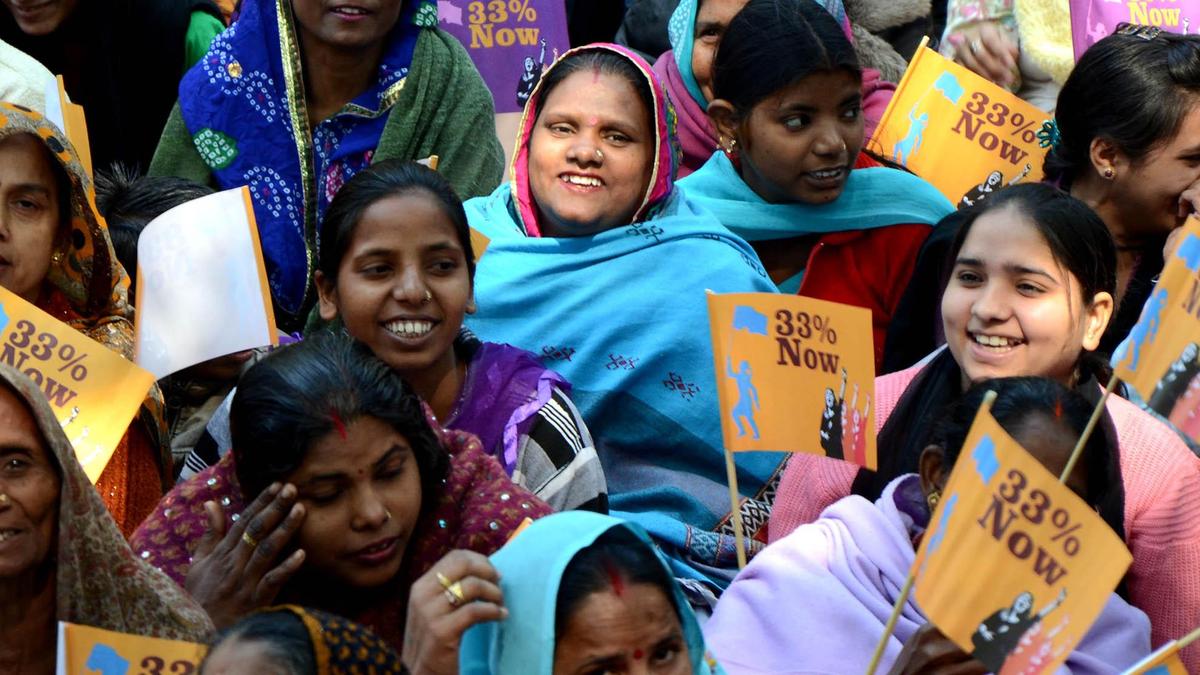
India's Lok Sabha rejected the Women's Reservation Bill, exposing a political maneuver to redraw electoral maps favoring the north over the south.

US Politics
US Launches $166B Tariff Refund Portal
The US is launching a $166 billion tariff refund portal to aid importers hit by Trump-era tariffs, with major implications for trade and supply costs.
Global Politics
Xi Jinping Calls China-Russia Ties 'Precious'
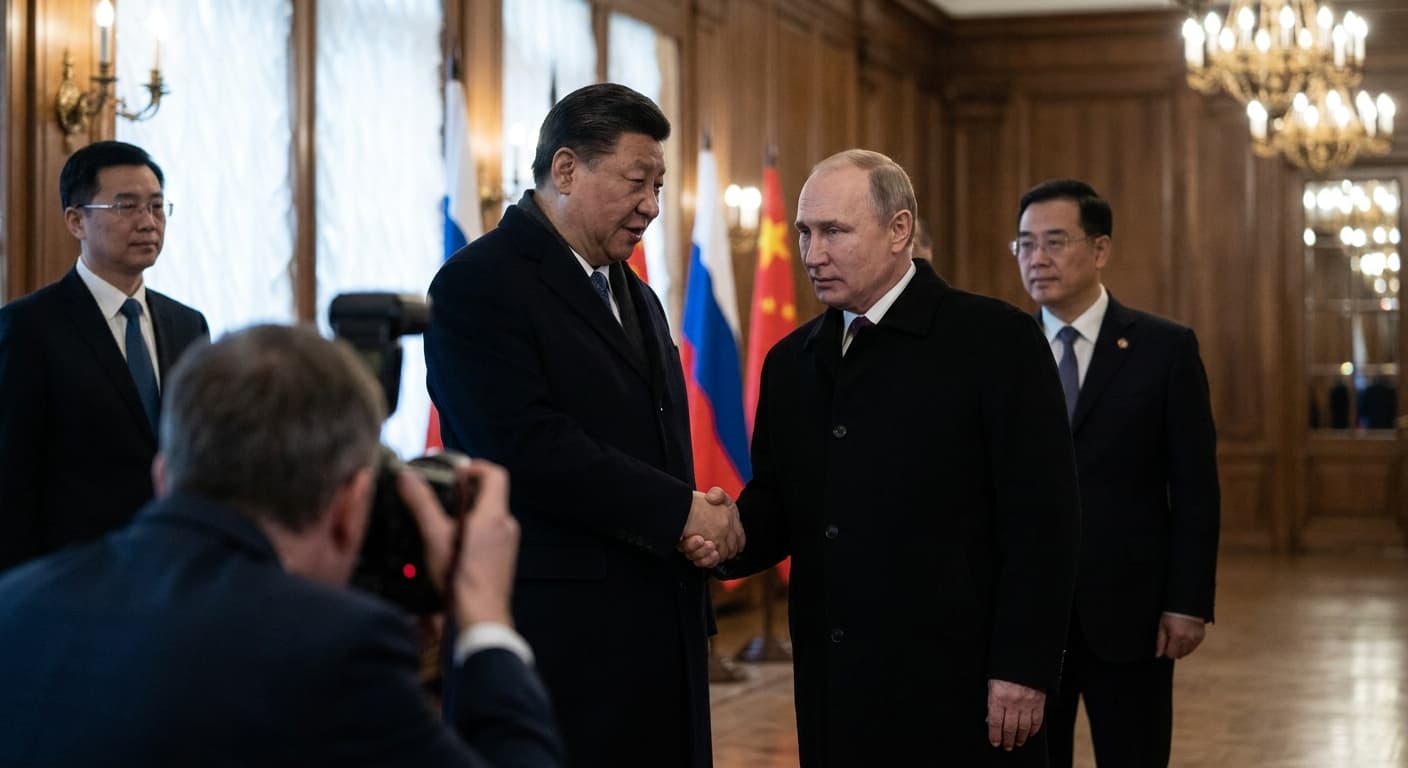
Xi Jinping's description of China-Russia ties as 'precious' reflects a strategic imbalance, with Beijing dictating terms in the partnership.

Conflict & Security
Drone Warfare Killing Aid Workers at Unprec
Over 1,000 humanitarian workers killed in three years as cheap armed drones collapse legal protections. Gaza, Sudan, Ukraine, and DRC see deliberate targeting of aid convoys and hospitals with zero prosecutions.