Seoul Ballot Recount: Ruling Party Bends
Democratic Party agrees to public ballot recount
Model Diplomat7 min readAsia
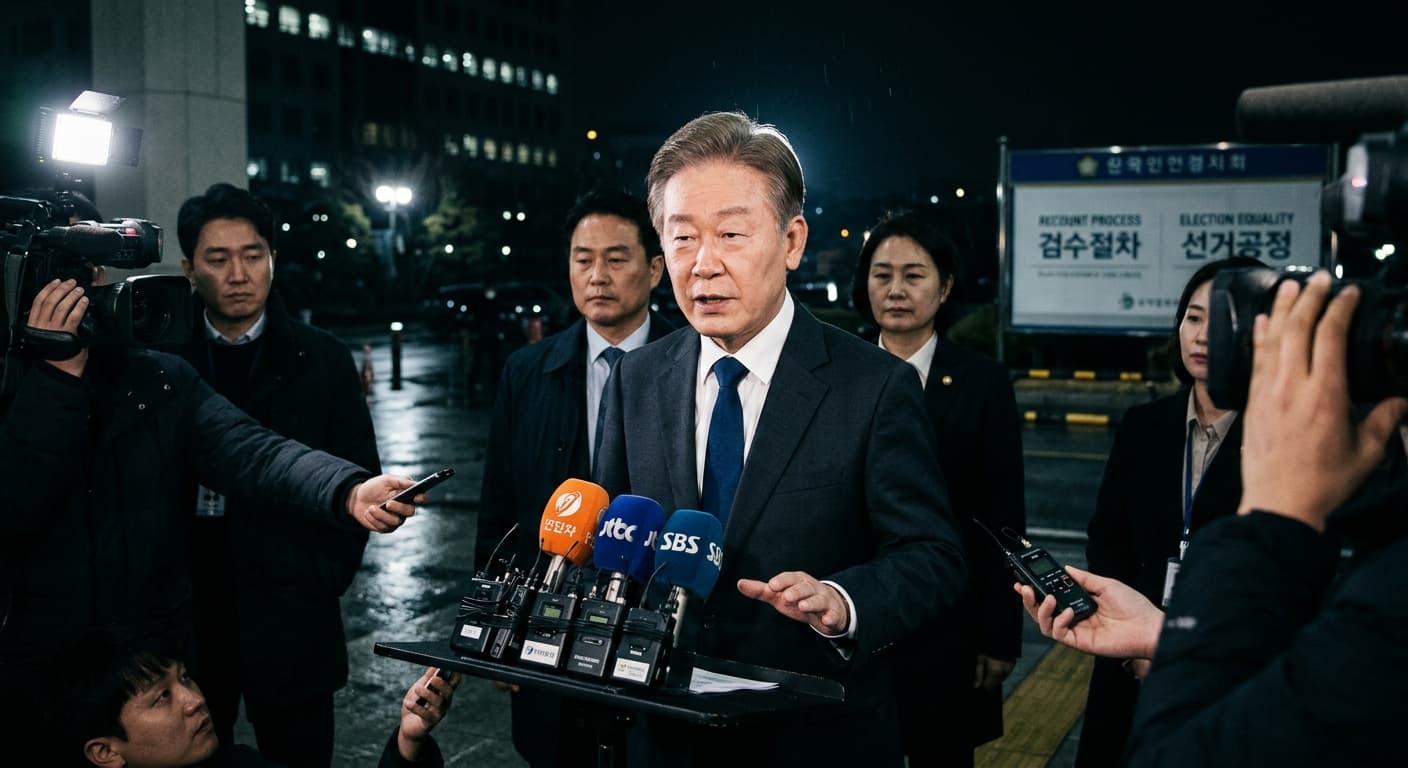
Seoul Ballot Recount: Ruling Party Bends to Defuse June 3 Vote Crisis
South Korea's Democratic Party said on July 7, 2026 it will "actively review" a public recount of 2.47 million ballots from the June 3 local elections stored in Seoul's Olympic Park — a shift meant to protect a wider result it cannot afford to see delegitimised.
South Korea's ruling Democratic Party on July 7, 2026 dropped its resistance to a public recount of 2.47 million paper ballots from the June 3 local elections, agreeing to "actively review" a verification plan proposed by the National Election Commission. The decision — announced by acting DP leader Han Byung-do at a party meeting and reported by UPI — is less a concession on Seoul's mayoral race, which conservative Oh Se-hoon won by roughly 53,000 votes, than a calculated move to shut down a fraud narrative now consuming a sweeping ruling-party win nationwide. The DP took 12 of 16 metropolitan and gubernatorial races and 9 of 14 by-elections; a recount that cannot mathematically flip Seoul is the price of stabilising all of it.
What the ruling party just accepted
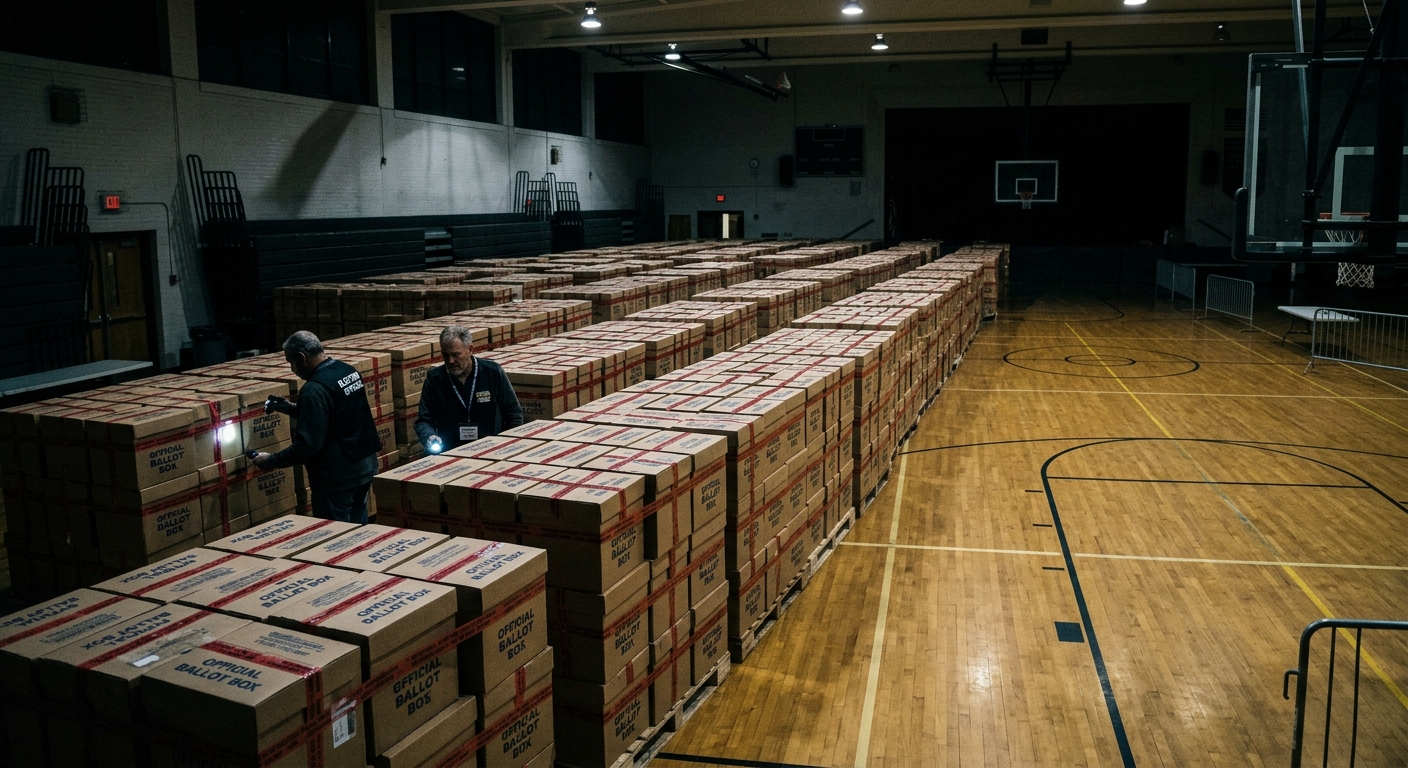
Han's language was narrow and deliberate. Under the plan filed by the National Election Commission with the National Assembly's Special Committee on the June 3 Ballot Shortage, roughly 440 personnel would verify the 2.47 million ballots — covering the Seoul mayoral vote, Songpa District Council races and Jamsil 7-dong polling stations — inside the Olympic Park Handball Gymnasium where they have sat for over a month. The process is budgeted at about 50 million won (roughly $36,000) and expected to run nine hours, according to a filing summarised by The Herald Business. Observers from every parliamentary party, media and police would attend; sealed vehicles would then move the ballots to the commission's Gwacheon headquarters, with tamper-evident seals signed by transfer monitors and continuous CCTV.
The commission's own statement to the committee, quoted by Aju Press, framed the move as damage control rather than concession:
"The prolonged storage of ballots in a temporary location has raised public concern and suspicion, and the gymnasium should be restored to its original use."
Committee chair Rep. Yoon Sang-hyun of the opposition People Power Party has pressed for a bipartisan agreement before any transfer; the ruling party's opening was the missing signature. The parallel UPI account of the July 2 on-site inspection makes clear the gymnasium has been physically blockaded by protesters demanding a re-vote — a standoff that has boxed in both parties.
Why the DP is folding now
The June 3 result was a paradox the DP has struggled to defend. The party won 12 of 16 major races and expanded its local base sharply, according to a tally by BBC News Korean. But it lost the one contest that voters and analysts read as a referendum on the Lee Jae-myung government: Seoul. Stanford's Gi-Wook Shin, quoted in an
AFP note carried by APARC, argued voters "were reluctant to grant the party unchecked power." The Carnegie Endowment's Sang-hun Lee, in a June 2026
Year in Power analysis, reported that Lee's approval dropped below 50 percent for the first time since taking office in June 2025 — driven by the "ongoing fallout from the ballot shortage crisis."
That fallout is the leverage. The commission has confirmed that 91 polling stations nationwide ran short of ballots and 26 temporarily suspended voting, with 14 of those in Seoul concentrated in Songpa. The opposition PPP has folded this into a broader charge — floor leader Song Eon-seok labelled it "a serious problem of a rigged election that is beyond simple mismanagement," per BBC News Korean. Prime Minister Kim Min-seok, writing on social media on June 5, called the shortage "a grave challenge to K-democracy" and endorsed criminal, parliamentary and special-counsel probes.
The DP's calculation is arithmetic. Oh Se-hoon beat Democratic candidate Cheong Won-oh by roughly 53,000 votes out of some 5.2 million cast — a margin well beyond the reach of any hand recount, as final NEC counts reported by BBC News Korean confirm. A public verification cannot cost the party anything it has not already lost in Seoul. What it can do is halt the delegitimisation of the other 11 metropolitan wins, several of them in traditional PPP strongholds. The recount is a firewall, not a retreat.
The legal ground under all of it
The commission has consistently maintained that the shortage does not meet the statutory bar for a re-vote. In its June 4 press release, cited by BBC News Korean, the NEC held that the incident "does not correspond to grounds for postponement or re-election under the Public Official Election Act" — a reference to Article 195 of the
Public Official Election Act, which limits re-votes to force-majeure events and the loss or destruction of ballot boxes. Vote counting under Article 155, the commission argued, was not obviously illegal even where lines outlasted the 6 p.m. close.
That reading is now under a formal parliamentary investigation. On June 18, the National Assembly approved a 45-day probe by a vote of 250 to 1 — near-unanimous authority that runs through August 1, 2026 and can be extended. The joint prosecutor-police task force has already questioned nine local polling officials and executed search-and-seizure orders on the central commission and five Seoul district offices, BBC News Korean reports. Central to the criminal probe is whether local commissions foresaw the shortage — the truth-finding subcommittee has established that Songpa and Seoul city officials flagged the risk at around 11:40 a.m. on election day, but a coordinated central response did not begin until after 5 p.m.
The unexpected beneficiary: the commission itself
The immediate winner of a supervised, televised verification is not either party. It is the National Election Commission, an independent constitutional body under Article 114 of South Korea's constitution whose chairman, Noh Tae-ak, resigned on June 5 taking "responsibility for all the incidents." The commission has spent a month watching its own credibility burn outside a padlocked gymnasium in Songpa, with hundreds of protesters camped at the gates and one arson attempt reported by BBC News Korean on June 17. A public verification restores the commission's operational grip on 2.47 million ballots it currently cannot move — and gives it a paper trail with which to defend its June 3 result to a hostile parliament and a prosecutor's office.
The international parallel worth flagging is Luzerne County, Pennsylvania, in the 2022 U.S. midterms. There too a ballot-paper shortage triggered lawsuits, a district-attorney investigation and, in October 2024, a settlement paying two disenfranchised voters $30,000 and requiring reformed procurement training — but no criminal charges, per AP reporting summarised in
BBC News Korean. The Luzerne outcome is the template South Korean prosecutors are quietly working towards: administrative and civil liability, not a criminal conspiracy narrative that would sustain the re-vote demand.
What is still contested
Two questions the recount will not settle remain. First, the number of voters actually disenfranchised. The commission has refused to publish an estimate, and until it does, the constitutional-court petitions being drafted on infringement-of-suffrage grounds — flagged by BBC News Korean — lack the numerator they need. Second, whether the shortage was administrative negligence or something worse. The commission printed ballots for roughly 73 percent of eligible voters nationally and only about 50 percent in Songpa, a call based on historic turnout that collided with the highest local-election turnout since 1994 (61.0 percent, according to the
NEC's own release).
Han Byung-do's language on July 7 — "actively review" — is not agreement to a recount. It is agreement to consider one on a bipartisan basis, contingent on the committee's terms. The commission's plan is on the table; Yoon Sang-hyun's committee has not yet formally adopted it; and the protesters at Olympic Park have not agreed to disperse. All three have to line up before the transfer to Gwacheon can happen.
What to watch
- Parliamentary special committee decision on the NEC verification plan. The committee met July 7 and is expected to vote on the recount protocol before its next on-site inspection; a bipartisan endorsement would trigger scheduling within days.
- Police crowd-control operation at the Olympic Park Handball Gymnasium. The NEC has flagged this as "essential" — a repeat of the 35-hour standoff cleared by riot police on June 5, described by
Al Jazeera, would delay any transfer to Gwacheon.
- August 1, 2026 deadline for the National Assembly's 45-day investigation, absent an extension vote; the joint prosecutor-police task force is expected to summon serving NEC staff after concluding witness interviews with polling officials.
- Constitutional Court petitions on suffrage infringement, and the parallel civil damages route flagged by legal commentators cited by
BBC News Korean. These will determine whether the Songpa dispute becomes a Luzerne-style administrative settlement or something with sharper edges.
The Bottom Line
South Korea's ruling Democratic Party has agreed to a public recount it cannot lose in order to end a fraud narrative it cannot win — a firewall built around the 12 metropolitan seats and 9 by-elections it took on June 3, purchased at the cost of formally validating Oh Se-hoon's 53,000-vote Seoul victory. The unexpected beneficiary is not either party but the National Election Commission itself, which needs the 2.47 million ballots moved out of a Songpa gymnasium to survive the parliamentary investigation now closing around it. If verification proceeds on schedule, the June 3 result stands; if the protesters and the PPP hold out for a re-vote, the crisis moves to the Constitutional Court — and to the South Korea political calendar's next stress test, the April 2028 general election.
Discover more

US Politics
SNAP Food Assistance Faces Legal Challenges
In 2026, SNAP faces stricter eligibility rules and mounting legal challenges, threatening food assistance for the millions of Americans who rely on the program.
US Politics
Congress Targets AI Chatbot Access for Terror
The House passed the Generative AI Terrorism Risk Assessment Act, focusing on AI's role in terrorism and potential surveillance implications.
India
700 Activists Accuse PM Modi of MCC Breach
Over 700 activists allege PM Modi breached election code with a televised address attacking opposition parties just before state elections.

Economics
Fed's Amex AML order puts correspondent banking on notice
Federal Reserve's Amex AML order requires board-level controls and a 90-day plan; OCC fined the bank $350 million over enterprise-wide deficiencies.