SA Court Upholds Fair Use, Leaves AI to Parl
Court upholds fair use, strikes education copy, leaves AI to Parliament
Model Diplomat4 min readAfrica
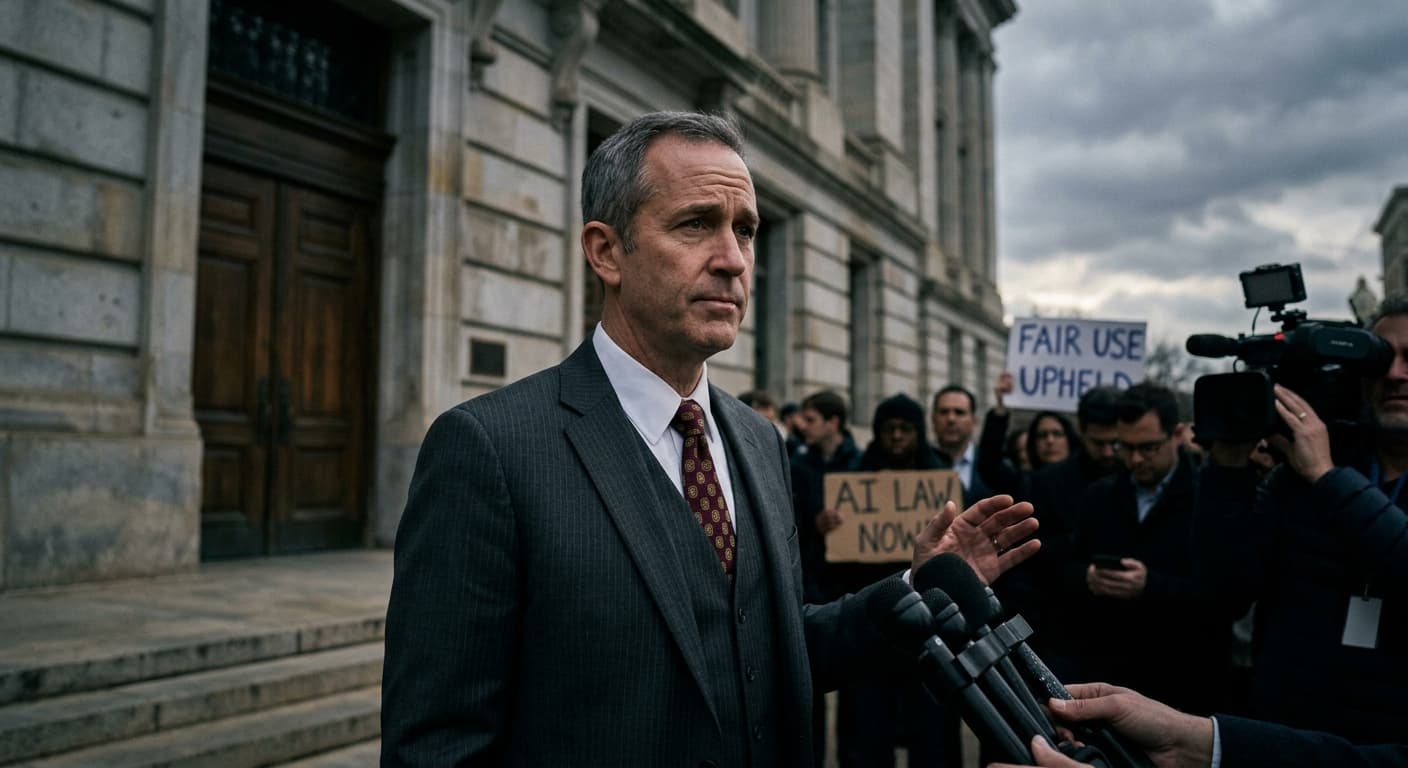
South Africa's Constitutional Court Clears Fair Use, Leaves AI to Parliament
South Africa's Constitutional Court upheld the Copyright Amendment Bill's shift to fair use on June 26, 2026, but struck down broad educational exceptions and said nothing on generative AI — handing Parliament a rewrite that is the country's best chance to regulate AI training before global tech firms set the de facto rules.
The Constitutional Court of South Africa upheld the core of the Copyright Amendment Bill's fair use framework on June 26, 2026, while striking down its broad educational copying provisions — the first time the Court has conducted an "abstract review" of a bill's substance before enactment. The ruling gives South Africa a constitutionally sanctioned shift from the narrow "fair dealing" system to a flexible US-style "fair use" standard. By invalidating the textbook-copying sections and remaining silent on generative AI, the judgment forces Parliament back to the drafting table on legislation conceived in 2017, before ChatGPT existed. That forced rewrite is now the country's best and perhaps last opportunity to write copyright rules for the AI era before global technology firms set the de facto terms through practice and litigation abroad.
A decade-long process, decided in one judgment
The case, Ex Parte President of the Republic of South Africa: In re Constitutionality of the Copyright Amendment Bill and the Performers' Protection Amendment Bill (CCT 306/24), addressed provisions amending the Copyright Act of 1978. The Bill was first published for public comment in July 2015, introduced in the National Assembly in 2017 as B13F of 2017, and passed by Parliament in 2019, according to IOL. President Cyril Ramaphosa referred it back over constitutional concerns. Parliament amended and resubmitted it in February 2024; still unsatisfied, Ramaphosa referred the copyright exceptions to the Constitutional Court in October 2024 under the Constitution's abstract review procedure, citing concerns they could amount to arbitrary deprivation of property protected by the Bill of Rights.
Justice Mhlantla, writing for a majority that included Acting Deputy Chief Justice Madlanga and six other justices, declared copyright to be property protected from arbitrary deprivation under the Constitution. It upheld the shift to fair use (Section 12A), finding it not an arbitrary deprivation based on the President's referral and the clause's text, as Adams & Adams reported. The Court also upheld new exceptions for personal use, translation, educational institutions, and libraries, archives, museums and galleries. The disability access provisions, at issue since the Court's 2022 ruling in Blind SA v Minister of Trade, Industry and Competition found existing law unconstitutional for blocking accessible-format conversions, were upheld in full,
IOL noted.
The most consequential finding for rights holders was that sections 12D(1)–(5), the broad exceptions allowing educational institutions to copy textbooks, were unconstitutional. The majority found these provisions went further than necessary to achieve their stated public benefit purposes, failed to define key terms with sufficient precision, and improperly shifted the financial burden of funding public education from the state onto individual authors and rights holders, according to Adams & Adams. Justice Steven Majiedt dissented over more than 100 paragraphs, arguing the majority undervalued constitutional rights to education, equality and access to knowledge and that he would have upheld the provisions.
Because the educational provisions were struck down, the President may not sign the Bill into law until Parliament cures the constitutional defect. The full judgment is available on the Constitutional Court of South Africa website.
Who wins, who loses
The ruling produces a clear set of beneficiaries and losers — and the split does not follow predictable lines.
Blind SA and print-disabled South Africans are the clearest winners. The disability access provisions survived intact, clearing the legislative path that was blocked when the Court found in 2022 that existing copyright law unconstitutionally denied accessible-format conversions. Section 19D of the Bill creates an inclusive disability exception — not restricted to print-disabled people only — which academic analysis describes as progressive and human-rights-oriented, aligning South Africa with the Marrakesh Treaty's principles, according to academic analysis in the Journal of South African Law.
Authors and textbook publishers win on the educational provisions. The Court's finding that sections 12D(1)–(5) arbitrarily deprived copyright owners of property — by making individual authors fund public education — gives rights holders a constitutional shield against broad copying exceptions. The majority's reasoning that the state, not authors, should bear the cost of educational access sets a precedent that will constrain future legislative attempts to expand exceptions on public-interest grounds.
AI developers and technology firms are the implicit beneficiaries of the fair use shift, but only partially. The upheld four-factor test (purpose, nature, amount, market effect) provides a flexible framework that could, in principle, accommodate AI training uses. The Court's narrowing interpretive rulings, however, that "such as" before the permitted purposes list does not open the floodgates and that market substitution is a mandatory constraint, give rights holders real ammunition to challenge bulk AI training that produces outputs competing with original works.
Musicians and performers lose, at least for now. The remuneration provisions — governing equitable payment to performers whose work is used commercially — were dismissed on procedural grounds. The President raised broader arguments before the Court than he had put to Parliament, making that part of the referral incompetent. The provisions were neither struck down nor definitively upheld, leaving creators in the same uncertainty they have faced for a decade, IOL reported.
Education unions and disadvantaged learners lose in the short term. The striking of the textbook-copying provisions means the current regime — which already failed the constitutional test in Blind SA — remains in force for educational copying. Supporters of reform will pressure Parliament to redraft narrowly enough to pass constitutional muster, as Ben Cashdan of the Centre on Knowledge Governance observed, IOL reported.
Discover more

US Politics
SNAP Food Assistance Faces Legal Challenges
In 2026, SNAP faces stricter eligibility rules and mounting legal challenges, threatening food assistance for the millions of Americans who rely on the program.
Global Politics
Trump's Conflicting Messages on Iran War
Trump's mixed messages on Iran reflect a strategy of audience management, benefiting Tehran amid a complex geopolitical landscape.
US Politics
Congress Targets AI Chatbot Access for Terror
The House passed the Generative AI Terrorism Risk Assessment Act, focusing on AI's role in terrorism and potential surveillance implications.

Economics
Fed's Amex AML order puts correspondent banking on notice
Federal Reserve's Amex AML order requires board-level controls and a 90-day plan; OCC fined the bank $350 million over enterprise-wide deficiencies.