Sánchez Concedes to Fujimori, Congress Fight
Sánchez vows to challenge Fujimori's presidency in Congress.
Model Diplomat8 min readSouth America
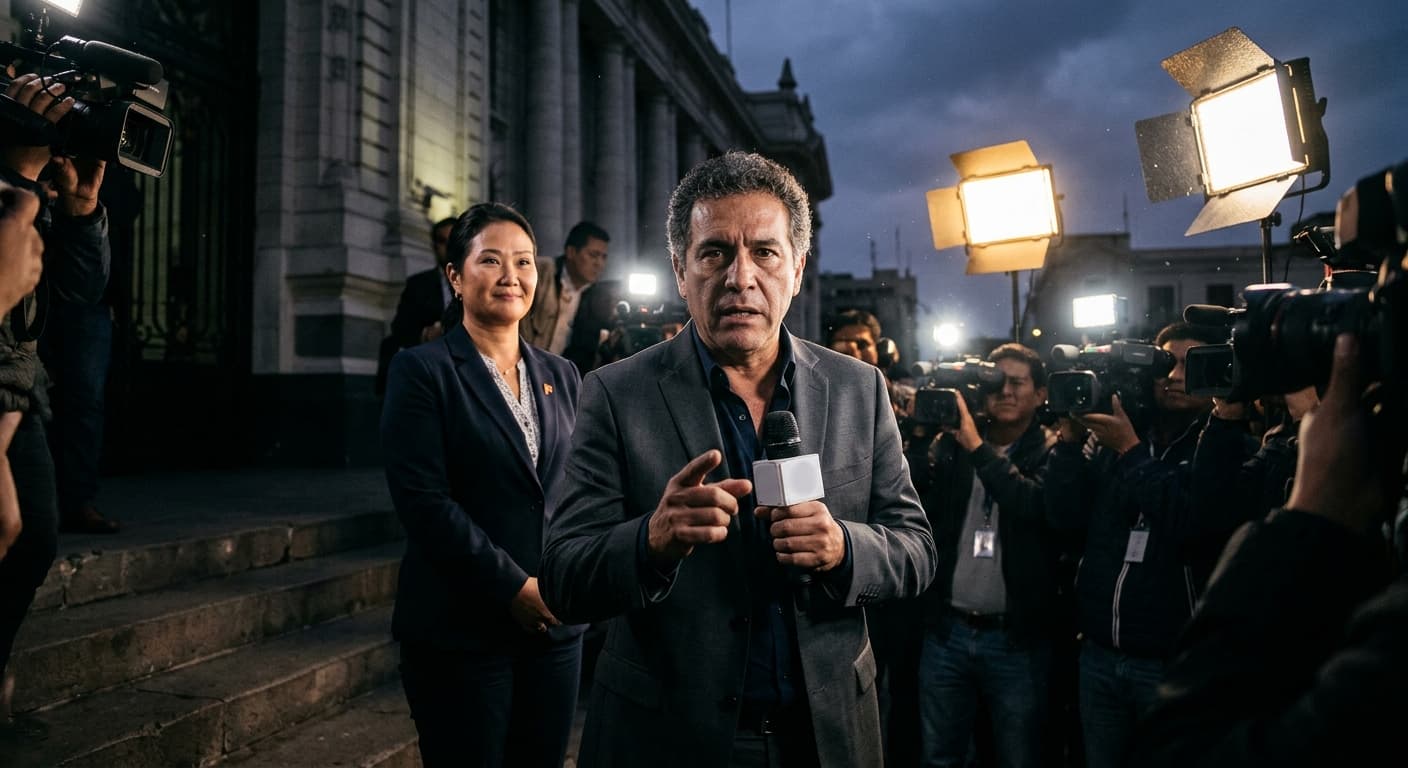
Peru: Sánchez Concedes to Fujimori, Vows Congress Fight
Roberto Sánchez conceded Peru's June 7 runoff to Keiko Fujimori by 49,641 votes on July 6, 2026, and pledged a "vigilant" congressional bloc to police her presidency.
Roberto Sánchez's July 6 concession — three days after the Jurado Nacional de Elecciones (JNE) proclaimed Keiko Fujimori president-elect by 49,641 votes — closes the count but opens the more consequential contest. Sánchez is not retreating; he is redeploying to a bicameral Congress that has ousted five of Peru's last eight presidents. His pledge to run a "firm, vigilant" opposition mirrors, almost line for line, the playbook Fujimori's own party pioneered against Pedro Pablo Kuczynski, Martín Vizcarra and Pedro Castillo — except that neither Sánchez nor Fujimori commands the 87 votes needed to impeach. The real winner of the standoff is the entrenched multi-party congressional bloc that has already survived every executive it faced.
The concession, and what it does not concede
Sánchez, the 57-year-old Juntos por el Perú congressman and former trade minister under Castillo, formally accepted the JNE's tally in a joint statement with the Ahora Nación and Obra Cívica parties, published on X. He explicitly refused to drop his fraud narrative. "Democracy demands respect for institutions, but it also demands defending the truth," the statement read, according to Anadolu Agency, preserving the right to keep denouncing "the irregularities that occurred during the electoral process."
That is a meaningful climb-down. On June 23, Sánchez had told supporters he would "not recognise that government" and declared "a movement of popular and patriotic resistance," per Al Jazeera. He also filed a complaint with the Inter-American Commission on Human Rights and asked the JNE to annul consular votes cast abroad — where Fujimori's margin was decisive. BBC Mundo's analysis of the overseas ballot found that without those votes,
Sánchez would likely have won.
The numbers he now accepts are these. Fujimori won 9,223,396 votes (50.135%) to Sánchez's 9,173,755 (49.865%), a margin of 49,641 out of 18.4 million valid ballots, BBC News reported after the July 3 certification. The JNE proclamation resolution and the underlying descentralized acts are published on the electoral body's
official portal. Peru's ombudsman, the
Defensoría del Pueblo, formally recognised Fujimori as the first woman elected president in the republic's 200-year history and confirmed her July 28 inauguration.
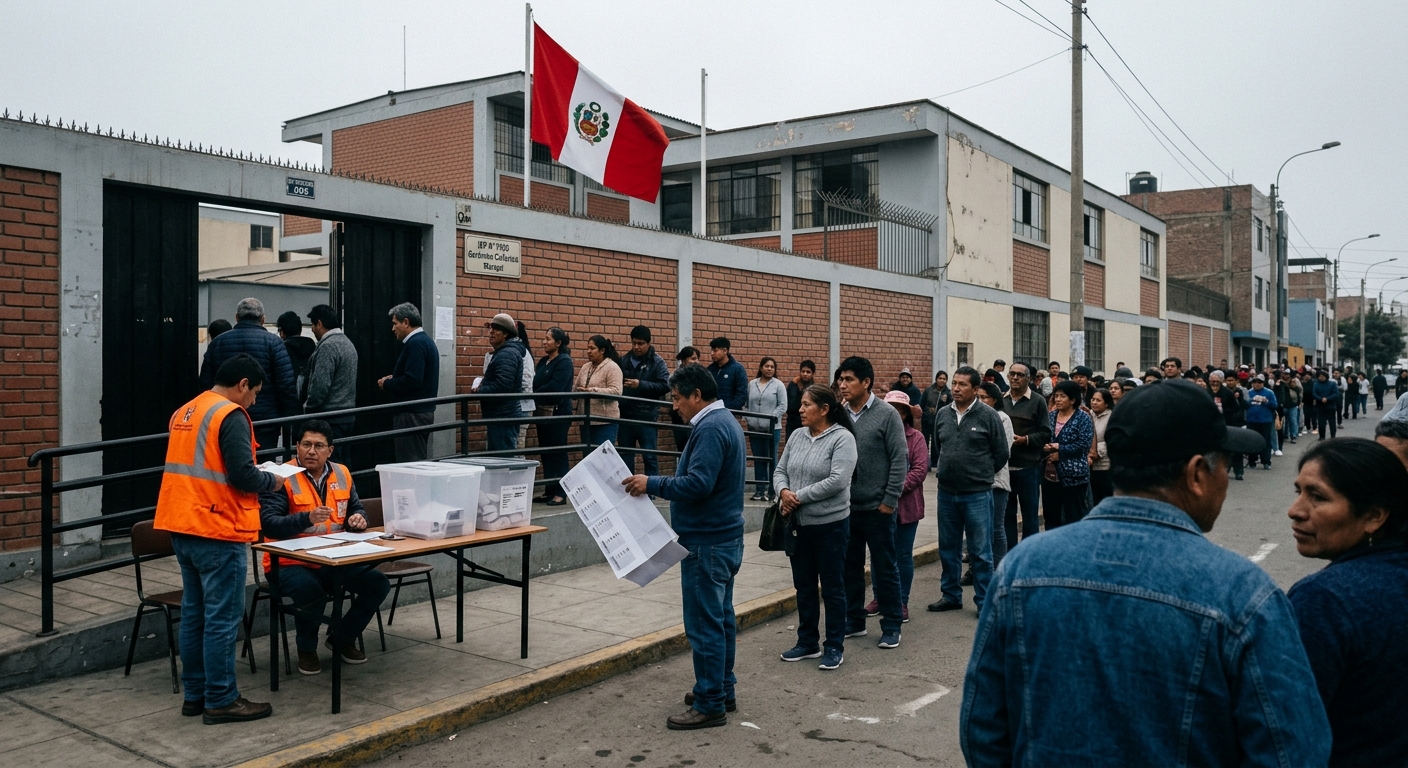
The opposition strategy: mirror-imaging fujimorismo
Sánchez's stated plan is precise: consolidate Juntos por el Perú, Ahora Nación and Obra Cívica into a parliamentary bloc that exercises "firm, vigilant, and responsible political control" over Fujimori, with the release of jailed former president Pedro Castillo as a founding legislative priority. Castillo has been imprisoned since December 2022, serving 11 and a half years for rebellion and conspiracy after trying to dissolve Congress and rule by decree, per BBC Mundo. Sánchez, who was Castillo's foreign trade minister, has framed the push as "national reconciliation" — a repositioning Al Jazeera notes was reinforced when Sánchez visited Castillo in prison mid-campaign and adopted the same wide-brimmed chota hat associated with Castillo's rural northern base.
The tactic is not new — it is the fujimorista template turned against its author. When Fuerza Popular held an absolute congressional majority in 2016, it used the same "vigilance" language to grind Kuczynski into resignation in March 2018 and then invoked Article 113's "permanent moral incapacity" clause to remove Martín Vizcarra in November 2020. The Council on Foreign Relations, in its 2020 analysis of Peru's democratic crisis, warned the mechanism had been "weaponized against a sitting executive on comparatively flimsy grounds," setting "a dangerous precedent for executive-legislative relations going forward." Six years on, that precedent is the norm — eight presidents in ten years, per the
Atlantic Council, which recorded 122 of 130 lawmakers voting to remove Dina Boluarte in October 2025 before an interim government under José Jerí took over.
The International Crisis Group's 2024 report Conflictividad perpetua identifies the structural driver: Peru's 1993 constitution allows the president to dissolve Congress and Congress to remove the president on vague grounds, and "fiercely opposed political forces" have exhausted both. Elcano's
analysis of the Kuczynski-Vizcarra years likewise concludes fujimorismo perfected the tools of obstruction — tools Sánchez now inherits, but without the numbers to make them lethal.
The seat math: why Fujimori is not another Kuczynski
This is where the historical parallel breaks down. Fuerza Popular will be the largest bloc in both chambers of the newly reconstituted Congress — with roughly 40 of 130 deputies and 22 of 60 senators, per BBC Mundo. That gives Fujimori a floor no left-wing president since Ollanta Humala has enjoyed, and one Castillo never had. It is not a majority: passing legislation still requires alliances with Rafael López Aliaga's Renovación Popular and other right-wing blocs.
But it is enough to block impeachment. Removing a president on "moral incapacity" grounds requires a two-thirds supermajority — 87 votes in the lower chamber. Sánchez's opposition coalition, on the first-round arithmetic, will hold perhaps 35 to 40 seats. Even in maximum alliance with independents and disaffected right-wing votes, reaching 87 without Fuerza Popular is arithmetically implausible. BBC Mundo's post-election analysis noted the point bluntly: unlike Sánchez, "the president-elect will have a level of congressional support that, according to analysts, would prevent her removal, even if she lacks her own majorities," per its three-keys explainer on why Fujimori finally won.
This inverts a decade of Peruvian political physics. Since 2016, presidents have governed as hostages to Congress. Fujimori is the first incoming president in that period to enter office with a partisan floor in the legislature — and the first not immediately vulnerable to a snap "vacancia" vote. Sánchez's "vigilant opposition" will therefore function less as a removal threat and more as a rolling investigation platform: subpoenas, censure motions against ministers, obstruction of Fujimori's security decrees, and continued street mobilisation. It is the model Fuerza Popular ran against Kuczynski when it, too, held a plurality but not the two-thirds trigger — the model Elcano credited with producing "one of the biggest recent political crises" in Peru's history.
Who benefits, who loses
The concrete winner is Fuerza Popular's authoritarian coalition in Congress — what the Council on Foreign Relations, in its October 2025 analysis of Boluarte's ouster, described as a bloc that has "quickly and effectively remade many of Peru's state institutions" to shield lawmakers from corruption investigations, weaken law enforcement facing illegal mining and drug trafficking, and shift power from executive and judiciary toward Congress. With Fujimori's Fuerza Popular now also holding the executive, that coalition no longer needs to churn presidents — it can legislate.
The clearest loser is the anti-fujimorista coalition that defeated Keiko in 2011, 2016 and 2021. BBC Mundo's post-mortem attributes its collapse to two shocks: the death of Alberto Fujimori in 2024, which drained the emotional charge of the "never Keiko" vote, and disillusionment with Castillo's chaotic presidency, which made Keiko palatable as "the lesser evil." The Andean south — the departments that carried Castillo in 2021 and where police killed at least 49 protesters in early 2023, according to the ICG report — voted heavily for Sánchez but were outweighed by Lima and, decisively, the diaspora.
The second-order loser is the Inter-American human rights system. Fujimori's campaign platform, per the CSIS pre-election brief, proposed withdrawing Peru from the Inter-American Court of Human Rights — a position she and López Aliaga openly shared during the first round, according to
BBC Mundo. Sánchez's IACHR complaint over the runoff was already an appeal to a body Fujimori intends to exit.
The third-order beneficiary is Washington. CSIS argues the Fujimori win creates "an opportunity for U.S. influence in a regional spot where Chinese investment in port infrastructure and energy projects has intensified geopolitical competition." Al Jazeera notes Fujimori was among the right-wing Latin American candidates supported by the Trump administration's militarised counter-narcotics push in the region.
Why the numbers rattled markets — and voters
Sánchez's fraud claim hangs on a real, if inconclusive, pattern. He led in the domestic count until overseas ballots pushed Fujimori across 50%. The BBC's count-in-progress reporting from June 8 showed Sánchez briefly ahead at 50.10% with 94.9% counted; only in the final tranche of consular votes did the tally reverse. BBC Mundo confirmed the
decisive role of the diaspora vote, which broke overwhelmingly for Fujimori.
International observers have found no evidence of systemic fraud. Al Jazeera reported that election monitors said "no proof had emerged" for Sánchez's claims. The JNE's own resolution proclaiming the first-round results documented the reconciliation process across the 60 special electoral juries, and the second-round proclamation was similarly cross-verified with ONPE's 100% tally. The count nonetheless took almost a month — a delay driven by tens of thousands of contested acts from both campaigns, per BBC Mundo's
explainer on the process.
The macro consequence is that Fujimori enters office with a legitimacy deficit even her supporters acknowledge. Homicides reached 10.7 per 100,000 last year, per BBC Mundo, and Ipsos polling before the runoff found 63% of voters listed insecurity as their top concern, ahead even of corruption at 62%, according to Al Jazeera. She has 60 days, per her own "Peru with Order" plan, to show results — while managing a Congress in which nearly half the seats are hostile.
What to watch
- July 28, 2026 — Fujimori's inauguration and first cabinet. The interior and justice ministries will signal whether she governs with Fuerza Popular hardliners or seeks a broader right-wing coalition with López Aliaga's Renovación Popular.
- First 60 days — Fujimori's promised emergency security decrees. Sánchez's coalition has flagged these as the first target for congressional censure motions.
- The Castillo file — any Sánchez-led bill for amnesty or transfer to house arrest will be the coalition's opening legislative move and Fujimori's first veto test.
- Inter-American Court proceedings — Sánchez's IACHR complaint remains active; a ruling or admissibility decision would collide directly with Fujimori's stated intent to withdraw Peru from the system.
The Bottom Line
The bottom line: Sánchez's concession does not end the contest — it relocates it to a Congress where Fujimori has a floor but no ceiling, and where the tools of destabilisation her own party invented are now aimed at her. Peru's decade of presidential churn has produced an equilibrium: no executive can govern, but this one, for the first time since 2016, probably cannot be removed either. That is not stability — it is stalemate, and stalemate is what the congressional coalition has always wanted.
Discover more
US Politics
SNAP Food Assistance Faces Legal Challenges
In 2026, SNAP faces stricter eligibility rules and mounting legal challenges, threatening food assistance for the millions of Americans who rely on the program.
India
Rajnath Singh's Durga Squad for 2026 Polls
Rajnath Singh's Durga Squad promised women's safety in Bengal but has since disappeared from the agenda, revealing BJP's true priorities.
US Politics
House Ethics Committee Pushes Sexual Miscond.
The House Ethics Committee has shifted responsibility for sexual harassment settlement records to the Office of Congressional Workplace Rights, complicating disclosure efforts.

Economics
Fed's Amex AML order puts correspondent banking on notice
Federal Reserve's Amex AML order requires board-level controls and a 90-day plan; OCC fined the bank $350 million over enterprise-wide deficiencies.