Rutte's Indo-Pacific Pivot in Ankara
NATO's focus shifts from politics to defense contracts
Model Diplomat4 min readEurope
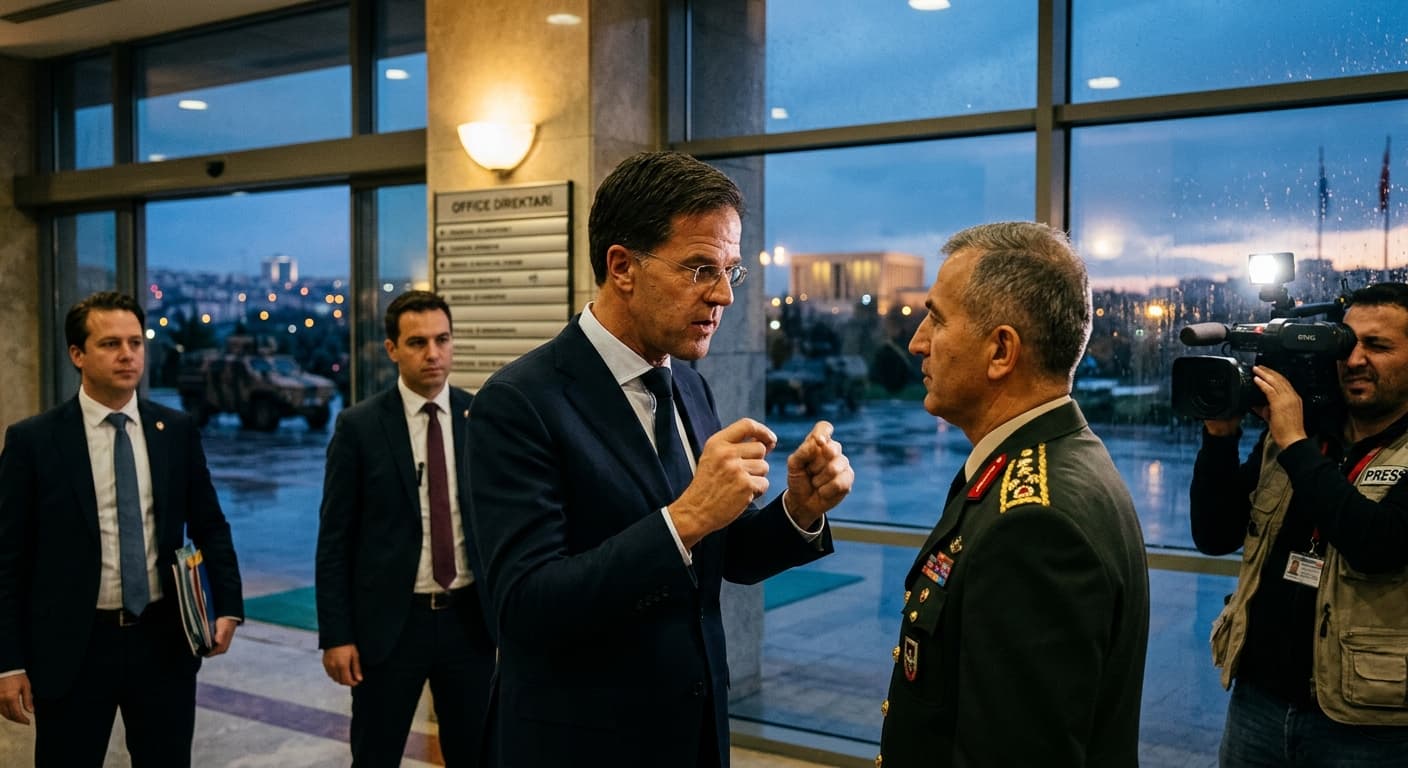
Rutte's Indo-Pacific pivot in Ankara: quieter, harder, more industrial
NATO chief Mark Rutte met the IP4 partners in Ankara on July 7, 2026, as only South Korea's Lee Jae-myung showed up in person — the alliance's Indo-Pacific push has narrowed from politics to hardware.
NATO Secretary General Mark Rutte convened the alliance's four Indo-Pacific partners in Ankara on July 7, 2026. Only one of them, South Korean President Lee Jae-myung, arrived as head of state. Australia, Japan and New Zealand each dispatched defence or foreign ministers, Al Jazeera reported. That downgrade is the story. Three years after the "IP4" label debuted at Vilnius in 2023 with all four premiers on stage, the format has quietly shed its political ambition and reconstituted itself as something narrower and, in a Trump-era alliance, arguably more consequential: a transatlantic-Pacific defence-industrial supply chain aimed at Russia, China and North Korea, with the politics stripped out.
The nut of it: Rutte is not selling the IP4 on a NATO office in Tokyo or a joint China posture. He is selling contracts, cyber standards and drone co-production. Lee arrived pitching a "Korea–NATO defence industry partnership 2.0" — joint R&D and joint production of weapons systems, not political solidarity. That is a downgrade from Vilnius's soaring language about a rules-based Indo-Pacific. It is also, in this alliance and this year, the only version that survives contact with Donald Trump.
What Ankara actually produced
Rutte's own agenda made the priorities plain. At his pre-summit press conference in the Beştepe presidential complex, the Secretary General framed the two-day meeting around implementing The Hague's 5%-of-GDP defence pledge, "turning cash into capabilities," and hosting the NATO Summit Defence Industry Forum — where he promised "tens of billions in new contracts." The Indo-Pacific was mentioned once, alongside the EU and Gulf partners, as invitees to the plenary, according to the NATO transcript. That is a striking narrowing: at Vilnius in 2023, IP4 leaders were named in paragraph two of the communiqué and the Indo-Pacific got its own dedicated section citing "our shared commitment to upholding international law and the rules-based international order," according to the
Vilnius text. Ankara offered no equivalent political envelope.
The IP4 huddle itself, held on the summit sidelines, produced no communiqué, no new political framework and no China language. What it did produce, according to The Mainichi and Turkish state agency
Anadolu, was an agreement to deepen work streams already running: defence-industrial cooperation, cybersecurity, and advanced technologies — the same list NATO's Cooperative Security Division walked through with Seoul at a technical meeting in Brussels on June 24, per an
official NATO readout. Major General Eray Üngüder, who runs that division, framed the goal as "mutual situational awareness of the closely connected security developments in the Indo-Pacific and Euro-Atlantic regions." In practice that means shared cyber exercises and interoperability standards, not political solidarity.
Lee went furthest. Speaking at the Defence Industry Forum, the South Korean president proposed upgrading Seoul's arrangement with the alliance to "Korea–NATO Defence Industry Partnership 2.0," involving "not only arms exchanges but joint research, production and operation of weapons systems," Al Jazeera reported. The subtext was unsubtle: South Korean shells, howitzers and shipbuilding capacity — Seoul's yards are the second-largest in the world after China, per a
BBC profile of Lee — are what a re-arming Europe cannot produce fast enough, and what a shrinking U.S. industrial base cannot replace.
Why the political ambition has drained out
Three forces have converged to shrink the IP4 conversation from strategy to procurement.
The first is Trump. The White House has already announced a phased withdrawal of U.S. warplanes, destroyers and submarines from NATO countries, and treated the Iran war as a loyalty test European allies failed. In Ankara, the president told reporters he "tested" allies over Iran and might not have attended had Erdogan not hosted, Al Jazeera reported. No European ally, in that environment, is willing to spend political capital antagonising Beijing on NATO letterhead. The Chatham House assessment after The Hague summit was blunt: with "three of the four IP4 heads of government" absent, "the perception is that the relationship is cooling," analysts wrote in a June 2025
Chatham House briefing. Ankara's ministerial-heavy attendance list confirms that trend rather than reverses it.
The second is Seoul. Lee's Democratic Party won power in June 2025 on a platform of restoring ties with Beijing and easing tensions with Pyongyang. In January 2026, on a state visit to Shanghai, Lee explicitly asked Xi Jinping to mediate with North Korea and floated a nuclear freeze in exchange for sanctions relief, Al Jazeera reported. Lee has told his own party that Seoul must "prioritize the national interest and avoid becoming too deeply involved in the China-Taiwan conflict," per a
Brookings analysis of his pre-election foreign-policy platform. His political adviser Moon Chung-in has warned publicly of "being entrapped in American strategy to contain and encircle China." He came to Ankara to sell shells and ships, not to sign a China communiqué.
The third is Japan. Prime Minister Sanae Takaichi's government sent Foreign Minister Toshimitsu Motegi and Defence Minister Shinjiro Koizumi — a serious delegation, but not the prime minister. Koizumi's own framing, in a recent BBC interview, is instructive: Japan is now selling destroyers to Australia, negotiating warship transfers to the Philippines and Indonesia, and talking to New Zealand — building an Asian defence network of its own that runs in parallel to, not through, NATO. "This vision of trading equipment and assets throughout the Indo-Pacific is something we have never seen before," Koizumi told the BBC. Tokyo values the alliance as a market and a standards body, not a strategic patron. The IP4 format, stripped of its political ambition, may be exactly what that calculation requires.
Discover more
India
BJP's Misunderstanding of Women's Quota Needs
The BJP's linking of the Women Reservation Bill to delimitation risks delaying women's empowerment in India, misreading the aspirations of female voters.
US Politics
Virginia's Redistricting Referendum
Virginia's redistricting referendum is drawing a flood of dark money, shaping future elections and the fight for congressional control amid party stakes.

US Politics
US Launches $166B Tariff Refund Portal
The US is launching a $166 billion tariff refund portal to aid importers hit by Trump-era tariffs, with major implications for trade and supply costs.

Conflict & Security
Drone Warfare Killing Aid Workers at Unprec
Over 1,000 humanitarian workers killed in three years as cheap armed drones collapse legal protections. Gaza, Sudan, Ukraine, and DRC see deliberate targeting of aid convoys and hospitals with zero prosecutions.