Rozgar Mela Turns Into a Skills Pitch in Andhra
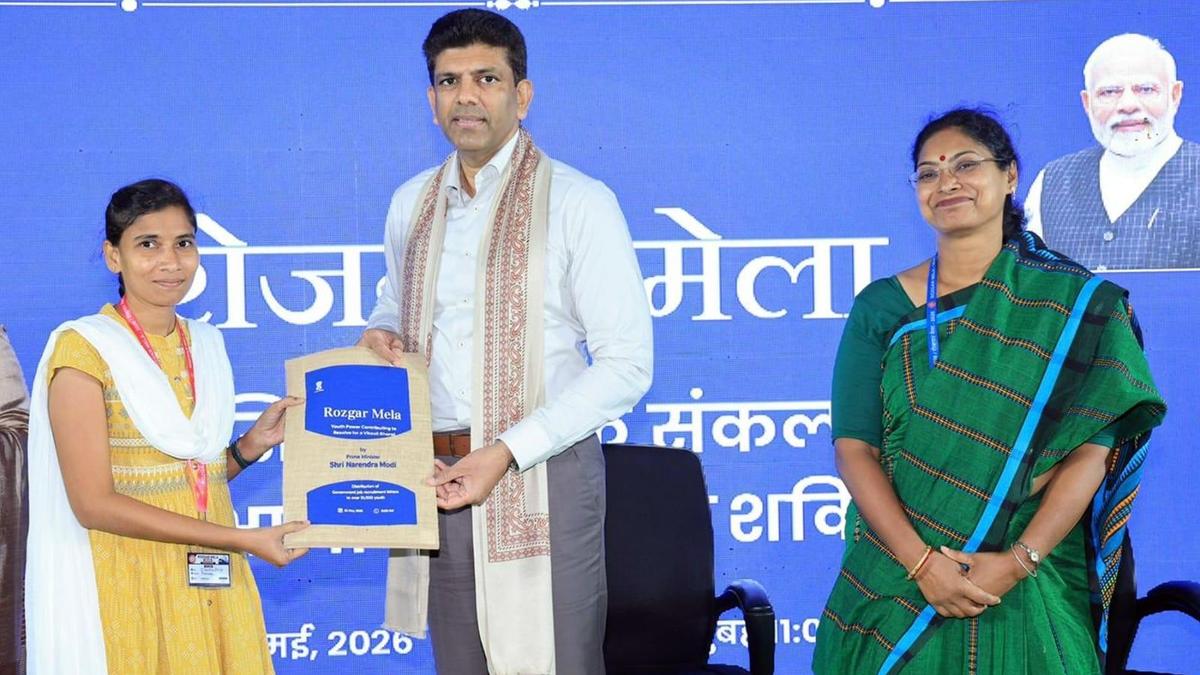
Pemmasani used the Guntur Rozgar Mela to sell a simple message: the Centre wants youth trained, disciplined and visible in public service, not just certified on paper.
Union Minister of State Pemmasani Chandra Sekhar used Saturday’s Rozgar Mela in Guntur to frame the Centre’s hiring drive as a test of competence and delivery, urging young recruits to focus on skills, responsibility and reform inside their departments rather than stop at getting a certificate ( The Hindu). That matters because the event was not just a distribution ceremony: it was part of a coordinated nationwide exercise in which Prime Minister Narendra Modi virtually addressed Rozgar Mela gatherings across the country and more than 51,000 appointment letters were issued at 47 locations (
 NewsDrum).
What the government is doing
The political utility of the Rozgar Mela is obvious. It lets the Modi government turn a chronic vulnerability — unemployment — into a visible, repeated administrative ritual. By staging appointments in railways, postal services and banks, the Centre can claim it is filling vacancies transparently and at scale, while presenting young appointees as proof of a functioning recruitment machine (The Hindu). The message from Guntur was sharper than the photo-op: Pemmasani explicitly said the Prime Minister’s direct monitoring had improved transparency and planning, and he linked that to India’s push toward becoming a developed nation (The Hindu).
That is not accidental rhetoric. The Centre is trying to shift the conversation from the sheer number of vacancies to the quality of the workforce it is building. Pemmasani’s advice that youth should “acquire skills rather than merely obtain certificates” fits the government’s broader claim that public recruitment is becoming more merit-based and less opaque (The Hindu).
Why Andhra Pradesh is a useful stage
Andhra Pradesh gives this messaging extra political mileage. The state is being presented by BJP ministers as a beneficiary of both central hiring and central infrastructure spending. Pemmasani pointed to railway modernization under the Amrit Bharat Station Scheme and highway upgrades, while also invoking stalled local works such as the Nandivelugu Railway Over Bridge to underline the contrast between neglect and revival (The Hindu). That is a familiar governing tactic: pair job letters with development claims so the Centre appears to be creating both employment and the infrastructure that will sustain it.
This also serves a second purpose. In a state where jobs and public works are politically valuable, the BJP-led Centre is trying to make itself the visible engine of opportunity, not just a remote employer. The recruits from railways, postal services and banking are useful not only as beneficiaries but as live symbols of administrative throughput (The Hindu).
What to watch next
The next test is whether the Rozgar Mela remains a one-day display or becomes evidence of a broader hiring pipeline. Watch for the Centre’s next round of appointment events, any fresh claims on vacancies filled, and whether Andhra Pradesh’s infrastructure promises — especially delayed rail and road projects — actually move from speech to execution. If they do, the government’s skills-and-jobs message will have substance. If they do not, the ceremony will look like messaging dressed as policy.
For a wider lens on how this fits India’s political economy, see  India and Global Politics.