Peru's Mid-May Election Results
Keiko Fujimori's victory alters Peru's political landscape.
Model Diplomat7 min readLatin America
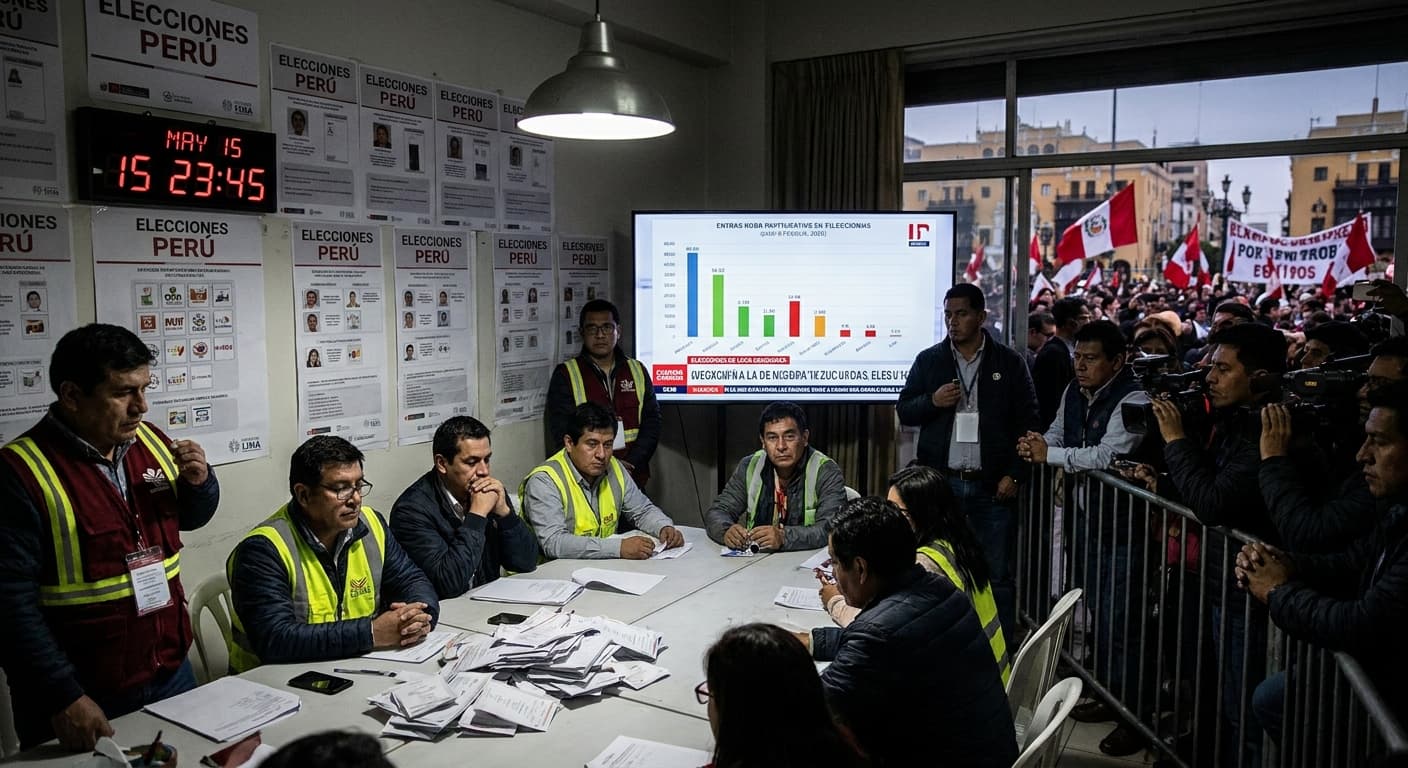
Peru's Mid-May Election Results Hand Fujimori the Senate
Peru's JNE certified the April 12 first round on May 17, 2026: Keiko Fujimori (17.18%) and Roberto Sánchez (12.03%) advanced to a runoff Fujimori would go on to win by 40,687 votes.
The story of Peru's mid-May results is not that Keiko Fujimori topped a fragmented first round with 17.18% of the vote — it is that the same ballot handed her Fuerza Popular the largest bloc in Peru's first bicameral Congress in 34 years, and with it a structural veto over the impeachment machinery that has removed eight presidents in a decade. Peru's National Jury of Elections (JNE) certified the results on May 17, 2026, locking in a Fujimori-Sánchez runoff; the June 7 vote and July 3 proclamation that followed were the coda. What matters now is the arithmetic of the new Senate — because for the first time since 2016, the president will not be a hostage.

What the JNE actually certified on May 17
Peru's electoral authorities took 35 days after the April 12 vote to produce a final tally, a delay the JNE blamed on logistical failures at polling stations and the novelty of a recount procedure applied for the first time in a Peruvian election. On May 17, the JNE plenary, presided over by Roberto Burneo, proclaimed the results in a solemn session in Lima's Jesús María district, per Peru's public broadcaster Radio Nacional. Fujimori took 2,877,678 votes (17.18%); Roberto Sánchez, of Juntos por el Perú, followed with 2,015,114 (12.03%). The far-right Rafael López Aliaga, on 11.90%, missed the runoff by roughly 21,000 ballots and immediately called for the entire first round to be annulled, according to
Al Jazeera.
The primary record is the JNE's own resolution establishing that decentralised proclamations submitted by the 60 Jurados Electorales Especiales showed no numerical inconsistencies with the Oficina Nacional de Procesos Electorales (ONPE) count, and clearing the path for the general proclamation. That resolution — published as a JNE plenary act — is the legal instrument that made the June 7 runoff constitutionally binding under Article 111 of Peru's 1993 Constitution and Article 18 of the Ley Orgánica de Elecciones. The
regional acta from Arequipa 2, one of dozens issued between May 11 and May 16, documents the mechanical process: 22 districts, 100% of actas returned by ONPE, results consigned per Article 318 of the electoral law.
The buried number: Fuerza Popular's Senate
The mid-May certification also crystallised something bigger than a runoff. Peru voted on April 12 for the presidency, 130 deputies, and — for the first time since Alberto Fujimori dissolved the bicameral legislature in 1992 — 60 senators, following a constitutional reform passed in 2024. According to BBC News Mundo, Fuerza Popular emerged as the largest force in both chambers: 22 of 60 Senate seats and 40 of 130 seats in the Chamber of Deputies. Neither figure is a majority. Both are pluralities big enough to shape agendas and, more importantly, to block them.
That matters because Peru's presidential removal mechanism — the "moral incapacity" clause of Article 113 of the 1993 Constitution — has been the country's real form of government since 2016. The Observer Research Foundation noted that 52 votes in the unicameral 130-seat Congress were enough to open impeachment proceedings and a two-thirds majority sufficed to remove the president on grounds courts never defined. Under the restored bicameral system, an academic analysis of the 2026 election published on
arXiv records that removal now requires action in the Senate, where Fuerza Popular's 22 seats sit comfortably above the one-third blocking share of 21.
In practical terms: Keiko Fujimori is the first Peruvian president since Pedro Pablo Kuczynski in 2016 to enter office with a party structurally positioned to protect her from her own legislature. That is not an accident of the ballot. Fuerza Popular helped draft the bicameral reform and the accompanying 5% electoral threshold, which Peru's Instituto de Estudios Peruanos analyst Martín Tanaka has called a filter designed by the incumbent parties in a column for IEP. The mid-May tally is where that engineering paid off.
The runoff was the confirmation, not the story
On June 7, Fujimori and Sánchez went to a runoff. Early ONPE counts put Fujimori ahead; overnight tallies from rural Andean provinces flipped the lead to Sánchez, per BBC News; ballots from Peruvians abroad — traditionally Fujimori strongholds — pushed her back into first place. By June 23, with 99.7% counted,
Al Jazeera reported Fujimori ahead by roughly 40,687 votes; Sánchez called the runoff "seriously compromised" and refused to concede.
The JNE certified Fujimori as president-elect on July 3, 2026, with 50.135% to Sánchez's 49.865% — a margin of under 50,000 votes, per the BBC. It was her fourth run and her third consecutive election decided inside 50,000 ballots. Sánchez conceded on July 6 while his Juntos por el Perú party filed a nullification appeal,
Al Jazeera reported. Fujimori will be inaugurated on July 28 — Peru's independence day — as the country's ninth head of state in a decade.
The runoff map matched the country's fault lines with unusual clarity. The Atlantic Council's Isabel Chiriboga, writing in a June 15 dispatch, noted that Sánchez carried "poorer and more rural regions" on a platform questioning Peru's market-led model, while Fujimori dominated Lima, the urban coast, and the overseas vote on a defence of the 1993 constitution and mano dura security policies. The 40,687-vote margin, Chiriboga wrote, "does not constitute a wide mandate."
Who benefits, who loses
The mid-May results reshaped four sets of interests.
Fujimori herself. After losses in 2011, 2016 and 2021, the daughter of jailed and later deceased former president Alberto Fujimori — who died in September 2024 — inherits a business-friendly constitution her father wrote, a party bloc in both chambers, and a mandate to accelerate her father's anti-crime playbook. Peruvian political scientist Mauricio Zavaleta told Al Jazeera that Fujimori is "the only one with enough power to finish her term" — a striking baseline in a country where the previous eight presidents did not.
Copper and lithium buyers. Peru is the world's second-largest copper producer, and Fujimori campaigned explicitly on protecting the 1993 constitution's mining framework. That is a direct win for Chinese state investors — MMG at Las Bambas, Chinalco at Toromocho — and for the U.S. firms Washington is trying to route into "friend-shored" critical-mineral supply chains. The Center for Strategic and International Studies framed the 2026 vote explicitly as a test of whether Peru "will build on its major non-NATO ally status" against intensifying Chinese port and energy investment. Fujimori has signalled she will hedge, not choose.
The Peruvian left. Sánchez, a former trade minister under jailed ex-president Pedro Castillo, briefly appeared to have engineered a comeback of the rural-Andean coalition that put Castillo in office in 2021. Instead, the left ends 2026 with 12% of the presidential first round, a rejected fraud claim, and a diminished parliamentary caucus. The Constitutional-rewrite project — a Castillo-era demand Sánchez adopted — is off the table for the 2026–2031 term.
Peru's impeachment industry. For the first time since 2016, the executive-legislative equilibrium tilts back toward the palace, at least on paper. That is the second-order effect the wires largely missed.
What to watch
- July 28, 2026: Fujimori's inauguration and first cabinet. The economy and interior portfolios will signal whether she governs from the centre-right or from the harder security wing of Fuerza Popular.
- August–September 2026: The new bicameral Congress convenes. The first Senate presidency vote will reveal whether Fuerza Popular can build the cross-bench alliance it needs to lead the chamber outright, or must settle for a blocking minority.
- Pending JNE ruling: Juntos por el Perú's nullification appeal against the July 3 proclamation. The JNE has already rejected the substantive fraud claims once; a second rejection would formally close the electoral cycle.
- The López Aliaga wildcard: The third-place candidate rejected the first-round result in May and never conceded. His Renovación Popular caucus in both chambers is the natural spoiler for a Fujimori legislative agenda that leans centrist.
Diplomat View
The consensus reading — a divided country, a narrow winner, more of the same instability — misses the structural shift. The mid-May election, not the June runoff, is what will define the 2026–2031 term: Peru swapped a unicameral impeachment machine for a bicameral one in which Fuerza Popular holds the veto point. On current numbers, Keiko Fujimori is the first Peruvian president in a decade whose removal is genuinely difficult, not merely inconvenient. That, not her 40,687-vote margin, is why market analysts at Verisk Maplecroft and Oxford Economics quoted by BBC Mundo shifted their Peru risk models the week the Senate count firmed up.
The forecast is falsifiable. It fails if any of three things happens: Fuerza Popular's Senate bloc fractures during the first budget cycle; the JNE reverses course on the nullification appeal; or the López Aliaga right and the Sánchez left build a shared no-confidence coalition against a specific cabinet minister — historically Peru's preferred method of destabilising a presidency without triggering vacancy. Absent one of those, Peru is likelier than at any point since 2016 to have the same president in 2029 that it inaugurates on July 28, 2026. For a country whose recent politics has been read primarily through instability, that is the shareable finding: the instability trap may have just been designed shut — by the party that built it in the first place.
Discover more
Global Politics
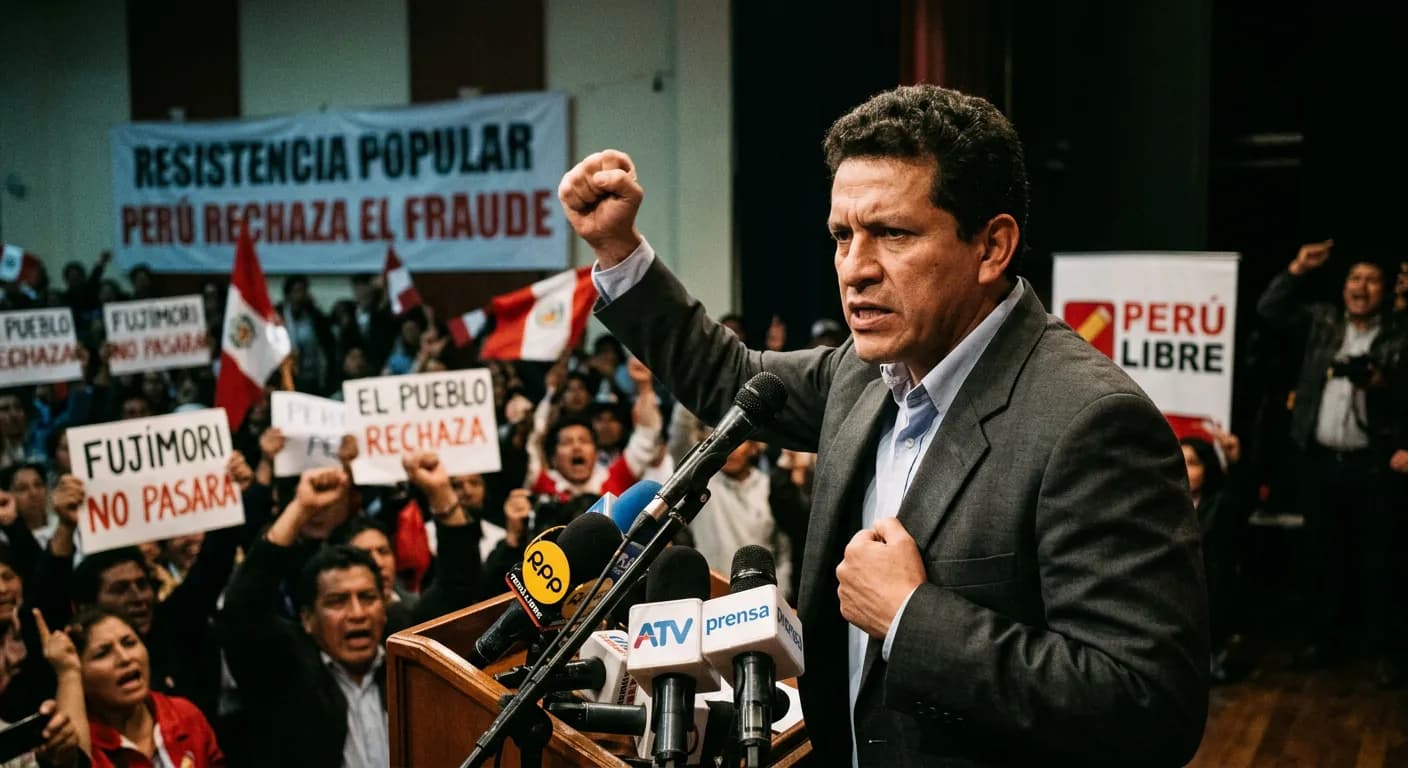
Sanchez Rejects Fujimori Victory in Peru
Sanchez vows to reject Fujimori's election victory in Peru, raising the threat of political chaos and a contested outcome that could deepen national divisions.
Conflict & Security
Peru Election Chief Resigns Before Runoff
Peru's election chief Piero Corvetto has resigned, deepening a political crisis at the ONPE just ahead of the country's critical June presidential runoff.
International Relations
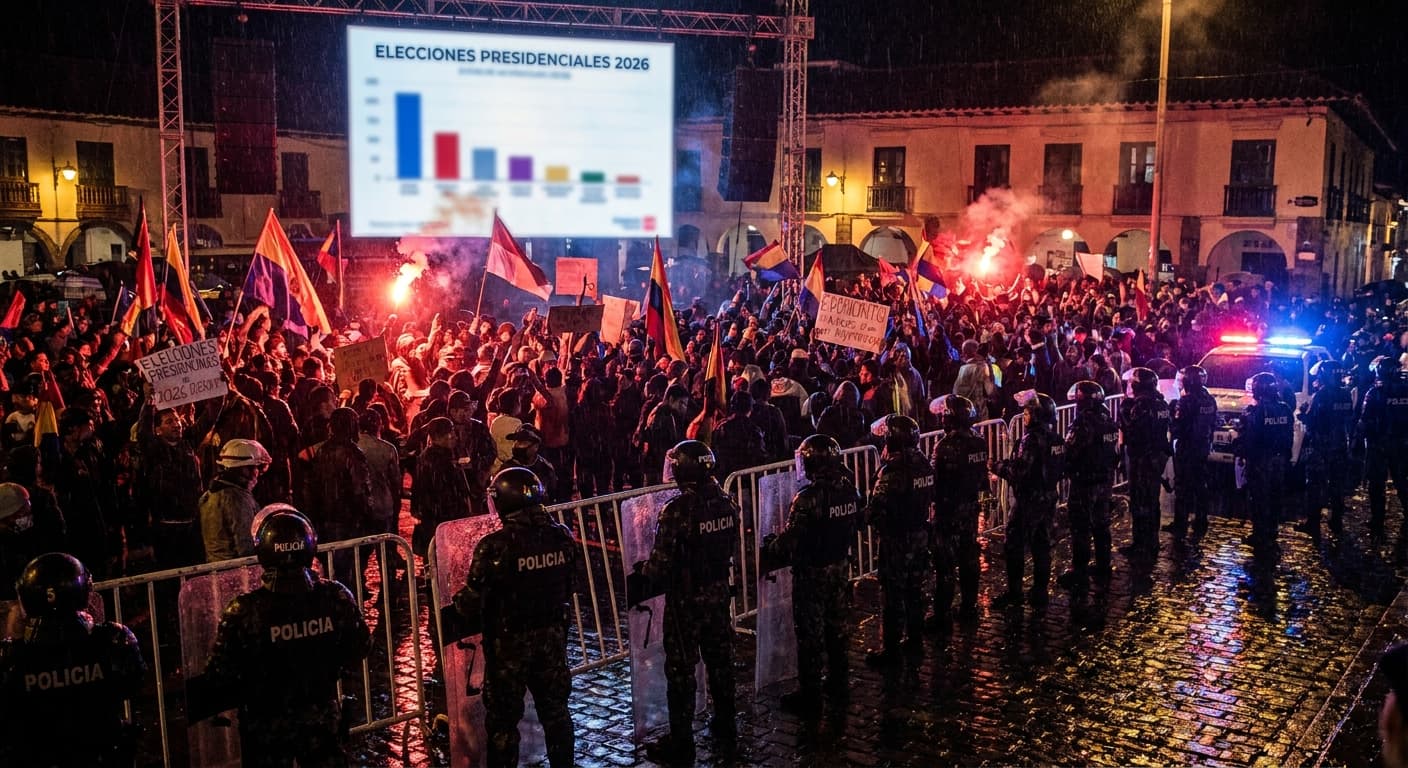
Peru Presidential Election Results Amid Turmo
Peru's presidential election results, expected mid-May 2026, underscore deep political instability and mounting challenges to the country's fragile democracy.

Conflict & Security
Drone Warfare Killing Aid Workers at Unprec
Over 1,000 humanitarian workers killed in three years as cheap armed drones collapse legal protections. Gaza, Sudan, Ukraine, and DRC see deliberate targeting of aid convoys and hospitals with zero prosecutions.