Pakistan Army Chief's Iran Visit Amid Tension
Diplomatic efforts to ease conflict and revive US-Iran talks
Model Diplomat3 min readMiddle East
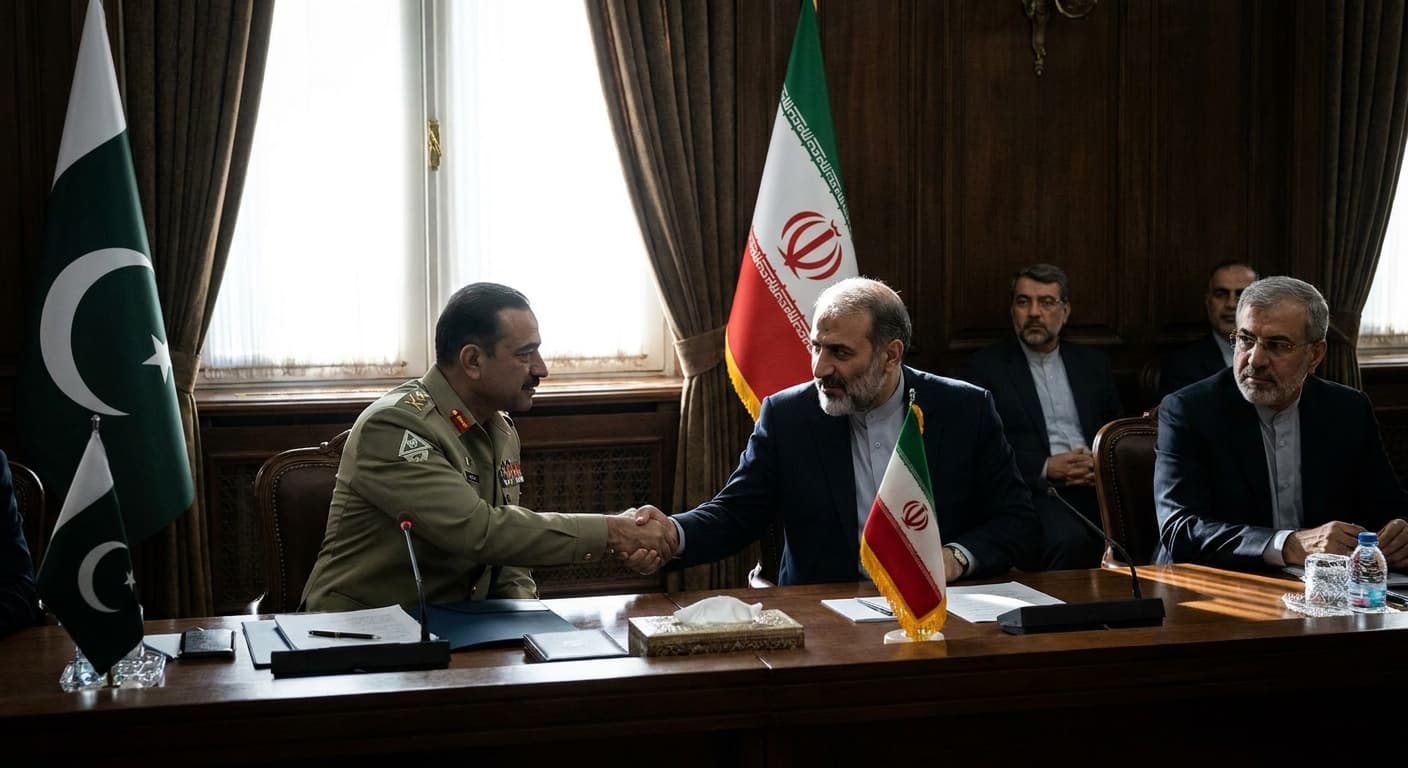
Pakistan’s Army Chief Meets Iran’s Foreign Minister Amid Middle East Conflict
Pakistan’s top military leader meets Iranian officials in Tehran to seek eased tensions and revive stalled US-Iran talks after weeks of war.
Pakistan’s army chief, General Asim Munir, traveled to Tehran this week to meet Iran’s foreign minister, Hossein Amir-Abdollahian, marking a critical diplomatic effort to ease the escalating conflict in the Middle East. This visit comes amid nearly seven weeks of intense fighting involving Iran and Israel, the largest regional clash in years, with global powers watching closely. The talks aim to restart the second round of indirect negotiations between the United States and Iran, a diplomatic avenue currently stalled since the outbreak of hostilities.
Why Pakistan’s Role Matters in the Iran War Effort
Pakistan is strategically positioned as a regional broker due to its historical ties with Iran and its complex relations with both the US and neighboring Middle East states. Islamabad’s role is especially significant as it balances its alliances: a close defense partner of the US and a neighbor with deep cultural and economic linkages to Iran. This visit crystallizes Pakistan’s attempt to exercise influence and possibly mediate reduced tensions in a conflict that threatens broader regional stability.
General Munir’s meeting with Amir-Abdollahian also signals Tehran’s openness to diplomatic engagement despite ongoing hostilities. This comes at a moment when the US continues to impose economic pressures on Iran, aiming to curb Tehran’s military capabilities during the conflict. U.S. Treasury Secretary Scott Bessent has warned of escalating sanctions, signaling Washington’s persistent strategy of economic containment in parallel with diplomatic efforts.
For Iran, securing Pakistani support to champion dialogue with the US enhances its bargaining position. It also highlights the limits of Iran’s existing alliances and the urgent need for channels through neutral or less directly involved regional players. Pakistan’s neutral yet proximate stance offers Tehran a lifeline to potentially de-escalate and pursue long-stalled nuclear negotiations indirectly.
Historical Echoes and Regional Stakes
The Iran-Israel conflict echoes past proxy wars but unfolds amid a dramatically altered Middle East architecture marked by the Abraham Accords and shifting US military focus. Past Iran-US negotiations, including the 2015 nuclear deal (JCPOA), showcased how regional intermediaries could influence global diplomacy. This Pakistani initiative parallels earlier diplomatic endeavors where third-party actors nudged direct rivals toward dialogue.
Moreover, Pakistan’s engagement signals growing South Asian involvement in Middle Eastern geopolitics—a region whose security dynamics increasingly intersect with South Asia’s own challenges. The potential ripple effects on Pakistan’s domestic security, particularly given its own security concerns in Balochistan near the Iran border, add layers of complexity to Islamabad’s diplomatic moves.
What to Watch Next
The key question is whether Pakistan can catalyze progress toward a second round of US-Iran talks without additional military escalations on the ground. Success would depend on Washington’s willingness to reduce economic pressure to create diplomatic space and Tehran’s readiness to offer concessions.
Meanwhile, the broader regional conflict intensity and Israel’s calculus will shape how open Iran remains to external mediation. Pakistan’s engagement might also inspire other regional players, including Gulf states with vested interests in stabilizing the conflict, to intensify diplomatic efforts.
As this situation develops, the interplay between economic sanctions, military actions, and regional diplomacy will define both the immediate trajectory of the war and the longer-term shape of Middle East geopolitics.
For more on the intricacies of regional diplomacy, see our Middle East conflict overview and Pakistan’s
strategic profile.
Discover more

Global Politics
Israel-Lebanon Talks and Trump's Iran Shift
Israel and Lebanon open direct talks while Trump hints at Iran negotiations in Pakistan, reshaping Middle East diplomacy and regional power dynamics in flux.
Global Politics
Trump's Bold Move
Trump announced a U.S. exit from Iran with or without a deal, a bold move that heightens tensions across the Middle East and risks serious diplomatic fallout.

Global Politics
Lebanon Ceasefire Amid US Blockade on Iran
Israel and Lebanon entered a 10-day ceasefire as a U.S. naval blockade on Iran took hold, sharply escalating tensions across an already volatile Middle East.

Economics
Fed's Amex AML order puts correspondent banking on notice
Federal Reserve's Amex AML order requires board-level controls and a 90-day plan; OCC fined the bank $350 million over enterprise-wide deficiencies.