Owaisi Pushes for Muslim Political Autonomy
AIMIM chief urges Muslims to build independent leadership
Model Diplomat7 min readAsia
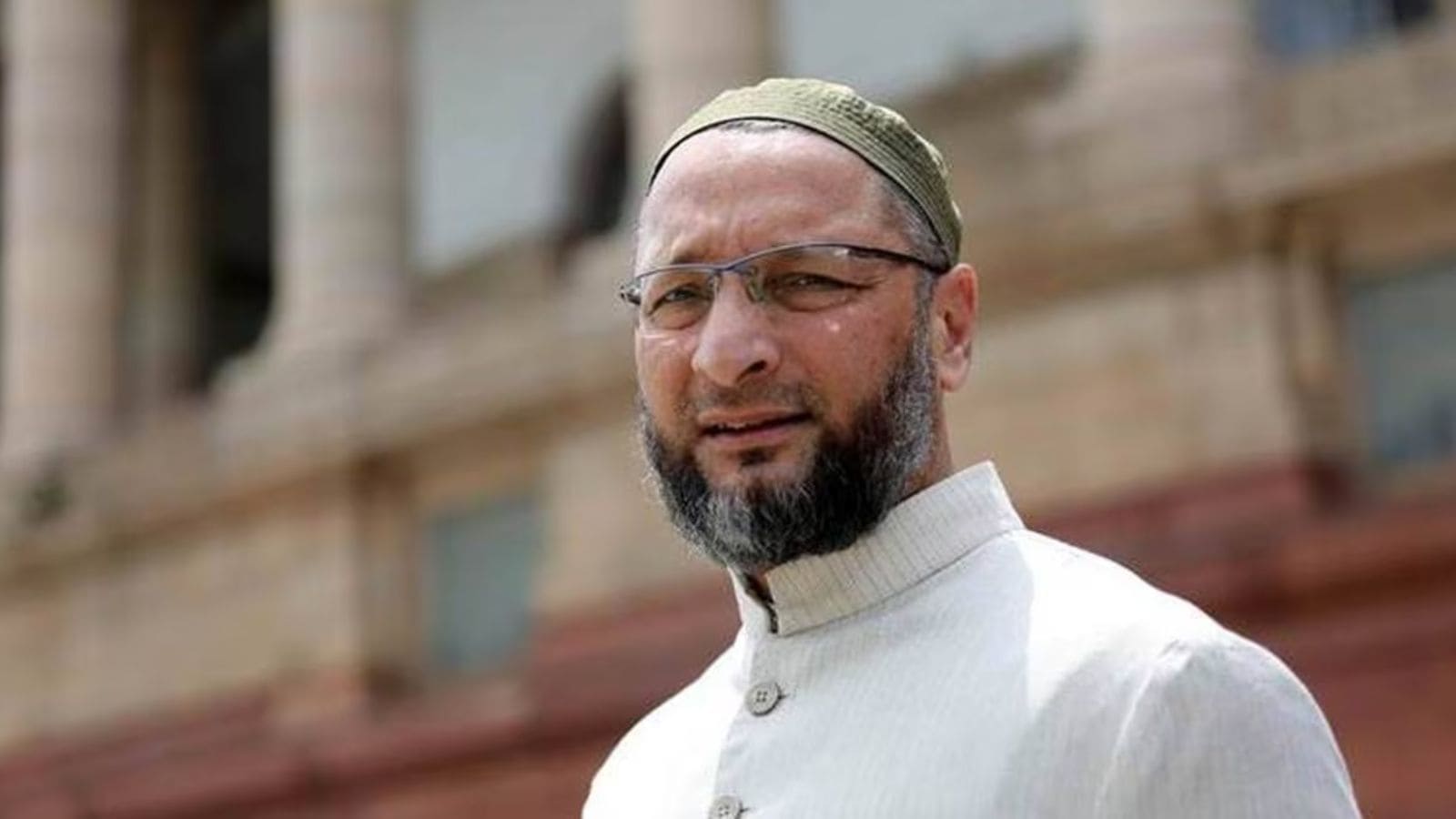
Owaisi's Bid for Muslim Political Autonomy After Bengal
After the BJP's May 4, 2026 sweep of West Bengal, AIMIM chief Asaduddin Owaisi says India's Muslims must build their own political leadership. Here is what he is actually asking for — and who stands to lose.
The day after Mamata Banerjee lost West Bengal, Asaduddin Owaisi stood in Hyderabad and told India's 200 million Muslims to stop lending their votes to parties that will not say their name. That May 5 press conference is the clearest post-2014 articulation of a strategy Owaisi has hinted at for a decade: the end of the "secular umbrella" bargain, and the construction of a Muslim political vehicle that negotiates from strength rather than begs from below. The thesis of this piece is narrow and testable — Owaisi is not calling for a separate community; he is calling for a separate bargaining table, and the immediate loser is not the BJP but the Trinamool Congress, Congress and Samajwadi Party, whose electoral model depends on Muslim votes they refuse to represent.
What Owaisi actually said
Speaking in Hyderabad on May 5, 2026, the five-term MP told reporters that Muslims should stop being "mere voters" for "so-called secular parties" and instead "develop their independent political leadership to become citizens with rights." He named the accused: Arvind Kejriwal's AAP in Delhi, Uddhav Thackeray's Shiv Sena and NCP in Maharashtra, and Mamata Banerjee's TMC in West Bengal — all, in his framing, practitioners of "soft Hindutva" who had ultimately lost power anyway, according to a report by The Print.
The framing is deliberate. Owaisi told the BBC in a separate interview that "if Mamata had not helped the BJP win, we would not be seeing these days," a line pointed enough that the Trinamool cadre took it as sabotage. His central claim, per The Hindu, is that Muslim voters are being "reduced to the role of mere voters" — instrumentalised at the ballot box, ignored in the manifesto.
That charge is not rhetorical. A June 2024 Al Jazeera analysis of six major opposition manifestos — Congress, Samajwadi Party, RJD, TMC, DMK and CPI(M) — found that most did not use the word "Muslim" at all. The TMC manifesto in Bengal, in a state where roughly 27% of the population is Muslim, avoided the word even while promising to block the Citizenship Amendment Act and the Uniform Civil Code.
The Bengal result that reset the argument
Owaisi's Hyderabad statement is not a philosophical flourish. It is a reaction to a specific number: 207.
That is the seat count Narendra Modi's BJP won in the 294-member West Bengal assembly on May 4, 2026, reducing the TMC to 80 seats and ending 15 years of Banerjee rule, NPR and the
BBC reported. The BJP polled 29.2 million votes against the TMC's 26.0 million — a gap of 3.2 million, according to
Al Jazeera. Suvendu Adhikari, who a year earlier had threatened to "physically throw Muslim MLAs out of the assembly," was sworn in as chief minister with Modi in attendance, per the
BBC.
Two facts hang over the result. First, the Election Commission of India's Special Intensive Revision (SIR) of Bengal's rolls removed roughly nine million voters — 12% of the 76 million electorate — before polling, Al Jazeera reported. Analysis by the Kolkata-based SABAR Institute found Muslims made up 34% of the deleted names against a 27% population share; in Nandigram, more than 95% of deletions were Muslim, according to the
BBC. Second, in 112 seats where more than 25,000 voters were struck off, the BJP won 72 — the mirror image of 2021, when the TMC had won 86 of the same seats,
BBC Hindi reported.
Owaisi's inference from those numbers is uncompromising: if a state where more than a quarter of voters are Muslim can be lost this decisively — with the "secular" incumbent unable even to protect its own voter rolls — then the transactional deal Muslims have made with regional parties since 1992 has collapsed on delivery. Anti-incumbency and Hindu consolidation, not just SIR, drove the swing; analysts Rahul Verma and Neelanjan Sircar told Al Jazeera the voter revision alone could not have produced a 130-seat swing. But the composite effect is the same: Muslim votes were structurally insufficient to save Banerjee, even where they were counted.
The representation gap, in numbers
The structural argument is older than the moment. Muslims form roughly 14.5% of India's population according to the 2011 census, but hold 24 of 543 seats — 4.4% — in the 18th Lok Sabha, the second-lowest count since independence, according to a study in SAGE Studies in Indian Politics. Christophe Jaffrelot's tracking for
Carnegie shows the trajectory: 49 Muslim MPs in 1980 (9% of the House), 30 in 2009, 23 in 2014 — the year the winning party fielded no Muslim MP for the first time — and roughly the same today. The gap between population share and parliamentary share has widened five-fold in four decades.
At the state level, the pattern is worse where the BJP governs. In Uttar Pradesh, home to India's largest Muslim population, the BJP fielded zero Muslim candidates in 2017 and won 312 of 403 seats. The Journal of Democracy essay "India's New Minority Politics" argues that Muslims now face "explicit exclusion from one side of the political spectrum and strategic silence from the other" — the precise vise Owaisi is trying to break.
Nor is this only Owaisi's diagnosis. The 2006 Sachar Committee report, commissioned by the Manmohan Singh government and archived on India's Press Information Bureau, documented that Muslims in India lagged the national average on virtually every socioeconomic indicator and were "abysmally" underrepresented in legislatures, bureaucracy and security services. The government-commissioned
Post-Sachar Evaluation Committee under Amitabh Kundu, which reported in 2014, found the picture had barely changed after eight years of nominally sympathetic government. Owaisi's contention is that two decades of "secular" governance have failed to move the numbers because the incentive structure — Muslim votes without Muslim voice — was working exactly as intended.
The counter-charge: Owaisi as vote-splitter
The response from Congress and its regional allies is familiar: AIMIM is the BJP's "B-team." Congress spokesperson Meem Afzal put it plainly to Al Jazeera in 2020 — AIMIM "never achieves anything substantial electorally but only divides Muslim votes." Telangana BJP chief N. Ramchander Rao, from the opposite direction, told the
Times of India the demand made no sense when Congress CM Revanth Reddy had already declared "Muslims are Congress, Congress is Muslims."
The vote-splitter charge has empirical bite in some seats — AIMIM's Bihar Seemanchal breakthrough in 2020 (five seats, 500,000 votes) coincided with narrow RJD losses. But in Bengal 2026 it collapses. AIMIM contested seven seats and won none, according to BBC Hindi. The party did not swing the election. The BJP won it on a 44% vote share and a 3.2-million-vote lead, most of it built through Hindu consolidation in the state's rural west and Jangalmahal belt. Owaisi's rhetorical opportunity is precisely that he cannot plausibly be blamed for the outcome — but he can plausibly claim that TMC's model, not AIMIM's absence, was what failed.
What "autonomy" actually means
Owaisi is careful not to say "separate." He and AIMIM spokesmen consistently frame the party as a vehicle for Dalits, tribal groups and Muslims alike — the party's 2019 Maharashtra tie-up with Prakash Ambedkar's Vanchit Bahujan Aghadi, and its self-description in Al Jazeera's 2020 profile, reflect that positioning. "We never represent ourselves as a Muslim party," national spokesman Syed Asim Waqar said then.
The operative demand is narrower and more institutional: that Muslims constitute themselves as a bargaining bloc with its own leadership, so that alliance negotiations with Congress or the SP begin with seat allocations, cabinet berths and manifesto language written in — not appended after the fact. Carnegie's 2024 mapping of Muslim voting behaviour notes that between 75% and 79% of Muslims voted for a single opposition force in the 2020 Bihar, 2021 Bengal and 2022 UP elections. That level of block behaviour, in a democracy, ordinarily commands proportionate representation. It has not.
Diplomat View
The Bengal result rewires the incentive map for Muslim politics in India, and Owaisi's bet is falsifiable within 30 months. Our call: AIMIM will not become a national party by 2029, but Owaisi's argument will reshape opposition seat-sharing in three states — Bihar (2025 already banked five seats), West Bengal (post-mortem now under way) and Uttar Pradesh (2027 assembly) — by forcing Congress and the Samajwadi Party to overweight Muslim candidates or lose the bloc. Watch two indicators. If, by early 2027, the SP's UP candidate list moves above 15% Muslim representation (it was 13% in 2022, per Lokniti-CSDS data), Owaisi has won the argument without winning seats. If Muslim turnout in Bengal 2029 by-elections falls sharply — a plausible response to nine million SIR deletions and no political recourse — the "autonomy" thesis will pivot from electoral to extra-electoral, and the risks compound. What would revise this call: an AIMIM alliance with the Congress-led INDIA bloc before the 2027 UP polls. That would signal Owaisi is negotiating, not exiting — and would end the "B-team" charge in a way five election cycles have not.
What to watch next
- Bihar assembly election, autumn 2026: AIMIM defends its five Seemanchal seats; a repeat would confirm a durable Muslim-plus-Dalit base outside Hyderabad.
- Uttar Pradesh 2027: Whether the SP under Akhilesh Yadav responds to Bengal by naming a Muslim deputy leader or expanding Muslim candidate share above the 2022 baseline.
- SIR rollout in other states: The Election Commission has flagged "logical discrepancy" deletions in Madhya Pradesh (2028 polls) and could extend the exercise to Bihar and UP. Each roll revision now doubles as a stress test of Owaisi's disenfranchisement argument.
The Bottom Line
Owaisi is not building a Muslim state within a state; he is trying to break the monopsony under which India's Muslim voters supply their ballots to parties that will not supply them representation. The Bengal wipeout — 207 BJP seats, 9.1 million voters deleted, 24 Muslim MPs in a 543-seat parliament — is the evidence he has been waiting a decade to cite. Whether the argument scales beyond Hyderabad depends less on AIMIM's own wins than on whether Congress and the regional parties conclude, after May 4, that silence on Muslims has finally stopped paying.
Discover more
India
BJP's Delimitation Strategy
Congress leader K.C. Venugopal claims the BJP uses women's reservation to advance delimitation, raising fears over electoral fairness ahead of the 2029 polls.
India
Rajnath Singh's Durga Squad for 2026 Polls
Rajnath Singh's Durga Squad promised women's safety in Bengal but has since disappeared from the agenda, revealing BJP's true priorities.
India
CPI(M) Calls to Decouple Quota from Delimita
CPI(M) advocates for a 33% women's quota in Lok Sabha by 2029, removing the need for delimitation and census linkage.

Conflict & Security
Drone Warfare Killing Aid Workers at Unprec
Over 1,000 humanitarian workers killed in three years as cheap armed drones collapse legal protections. Gaza, Sudan, Ukraine, and DRC see deliberate targeting of aid convoys and hospitals with zero prosecutions.