Oregon AG's $111bn Antitrust Gambit
Oregon's pause on Paramount-Warner merger tests media power dynamics.
Model Diplomat8 min readNorth America
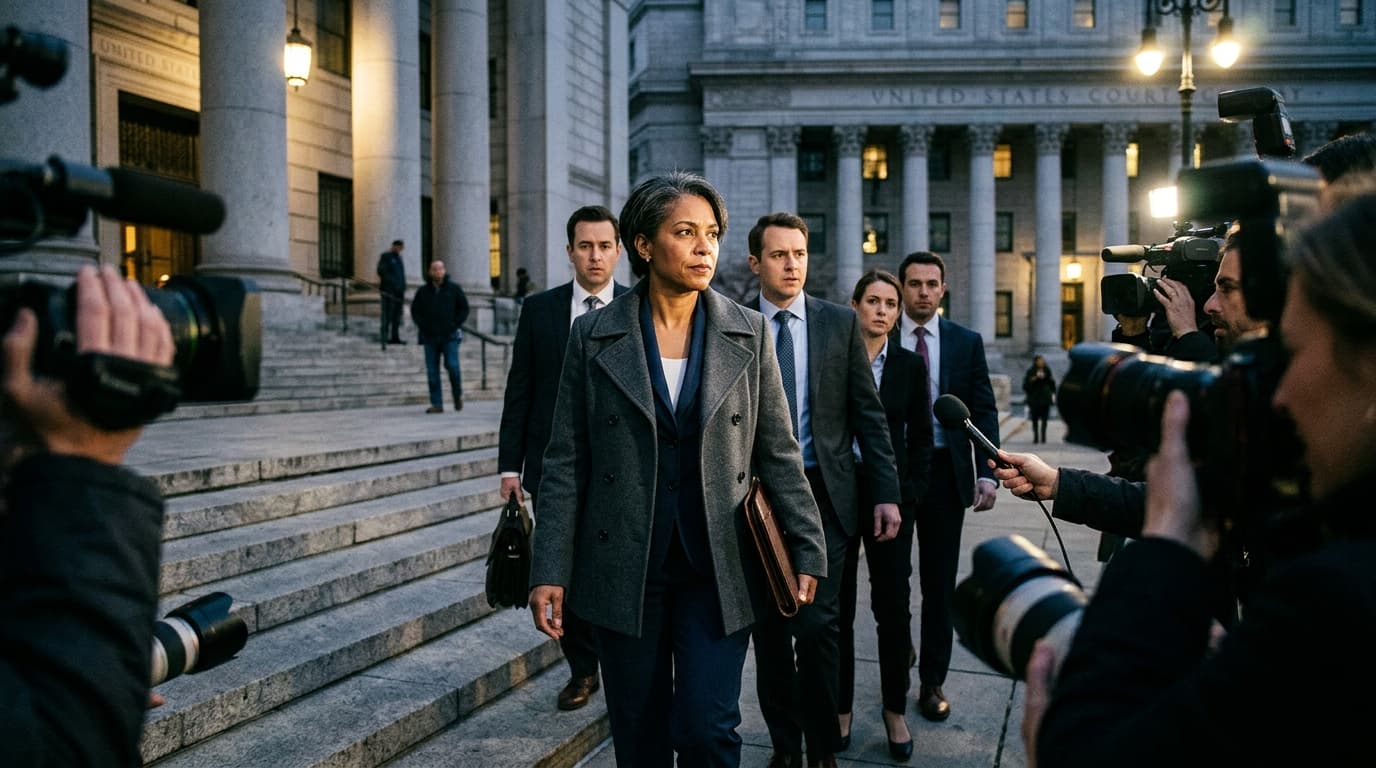
Oregon AG's $111bn Antitrust Gambit Tests Federal-State Media Power
Oregon's motion to pause the Paramount–Warner Bros. merger for 60 days signals that state antitrust enforcers, not the DOJ, now hold the leverage over America's biggest media deal.
Oregon Attorney General Dan Rayfield asked a Multnomah County judge on July 7, 2026 to freeze Paramount Skydance's $111 billion acquisition of Warner Bros. Discovery for 60 days and to compel the company to produce records of its lobbying of the White House and the Justice Department — an argument that if DOJ's June 12 clearance was, in Rayfield's words in the filing, "the product of a corrupt bargain," it deserves "little to no credit." That framing, more than the delay itself, is the story: a state prosecutor is asking a state court to treat a federal merger clearance as evidence, not as a bar. If Judge Eric Dahlin agrees on Monday, July 13, the balance of power in US antitrust — long tilted toward Washington — moves decisively toward the state capitals.
The motion, in plain view
The immediate legal question is narrow. Rayfield wants a 60-day pause on closing and enforcement of civil investigative subpoenas that Paramount Skydance has resisted. Paramount's lawyers have told the court they will not close before July 22, and the company insists that date reflects the European Commission's Phase 1 merger review deadline rather than an Oregon-imposed constraint, according to Variety. A hearing scheduled for Wednesday before Presiding Judge Judith Matarazzo was punted; Dahlin now inherits it.
But the theory of the case is expansive. Rayfield is not just alleging that the combined company would harm consumers or Oregon's film-adjacent economy. He is arguing that the federal antitrust review was tainted — that Paramount lobbied the White House and DOJ to secure a clearance that a "rigorous" investigation would not have produced. The DOJ's June 12 statement declared the deal would "increase competition across the media and entertainment ecosystem, with benefits for American consumers and workers," a formulation the BBC noted was unusually promotional for an antitrust closing statement. Rayfield's brief seizes on that: the state, he argues, would normally defer to DOJ's investigatory resources, but not if the investigation was pretextual.
The angle: state AGs are colonising federal antitrust space
This is not the first time state attorneys general have squared off against a friendly federal DOJ on a merger. It is the first time they have done so on a media megadeal in an environment where the federal clearance itself is widely presumed to be politically negotiated.
The controlling precedent for state authority is California v. American Stores Co., 495 U.S. 271 (1990), in which the Supreme Court held that a state suing under Section 16 of the Clayton Act may obtain divestiture — the full remedial toolkit — even after the FTC has settled. The court has since reinforced that "a system of multiple enforcers is an integral part of the congressional plan for protecting competition." That doctrine is the legal spine of what California AG Rob Bonta, New York AG Letitia James and now Rayfield are threatening.
The modern template is New York v. Deutsche Telekom AG, the 2019–20 multistate challenge to the T-Mobile–Sprint merger. There, thirteen states and the District of Columbia sued to block a deal DOJ had already settled with divestitures. The states lost at trial — but the case established two things now central to Paramount–Warner. First, the DOJ tried to file a Statement of Interest suggesting states lacked authority to disturb a federal settlement; a coalition of state AGs wrote to Judge Victor Marrero denouncing that as an attempt to "undermine the states' important and independent role" in antitrust enforcement,
according to a filing from Washington AG Bob Ferguson. Second, and more consequentially: state AGs learned that even losing at trial reshapes the deal, because settlement leverage flows from the credible threat of an injunction.
Columbia Law professor Tim Wu, writing on the Warner–Paramount deal earlier this year, told NPR that the merger "reduces competition too much in too many markets in violation of federal law and probably of state — in this case, California — other laws." Wu identified the labor-market theory — that consolidating the last independent movie-and-television bidders depresses wages for writers, directors and crew — as the argument most likely to move a California judge. That's the substantive claim states are converging on. Rayfield's lobbying subpoenas are the procedural weapon.
Why the "corrupt bargain" framing matters
Rayfield's brief is doing something that Bonta and James have been careful to avoid so far in filings: putting the political corruption theory of DOJ clearance on the record. In a press statement, he said Paramount "had every opportunity to hand over records and answer a few basic questions. Instead, it is trying to run out the clock and evade scrutiny," per reporting from TheWrap.
The context is well-documented. In July 2025, Paramount paid $16 million to settle a lawsuit Donald Trump had filed as an individual over CBS's editing of a 60 Minutes interview with Kamala Harris, as NPR reported. Days later, FCC Chair Brendan Carr cleared Paramount's earlier $8 billion Skydance merger after David Ellison agreed to eliminate DEI programs, install an ombudsman to police "ideological bias" at CBS News, and — in a decision Paramount denies was linked — end Stephen Colbert's late-night show. Oregon Sen. Ron Wyden called the settlement "a bribe for merger approval" and urged state prosecutors to act.
That is the backdrop against which the DOJ's Antitrust Division, under Trump appointee leadership after career chief Abigail Slater's forced resignation, closed a probe of a much larger combination in under three months and issued an atypically laudatory statement. The Ellison family's political ties are not incidental to the story: Larry Ellison is a major Trump donor and, per the Financial Times, the combined Paramount–Warner would be nearly 50% foreign-owned, with Saudi, Emirati and Qatari capital in the stack — a fact senators Warren, Schumer and Booker cited in urging additional scrutiny.
Rayfield's calculation is that a Multnomah County judge, applying Oregon's own antitrust statute, does not have to accept DOJ's clearance at face value. Under United States v. Philadelphia National Bank, 374 U.S. 321 (1963), courts have long held that regulatory approval of a transaction does not preclude independent judicial review of its competitive effects. State-court judges will read that same doctrine even more permissively.
Why the delay itself is the leverage
The Paramount–Warner deal is a leveraged bet. Ellison financed the acquisition partly through debt that Warner Bros. Discovery's board estimated at $87 billion in the combined company post-close, in an amended merger filing Al Jazeera reported in January. The company has committed to a September 30, 2026 target close, according to
NPR. Every additional month of delay increases financing costs, extends employee-retention risk at both studios, and gives regulators in Brussels leverage to demand more concessions.
That is why Oregon's motion is more dangerous than its narrow relief suggests. If Dahlin grants the 60-day pause, California and New York — which Reuters reported via The Straits Times are preparing a multistate suit as early as next week — gain time to assemble a Section 7 Clayton Act case with the discovery record Rayfield is trying to extract. If Dahlin denies it, Paramount still faces the far larger threat of a California-led injunction lawsuit. Either way, the September close slips.
Paramount understands this. Its lawyers have insisted the July 22 date is tied only to the European Commission's Phase 1 clock — the deadline for Brussels either to clear the deal, open a Phase 2 investigation, or accept remedies. Discussions on remedies are already underway, the Financial Times reported in May, meaning EU clearance itself is not the free pass Ellison implied it would be.
The second-order effect: state AGs become the merger regulator
The deeper implication runs beyond one deal. For a decade, US merger control has effectively been federal. State AGs joined DOJ or FTC actions; rarely did they lead. The Trump administration's transactional approach to antitrust — closing the Paramount and Hewlett Packard Enterprise–Juniper cases with statements sympathetic to the parties, according to NPR reporting — has created a vacuum that Democratic AGs are filling. What Rayfield is testing is whether Oregon state court, applying Oregon antitrust law, can act as a de facto national merger regulator on transactions the federal government has waved through.
The precedent for that is thin but real. In California v. American Stores, one state's suit produced divestiture of a nationwide grocery chain. In New York v. Deutsche Telekom, states forced concessions even in defeat. If Bonta and James file their multistate case next week and Rayfield's motion succeeds, the Paramount–Warner combination could become the first megadeal of the Trump-2 era in which state AGs, not federal regulators, set the terms.
That would be a durable shift. As the state AGs' 2020 letter put it, quoting the Supreme Court, "a system of multiple enforcers is an integral part of the congressional plan." Under a federal antitrust apparatus perceived as politically compromised, that multiplicity stops being redundant and starts being the whole ballgame.
Diplomat View
The forecast: Rayfield probably loses on the full 60-day pause but wins the subpoenas, at least in part — and that partial win is enough. Multnomah County courts are cautious about enjoining transactions on record demands alone, but Oregon has a colorable interest in its film labor market and its consumers, and Paramount's blanket refusal to disclose federal-lobbying records will read badly to a state-court judge. California and New York will file within two weeks, converting Oregon's discovery record into a national Section 7 challenge. Expect Paramount to offer behavioral remedies — labor commitments, film-slate guarantees, HBO Max carriage assurances — to peel off swing-state AGs before trial. This forecast changes if (a) Judge Dahlin denies both the delay and the subpoenas outright, in which case federal preemption arguments gain traction and the multistate coalition loses momentum; (b) the EU Commission opens a Phase 2 review on July 22, which would push the deal past September and hand states unlimited time; or (c) the White House intervenes publicly, which would confirm Rayfield's "corrupt bargain" theory and radicalise the state-court judges.
What to watch:
- July 13, 2026: Judge Eric Dahlin hears Oregon's motion for a 60-day delay and subpoena enforcement in Multnomah County.
- July 22, 2026: European Commission Phase 1 deadline — either clearance with remedies, or Phase 2 opens, extending review by four months.
- Week of July 13, 2026: California-led multistate antitrust complaint expected filing window, per sources cited by Reuters.
- September 30, 2026: Paramount's self-imposed target close; any state injunction lands before this date or renders itself moot.
The Bottom Line
Oregon's motion is not really about Oregon — it is a test of whether state courts will treat a federal antitrust clearance as evidence, not as immunity, when the federal reviewer is perceived to have been captured. If Rayfield wins even partial discovery on Paramount's lobbying of the Trump White House, the state-AG bloc will have converted the largest US media merger since AT&T–Time Warner into a durable template for policing federally rubber-stamped deals. The next decade of American merger control may be written not in Washington but in Portland, Sacramento, and Albany.
Discover more
Tech Policy
EU Forces Google to Open Search Data to AI R
EU forces Google to share search data and open Android to AI rivals under the Digital Markets Act, with binding deadlines starting November 2026.
Tech Policy
Google Play Opens to Third-Party Stores July
Google Play will allow third-party app stores like Epic Games Store and Amazon Appstore starting July 22, 2026, following a federal antitrust injunction. The move reshapes the $49.2 billion Android app economy.
Tech Policy
Google Play Opens to Rival Stores Under Court
Google opens Google Play to rival app stores on July 22, 2026, under a federal court order after losing Epic Games antitrust case. The remedy includes a $5,000 annual fee and automatic developer enrollment, favoring large platforms over small competitors.
Tech Policy
EU Orders Google to Open AI and Search Data
EU orders Google to open Android AI features and share search data with rivals under the DMA, targeting its data flywheel. OpenAI and Anthropic stand to gain.