Nuclear Inspectors Return Amid Lebanon Crisis
Inspectors back in Iran as Lebanon faces escalating violence.
Model Diplomat3 min readMiddle East
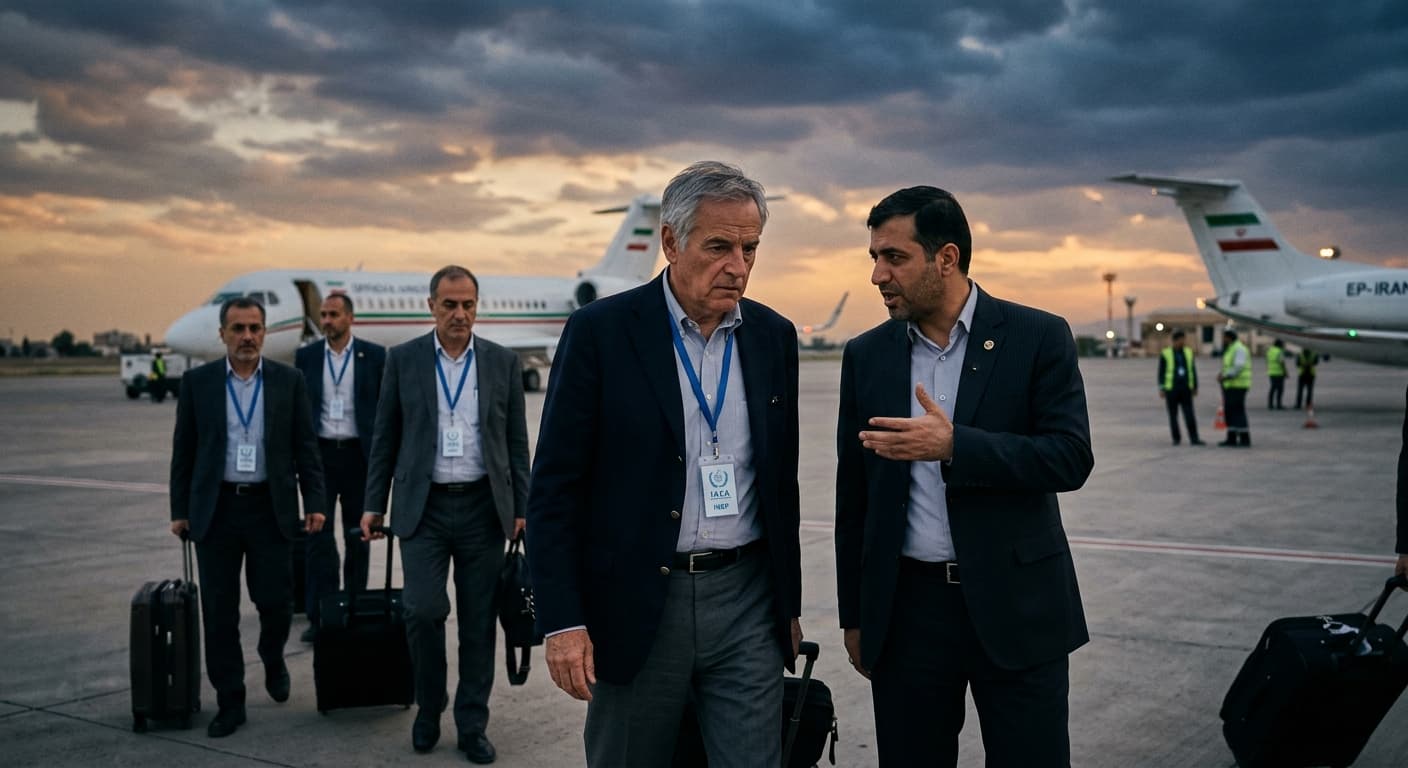
Netanyahu's Stalling Game: Why Israel Keeps Bombing While IAEA Returns to Iran
Israel defies US diplomacy with continued Lebanon strikes as nuclear inspectors prepare to return to Iran under a fragile 60-day truce framework.
Al Jazeera reported on June 26 that Israeli forces hit southern Lebanon as international nuclear inspectors prepared to return to Iran—despite an interim US-Iran peace accord meant to end hostilities on all fronts. The disconnect is stark: while IAEA chief Rafael Grossi announced plans to visit Iran's nuclear sites and resume supervision of enrichment activities, Israeli forces killed two people in Mayfadoun and a third person wounded in a separate raid on Nabatieh al-Fawqa. Prime Minister Benjamin Netanyahu explicitly pledged the military would "not going to withdraw" from occupied Lebanese territory.
The contradiction runs deeper than daily clashes. Israel is conditioning its Lebanon pullout on Hezbollah's complete disarmament—a process neither side believes is imminent—while the BBC reported that inspectors will only access bombed Iranian nuclear sites after a final deal is concluded and all sanctions are lifted. Both sides are using the same tactic: turning military positions into negotiating leverage while mouthing compliance with diplomatic timelines. The US-Iran memorandum of understanding runs 60 days; the Israel-Lebanon talks, mediated from Washington, have been framed as moving toward a "commitment of intent." Neither has teeth while the fighting continues.
How Israel Is Blocking the Deal from Below
Netanyahu's position is unambiguous: The Hindu reported that Israeli Defense Minister Israel Katz said Israeli forces would remain in southern Lebanon as long as Hezbollah posed a threat. Israeli officials denied on June 25 that any meaningful withdrawal had occurred, contradicting a US State Department official's claim that Israel had pulled back from part of a buffer zone. The gap between what Washington claims and what Netanyahu's government actually does is the real story.
Since the war began on February 28, 4,230 people have been killed in Lebanon and 12,179 wounded, according to the Lebanese Ministry of Public Health. Netanyahu explicitly made occupation conditional not on a US deadline but on Hezbollah's political destruction—a process that cannot be decoupled from Iran's regional role. By keeping forces in place and conducting near-daily strikes, Israel is signaling to both Washington and Tehran that any US-Iran deal that leaves Hezbollah intact will face Israeli nullification on the ground.
What Washington Is Pretending Didn't Happen
US Secretary of State Marco Rubio has praised "progress" toward a "commitment of intent" between Israel and Lebanon. Al Jazeera reported his statements on June 25, noting that this would be "the first time in 30 years" the two countries are in direct talks. This framing obscures the core problem: talks produce nothing if Israel refuses to leave, and Israel will not leave until Iran is weakened sufficiently—a goal fundamentally misaligned with the interim deal Rubio helped broker.
Grossi's assertion that inspectors will visit "as soon as possible" is equally ceremonial. Iran's deputy foreign minister has already stated that access to damaged nuclear facilities remains contingent on a final agreement and sanctions relief. The IAEA has not inspected the most sensitive sites—Isfahan, with its underground uranium stockpiles—since the Israeli strikes last June. The memorandum of understanding acknowledges IAEA supervision "explicitly," but the actual timetable depends on whether both sides believe the other is complying. They don't.
What Happens Next
The 60-day negotiation window assumes good faith. It doesn't have it. Israel's continued occupation and strikes on Lebanon tell Iran that the US cannot enforce a ceasefire, making Iranian hardliners who oppose any deal with Washington more credible. Conversely, if Netanyahu withdraws under US pressure without Hezbollah disarmed, Israeli domestic politics will force a government crisis. Watch three dates: late June, when the next round of US-Iran technical talks resumes; early August, as the 60-day window nears its end; and any moment when the US signals it will stop defending Israeli strikes in Lebanon. That moment will determine whether this war has 119 days behind it or 120 days ahead.
Discover more
India
BJP Congress Clash Over MP Bill Defeat
The BJP's defeat of the women's quota amendment sparks a political narrative war with Congress, impacting future elections.

US Politics
Virginia GOP Rallies Rural Voters Against Red
Virginia Republicans are mobilizing rural voters against a Democratic-led redistricting referendum, a fight seen as pivotal to control in the 2026 midterms.

US Politics
Senate Repeals Minnesota Mining Ban for Twin
The Senate's repeal of a 20-year mining moratorium in Minnesota allows Twin Metals to proceed, raising concerns over environmental impacts and foreign ownership.

Conflict & Security
Drone Warfare Killing Aid Workers at Unprec
Over 1,000 humanitarian workers killed in three years as cheap armed drones collapse legal protections. Gaza, Sudan, Ukraine, and DRC see deliberate targeting of aid convoys and hospitals with zero prosecutions.