North Korea’s Naegohyang Turns a Football Win Into Leverage
Naegohyang’s 1-0 victory in Suwon was more than a title: it gave Pyongyang a rare public platform in the South and a new diplomatic talking point.
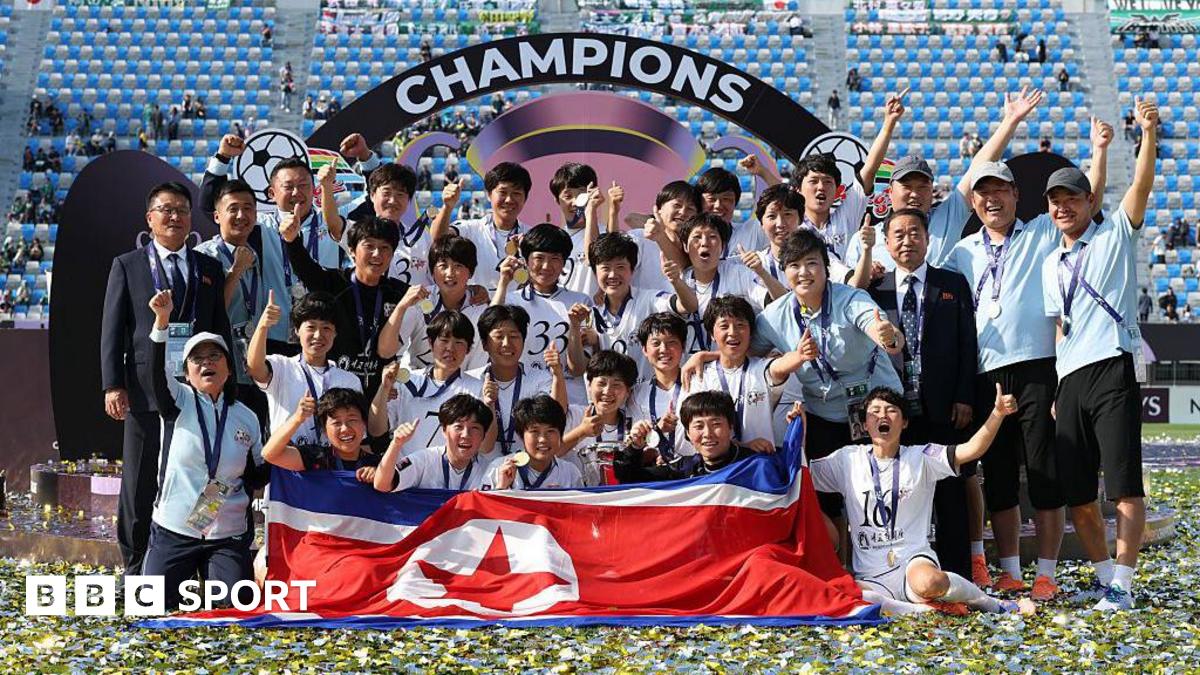
North Korea’s Naegohyang beat Japan’s Tokyo Verdy Beleza 1-0 in the Asian Women’s Champions League final in Suwon, South Korea, with captain Kim Kyong Yong scoring just before halftime and the team later parading the North Korean flag after the trophy ceremony, according to  BBC Sport. The result mattered because it came on South Korean soil, in the first visit by North Korean athletes to the South since 2018, and because it handed Pyongyang a clean, controlled image at a moment when inter-Korean relations are frozen but not closed.
Sport as a low-cost diplomatic channel
This was a rare case where North Korea entered South Korea on its own terms. There were no official away supporters because of travel restrictions, but the crowd still included civic groups backed by Seoul’s unification ministry, and South Korea’s Unification Minister Chung Dong-young had already called the game a “positive precedent,” BBC Sport reported. That is the leverage point: North Korea gets global visibility without making political concessions. It can project discipline, competitiveness and normalcy through its women’s team, while keeping the broader diplomatic file shut.
The South Korean side also had an interest in making the match work. President Lee Jae Myung is seeking to improve ties, even as Pyongyang continues to describe the South as its “most hostile state,” according to BBC News. That leaves Seoul in a familiar bind: it can host symbolic exchanges and hope they lower the temperature, but it cannot force reciprocity. The result is a public event that South Korea can frame as engagement, while North Korea can frame as proof that it remains a serious sporting power.
For Pyongyang, the bigger win is reputational. North Korean women’s football has become one of the regime’s few consistently successful international showcases, and Naegohyang’s title adds to that record. The club was founded in 2012, and its first-year run to a continental title gives the regime a propaganda asset that costs far less than missile testing and irritates far fewer governments, while still signaling national competence, BBC News noted.
The money question is the real pressure point
The next fight is not on the pitch. It is over the prize money.  Korea JoongAng Daily reported that Naegohyang’s $1 million winner’s purse may run into UN sanctions problems, because Resolution 2094 restricts bulk cash transfers to North Korea. That is the practical limit on Pyongyang’s gains: the symbolism is already banked, but the financial payoff may be blocked or delayed.
That uncertainty matters because it shows how sports are now being absorbed into the sanctions architecture. North Korea can still win, still travel, still be filmed celebrating, but turning that into usable cash is harder. If the AFC finds a workaround, Pyongyang will pocket both prestige and funds. If not, the regime still gets the propaganda value while losing the economic upside.
What to watch next
The immediate watchpoint is whether the AFC confirms how Naegohyang will receive its prize money, and whether South Korea uses this tournament as a template for more tightly managed sports exchanges. The broader date to watch is next year’s FIFA Women’s Champions Cup, where Naegohyang’s qualification guarantees another international platform — and another chance for Pyongyang to convert sport into state power.