North Korea's Labor Pipeline Faces Crisis
Pyongyang's overseas labor dispatches to Russia decline.
Model Diplomat7 min readAsia
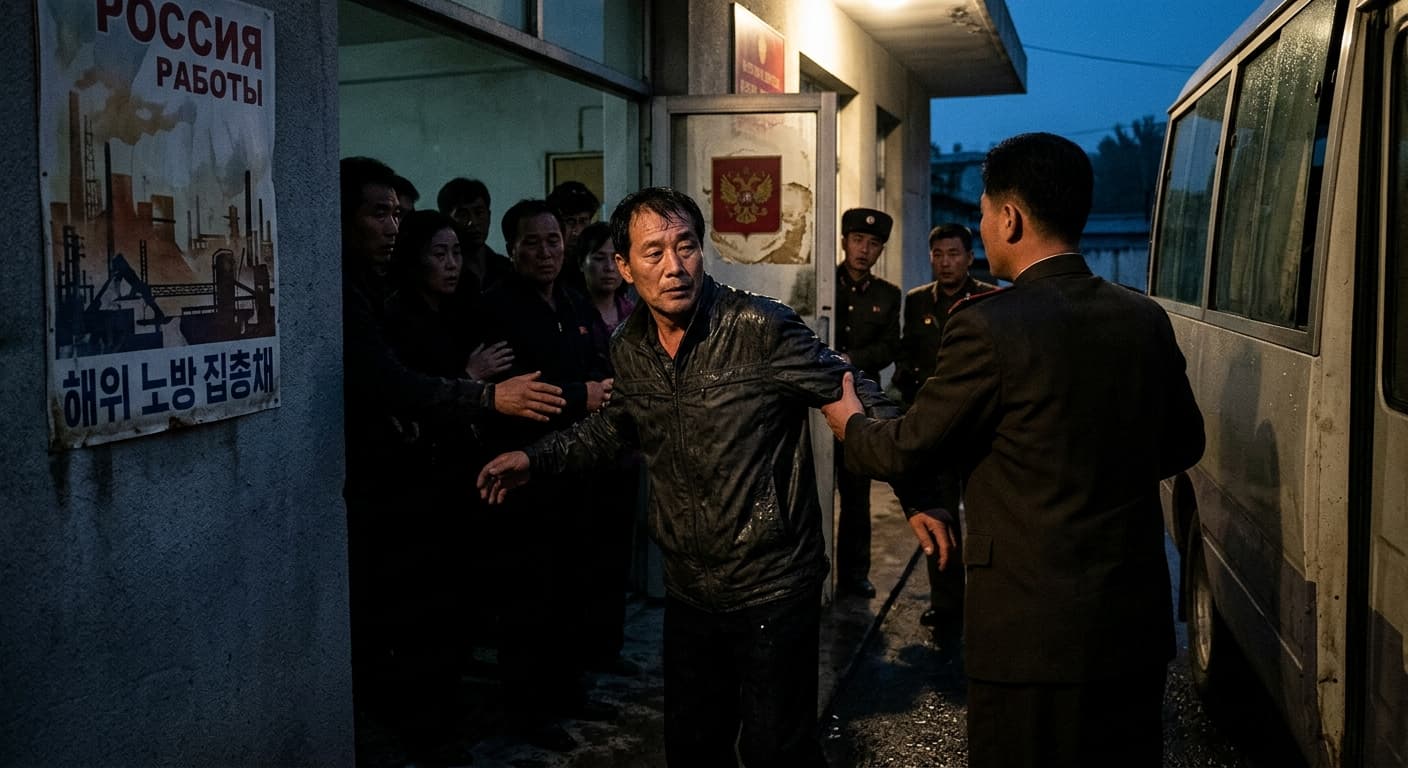
Pyongyang's Overseas Labor Pipeline Cracks as Russia War Fear Spreads
North Koreans in Pyongyang are refusing dispatch to Russia for the first time in a generation — a supply-side crack in a $150–600 million pipeline that props up Kim Jong Un's weapons budget and reshapes Indo-Pacific security calculus.
For the first time in a generation, ordinary North Koreans are refusing what their parents once bribed cadres to obtain: a ticket abroad. Sources inside Pyongyang told Daily NK on July 3, 2026 that rumours of Ukrainian strikes on Moscow and St. Petersburg have collapsed the appeal of Russia postings, forcing the regime to early-discharge soldiers to fill quotas. The thesis: Kim Jong Un's overseas-labor machine — a $150–600 million-a-year lifeline that funds his ballistic-missile program — is now hostage to a Ukrainian drone campaign 8,000 kilometers from Pyongyang, and the resulting cash squeeze is what will shape North Korea's next round of coercion on the peninsula.

The Pyongyang street votes with its feet
Overseas dispatch has been the single most sought-after economic prize in North Korean society for two decades. A Kookmin University study cited by the BBC found candidates routinely paid bribes to secure slots, chasing wages ten times higher than domestic rates. That calculus has flipped. Pyongyang sources told
Daily NK on July 3, 2026 that residents now say openly: "who wants to earn money in a war zone and become cannon fodder for a few dollars? Life is more important."
The precipitating fact is battlefield leakage. Despite tight information control, news of Ukrainian long-range drone and missile strikes on Moscow and St. Petersburg has reached ordinary Pyongyang households through the informal channels Daily NK's network monitors. A separate report in Jayu Ilbo — a South Korean outlet aggregating the same sourcing — confirms the phrase circulating in the capital: "달러보다 목숨이 먼저," dollars come after life.
This is not moral awakening. It is risk repricing. Every North Korean sent to Russia knows the Kursk memorial that Kim ordered built in Hwasong district in October 2025, unveiled on April 26, 2026, and analysed by the BBC as commemorating roughly 2,300 dead. When the regime itself publicly mourns the dead, ordinary families do the arithmetic.
The regime is scaling up as morale collapses
The reluctance emerges at precisely the wrong moment for Kim Jong Un. South Korean intelligence told the BBC in August 2025 that Russia intends to eventually absorb more than 50,000 North Korean workers, up from a 12-fold surge in 2024 alone. The
Multilateral Sanctions Monitoring Team, the eleven-nation body established in October 2024 to replace the UN Panel of Experts Russia vetoed out of existence, said in its October 22, 2025 report that Pyongyang has plans to deploy up to 40,000 workers to Russia including IT specialists.
Kim needs the pipeline for structural reasons. According to Foreign Affairs, Russia's official bilateral trade with the DPRK hit a record $34 million in 2024 — still trivial next to China's $2 billion — but Moscow also unfroze $9 million in DPRK assets and granted Pyongyang access to international banking channels for the first time in years. Labor exports and soldier-for-hire schemes are the exchange currency. The U.S. State Department told Yonhap, quoted by
NPR, that Pyongyang is "now relying on Russia to provide it with desperately needed funds in exchange for labor and soldier for hire schemes."
The pipeline itself is illegal. UN Security Council Resolution 2397, adopted unanimously on December 22, 2017, required member states to "repatriate all DPRK nationals earning income in that Member State's jurisdiction… no later than 24 months," according to the UN Security Council record. Russia is not repatriating; it is importing. The
UN News release describing the vote makes explicit that the ban was designed to sever Pyongyang's hard-currency stream to its "prohibited nuclear and ballistic missile programmes." Moscow's workaround, according to the BBC's reporting on Russian border data, is student visas — nearly 8,000 of the 13,000 North Koreans who entered Russia in 2024 arrived that way.
Backfilling with soldiers
Because volunteer supply from Pyongyang is drying up, the regime has moved to compulsion. Daily NK reported that authorities in late June 2026 discharged soldiers with seven to eight years of service from units in Ryanggang and Jagang provinces — provinces bordering China and traditionally the poorest — and sent them directly to Russia as laborers. The framing is telling: soldiers accept dispatch because the domestic alternative is muribaechi, forced post-discharge assignment to coal mines or collective farms. One source described a soldier's family mishearing "dispatch" (파견, pakyeon) as "military deployment" (파병, pabyong) and breaking down in tears.
The construction pipeline into Russian-held Ukraine, meanwhile, has stalled. In a second Daily NK dispatch, a source described a first cohort selected in November 2025 for occupied eastern Ukraine that has been held back because "the war isn't going as well as they thought." Workers already reassigned to "overseas" status now sit in bureaucratic limbo, unable to return to original workplaces and unable to leave. Some borrowed money at high interest to pay the bribes required to be selected. That debt is now a domestic political problem: "there will be a flood of complaints and petitions, or conflict will emerge," the source warned.
The IT substitution — and its ceiling
Kim's regime has an obvious hedge: send fewer bodies, more keyboards. The MSMT report published via the U.S. State Department in January 2026 documents that DPRK operators stole $2.84 billion in virtual assets between January 2024 and September 2025 — $1.65 billion in the first nine months of 2025 alone. That is roughly one-third of North Korea's total foreign-currency revenue in 2024, according to
ISPI's reading of the report.
But cyber cannot fully replace construction. The IT-worker scheme, generating $250–600 million annually per the UN Panel of Experts report cited by the BBC, requires a foreign perimeter — laptop farms, foreign facilitators, banking mules — that Washington began dismantling in earnest through the "DPRK RevGen: Domestic Enabler Initiative," according to
CSIS. On November 4, 2025, the
U.S. Treasury sanctioned DPRK bankers and institutions laundering IT-worker funds, tightening the choke point. And the workers themselves face the same "you see the real world" problem the BBC's defector Jin-su described — precisely why Pyongyang prefers construction crews under barracks discipline.
What actually changes
The reluctance in Pyongyang does not end the pipeline. Russia's labor shortage is structural — Andrei Lankov of Kookmin University, quoted by the BBC, argues North Korean laborers "will be the lasting legacy of Kim and Putin's wartime friendship" long after the war ends. What changes is the composition and the price. Fewer volunteers means more conscripts, more corruption crackdowns to police cadres who took bribes for slots that never materialized, and more early-discharged soldiers who will return home with grievances rather than the housing deposits they were promised. The RSIS estimate that expatriate workers contribute roughly $147 million a year to the state — cited in a
Rajaratnam School analysis — sits inside the U.S. State Department's $150–300 million range for taxes on foreign-based citizens.
For Seoul and Washington, the second-order effect matters more than the headline. If Kim's labor cash flow tightens even 10–15%, and if MSMT enforcement continues to close IT-worker laptop farms, Pyongyang's remaining leverage is provocation — missile tests, cyber theft, or the "up to 30,000 additional soldiers" that Ukraine's military intelligence directorate warned in July 2025, cited by the Council on Foreign Relations, could be sent to Russia. The CFR analysis is blunt on the geometry: the task today is "no longer just deterring North Korea but deterring a Korean conflict that could draw in China and Russia together."
Diplomat View
The Pyongyang street's revolt against overseas dispatch is the first supply-side signal in years that Kim Jong Un's sanctions-evasion economy has an internal ceiling. It is not a moral awakening; it is Ukrainian drones re-pricing the Russia option in Pyongyang neighborhoods where information travels faster than the regime's censors. The specific forecast: expect Pyongyang to lean harder on IT-worker fraud and crypto theft through 2026 to plug the gap, and expect a fresh round of Kursk-style compulsory dispatches from northern provinces where discontent is easier to suppress. What would revise this call: a Russia-Ukraine ceasefire that reopens reconstruction contracts in occupied Donbas, or a Chinese decision to quietly re-admit large DPRK labor cohorts through student-visa channels. Both are plausible within twelve months. Neither restores the pre-war equilibrium in which Pyongyang residents queued to pay bribes for a shot at Moscow. That queue is now gone.
Forward look — three catalysts to watch:
- Third MSMT report (expected Q3–Q4 2026): will document whether North Korean labor flows to Russia rose or fell year-on-year, and how badly the eleven-nation team can pierce the student-visa workaround.
- North Korea's 9th Party Congress (widely expected in early 2026 or delayed to late 2026): if Kim signals a rhetorical shift on overseas earnings or unveils new domestic wage incentives, treat it as confirmation the pipeline is under strain.
- U.S. Treasury OFAC designations tranche following November 4, 2025 action: further sanctions on Russian firms hosting DPRK workers — particularly Yav-Stroi-scale employers in the Russian Far East — would test Moscow's willingness to formalize violations of UNSCR 2397 or push cooperation further underground.
The Bottom Line
The bottom line: Pyongyang's overseas labor machine is not collapsing, but it is cracking from the inside for the first time since Kim took power — and the crack was opened not by Washington's sanctions but by Kyiv's drones. If Ukrainian long-range fire keeps reaching Moscow through 2026, Kim will pay for his weapons program in bodies rather than volunteers, and the resulting domestic friction is the single most underpriced variable in the Korean peninsula's security outlook. *
Discover more
Global Politics
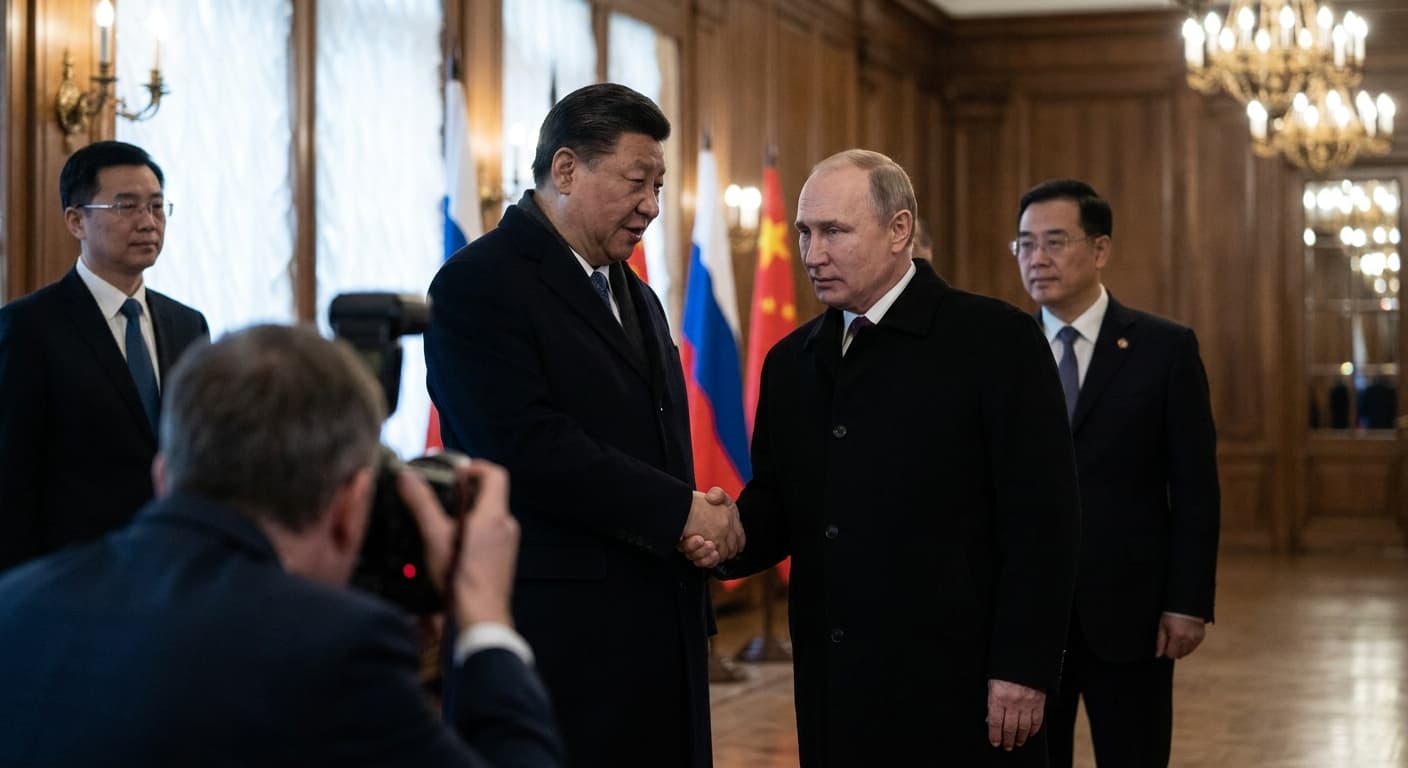
Xi Jinping Calls China-Russia Ties 'Precious'
Xi Jinping's description of China-Russia ties as 'precious' reflects a strategic imbalance, with Beijing dictating terms in the partnership.

US Politics
US Launches $166B Tariff Refund Portal
The US is launching a $166 billion tariff refund portal to aid importers hit by Trump-era tariffs, with major implications for trade and supply costs.
US Politics
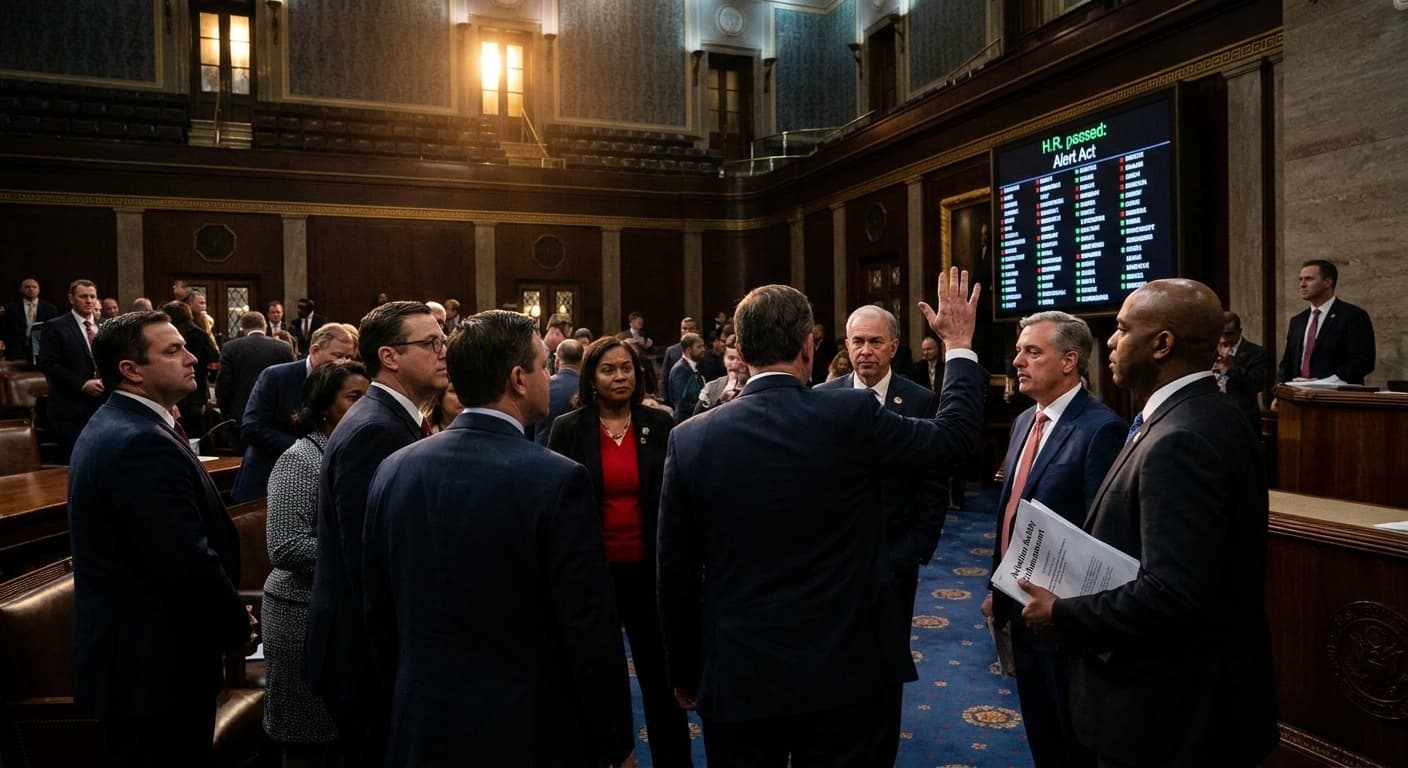
U.S. House Passes Alert Act for Aviation
The House passed the ALERT Act 396–10, replacing the ROTOR Act after Pentagon intervention, impacting aviation safety regulations.

Conflict & Security
Drone Warfare Killing Aid Workers at Unprec
Over 1,000 humanitarian workers killed in three years as cheap armed drones collapse legal protections. Gaza, Sudan, Ukraine, and DRC see deliberate targeting of aid convoys and hospitals with zero prosecutions.