Nigeria Senate Moves to End Boko Haram Rehab
Senate demands closure of Operation Safe Corridor amid rising insurgency.
Model Diplomat10 min readAfrica
Nigeria's Senate Moves to Kill Boko Haram Rehab as Sahel Jihad Closes In
Nigeria's Senate on July 7, 2026 demanded an end to Operation Safe Corridor — with 124,000 fighters mid-surrender and the Sahel insurgency spilling into Nigerian territory.
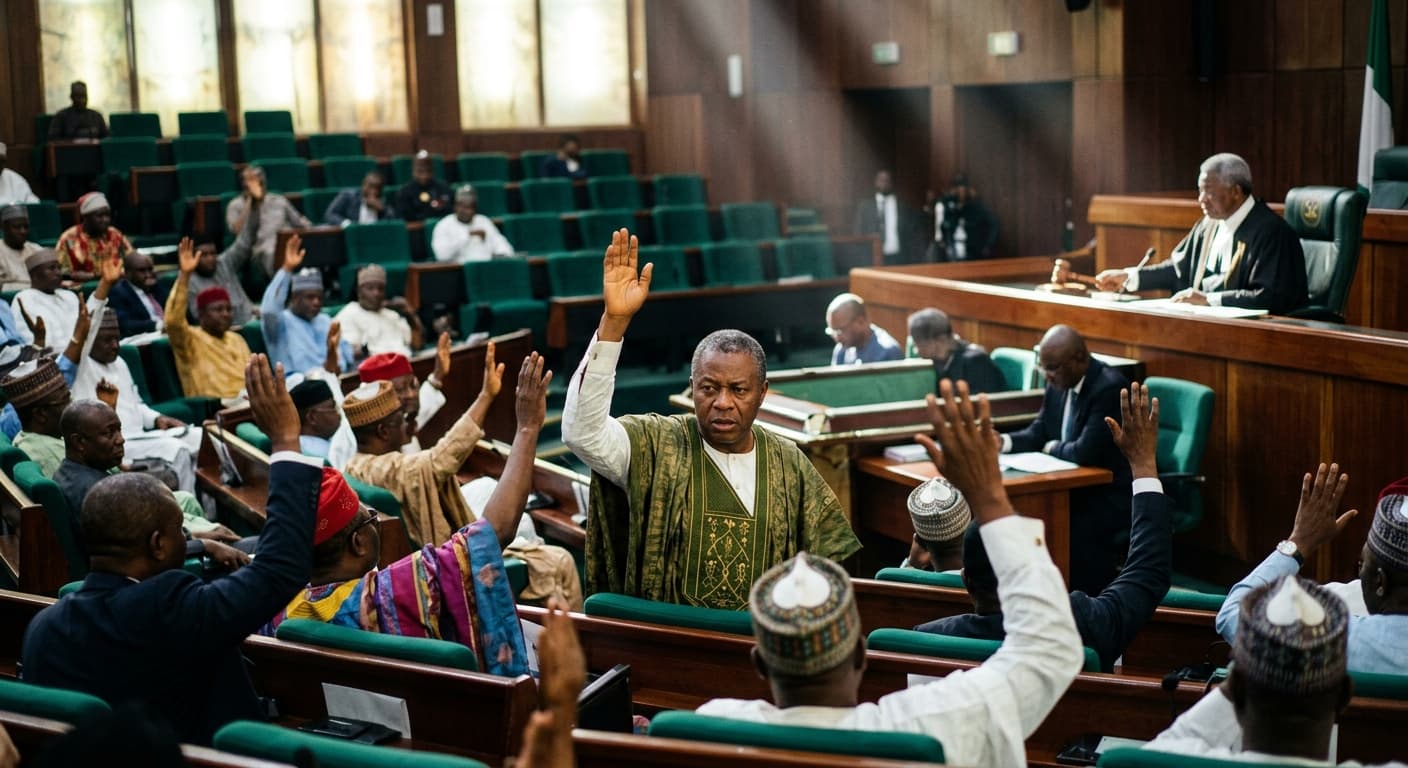
Nigeria's Senate voted by voice on July 7, 2026 to demand President Bola Tinubu shut down the country's only exit ramp for defecting Boko Haram fighters — at precisely the moment the northwestern border with Niger has become the merger point of Nigeria's decade-old insurgency and the Sahel's al-Qaeda and Islamic State franchises. The resolution, moved by Senator Abdulazeez Yar'Adua after the death in captivity of former Director of Defence Information Maj. Gen. Rabe Abubakar, would freeze the pipeline that has processed more than 124,000 surrenders since 2023. The second-order effect is not domestic but regional: cutting the only non-kinetic pressure valve on Boko Haram just as ISWAP, JNIM and IS-Sahel Province converge on Nigeria's western borderlands.
What the Senate actually resolved
The motion — supported on the floor by Senator Joseph Ikpea and former Edo governor Adams Oshiomhole, who called the rehabilitation policy nonsensical — passed by voice vote and instructed the Federal Government to halt the pardon and reintegration of "repentant" Boko Haram members and other insurgents. According to Daily Trust, lawmakers coupled the demand with a call for arrests and prosecutions, and resolved to meet Tinubu directly over the worsening security picture.
Vanguard reported that the chamber condemned attacks on serving and retired officers spanning January 2023 to May 2026.
BBC Pidgin captured the political register that carried the motion through the floor: "E no make common sense," Oshiomhole told colleagues, that the state pardons criminals it should be prosecuting.
The trigger event was specific and symbolic. Maj. Gen. Rabe Abubakar — military spokesman from 2015 to 2017 — was abducted with his wife on May 30, 2026, en route to a wedding in Katsina State. The BBC reported his death in captivity on June 13, 2026, from diabetes and hypertension complications. His widow was later shot during a rescue operation and evacuated to a military hospital. That a former defence spokesman could die in the hands of armed groups after a video circulated online showing him wounded was the political detonator the Senate had been waiting for.
Motions in the Nigerian Senate do not bind the executive. But this one lands with unusual force because it targets a signature counter-insurgency instrument the presidency has publicly defended, and does so while the executive is politically exposed on security. Two governors of the front-line north — Borno's Babagana Zulum and Yobe's Mai Mala Buni — have already spent the past year lobbying for troop surges rather than DRR investment, per the Council on Foreign Relations. The Senate vote effectively formalises that preference at the federal level.
The program the Senate wants killed
Operation Safe Corridor (OPSC), launched in 2016 out of Mallam Sidi in Gombe State, is Nigeria's Deradicalisation, Rehabilitation and Reintegration (DRR) architecture for "low-risk" defectors. The International Crisis Group has documented its opaque screening criteria, its over-referral of civilians mislabelled as jihadists, and reintegration outcomes that have been bumpy but, in many cases, successful. Coordinator Brig. Gen. Yusuf Ali has publicly claimed a recidivism rate below 2 percent, per the
Centre for Democracy and Development. Independent researcher
Bulama Bukarti and Vanda Felbab-Brown flagged those numbers as unverifiable years ago — but no independent Nigerian body has produced a competing figure since.
The scale has changed dramatically under Tinubu. In his June 12, 2026 Democracy Day address, cited by Al Jazeera, the president said more than 124,000 fighters and dependants had entered the surrender process since 2023. Defence Headquarters puts total surrenders between 2016 and 2025 at over 300,000, with 2,615 individuals formally graduated and reintegrated. The ratio matters: roughly one in every 115 people who enters the surrender pipeline actually graduates through Mallam Sidi. Everyone else is either detained pending Ministry of Justice screening, quietly released to communities, or held in the Giwa Barracks system that has drawn repeated human-rights criticism from
Brookings.
Nigeria's presidency, in a statement archived at State House Abuja, has previously insisted that no OPSC graduate has been absorbed into the military, and that the International Organization for Migration is the lead implementing partner, with European Union and United Nations backing. That EU-UN institutional scaffolding is why killing OPSC is not a domestic-only decision. It would collapse the framework donors use to justify counter-terrorism assistance in the Lake Chad Basin — the same framework the African Union Commission Chairperson praised in April 2024 as "Support for the Disengagement, Review, Reintegration, and Reconciliation" (SD3R), per the
African Union.
The Sahel angle the Senate is under-weighting
Nigeria's northern insurgency is no longer a self-contained Lake Chad problem. Analysis by the Institute for Security Studies identifies the Borgu-Kainji axis on the Nigeria-Benin-Niger triangle as an emerging convergence zone for Sahel and Lake Chad extremists. In February 2026, Boko Haram's Sadiku-JAS faction killed roughly 170 people in Woro and Nuku villages in Kwara State — the deepest southern penetration of the insurgency in more than a decade. President Tinubu responded with Operation Savannah Shield, but within days coordinated attacks struck Borgu in neighbouring Niger State, killing more than 30.
The regional picture is worse still. The South African Institute of International Affairs documented at least 400 ISWAP attacks across Nigeria and the Lake Chad Basin in 2024 alone, with 233 more in the first half of 2025. The withdrawal of Niger from the Multinational Joint Task Force in April 2025 — a consequence of the 2023 coup and the deterioration of Abuja-Niamey ties — has removed military pressure from the cross-border logistic routes linking ISWAP to Islamic State-Sahel Province. Chad has since floated its own withdrawal, calling the MNJTF "lethargic" in a presidency communiqué reported by
Cameroon Tribune.
The Italian Institute for International Political Studies reports that fighters speaking Nigerian Hausa and Kanuri participated in the January 29, 2026 attack on Niamey's Diori Hamani airport — the first combat use of drones by IS-Sahel Province, and clear evidence of operational integration between Islamic State affiliates on both sides of the border. The Nigerian splinter Lakurawa, born as a Boko Haram offshoot in 2016, is now the bridge unit between the two theatres. The
Stimson Center traces JNIM's first attack on Nigerian soil to October 2025 — small in scale, but a signal that al-Qaeda's Sahel affiliate now considers Nigeria within its operating theatre.
This is the strategic setting into which the Senate resolution drops. If defection incentives collapse — and rehabilitation is the only public defection incentive Nigeria offers — surrenders slow, intelligence flows dry up, and the mid- and low-ranking fighters who might have exited instead get absorbed by the more coherent transnational networks now operating through Kwara, Niger and Kebbi states.
Who benefits, who loses
The biggest immediate beneficiary of a suspension would be ISWAP's recruitment machine. According to ACLED data cited by the BBC, just under 53,000 civilians have been killed in targeted political violence in Nigeria since 2009, with roughly 21,000 killed between 2020 and September 2025. The Centre for Democracy and Development's
West Africa Security Tracker recorded 5,768 conflict-related deaths in Nigeria in the first half of 2025 alone — 44.5 percent of West Africa's total. In that operating environment, the marginal fighter deciding whether to defect is highly price-sensitive to what the state offers on the other side. Take away the offer and the market clears in ISWAP's favour.
The Nigerian analyst Bukarti has estimated that around 70 percent of Boko Haram recruits joined in reaction to state abuses, per BBC Hausa's interview with him. That is the recruitment elasticity the Senate motion ignores. A pure prosecution-first model, without a rehabilitation off-ramp, historically feeds that pipeline rather than draining it.
The political beneficiaries are the northeastern legislators and traditional leaders who have long resented the perception — as Al Jazeera's Hakeem Najimdeen argued on the day of the vote — that "violence and terrorism can lead to rehabilitation and economic support, while victims are left to face poverty, displacement and neglect." According to the Observatory for Religious Freedom in Africa, 79,323 people were killed and 34,773 abducted in Nigeria between 2020 and 2025, with the internally displaced population at 3.7 million. Those numbers make the moral asymmetry politically radioactive — especially when a stakeholder dialogue convened in Maiduguri as far back as 2016, published by
CDD West Africa, warned that communities wanted a ten-year window before reintegration and that OPSC should never operate "at the detriment of those who have been affected by violent extremist activities."
The losers are more diffuse. The Multinational Joint Task Force framework, which the African Union Peace and Security Council has repeatedly renewed on the assumption that a non-kinetic pathway exists, would need reworking. The International Organization for Migration, which since 2018 has funded business-kit reintegration, would lose its Nigerian delivery vehicle. And Borno State governor Babagana Zulum's community-driven "Borno Model" is architecturally dependent on OPSC as the vetting funnel — remove Safe Corridor and the model becomes a demobilisation exercise without a rehabilitation stage.
The historical parallel: 2013 all over again
The strategic memory Nigerian policymakers should be consulting is 2013. President Goodluck Jonathan formed the Presidential Committee on Dialogue and Peaceful Resolution of Security Challenges in the North, then abandoned it under military and political pressure. Boko Haram fractured, hardened, and Shekau's faction escalated to the April 2014 Chibok abductions. Bukarti has argued, in BBC Hausa's coverage, that the government's post-2009 error was to celebrate a premature victory while merely scattering — not dismantling — the movement. The same logic applies now: closing OPSC removes a visible track without removing the fighters who were on it.
The Buhari-era doctrine, in the presidency's own words at State House Abuja, put the risk plainly: "Unless they want them to take up arms and resume terrorism from which they have repented, community leaders must work with the relevant agencies to end their rejection." The 2026 Senate is testing whether that logic still holds when the political cost of a single dead general outweighs the analytical case. The 601 graduates of the fourth cycle referenced in that same statement now sit in an institutional limbo — screened, deradicalised on paper, but with no destination community willing to receive them if the Senate holds its line.
There is a second parallel worth noting. In February 2020, Yobe senator Ibrahim Gaidam introduced legislation to create a National Agency for Deradicalization, Rehabilitation, and Reintegration — a move the Council on Foreign Relations analysed as the logical institutional home for OPSC. That bill died. Six years later, with no statutory framework, OPSC remains, in the Centre for Democracy and Development's phrase, an "ad hoc" committee dependent on Defence Headquarters funding. The Senate is now moving to kill a programme its predecessor chamber never bothered to legislate into permanence.
What to watch next
- The Tinubu meeting. The Senate resolved to meet the president directly, per
Daily Report Nigeria. Watch whether the presidency defends OPSC publicly or quietly downgrades the graduation ceremonies to buy political room. A face-to-face without a communiqué is a de facto win for the legislature.
- The 601-graduate cohort. The most recent OPSC graduation cycle — the fourth — created a live cohort now sitting in transit facilities. If any batch reintegration is paused after this motion, that is the concrete signal that the executive is blinking.
- Mass trials in Abuja.
BBC Pidgin reported that Attorney-General Lateef Fagbemi arraigned nearly 600 terror suspects between June 15 and 18, 2026, with roughly ten Federal High Court judges assigned. Watch conviction and sentencing rates: the Senate's preferred alternative — prosecution over rehabilitation — only works if the courts can absorb the caseload.
- MNJTF politics. Niger left in April 2025; Chad has publicly floated withdrawal. If Nigeria formally suspends its rehabilitation track, expect Cameroon's Comité national de désarmement to press for a regional replacement framework at the next Lake Chad Basin Commission meeting.
- The Borgu-Kainji axis. Any major attack in this triangle before September 2026 will reset the political conversation in favour of the Senate's position — regardless of what analysts say about defection incentives.
Diplomat View
The Nigerian Senate is right about the moral asymmetry and wrong about the strategic timing. Killing Operation Safe Corridor now — with the al-Qaeda and Islamic State franchises actively probing Kwara, Kebbi and the Nigeria-Benin border, and with Niger already outside the MNJTF — would remove the last soft-power tool Abuja has for splitting mid-level fighters from hardened commanders. The falsifiable call: if the executive quietly downgrades OPSC to a smaller, prosecution-first "screening-and-triage" model within 90 days while retaining IOM funding, this becomes a political win for the Senate at manageable strategic cost. If instead Tinubu formally shutters the programme under pressure, expect a measurable rise in ISWAP and Lakurawa recruitment on the Nigeria-Niger frontier by Q1 2027, and renewed AU pressure to rebuild a DRR framework from scratch — this time without the EU and UN cover Buhari's original design attracted. The conditions that would revise this forecast: a credible, funded, victim-first reparations scheme announced alongside any OPSC suspension, or a decisive military success in the Borgu-Kainji axis that makes defections irrelevant. Neither is currently on the presidency's desk.
The Bottom Line
Nigeria's Senate did not just reject a rehabilitation programme on July 7, 2026 — it moved to close the only door Abuja holds open to fighters weighing whether to leave the battlefield, at the exact moment the Sahel's jihadist economy is opening new ones on the western border. Whether Tinubu holds the line or folds will determine whether the next 124,000 surrenders happen through Mallam Sidi or never happen at all. The historical warning is clear: the last time a Nigerian government abandoned a dialogue track without a replacement, Chibok followed within a year.
Discover more
US Politics
SNAP Food Assistance Faces Legal Challenges
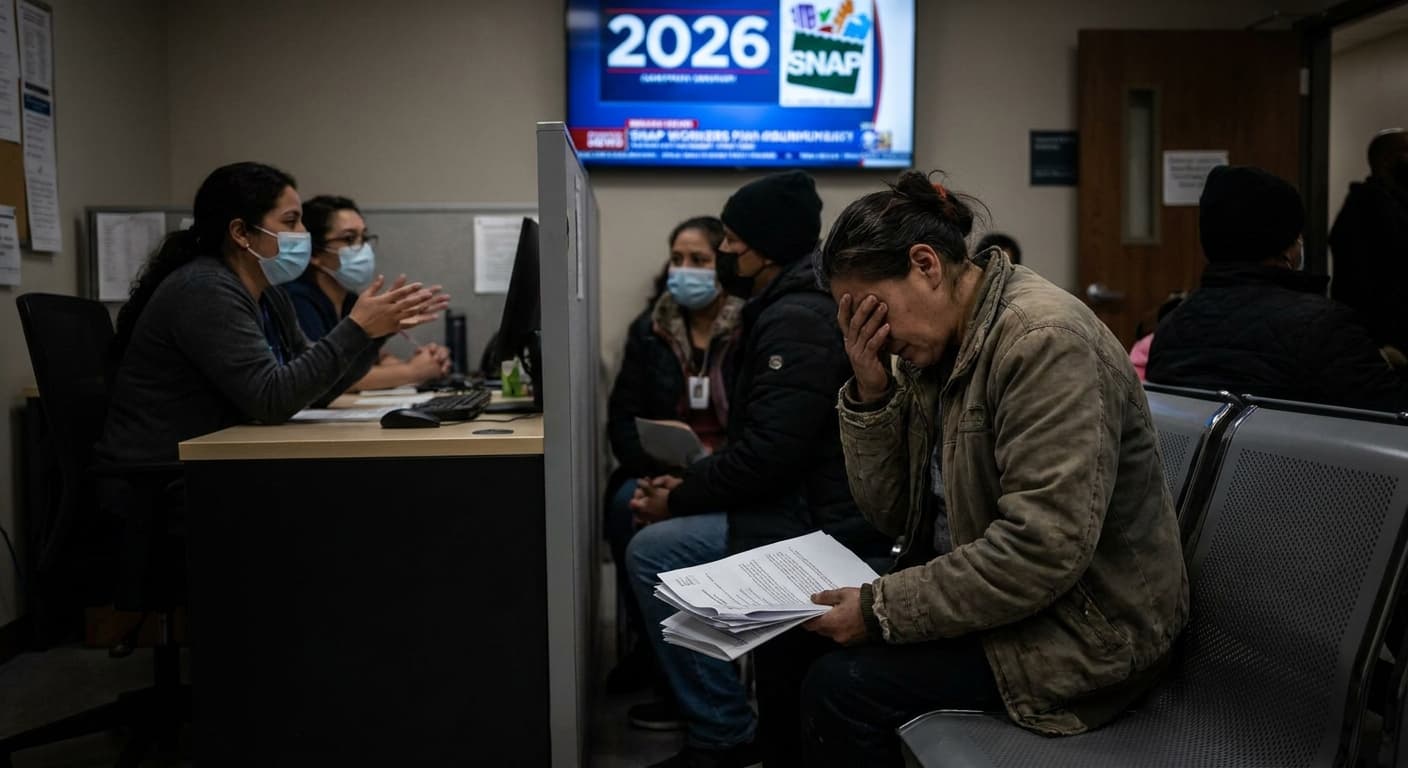
In 2026, SNAP faces stricter eligibility rules and mounting legal challenges, threatening food assistance for the millions of Americans who rely on the program.

Global Politics
US Seizes Iranian Ship, Tensions Surge
The US seizure of the Iranian ship Touska highlights a shift in control over the Strait of Hormuz, favoring Iran's strategic position.
India
Rajnath Singh's Durga Squad for 2026 Polls
Rajnath Singh's Durga Squad promised women's safety in Bengal but has since disappeared from the agenda, revealing BJP's true priorities.
Economics
Fed's Amex AML order puts correspondent banking on notice
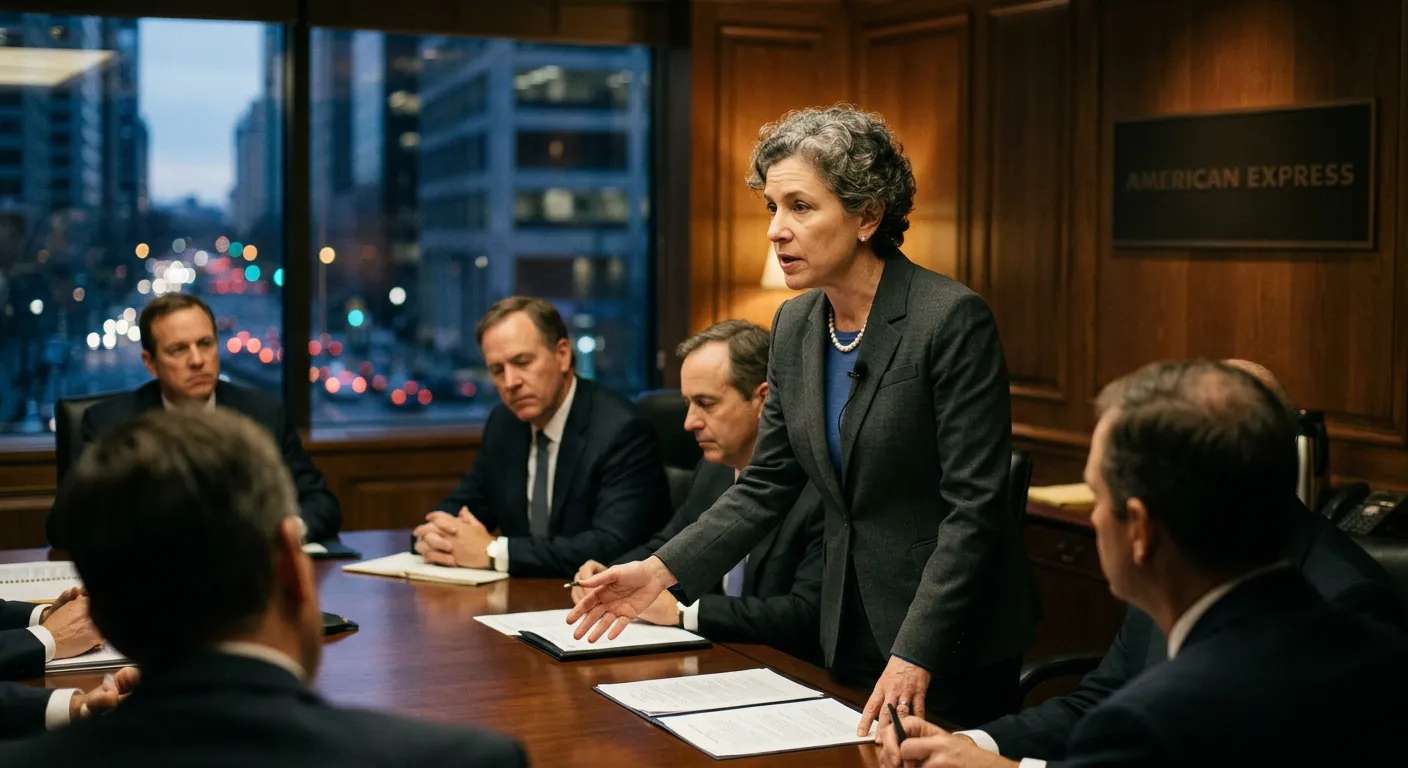
Federal Reserve's Amex AML order requires board-level controls and a 90-day plan; OCC fined the bank $350 million over enterprise-wide deficiencies.