NATO Gives the Baltics a Second Warfighting HQ
The alliance is moving from tripwire deterrence to forward defense, giving Germany and the Netherlands a bigger role and the Baltics faster reinforcement if Russia tests the flank.
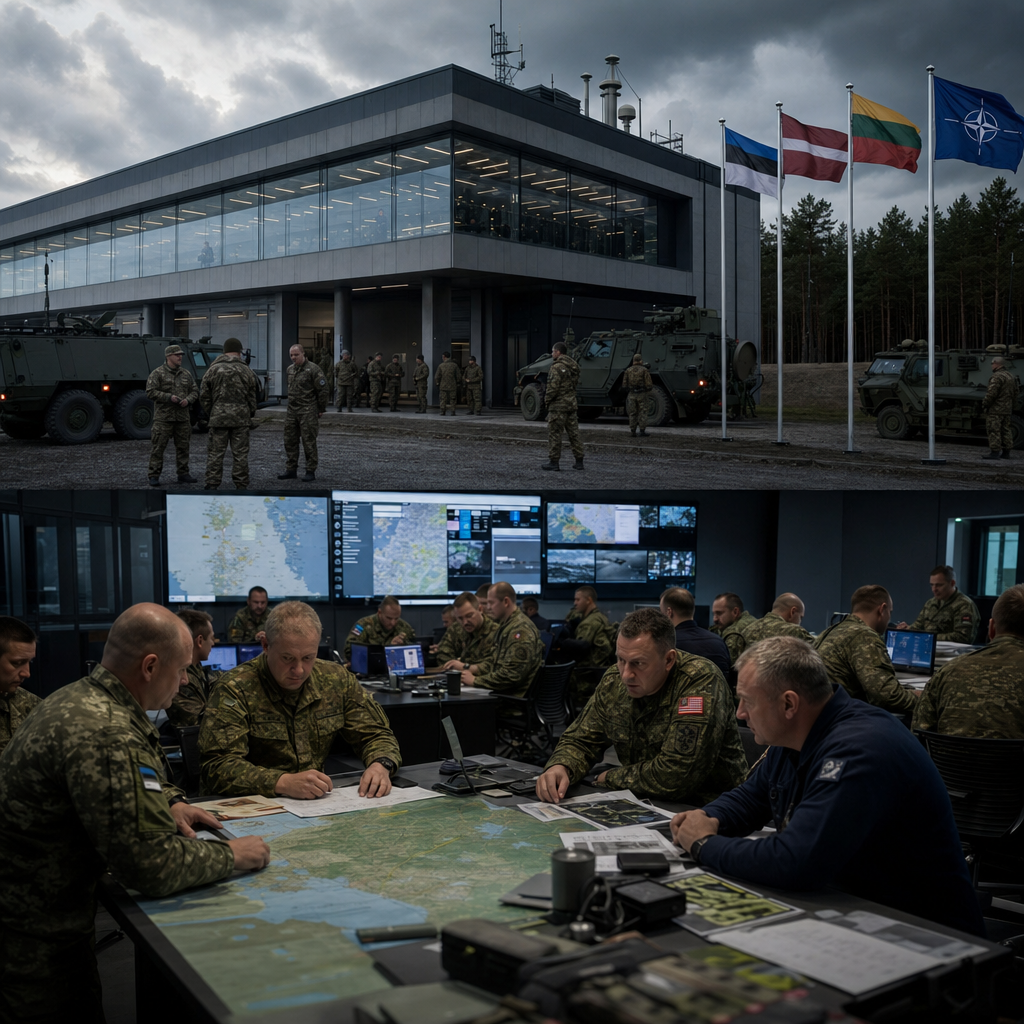
NATO is preparing a second corps-level command for Latvia and Estonia, a move designed to let the alliance bring in “mass at speed” if war with Russia breaks out, according to  Reuters. Germany and the Netherlands have agreed to assign the German-Netherlands Corps, based in Münster, to Baltic defense; at present, NATO’s forces in the Baltics and northern Poland sit under a single multinational headquarters in Szczecin, Reuters reported. A corps is not a token presence: when fully operational it typically controls three divisions, or roughly 40,000 to 60,000 troops, with enablers such as artillery, air defense, engineers and medics in place to expand quickly in crisis. That is the point of the change — the alliance is trying to make reinforcement plausible before a Russian attack can create a fait accompli.
Why this matters now
This is NATO moving away from the old Baltic model of a small forward presence meant mainly to signal commitment. The Baltic states have spent years arguing that battalion-sized battle groups are not enough and should be upgraded into brigades, with stronger air defense layered over them, as  RAND has noted in its analysis of NATO’s “forward defense” shift. That pressure has only intensified as drone incidents keep exposing gaps in regional air defenses.
  BBC News reported this week that NATO fighter jets were scrambled after repeated incursions, and that Estonia, Latvia and Lithuania have jointly urged the alliance to turn air policing into a “comprehensive air defence mission.”
The military logic is straightforward. The Baltics are small, exposed and strategically shallow; if NATO waits to build combat power after a crisis begins, it may be too late. A corps HQ, preloaded with specialist staff and tied to the region in peacetime, shortens decision time and improves the odds that the first reinforcements arrive in useful shape. For  Conflict, that is the difference between deterrence and rescue.
Who gains leverage
The immediate winners are Estonia and Latvia, which gain a clearer NATO plan for rapid reinforcement and a stronger signal that they are not being left to hold the line alone. Germany also gains leverage inside the alliance: it is increasingly the European power expected to anchor eastern-flank defense, especially as Reuters noted that the move comes amid fresh criticism from President Donald Trump and Washington’s announcement that it will pull 5,000 U.S. troops from Germany.
That is the deeper shift here. The U.S. remains central to NATO, but Europe is being pushed to shoulder more of the front-line burden, and Berlin is moving into the command space that once depended far more heavily on Washington. Russia loses if NATO can make this structure real, because Moscow’s preferred gamble — speed, shock and political hesitation — becomes harder to execute. What Moscow may still test, however, is whether the alliance can actually fill the corps with the needed firepower and support units.
What to watch next
The key question is not the announcement, but the implementation. Reuters said it was not immediately clear when the decision would take effect, and the corps still needs troops and enablers to be fully credible. Watch for three things: formal NATO approval, the pace of German and Dutch force generation, and whether Baltic air-defense planning moves from air policing toward a standing integrated defense mission after the latest drone incidents. If those pieces come together, the Baltics will shift from a tripwire to a defended frontier. If they do not, this will remain a command diagram rather than a warfighting capability.