Naidu Secures South Coast Railway Zone
Andhra CM fulfills long-awaited railway promise.
Model Diplomat7 min readAsia
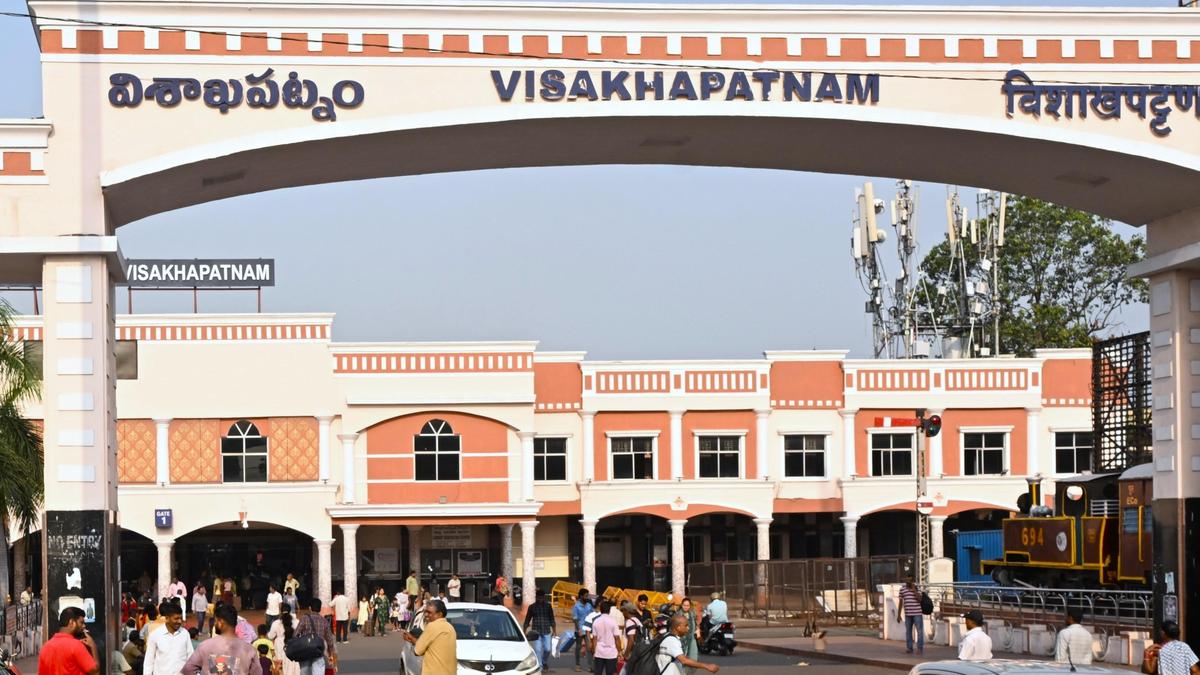
Naidu Secures South Coast Railway Zone After Seven-Year Wait
Andhra CM Chandrababu Naidu secures the long-promised South Coast Railway zone with Visakhapatnam HQ. Notified May 5, 2026; operational June 1.
Seven years, one lost election, and a coalition rescue after it was first announced, the Centre notified the South Coast Railway (SCoR) as India's 18th zone on May 5, 2026, with headquarters in Visakhapatnam and Andhra Pradesh Chief Minister N. Chandrababu Naidu framing it as a "long-cherished dream fulfilled". The thesis worth remembering: this zone was not built by economics but by parliamentary arithmetic. The file moved only after Naidu's 16 Telugu Desam Party (TDP) MPs became load-bearing to Prime Minister Narendra Modi's post-2024 coalition — a reminder that in Indian federalism, infrastructure follows leverage, and Odisha, which lost the tug-of-war over the mineral-rich Waltair division, is the quiet loser of the deal.
The deal that was frozen for seven years
The zone was legally required. Item 8 of Schedule 13 of the Andhra Pradesh Reorganisation Act, 2014, the bifurcation statute that carved Telangana out of united Andhra Pradesh, obliged Indian Railways to examine a new zone for the truncated successor state. Then-Railway Minister Piyush Goyal announced SCoR in
a February 27, 2019 press release, naming Visakhapatnam as headquarters and folding the Guntakal, Guntur and Vijayawada divisions into it, with the profitable Waltair division to be split between the new zone and the East Coast Railway (ECoR).
Then nothing happened for five years. The reason was Waltair. As Business Standard reported when the notification finally landed, Odisha "strongly opposed any transfer of mineral-bearing routes outside the control of ECoR", arguing it would gut the zone's freight earnings. Waltair's Koraput–Kirandul, Kottavalasa–Bacheli and Rayagada corridors haul iron ore, alumina and coal out of southern Odisha's mining belt — some of the highest-yielding freight sections on the Indian Railways network. Bhubaneswar's political class, across Naveen Patnaik's Biju Janata Dal and its BJP successor, treated the routes as strategic property.
Naidu, meanwhile, spent 2019–2024 out of power, and his signature demand went unattended. That changed on June 4, 2024.
Why it moved now: the 240-seat problem
The BJP won 240 Lok Sabha seats in the 2024 general election, 32 short of a majority in the 543-member house. As BBC News put it at the time, Modi became "primarily reliant on two allies" — Nitish Kumar's Janata Dal (United) and Naidu's TDP — for his parliamentary survival. Between them the two regional parties held 28 seats; the TDP alone contributed 16.
That is the number that unlocked the file. Naidu, who had labelled Modi a "terrorist" in 2019 before rejoining the National Democratic Alliance ahead of the 2024 vote, walked into New Delhi in June 2024 with a shopping list: fiscal support for the new capital at Amaravati, expedited work on the Polavaram irrigation project, and the railway zone. Al Jazeera's post-election analysis noted that the TDP and JD(U) had explicitly demanded "special status" for their states, and that "the politics of alliance" had become "a compulsion for Modi".
Within eighteen months, the two files most closely watched in Andhra Pradesh — the zone and the Polavaram funding release — moved. In December 2024 the Cabinet issued an ex-post facto approval revising the 2019 plan: instead of dissolving Waltair into Vijayawada, the truncated Waltair would be retained as a standalone division under SCoR and renamed the Visakhapatnam division, "because Waltair name is a colonial legacy that needs to be changed." A separate Rayagada division was created under ECoR to hold the 680-kilometre mineral network for Odisha. The compromise gave both states a division with a headquarters city — and Odisha kept the mineral revenue.
The Railway Ministry gazette notification, signed by Railway Board Secretary R. Mohanraja and reported by The Hindu BusinessLine, completed the paperwork on May 5, 2026. The zone became operational on June 1 under first General Manager Sandeep Mathur,
The Hindu reported. Naidu, in
remarks carried by Akashvani, called it a validation of the "long-standing aspirations" of the state's people.
The map, the money, and who really lost
The new zone spans roughly 3,300 route kilometres across Andhra Pradesh with slivers in Telangana, Tamil Nadu and Karnataka, according to the Business Standard reconstruction of the gazette order. It absorbs the Guntakal (1,344 km), Vijayawada (1,002 km) and Guntur (491 km) divisions from South Central Railway, plus the truncated 463-km Visakhapatnam division from ECoR.
But the story worth telling is what was kept out. The 696-kilometre Rayagada division — covering the Koraput–Singapur Road corridor, the Kottavalasa–Kirandul iron-ore line, and the Kuneru–Theruvali section — stays with ECoR in Bhubaneswar. An ECoR official told Business Standard that "most of the high-density mineral routes that contribute substantially to freight loading remain within ECoR." That is the concession that made the deal politically possible.
The scale matters. Freight generates roughly 65% of Indian Railways' revenue, per a NITI Aayog study on railway competitiveness, and mineral traffic from Odisha's Koraput–Kalahandi belt is among the most profitable per kilometre on the network. Andhra Pradesh got the political trophy — a zonal headquarters that will house a general manager, a divisional bureaucracy of thousands, and a construction pipeline. Odisha kept the annuity.
The Visakhapatnam node itself is not incidental. The city sits at the heart of India's East Coast Economic Corridor and the Vizag–Chennai Industrial Corridor, an Asian Development Bank–backed programme that the Observer Research Foundation calls the "spine of India's manufacturing ambitions under the Act East policy". Vizag Port handled 81 million tonnes of iron ore in FY 2023-24, alongside petroleum and pharmaceutical exports. Having a zonal HQ co-located with a Sagarmala port and an industrial corridor is a genuine logistics dividend — not just symbolism.
The historical pattern: coalition dependency is Andhra's oldest lever
There is a template here worth naming. The TDP, founded by N.T. Rama Rao in 1982, has held the BJP over a fiscal barrel every time it has been the marginal partner in a Delhi coalition. In 1998–2004, under Atal Bihari Vajpayee, TDP support extracted the Vajpayee-era railway budget concessions for coastal Andhra. In 2014, when Naidu allied with the BJP ahead of the bifurcation, he secured the Reorganisation Act's Schedule 13 commitments — including the zone he has just cashed. In 2018, when the "special category status" demand went unmet, he quit the NDA, as BBC reported at the time. He returned only when the arithmetic tilted back.
The lesson is unglamorous but durable: southern states, which the BJP has struggled to penetrate — Al Jazeera noted that the BJP won only 30 of 131 southern seats in 2019 — extract federal transfers most reliably when Delhi is short of a majority. With the delimitation exercise scheduled after 2026, which is expected to shift parliamentary seats toward the more populous Hindi-belt states, southern leverage is on a clock. Naidu is cashing chips while they are still worth something.
What's next
The zone opening is a beginning, not an end. Three markers to watch.
- Staffing and asset transfers, second half of 2026. Moving 40,000-plus employees between zones, dividing rolling stock, and setting up divisional headquarters at Rayagada is the phase where inter-state disputes tend to flare. Odisha's mining lobby will watch train-slot allocation between ECoR's Rayagada and SCoR's Visakhapatnam divisions closely.
- Union Budget 2026-27 capital allocations.
Ministry of Railways data put the Union Budget's 2026-27 railway capital outlay at a record ₹2.78 lakh crore. How much of that flows into SCoR-territory projects — Vijayawada–Gudur third line, Guntur–Guntakal doubling, Vizag suburban rail — will show whether the zone is a name-plate or a funded entity.
- The delimitation vote, expected 2027-28. If seat redistribution proceeds against the south, the TDP's structural leverage over Delhi shrinks. Naidu's remaining wish-list — special package for Amaravati, Polavaram Phase-II funding, a semiconductor cluster — will move faster before that reallocation than after.
Diplomat View
The South Coast Railway zone will be remembered less as an infrastructure decision than as the clearest early evidence that Modi 3.0 is a genuine coalition government, not the majoritarian regime of 2019–2024. The Centre notified a zone it had frozen for seven years, at the price of a face-saving compromise with Odisha, because Naidu's sixteen MPs made refusal costlier than approval. Expect the next twelve months to bring a series of similar Andhra-favouring files — Polavaram funding, Amaravati capital support, port-linked concessions — because the underlying incentive structure has not changed. The forecast revises if two things happen: TDP loses seats in a by-election cycle that trims its coalition weight, or the BJP absorbs enough Andhra state legislators to make Naidu dispensable. Absent either, the pattern holds. The zone is the template, not the exception.
The Bottom Line
The South Coast Railway zone finally exists because Andhra Pradesh holds 16 seats Modi cannot govern without — the same reason Vajpayee funded coastal Andhra in 1999 and the same reason Naidu will get more before delimitation shrinks his leverage. Visakhapatnam wins a headquarters; Bhubaneswar keeps the mineral revenue; Delhi buys parliamentary peace. In India's federal bargain, coalition math still writes the infrastructure map.
Discover more
India
Modi's Women’s Convention in Varanasi
Modi's Varanasi rally frames women's reservation as a national mission, targeting the 2027 Uttar Pradesh elections with a strategic narrative.
India
Rajnath Singh's Durga Squad for 2026 Polls
Rajnath Singh's Durga Squad promised women's safety in Bengal but has since disappeared from the agenda, revealing BJP's true priorities.

Conflict & Security
Drone Warfare Killing Aid Workers at Unprec
Over 1,000 humanitarian workers killed in three years as cheap armed drones collapse legal protections. Gaza, Sudan, Ukraine, and DRC see deliberate targeting of aid convoys and hospitals with zero prosecutions.

Global
World Normalises Taliban as Afghan Women Eras
UN data shows Afghan women erased from public life as Russia recognises the Taliban, EU hosts officials in Brussels, and ICC warrants for gender persecution go unenforced.