Modi's Bengal Gamble
Modi's bold pledge aims to shift Bengal's political landscape.
Model Diplomat3 min readWest Bengal

Modi's Bengal Gamble: BJP Bets on Phase 2 to Break TMC's Grip
With Phase 2 voting days away, Modi's oath-taking vow is a calculated pressure move — but Mamata Banerjee's machine has survived this script before.
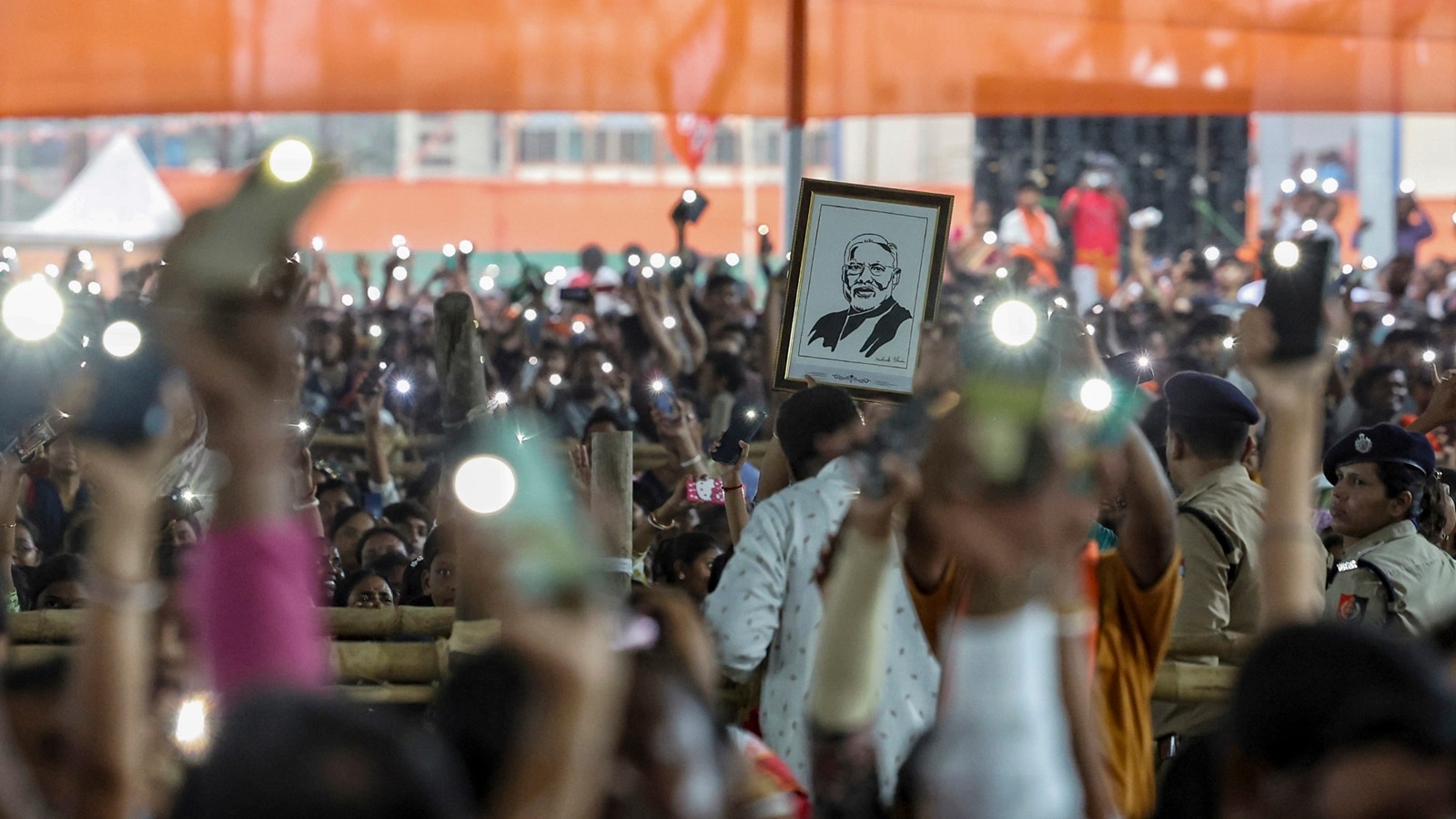
Prime Minister Narendra Modi, rallying in Barrackpore on April 27, declared the "mood of Bengal" favors BJP and pledged to return to the state for a BJP government's oath-taking ceremony. It's a bold public bet — one that doubles as campaign theater and strategic framing ahead of Phase 2 voting on April 29, which covers 142 of West Bengal's 294 assembly seats.
The Numbers BJP Is Working With
BJP's confidence is anchored in Phase 1, where 152 seats voted on April 23. Union Home Minister Amit Shah publicly projected the party would win 110+ seats in that phase alone, framing the result as the foundation of an absolute majority. Shah went further at a Kolkata press conference on April 24, invoking the historical kingdoms of "Anga, Banga, Kalinga" to signal a BJP sweep across West Bengal, Bihar, and Odisha — promising a Bengali-speaking Chief Minister if the party prevails, a direct counter to the "outsider" charge TMC routinely deploys against Delhi-led BJP campaigns. The Hindu
The BJP's manifesto anchors its economic pitch on ₹3,000/month for unemployed youth — double TMC's own welfare promise of ₹1,500 — a direct bid to peel away the young, jobless voters who form a volatile constituency in districts like Katwa and Barrackpore. The Hindu
What TMC Holds
Mamata Banerjee is not conceding the script. Her campaign has centered on two attack lines: alleged voter roll deletions that she claims disenfranchise TMC supporters, and the accusation that BJP seeks to bifurcate West Bengal — a charge with potent resonance in a state with a complex identity and border politics. Both arguments are designed to consolidate her core base rather than expand it.
Mamata's structural advantage remains formidable. TMC controls the state machinery, the booth-level networks, and the welfare delivery apparatus that has been her political currency since 2011. BJP made significant inroads in the 2021 assembly elections — winning 77 seats — but fell well short of the majority it had predicted with similar confidence. Modi made the same oath-taking pledge in 2021. TMC won 213 seats.
That precedent is the single most important data point for any forecast.
The Wildcard and What to Watch
Arvind Kejriwal and AAP are running candidates in select seats, primarily in Kolkata and Howrah — a marginal factor for seat outcomes but potentially relevant in tight urban contests where vote-splitting could benefit BJP.
Watch for: Phase 1 actual result counts when they're released — if BJP's 110-seat projection holds, Modi's oath-taking rhetoric transforms from campaign spin into a credible majority path. If the tally falls significantly short, Phase 2 becomes a must-win and the narrative collapses before a single Phase 2 vote is cast.
The April 29 Phase 2 turnout figure will be the first real indicator. In Bengal, high turnout historically advantages TMC's ground machine. A suppressed turnout in TMC strongholds — whether from voter roll issues or intimidation — could shift the calculus. Results are expected in early May.
For deeper context on India's shifting electoral politics, the Bengal contest is a stress test of whether BJP's national wave model can crack a state with deeply entrenched regional identity politics.
Discover more
India
Modi's Women’s Convention in Varanasi
Modi's Varanasi rally frames women's reservation as a national mission, targeting the 2027 Uttar Pradesh elections with a strategic narrative.

Conflict & Security
Drone Warfare Killing Aid Workers at Unprec
Over 1,000 humanitarian workers killed in three years as cheap armed drones collapse legal protections. Gaza, Sudan, Ukraine, and DRC see deliberate targeting of aid convoys and hospitals with zero prosecutions.

Global
World Normalises Taliban as Afghan Women Eras
UN data shows Afghan women erased from public life as Russia recognises the Taliban, EU hosts officials in Brussels, and ICC warrants for gender persecution go unenforced.
Conflict & Security
West Africa Food Crisis: Three Shocks in 2026
Conflict, climate extremes, and the Strait of Hormuz closure drive a severe food crisis in West and Central Africa, with fertilizer prices surging 80% and millions displaced.