Modi Government's Women’s Reservation Bill
Exploring the implications of India's women's reservation bill
Model Diplomat3 min readIndia

Reservation ruse: Women’s quota as cover for Lok Sabha seat reallocation
Modi government links women's reservation to a larger delimitation bill, reshaping Indian electoral politics under the guise of empowerment.
The Modi-led government’s move to combine the long-stalled women’s reservation bill (Nari Shakti Vandan Adhiniyam, or the 106th Amendment) with a sweeping Delimitation Bill marks a strategic pivot with far-reaching consequences for India’s electoral map and democratic representation. As highlighted in an editorial by The Hindu on April 15, 2026, this legislative bundling effectively uses the widely supported cause of women’s empowerment to obscure a far more contentious political recalibration: the reallocation of seats in the Lok Sabha (India’s lower house of Parliament) based on fresh demographic data.
Why delimitation matters — and why it’s contentious
Delimitation is the redrawing of parliamentary and assembly constituencies to reflect population changes from the census. The last nationwide delimitation exercise was frozen until 2026 to avoid penalizing states that had successfully controlled population growth. Now, the Modi government’s push to initiate delimitation could reshape political fortunes profoundly—some parties and states stand to gain seats, while others may lose.
Critically, the upcoming delimitation is not a mere technical adjustment. It will incorporate data from the 2021 census, which reflects shifts in population and migration patterns over the past two decades. States like Uttar Pradesh, Maharashtra, and Bihar could see a notable reconfiguration of constituencies, altering the balance of power within the Lok Sabha. This, in turn, can translate into an electoral advantage for the ruling coalition at a time when national and state-level elections are looming.
By tethering the women’s reservation bill—historically a key plank of gender equality—to this delimitation process, the government is capitalizing on the broadly positive public support for women’s representation to smooth the passage of a politically sensitive delimitation plan. Women's reservation in Parliament (about 33% seats reserved for women) has been stuck for years amid political wrangling. Moving it now alongside delimitation may make opposing the bill appear anti-women or regressive, despite objections about prudence and timing.
Women’s reservation bill: progress or political cover?
The women's reservation bill marks a landmark opportunity to increase female representation in the Lok Sabha. Yet, the legislative pairing with delimitation brings risks. Critics argue that mixing two distinct issues complicates debate and may dilute the focus on genuine women’s empowerment.
Moreover, states with relatively higher female political participation but who may lose seats in delimitation could feel doubly aggrieved. The question arises: does the bill genuinely advance women’s representation, or is it a political cover designed to push through a delimitation process with minimal resistance?
This tactic recalls historical precedents in Indian politics, where popular reforms have been leveraged to fast-track contentious electoral or fiscal policies. The lesson here is clear: even well-intentioned reforms can get tangled in broader political strategies, raising concerns about transparency and democratic accountability.
What to watch next
The next few months will reveal whether opposition parties unify against this dual bill strategy and how states recalibrate politically in response to seat reallocation. The Supreme Court may also emerge as a battleground if the delimitation process challenges constitutional principles or federal balance.
For voters and political analysts, the unfolding debate is not just about numbers or gender equity in isolation—it cuts to the heart of how India’s democracy compensates for demographic change while ensuring fair and inclusive representation. The Modi government’s maneuver compels us to scrutinize both the substance and timing of reform initiatives, reminding us that the politics behind policy often determine the fate of progress.
This episode underscores the intersection of India’s gender, demographic, and federal politics—one that will shape the contours of the next general election and beyond.
—
See more on India’s political landscape and electoral reforms in our
Global Politics section.
Reservation ruse: On women’s quota and delimitation - The Hindu
Discover more

India
Tamil Nadu, Andhra Leaders Oppose Women's Quo
Tamil Nadu and Andhra Pradesh leaders push back on women's reservation and delimitation bills, questioning their timing during a charged election season.

Economics
Fed's Amex AML order puts correspondent banking on notice
Federal Reserve's Amex AML order requires board-level controls and a 90-day plan; OCC fined the bank $350 million over enterprise-wide deficiencies.
Conflict & Security
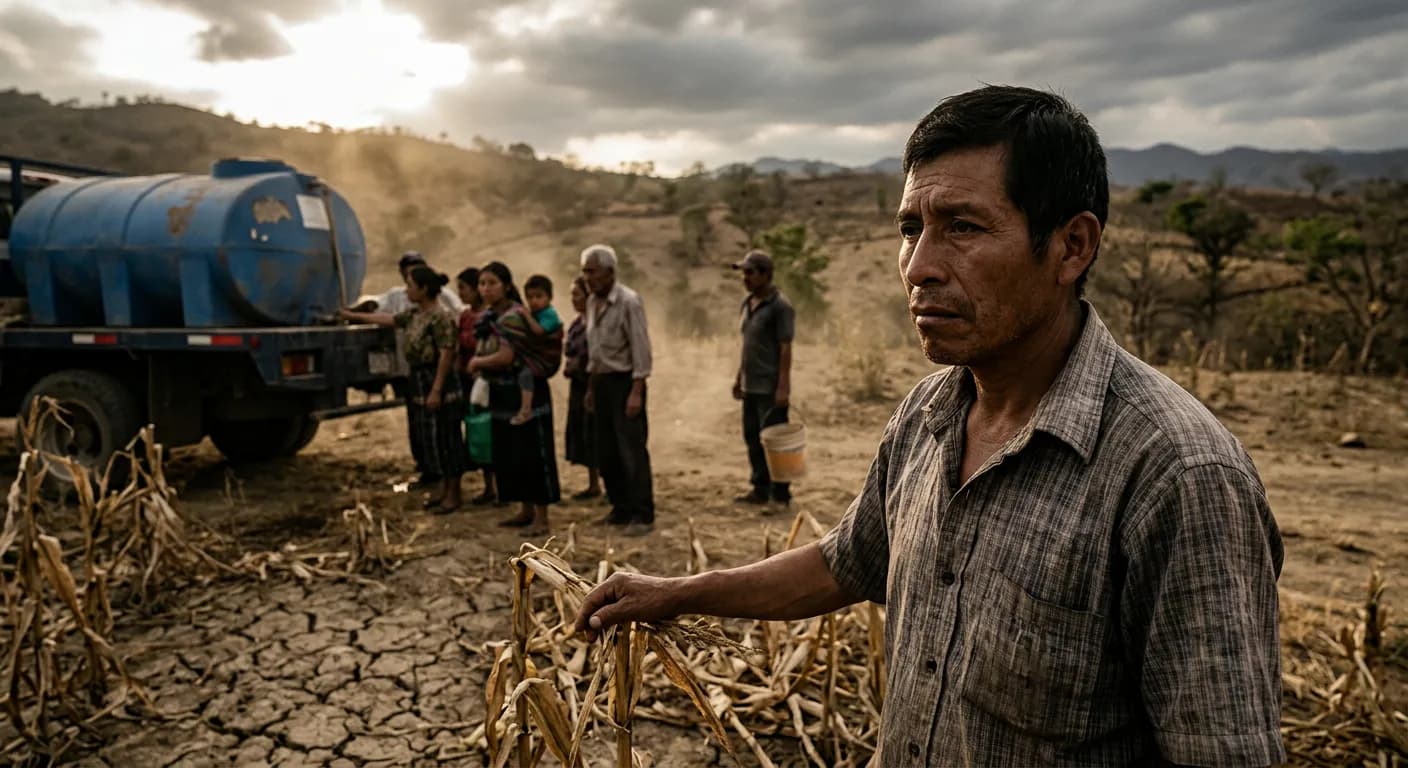
Guatemala: El Niño 2026–27 becomes regional security test
UNICEF: 25.8M children face El Niño risks in Latin America; Guatemala maps 188 municipalities for drought and food insecurity amid regional security test.

Economics
Fed's stress-test overhaul is a capital-smoothing exercise
Federal Reserve finalized stress-test overhaul: two-year averaging for bank capital buffers and public input, expected to halve volatility.