Mnangagwa Extends Zimbabwe Presidency to 2030
Amendment abolishes direct presidential elections in Zimbabwe.
Model Diplomat6 min readSub-Saharan Africa
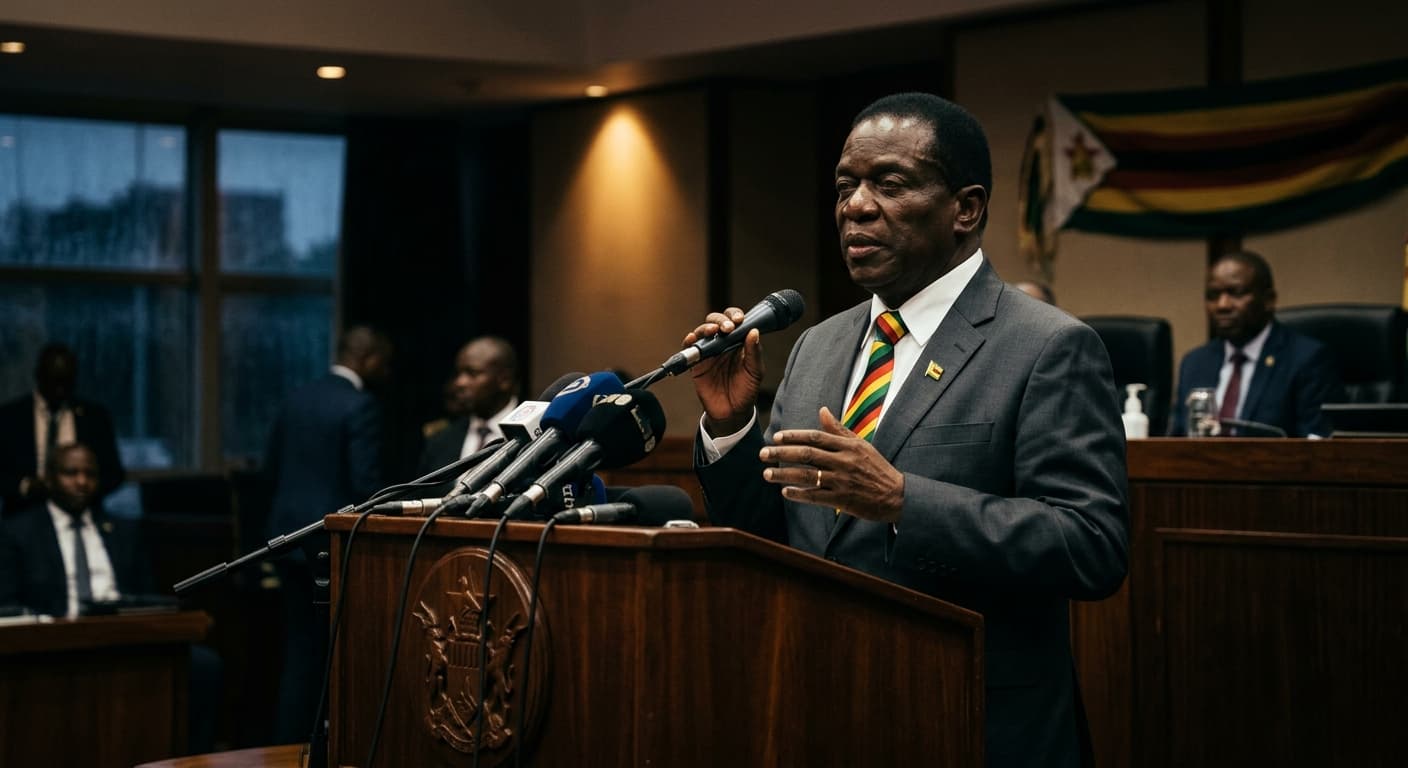
Mnangagwa Signs Zimbabwe Term-Extension Decree Through 2030
Zimbabwe's president has signed Amendment No. 3 extending his rule to 2030 and abolishing direct presidential elections — a bloodless coup against his own vice-president.
Zimbabwean President Emmerson Mnangagwa on July 7, 2026 signed Constitutional Amendment No. 3 into law, extending his term to 2030, stretching presidential and parliamentary terms from five to seven years, and abolishing the direct popular election of the president. The immediate loser is not the fragmented opposition Citizens Coalition for Change — it is Vice President Constantino Chiwenga, the retired general whose expected path to State House ran through the ballot box that Mnangagwa has now removed. The amendment is less a term extension than a targeted disarmament of the man who put Mnangagwa in office in 2017.
What the decree actually does
The law rewrites the 2013 Constitution's most protected clauses. According to Human Rights Watch, which published its assessment on July 8, the amendment "abolishes the election of the president by popular vote and establishes a parliamentary method for selecting the president," while extending terms from five to seven years and postponing the 2028 elections to 2030. Presidential elections have been held in Zimbabwe since 1990; the
BBC reports that direct polls are now scrapped, with future presidents chosen by a joint sitting of the Senate and National Assembly.
The parliamentary arithmetic left no suspense. The National Assembly passed the bill 216 to 42 on June 18, clearing the 187-vote two-thirds threshold with room to spare, and the Senate approved it 75 to 4 on June 24, Al Jazeera reported. Notably, more than 30 opposition MPs from the CCC broke ranks and voted with ZANU-PF — a defection that made the outcome not just legal but comfortably legitimate on paper.
The Justice Ministry insists no term limit has been breached. Justice Minister Ziyambi Ziyambi told parliament the bill "does not give the president a term extension or a third term" and "does not take away the right to vote," according to Al Jazeera's reporting from Harare. That framing hinges on ZANU-PF's argument that the two-term limit remains formally intact — only the length of each term has changed. Critics call this what the Institute for Security Studies labelled it in February: a
constitutional coup.
The real target sits one office away
To understand why Mnangagwa moved now, look at who was denied a runway. Chiwenga is the former army general who led the November 2017 tanks-in-Harare operation that ended Robert Mugabe's 37-year rule. The unwritten pact, according to reporting by Al Jazeera and multiple ISS analyses, was that Chiwenga would inherit the presidency after Mnangagwa's second term ended in 2028. That promise is now void.
By replacing a direct national vote with a parliamentary selection controlled by ZANU-PF's central committee, Mnangagwa has moved the succession decision into a room he owns. Chiwenga's constituency — the military, the war veterans, a rural base skeptical of the "crocodile" — cannot deliver a parliamentary caucus the way it might have delivered a plebiscite. The president has also spent the past 18 months systematically demoting Chiwenga's allies: in March 2025, army chief General Anselem Sanyatwe, a key Chiwenga loyalist, was moved from the military command to the Ministry of Sports, Art and Recreation, the same Al Jazeera analysis noted.
The most vocal war-veteran critic, Blessed "Bombshell" Geza — widely reported as a Chiwenga proxy — was expelled from ZANU-PF in March 2025 and later died in circumstances the BBC reported without elaboration. Geza's YouTube-broadcast call for mass protests in Harare on March 31, 2025 drew heavy police deployment and few demonstrators.
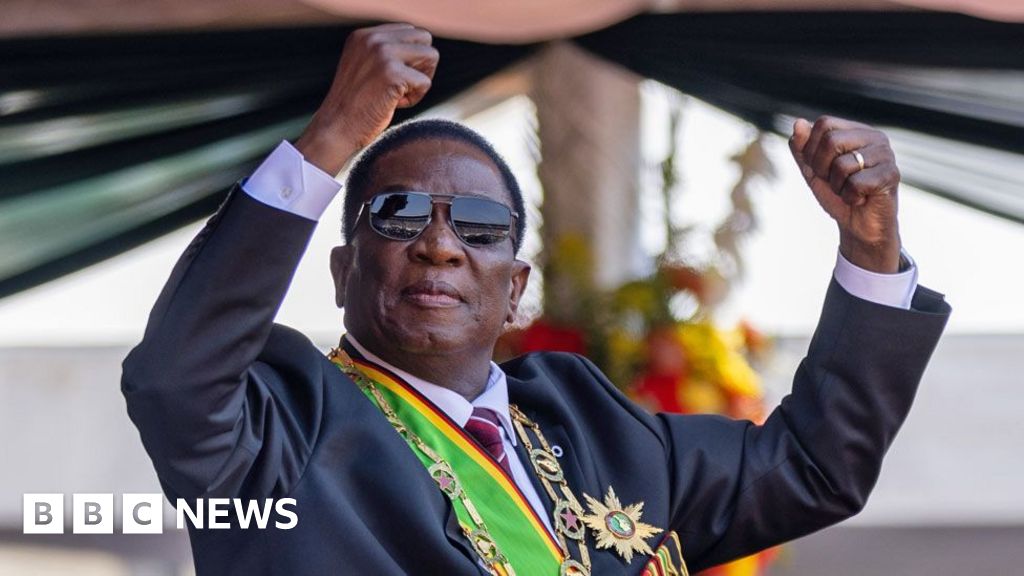
The 2013 firewall that failed
The 2013 Constitution was drafted precisely to prevent this. Adopted by 95% of voters in a March 2013 referendum, according to contemporaneous BBC reporting, it locked in two five-year presidential terms and — critically — section 328(7), which requires that any amendment extending the time a person may hold public office go to a national referendum and, further, cannot apply to a sitting incumbent unless voters approve in a second referendum.
ZANU-PF has walked around both requirements with a semantic argument that Bulawayo Mayor David Coltart, one of the 2013 constitution's drafters, has publicly demolished. As Coltart told the ISS, the constitution restricts "the length of time that a person may hold or occupy a public office," and it does not matter whether the government calls the change a "cycle" or a "term." ZANU-PF Treasurer Patrick Chinamasa's response on X was blunt: "There will be no referendum. Full stop." The ISS analysis called this a template other African incumbents will study.
The Constitutional Court — whose sitting judges had their retirement age raised by Mnangagwa via a 2021 constitutional amendment, according to Al Jazeera — dismissed the challenges. A case filed by veteran constitutional lawyer Lovemore Madhuku, head of the National Constitutional Assembly, was struck out on procedural grounds, per Human Rights Watch. Activist Youngerson Matete's High Court petition seeking a referendum was similarly struck off the roll for what
Al Jazeera called "technical reasons."
The economic backdrop nobody is talking about
Mnangagwa is not extending his rule from a position of desperation — he is doing it from the strongest macroeconomic position ZANU-PF has held in a decade, which sharpens rather than blunts the political question. The International Monetary Fund announced a staff-level agreement on a 10-month Staff-Monitored Program in February 2026, noting that Zimbabwean GDP growth in 2025 surpassed the initial projection of 6.6% and that inflation had fallen to 4.1% by January 2026, the first single-digit annual local-currency inflation reading since 1997.
The World Bank forecasts 5% growth in 2026, driven by gold, platinum and lithium. That gives Mnangagwa a story to tell about "continuity" — the exact word ZANU-PF used in its October 2025 conference resolution — and gives foreign creditors a reason to keep quiet. The signal from Washington reinforces the silence: as Brookings scholars Chipo Dendere and Miles Tendi noted in
their June 2026 assessment, the shuttering of USAID in June 2025 and a State Department directive instructing embassies to stop commenting on the "fairness or integrity" of foreign elections has removed the external pressure that constrained similar African incumbents a decade ago.
Who benefits, who loses
The clearest winner beyond Mnangagwa himself is the Tagwirei-Chinamasa business network — the sanctioned commodities and finance ecosystem that has grown around the presidency since 2017. Reuters and Al Jazeera have reported the U.S. Treasury's 2024 sanctioning of businessman Kudakwashe Tagwirei and First Lady Auxillia Mnangagwa for alleged involvement in illicit gold and diamond networks. Two more years of ZANU-PF-controlled procurement, mining licences and central-bank policy continuity extends those rents to 2030.
The loser is not just Chiwenga. The CCC, already fractured after a leadership war between Nelson Chamisa and Sengezo Tshabangu, has lost the one asset a united opposition could plausibly have leveraged in 2028: a national head-to-head on a single ballot. Under the new system, a splintered opposition simply cannot assemble the parliamentary majority needed to pick a president — even in the theoretical case that ZANU-PF collapsed.
The Southern African Development Community, which under its own principles is meant to interrogate constitutional term extensions, has said nothing on the record. This is consistent with the pattern documented in the Brookings paper by Dendere and Tendi: regional and Western silence in 2017 taught ZANU-PF that entrenchment carries no international cost. Amendment No. 3 is that lesson operationalised.
What to watch
- Constitutional Court appeals: Madhuku and other applicants have signalled they will refile. The next scheduled procedural hearing is expected before the court's October 2026 term.
- ZANU-PF congress, December 2027: The party will choose its 2030 candidate. Whether Chiwenga is removed from the vice-presidency before then — or accepts a demotion — is the succession's decisive moment.
- SADC Summit, August 2026: The first regional heads-of-state gathering after the signing. Any communique language on Zimbabwe would break a nine-year regional silence on ZANU-PF's constitutional manoeuvres.
- IMF Staff-Monitored Program review: The Fund's next mission to Harare will test whether the amendment triggers governance concerns severe enough to interrupt Zimbabwe's arrears-clearance path.
The bottom line
The bottom line: Amendment No. 3 is not primarily about Mnangagwa staying in power two extra years — it is about locking the succession inside a parliament ZANU-PF controls, which strips Vice-President Chiwenga of the direct popular vote that was his only credible route to the presidency. Zimbabwe's 2028 election, the one contest where Mugabe-era term limits still had teeth, has been legislated out of existence. The next real vote for the presidency will not happen at a polling station; it will happen inside a ZANU-PF caucus room.
Discover more

US Politics
SNAP Food Assistance Faces Legal Challenges
In 2026, SNAP faces stricter eligibility rules and mounting legal challenges, threatening food assistance for the millions of Americans who rely on the program.
Global Politics
Trump's Conflicting Messages on Iran War
Trump's mixed messages on Iran reflect a strategy of audience management, benefiting Tehran amid a complex geopolitical landscape.
US Politics
Congress Targets AI Chatbot Access for Terror
The House passed the Generative AI Terrorism Risk Assessment Act, focusing on AI's role in terrorism and potential surveillance implications.

Economics
Fed's Amex AML order puts correspondent banking on notice
Federal Reserve's Amex AML order requires board-level controls and a 90-day plan; OCC fined the bank $350 million over enterprise-wide deficiencies.