Lesotho's Crisis: A 2013 Diagnosis
Exploring Lesotho's structural dependency and current turmoil
Model Diplomat4 min readafrica
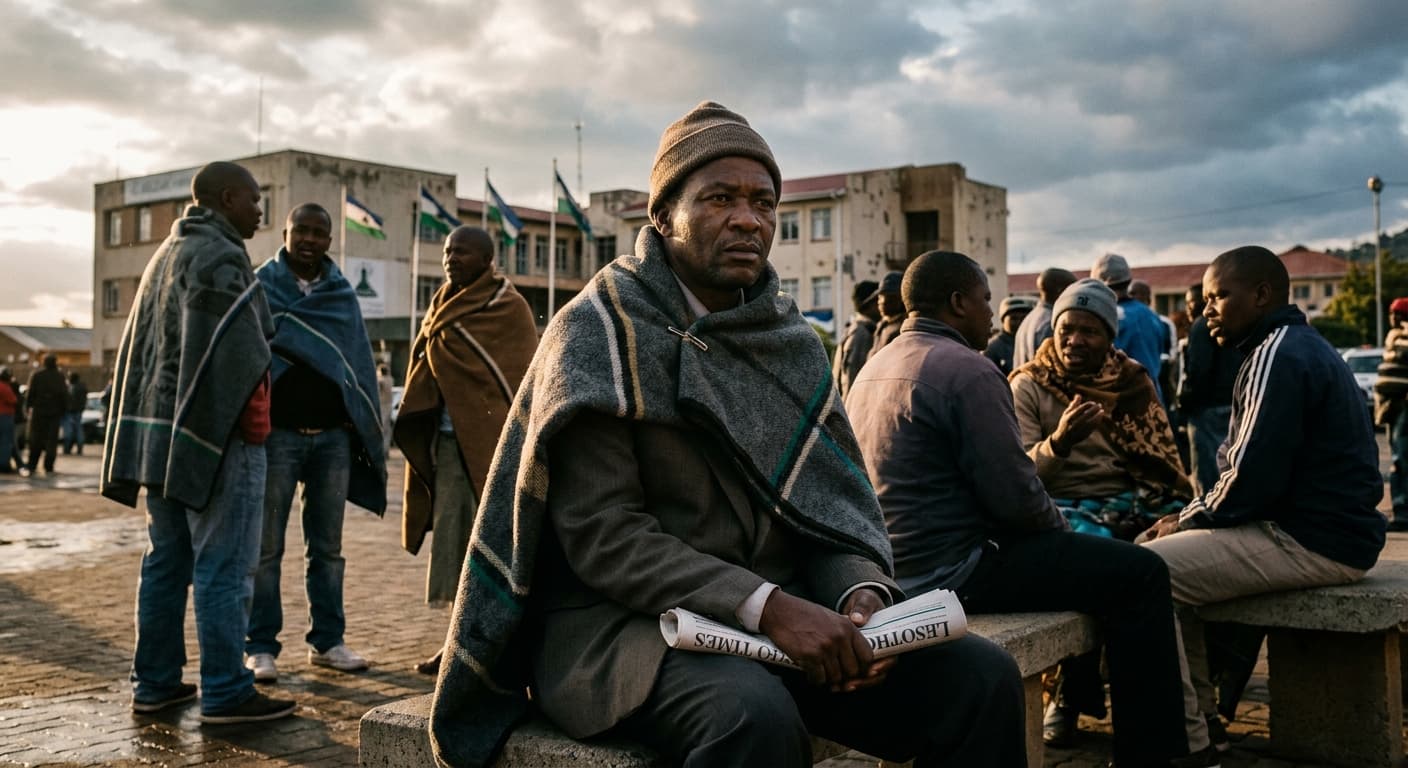
Lesotho's Enclave Trap: Why a 2013 Academic Diagnosis Explains the Kingdom's 2026 Crisis
A 13-year-old journal article on Lesotho's structural dependency foretells today's paralysis — with the U.S. tariff shock, coalition gridlock, and sovereignty panic all feeding the same dynamic.
In July 2025, an opposition MP was arrested in Maseru for accusing King Letsie III of "signing over Lesotho to become the 10th South African province." Tshepo Lipholo now faces sedition charges, and a retired major general was also detained for allegedly supporting him. The incident might read as fringe theater — a single-seat party leader reviving a decades-old territorial grievance. BBC News reports that Lipholo's Basotho Covenant Movement wants parts of five South African provinces returned to Lesotho's control.
The episode is not a sideshow. It is the live-wire expression of a structural condition that scholars M.K. Mahlakeng and Hussein Solomon diagnosed in their 2013 SAGE Journals article: an enclave landlocked state whose "mere economic existence, leading to political existence, may depend heavily upon the benevolence of their encircling neighbours." The sovereignty anxiety that landed Lipholo in custody is the domestic face of an external dependency that has only deepened since the article was published.
The Mahlakeng and Solomon framework identifies two interlocking constraints: chronic internal political instability — coups, collapsing coalitions, and parliamentary deadlock — and overwhelming external dependence on South Africa, crystallized by the 1998 SADC military intervention (Operation Boleas). Thirteen years later, both vectors are intensifying simultaneously, and the compounding effect is now visible in economic data and legislative paralysis alike.
Prime Minister Sam Matekane's Revolution for Prosperity party, which swept to power in October 2022 on a business-savvy outsider platform, won 56 of 120 seats — close to an outright majority but not enough to govern alone. Al Jazeera noted at the time that no Lesotho premier had served a full five-year term in a decade. The Matekane coalition now governs with three smaller parties — the Movement for Economic Change, the Alliance for Democrats, and the Basotho Action Party — a fragile arrangement that the
IMF's August 2025 Article IV report describes bluntly: "In office for almost three years, the government's fragile coalition has struggled to pass any meaningful reform through Parliament." The Omnibus Bill — the flagship constitutional reform package meant to end Lesotho's cycle of political logjams — remains stuck, three years in.
Then came the external shock. Lesotho was hit with a 50% U.S. tariff — the highest rate imposed on any country — when President Trump announced sweeping trade measures in April 2025. Though the 50% rate was paused, the 10% baseline remains, and the African Growth and Opportunity Act (AGOA) expires at the end of September 2026. The government has warned of up to 40,000 job losses if AGOA is not renewed. In May 2026, Deputy Prime Minister Nthomeng Majara declared a national state of disaster — in effect until June 2027 — explicitly citing "high rates of youth unemployment and job losses" from tariff uncertainty, as BBC News reported.
The shock lands on an economy with almost no margin. GDP growth averaged 0.5% over the past decade, according to the World Bank. The IMF projects growth slowing to 1.4% in the near term. SACU transfers and water royalties from the Lesotho Highlands Water Project — both flows dependent on South Africa — have masked deeper structural decay, producing a 9% fiscal surplus in FY24 that gave the illusion of health. Strip away those transfers and Lesotho's textile sector, which depends on U.S. market access, faces collapse. The World Bank announced a $50 million energy-access project in May 2026, a modest investment that underscores how far the country is from even basic infrastructure resilience.
What binds these threads is the original Mahlakeng-Solomon thesis: Lesotho cannot insulate itself from external shocks because it cannot generate internal political stability, and it cannot generate internal stability because every political actor calibrates their position against South Africa's gravitational pull and a history of military intervention that delegitimized sovereignty. Lipholo's sedition case shows how raw that sovereignty wound remains — and how quickly it is weaponized when the economy turns. The IMF's diplomatic language about "policy continuity concerns" masks a harder reality: the Matekane coalition may not survive the next external blow.
Watch the Omnibus Bill. If constitutional reform clears Parliament before the AGOA deadline in September, Lesotho has a narrow path to reset both its political rules and its investor credibility. If it does not — and the coalition fractures — the kingdom enters 2027 with no trade preferences, a stalled reform agenda, and a political class primed for the kind of crisis South Africa has repeatedly been forced to manage. Pretoria is watching. The 1998 precedent still frames every calculation in Maseru.
Discover more

US Politics
SNAP Food Assistance Faces Legal Challenges
In 2026, SNAP faces stricter eligibility rules and mounting legal challenges, threatening food assistance for the millions of Americans who rely on the program.
Global Politics
US-Iran Tensions Rise
Tensions escalate in the Strait of Hormuz as Iran and the US clash over maritime control, with a ceasefire hinging on a contested MoU paragraph.
US Politics
Congress Targets AI Chatbot Access for Terror
The House passed the Generative AI Terrorism Risk Assessment Act, focusing on AI's role in terrorism and potential surveillance implications.

Conflict & Security
Drone Warfare Killing Aid Workers at Unprec
Over 1,000 humanitarian workers killed in three years as cheap armed drones collapse legal protections. Gaza, Sudan, Ukraine, and DRC see deliberate targeting of aid convoys and hospitals with zero prosecutions.