Lee Turns to NATO on North Korea Deal
South Korea seeks NATO's help on North Korea's nuclear threat.
Model Diplomat3 min readAsia
Lee Turns to NATO on North Korea — But the Real Deal Is Industrial
Lee Jae-myung asked NATO for help halting Pyongyang's nuclear program in Ankara on July 7, 2026. The alliance's answer, and the deal actually being cut, sit in defense industry.
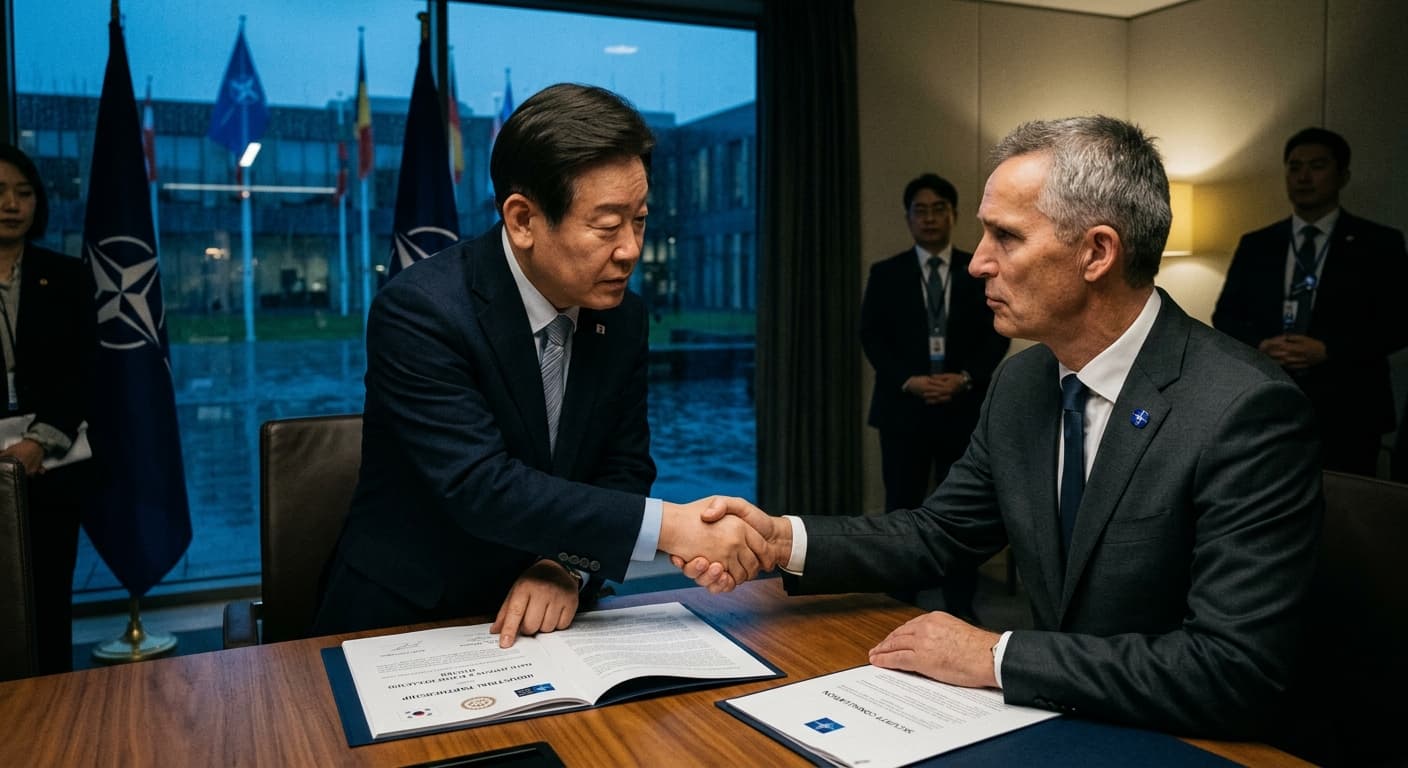
South Korean President Lee Jae-myung used his first NATO summit appearance on July 7, 2026 to ask the alliance for support in halting North Korea's weapons programs — and walked away with a defense-industrial handshake instead of a political one. The Ankara Summit Declaration issued the following day does not mention North Korea. What Lee actually secured is a track toward a "Korea-NATO Defense Industry Partnership 2.0" that opens NATO's €70 billion Ukraine pledge and a rearming Europe to Hanwha Aerospace, Hyundai Rotem, and Korea Aerospace Industries. The North Korea ask was the framing; the industrial deal was the substance. That is how Indo-Pacific security is being rewired — not through deterrence architecture, but through supply chains.
The ask, and the silence
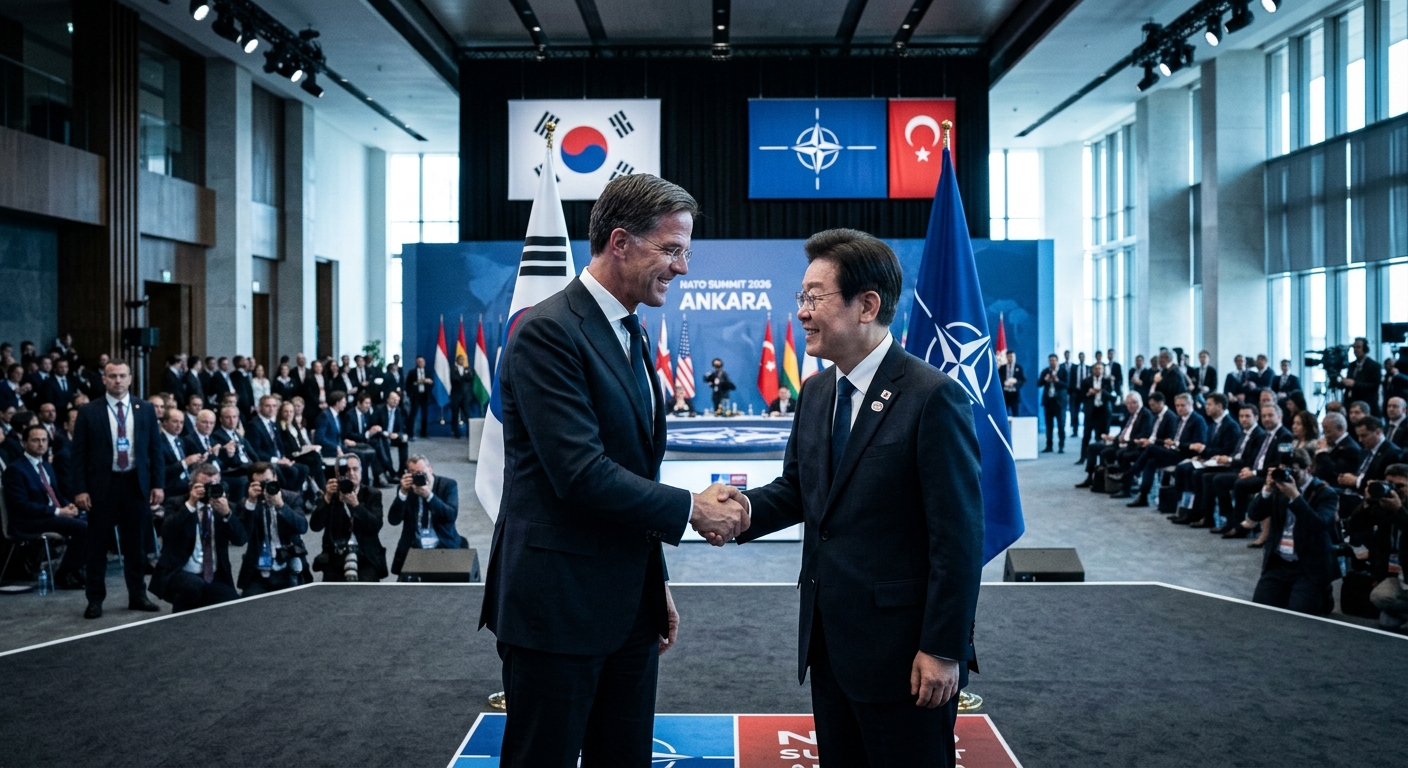
Lee met NATO Secretary General Mark Rutte at the Ankara Congresium, where — according to the NATO summit programme — the two delivered short remarks at 14:35 on July 7 before wider consultations. In the meeting, Lee "asked for NATO's support to halt North Korea's nuclear and missile development, emphasizing denuclearization as the ultimate goal,"
NK News reported. Rutte said he would explore how NATO could help — and announced no deliverable.
The Ankara Summit Declaration, issued July 8, makes the omission louder than the ask. The seven-paragraph text names Russia and Iran, commits allies to €70 billion in Ukraine assistance in 2026, and pledges "more than $50 billion in new procurements" — but does not name the DPRK, China, or the Indo-Pacific. That is a deliberate step down from the 2025 Hague declaration, which condemned "growing and destabilising collusion between autocratic regimes in Russia, China, Iran, North Korea and Belarus," as recorded in
NATO PA Declaration 496. The 2024 North Atlantic Council also went further, calling Russia-DPRK cooperation "a breach of multiple UN Security Council resolutions" in a
dedicated statement. Ankara pulls back from that language.
Two forces pushed North Korea off the paper. Trump wants a bilateral track with Kim Jong Un and has already called Pyongyang "sort of a nuclear power," according to Al Jazeera — a NATO communiqué demanding denuclearization would cross his own diplomacy. Seoul's drift is the second force. Lee told the BBC in September 2025 he would accept
a Trump–Kim freeze deal as "an interim emergency measure" — citing an estimate that North Korea produces "an additional 15–20 nuclear weapons a year." The ROK Foreign Ministry's own
policy tasks document now speaks of "a phased and pragmatic approach" — freeze-first language. When Seoul itself has softened its objective from dismantlement to freeze, asking 32 allies to sign onto the harder position was always going to fail. The real signature from Ankara is the one on the order form: Lee and Trump discussed cooperation on building U.S. military vessels at the NATO dinner, according to
Yonhap — a reminder that the most durable Indo-Pacific security architecture is being assembled not in communiqués, but in shipyards.
Discover more
US Politics
SNAP Food Assistance Faces Legal Challenges
In 2026, SNAP faces stricter eligibility rules and mounting legal challenges, threatening food assistance for the millions of Americans who rely on the program.
US Politics
Congress Targets AI Chatbot Access for Terror
The House passed the Generative AI Terrorism Risk Assessment Act, focusing on AI's role in terrorism and potential surveillance implications.

US Politics
Next Generation Republicans
A leaked survey shows 39% of Republicans under 30 do not identify as MAGA, revealing a split in the GOP's future leadership.

Conflict & Security
Drone Warfare Killing Aid Workers at Unprec
Over 1,000 humanitarian workers killed in three years as cheap armed drones collapse legal protections. Gaza, Sudan, Ukraine, and DRC see deliberate targeting of aid convoys and hospitals with zero prosecutions.