Kosovo Election Certification: Kurti's Dilema
Kosovo's election results certified, but deadlock continues.
Model Diplomat8 min readEurope
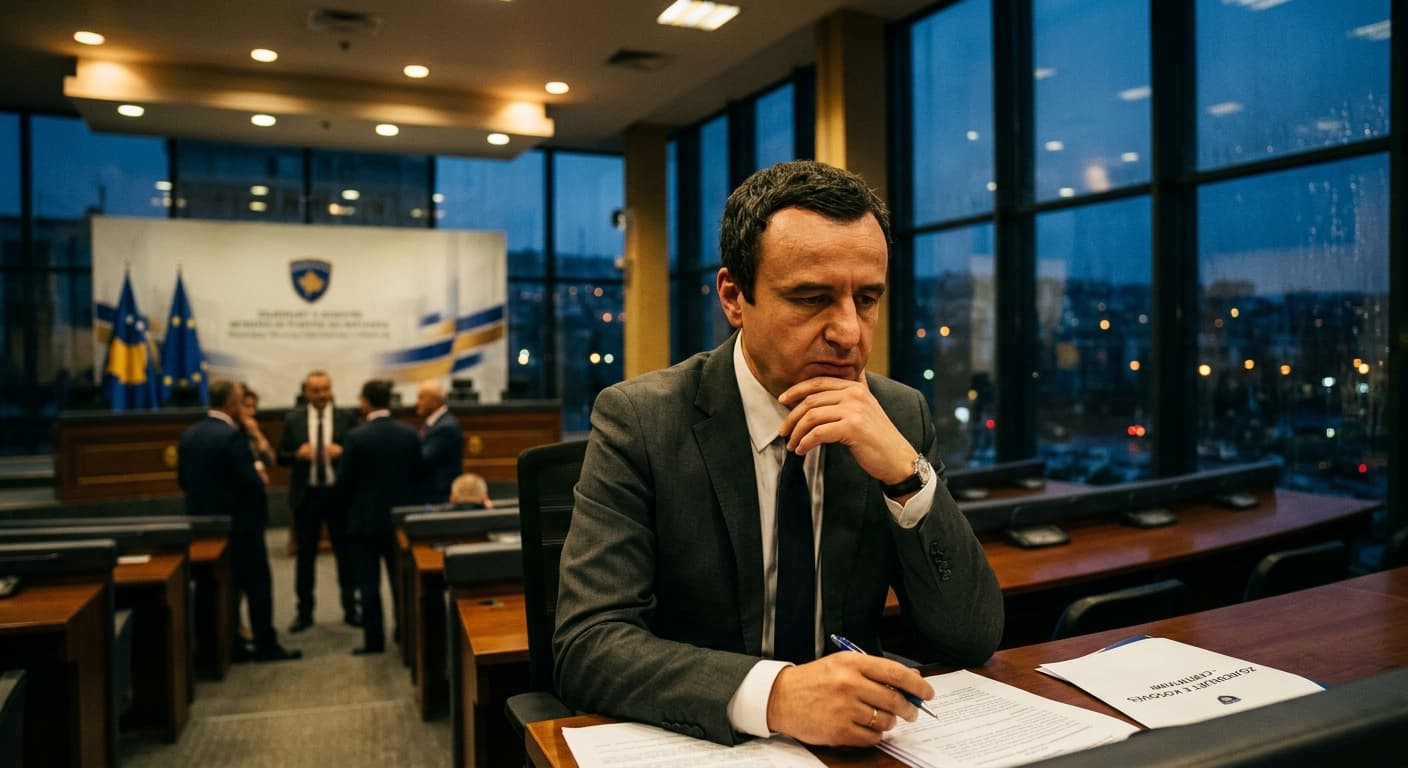
Kosovo certifies June 7 vote: Kurti wins, the deadlock doesn't
Kosovo's Central Election Commission certified the June 7, 2026 snap election on July 8, giving Vetëvendosje 53 seats — enough to govern, not enough to elect a president or end the crisis.
Kosovo's Central Election Commission certified the results of the June 7 snap parliamentary election on July 8, 2026, and the arithmetic that has paralysed the country for 16 months did not budge: Prime Minister Albin Kurti's Vetëvendosje (VV) won 53 of 120 seats on 47.13% of the vote — a clear plurality, a workable governing majority with minority MPs, but nowhere near the 80 votes the constitution demands to elect a head of state. The certification restarts the same clock that ran out twice already — a 30-day window to convene parliament, then a fresh presidential race that the current chamber, on paper, cannot win. Kosovo is now legally required to try again to form institutions it structurally cannot form, using an assembly that structurally resembles the last one.
That is the story worth watching. The vote count is old news by July 8; the certification simply makes the deadlock official and hands the next crisis a firm calendar.
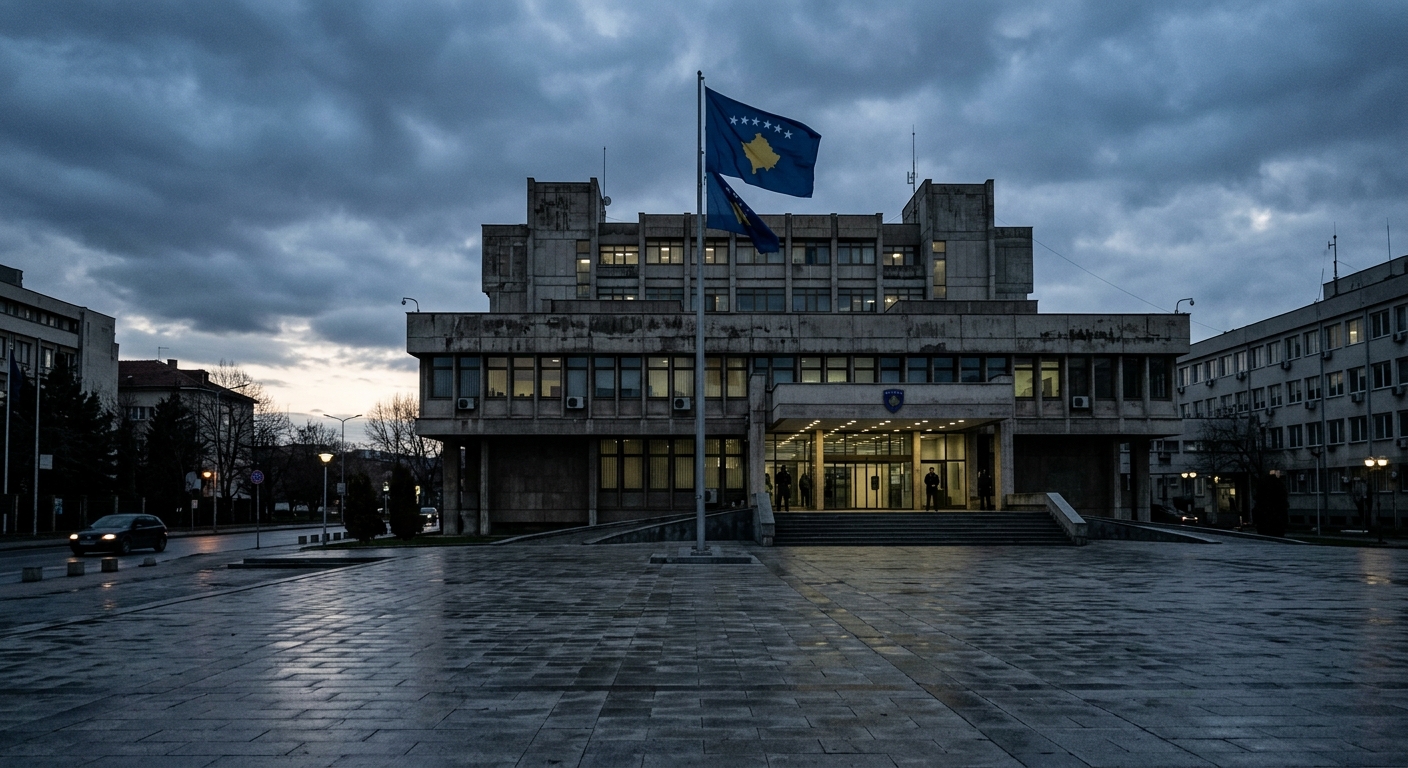
What the CEC actually certified
The Central Election Commission chair, Kreshnik Radoniqi, confirmed there were no outstanding complaints obliging further delay and published the final composition of the 120-seat Assembly, according to KOHA.net. Vetëvendosje took 53 seats on 47.13% of the vote; the Democratic Party of Kosovo (PDK) 22 seats on 19.44%; the Democratic League of Kosovo (LDK) 18 seats on 16.69%; and Ramush Haradinaj's Alliance for the Future of Kosovo (AAK) 7 seats on 6.74%,
Panorama reported. The Belgrade-backed Serbian List (Srpska Lista) returned to the parliament with roughly 5.4% of the vote and 9 of the 10 seats reserved for the Serb minority, according to
BBC News in Serbian; Nenad Rašić's rival Serb list is set to take the tenth. Two seats changed hands even after the count: Ardian Gjini and Daut Haradinaj vacated their AAK mandates, replaced by Bekë Berisha and Burim Ramadani,
Prizren Post noted.
Under Kosovo's constitution and the CEC certification, the acting president, Albulena Haxhiu, must now call a constitutive session of the new Assembly within 30 days — a window that runs, per Hürriyet Daily News, from July 9 to August 7, 2026. If she fails, deputies convene automatically on the last day. The session must elect a speaker and five deputy speakers; only then can Kurti be mandated to form a government, and only then can the presidential race begin.
Why the numbers do not fix the crisis
The math is unforgiving. Article 86 of Kosovo's Constitution requires 80 votes to elect a president in the first two rounds, dropping to a simple majority of 61 in the third — but only if two-thirds of MPs are present, a quorum the opposition has repeatedly denied by staying home. That is exactly what killed the last parliament. As the Warsaw-based OSW Centre for Eastern Studies documented, the previous Assembly failed to elect a president by the Constitutional Court's April 28, 2026 deadline because Kurti "was unable to persuade the opposition to attend the session, so the quorum required for a vote was not reached."
VV won 53 seats. All 20 minority MPs voting with Kurti would still deliver only 73 — seven short of the constitutional threshold. That gap can only be closed by cooperation with LDK (18 seats) or PDK (22). Both have spent 16 months refusing to provide it, and there is little in the June 7 result to suggest a change of heart: LDK and PDK each gained seats on Kurti's expense, precisely by campaigning against what they call his attempt to "impose full control over all political institutions," as Al Jazeera reported before the vote. Their leverage grew; his shrank.
That is why the certification is less a resolution than a reset. Kurti's own December 2025 landslide — 51% and 57 seats — proved, as OSW put it, "a Pyrrhic victory." A weaker June result is unlikely to prove otherwise.
The presidency is the real prize — and the real trap
The office at issue is largely ceremonial. It matters anyway, for three reasons the standard wire coverage tends to underplay.
First, control of the presidency shapes control of the dialogue with Serbia. Kosovo's president formally represents the country in foreign policy and has been the interlocutor in Brussels-facilitated normalisation talks. The European Parliamentary Research Service, in its June 2026 briefing on the 2025 Commission report on Kosovo, confirms the EU's Special Representative Peter Sørensen was appointed to revive that process; without an elected head of state, Pristina engages Brussels through an acting figure with contested legitimacy.
Second, personal politics. LDK's presidential nominee is Vjosa Osmani, who served as president from 2020 to April 2026 and whose relationship with Kurti collapsed after he refused to back her second term. As OSW noted in a June 11 analysis, LDK is "his only viable coalition partner," yet Osmani's candidacy is precisely the wedge that broke the December parliament. The CIDOB political biography of
Vjosa Osmani records that her four-year mandate ended on April 4, 2026, and passed to Assembly speaker Albulena Haxhiu — a VV loyalist Kurti's rivals distrust.
Third, structure. The Congressional Research Service report on Kosovo explains the mechanism plainly: "Parliament's failure to elect a president could trigger early parliamentary elections." That is not hypothetical. It is the trip-wire that produced June 7 in the first place, and the same trip-wire is now armed again.
The bill Kosovo is running up
The stakes are not abstract. Kosovo has approximately €882 million allocated under the EU's Reform and Growth Facility, and the International Crisis Group noted that as of its October 2025 assessment, "none of the €882 million allocated to Kosovo under the Reform and Growth Facility have been disbursed." An initial 7% prepayment of €61.8 million was unlocked in February after the Kurti III government ratified the framework agreement, per OSW's
February 18 briefing — but a further €96 million tranche required 13 reforms by end-June that a dissolved parliament could not pass.
The European Commission's own staff working document on Kosovo is unambiguous about the linkage:
"Constructive engagement in the normalisation of their relations is also a requirement under the Reform and Growth Facility for the Western Balkans. In line with the 3 June 2023 statement by the High Representative on behalf of the EU, the EU has been implementing reversible measures vis-à-vis Kosovo."
Those measures — imposed after 2023 clashes with Kosovo Serbs in the north — cost the country €230 million in irreversibly lost EU funds, according to OSW. The Carnegie Endowment argues the current phase amounts to "managed stabilization, not genuine progress." Every additional month without a president is a month during which Kurti cannot deliver reforms that unlock the money — and every failed presidential vote pushes the country closer to a fourth election.
Regional stability: the quiet story
The June 7 result matters for the neighbourhood in ways not captured by seat totals.
The Serbian List returned to Kosovo's parliament after a two-year boycott, and its nine seats give Belgrade a formal foothold in Pristina's legislature again. That is a stabilising development on the surface — engagement over exit — but the BBC's Serbian service noted Serbian List president Zlatan Elek is already alleging "political engineering" against his party's tenth seat, and analyst Donika Emini told the BBC the list functions "mainly as an instrument of Belgrade's political influence rather than a genuine advocate of Kosovo Serbs' interests." Any presidential vote that requires constitutional-level majorities will need Serbian List votes; those votes will not come free.
Meanwhile the Kurti government has continued to transform the Kosovo Security Force into a full army by 2028, with defence spending at roughly 2.1% of GDP, per OSW. It has deepened trilateral defence cooperation with Albania and Croatia since March 2025. The BBC reported Kurti's programme includes locally-manufactured combat drones under a "Made in Kosova" label. None of this pauses because the Assembly is deadlocked — but a caretaker government cannot ratify new international agreements, cannot conclude EU accession chapters, and cannot represent Kosovo credibly in the Brussels-facilitated dialogue whose collapse in 2023 triggered the punitive measures in the first place.
Who benefits from the loop
The non-obvious beneficiary of Kosovo's electoral loop is the opposition — even though it keeps losing at the ballot box. LDK and PDK have inverted the meaning of parliamentary defeat. By refusing to attend presidential sessions, they force new elections in which their combined seat share creeps upward: PDK from 20 to 22, LDK from 16 to 18 between December and June. Each election corrodes Kurti's mandate while costing the opposition little politically, because voters increasingly blame both sides for the paralysis rather than punishing the boycotters specifically. As BBC analyst Guy Delauney observed, voters have "resoundingly endorsed such a polarising figure" as Kurti not out of enthusiasm but because they consider "the opposition to be more harmful." That is not a stable equilibrium; it is a permission structure for continued attrition.
Belgrade also gains from the drift. Every month Kosovo lacks a president is a month the Brussels dialogue runs at reduced tempo and the Association of Serb-Majority Municipalities — Serbia's central demand — is not implemented. President Aleksandar Vučić absorbs no cost from Pristina's paralysis; Kurti absorbs all of it.
The clear losers are the EU institutions themselves. The Crisis Group argues the Commission's credibility is being eroded from both sides: it lifted some 2023 measures on Kosovo in May 2026 without a clear road map, yet still holds nearly the entire €882 million package hostage to reforms that Kosovo's dysfunctional parliament cannot pass. Brussels is now the enforcer of a deadlock it publicly deplores.
What to watch
- Constitutive session: between July 9 and August 7, 2026. Acting president Albulena Haxhiu must call the first sitting of the new Assembly. Watch whether PDK, LDK and AAK deputies attend or begin their boycott on day one — the earliest test of whether the June election shifted anything at all.
- Speaker election on the constitutive day. The chamber must elect a speaker and five deputy speakers before a government can be mandated. VV cannot elect a speaker alone in a single round without opposition or minority support; the composition of that vote will telegraph the coalition arithmetic.
- Presidential nomination window. Once the speaker is in place, at least two candidates need 30 signatures each. Watch whether Kurti puts forward a Vetëvendosje figure, a non-partisan, or blinks and backs Vjosa Osmani. His choice on this point will decide whether the constitutional court is asked to referee dissolution round two.
- EU disbursement cycle. The next Reform and Growth Facility tranche depends on 13 legislative reforms. Without a functioning Assembly by late summer, the €96 million milestone slips further, and the total €882 million package begins to look politically endangered inside member-state capitals.
The Bottom Line
Kosovo's July 8 certification is not the end of a political crisis — it is the legal restart of one. Vetëvendosje's 53 seats guarantee Albin Kurti a third premiership but leave him 7 votes short of the 80 needed to elect a president, and the opposition parties who denied him quorum in April 2026 emerged from the June rerun with more seats, not fewer. Until the Constitution's presidential threshold is changed or Kurti cuts a coalition deal with LDK, Kosovo's electoral loop — and the €882 million of EU funds and the Belgrade dialogue that hang on it — will keep spinning.
Discover more

US Politics
SNAP Food Assistance Faces Legal Challenges
In 2026, SNAP faces stricter eligibility rules and mounting legal challenges, threatening food assistance for the millions of Americans who rely on the program.
India
700 Activists Accuse PM Modi of MCC Breach
Over 700 activists allege PM Modi breached election code with a televised address attacking opposition parties just before state elections.
US Politics
Congress Targets AI Chatbot Access for Terror
The House passed the Generative AI Terrorism Risk Assessment Act, focusing on AI's role in terrorism and potential surveillance implications.

Economics
Fed's Amex AML order puts correspondent banking on notice
Federal Reserve's Amex AML order requires board-level controls and a 90-day plan; OCC fined the bank $350 million over enterprise-wide deficiencies.