Netanyahu's Unity Coalition Pitch Fails
Netanyahu's call for a broad government faces swift rejection.
Model Diplomat3 min readasia
Netanyahu's "Broad Government" Pitch Is His Fourth Act. Nobody's Buying It.
The prime minister's weekend pledge to form a unity coalition after October's vote echoes his 2012, 2019, and 2023 plays — but his far-right allies have already rejected it, and the opposition has its own unity story to sell.
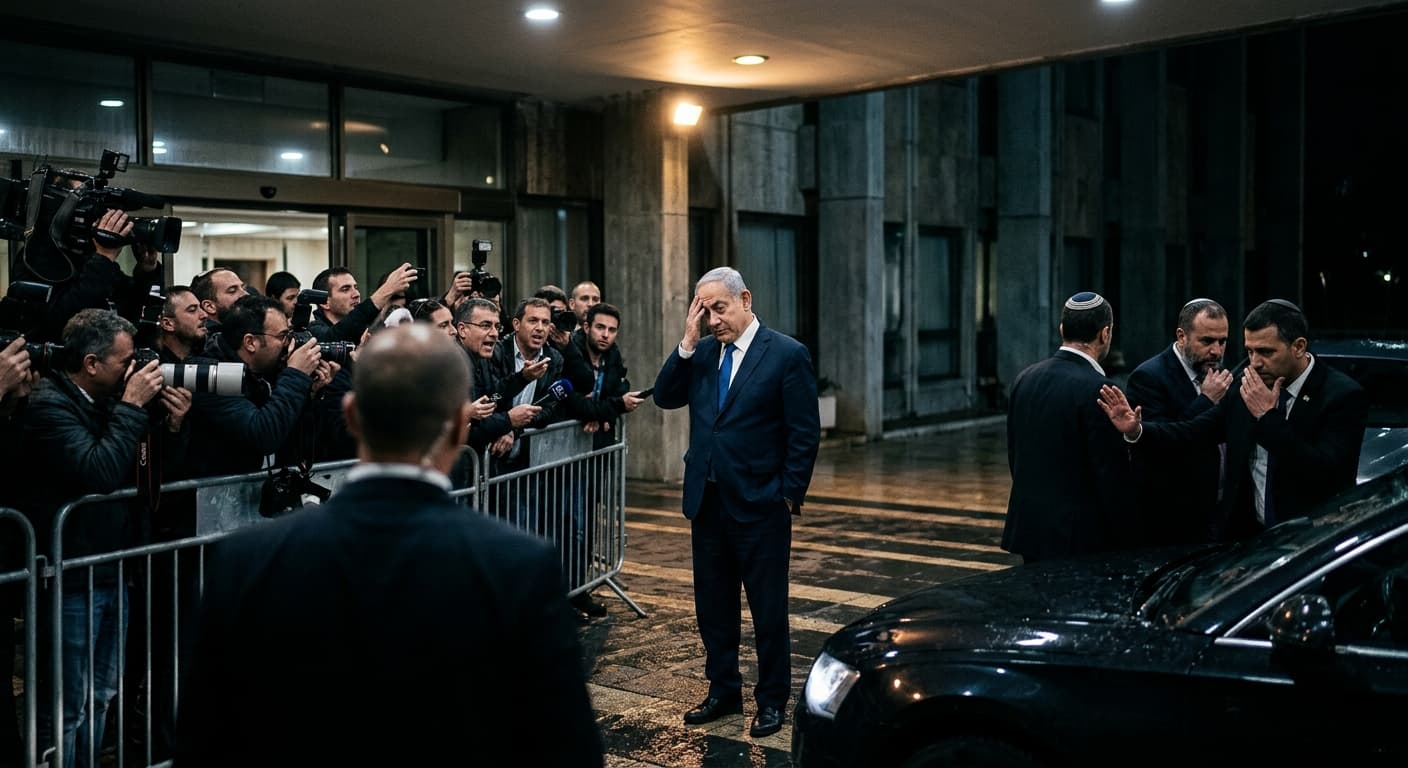
Benjamin Netanyahu stood before cameras on Saturday night and declared he would seek a "broad national government" after the October elections — explicitly not a right-wing government, not one dependent on Arab parties, but a Zionist unity coalition capable of reaching internal consensus on the issues tearing Israel apart. The Times of Israel described the press conference as an attempt at pre-election rebranding;
TRT World called it a "significant shift in political strategy."
It is neither. It is a familiar move from a prime minister who has deployed the "national unity" card whenever his right-religious coalition became a liability — and it was dead on arrival.
Within hours, National Security Minister Itamar Ben Gvir called the remarks "very disturbing" and insisted Netanyahu "must form a fully right-wing government." TRT World The far-right flank that has anchored Netanyahu's coalition since 2022 sees no upside in a centrist pivot — and they know the math as well as he does.
The polling trap
Netanyahu's Likud has recovered modestly in recent surveys. A Maariv poll cited by TDPel Media put Likud at 22 seats, up from a low of 21, with the broader governing bloc reaching 50. That still falls 11 seats short of a 61-seat Knesset majority. The same polls show the Zionist opposition bloc at 60 seats — enough to form a government if it can hold together.
The "broad national government" rhetoric is designed to solve exactly this problem: by floating the possibility of partnerships beyond the far-right and ultra-Orthodox, Netanyahu signals to center-right voters that they can back Likud without endorsing Ben Gvir or the Haredi draft exemption. It also opens a post-election path — however narrow — toward peeling off elements of the opposition if no bloc wins outright.
The draft is the fuse
The election itself exists because Netanyahu's coalition fractured over ultra-Orthodox military conscription. As NPR reported, the Degel HaTorah faction of United Torah Judaism declared it had "no trust in Netanyahu anymore" and demanded parliament's dissolution after the prime minister refused to advance a blanket draft exemption bill. The Knesset voted to dissolve on May 20, as
The Economist confirmed, setting the stage for elections by the October 27 deadline.
Netanyahu's framing of a "broad national government" is therefore directly transactional: he is telling secular and center-right voters that only a unity coalition can resolve the draft crisis without civil conflict, while telling his Haredi partners — implicitly — that they will still have a seat at the table if they deliver votes. Whether both audiences can hear different things from the same speech is the test.
An opposition with its own unity story
Netanyahu's rebrand lands in a political landscape already reshaped by the April merger of Naftali Bennett and Yair Lapid into the "Together" party. Al Jazeera reported the alliance explicitly frames itself as the Zionist, center-right alternative to Netanyahu — using language that overlaps almost perfectly with his new pitch. Bennett called it "the most Zionist and patriotic step we have ever taken."
Polling suggests Together has struggled since its launch, losing an estimated 10 seats to roughly 18 in recent surveys, while former IDF chief Gadi Eisenkot's Yashar! party holds 21. TDPel Media But that fragmentation may paradoxically help Netanyahu: a divided anti-Netanyahu camp that cannot coalesce behind a single candidate for prime minister gives Likud room to maneuver in coalition talks even without a decisive plurality.
What to watch
Two dates matter. First, whether the election is set for early September or pushed to the October 27 deadline — the later the date, the more time Netanyahu has to campaign. Second, whether Eisenkot and Bennett reach their own merger before ballots are printed. If they do, the opposition sits at roughly 37 seats under a single leader and Netanyahu's path to 61 narrows dramatically. If they don't, the "broad national government" pitch becomes Netanyahu's post-election escape hatch — and Ben Gvir's public rejection becomes irrelevant if the math says otherwise.
Discover more

US Politics
SNAP Food Assistance Faces Legal Challenges
In 2026, SNAP faces stricter eligibility rules and mounting legal challenges, threatening food assistance for the millions of Americans who rely on the program.
US Politics
Congress Targets AI Chatbot Access for Terror
The House passed the Generative AI Terrorism Risk Assessment Act, focusing on AI's role in terrorism and potential surveillance implications.
US Politics
House Ethics Committee Pushes Sexual Miscond.
The House Ethics Committee has shifted responsibility for sexual harassment settlement records to the Office of Congressional Workplace Rights, complicating disclosure efforts.

Conflict & Security
Drone Warfare Killing Aid Workers at Unprec
Over 1,000 humanitarian workers killed in three years as cheap armed drones collapse legal protections. Gaza, Sudan, Ukraine, and DRC see deliberate targeting of aid convoys and hospitals with zero prosecutions.