Iran's AI Meme War Against Trump Explained
Tehran uses memes to influence U.S. political discourse.
Model Diplomat2 min readMiddle East

Iran’s meme war is aimed at Trump’s ego
Tehran’s power move is cheap and asymmetric: flood U.S. feeds with AI memes, hit Trump’s weak spots, and force Washington onto Iran’s narrative.
Iran is using AI-generated memes and troll videos to turn the information fight into a second front against Donald Trump, according to CNN. The message is not subtle: make Trump look old, erratic, isolated, and outmaneuvered, while making Iranian accounts look fluent in American internet culture. That is a leverage play, not a joke.
The play here
The edge belongs to Iran’s information apparatus because it can produce this content faster and cheaper than the U.S. can counter it, especially when the material is built to travel in English and borrow U.S. pop-culture formats. AP reporting, carried by The Washington Post, said pro-Iran groups are using AI to create slick memes in English to shape the war narrative and foster opposition to the U.S.-Israel campaign. The same report said the content has racked up millions of views, even if its real-world influence is hard to measure.
That matters because Iran is not trying to win a conventional contest online. It is trying to extend a military disadvantage into a political one: keep the conflict noisy, keep Trump reactive, and push dissent inside the U.S. political system. Brookings says the AI flood is meant to sow confusion, project strength Iran does not have, and erode support for a prolonged U.S. campaign. In other words, Tehran is using low-cost spectacle to buy strategic time.
Why this works on Trump
The content is built for the target. Al Jazeera reported that Iranian creators are using Trump’s own language back at him — “TACO,” “loser,” and other signature slurs — while wrapping the attacks in Lego-style animation, rap beats, and obvious trolling. That is deliberate. It weaponizes Trump’s preferred media environment: attention, insult, and repetition.
It also exploits a gap in the U.S. response. AP noted that Israeli and U.S. messaging has not matched Iran’s meme volume in the same style, and that the White House memes it does publish are aimed at an American audience, not at winning a foreign-language narrative war. Iran’s accounts, by contrast, are trying to speak directly to U.S. social feeds. For policymakers, that is the warning: this is not propaganda in the old broadcast sense. It is networked agitation designed to travel.
For the wider U.S. angle, see United States. For the broader regional context, see
Global Politics.
What to watch next
The next decision point is whether platforms keep throttling or suspending the biggest pro-Iran accounts, and whether that changes reach more than it changes content. Watch too for whether Trump’s team answers with its own meme campaign or tries to ignore the bait. If the conflict hardens again, expect Iran to keep using AI not to persuade everyone, but to keep the fight politically costly for Washington.
Discover more
Global Politics
Trump's Conflicting Messages on Iran War
Trump's mixed messages on Iran reflect a strategy of audience management, benefiting Tehran amid a complex geopolitical landscape.

Conflict & Security
Drone Warfare Killing Aid Workers at Unprec
Over 1,000 humanitarian workers killed in three years as cheap armed drones collapse legal protections. Gaza, Sudan, Ukraine, and DRC see deliberate targeting of aid convoys and hospitals with zero prosecutions.

Global
World Normalises Taliban as Afghan Women Eras
UN data shows Afghan women erased from public life as Russia recognises the Taliban, EU hosts officials in Brussels, and ICC warrants for gender persecution go unenforced.
Conflict & Security
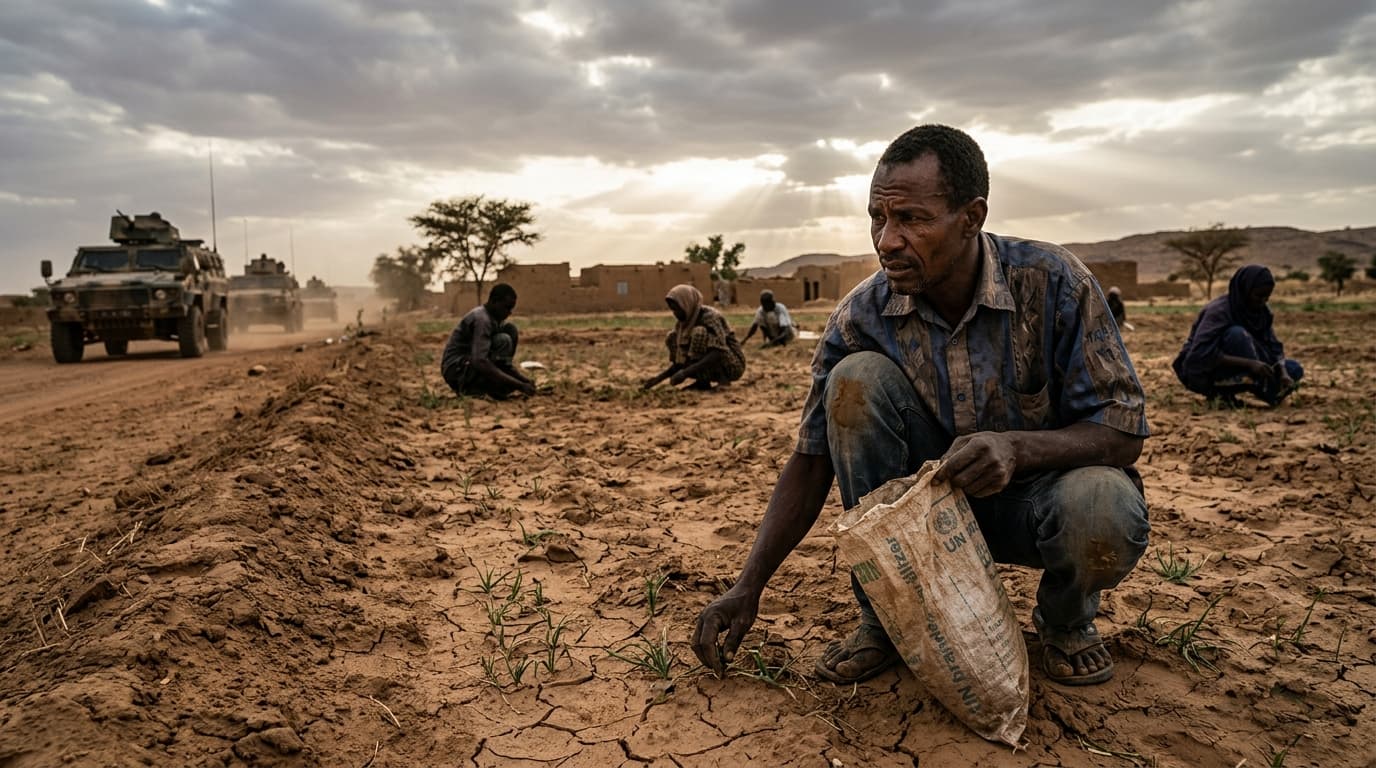
West Africa Food Crisis: Three Shocks in 2026
Conflict, climate extremes, and the Strait of Hormuz closure drive a severe food crisis in West and Central Africa, with fertilizer prices surging 80% and millions displaced.