Ipswich Teens Challenge Social Media Ban
Ipswich teens influence UK social media policy consultation.
Model Diplomat3 min readEurope
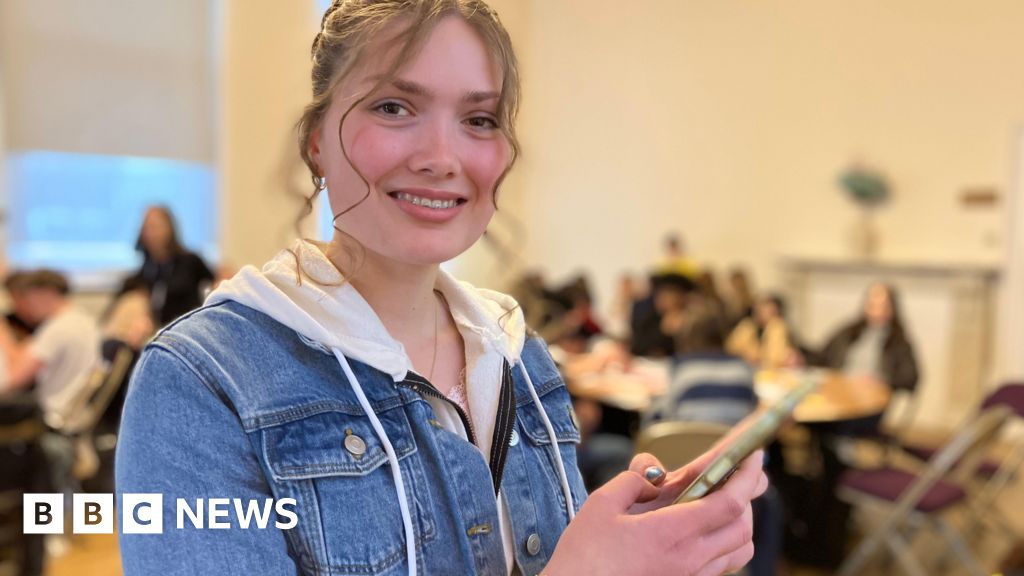
Ipswich Teens Turn Social Media Ban Into a Policy Test
Fifty Ipswich teenagers fed the UK’s under-16 social media consultation, exposing the real fight: blanket ban versus safer platform design and enforcement.
Young people in Ipswich used a “hackathon” at Town Hall to feed the government’s consultation on whether to ban social media for under-16s, with 50 students from Northgate Sixth Form Centre debating what should happen instead if ministers stop short of a full ban (BBC). The political point is bigger than the event: Westminster is not really asking whether to act, but how hard to go, and the answer will shape who carries the burden — platforms, parents or the state (
BBC).
The leverage is with government, not the teens
The Ipswich exercise was one of seven “hacks” across the UK, and organizers said the aim was to turn youth voice into youth power before the consultation closes on 26 May (BBC). That timing matters. Ministers have already signaled that some form of age or functionality restriction is coming even if they do not adopt an Australia-style ban, which means the consultation is now about the shape of the rulebook, not the principle of intervention (
BBC).
The teenagers’ views underline the policy dilemma. In Ipswich, only one of the six young people interviewed by the BBC backed a total ban; the others argued for education, narrower restrictions, stronger age checks or limits on addictive features such as autoplay and infinite scroll (BBC). That is not a rejection of regulation. It is a warning that a blunt ban could solve the wrong problem while missing the design features that keep children hooked.
Why this debate is now about platform design
The government’s consultation is already wider than a simple yes-or-no ban. It covers curfews, age verification, addictive features and even limits on AI chatbots (BBC). That matters because the state’s leverage is strongest where it can force product changes, not just age gates. If ministers can require platforms to switch off the mechanics that drive compulsive use, they can claim a measurable safety gain without relying on teenagers to disappear from the internet.
Ofcom’s latest assessment backs that logic. The regulator said TikTok and YouTube are still “not safe enough” for children, and noted that many underage users remain on major services despite minimum-age rules (BBC). The Education Committee has gone further, calling for a statutory ban on under-16s alongside limits on high-risk features for older teens (
BBC). In other words, the pressure inside Whitehall is not toward inaction; it is toward harder enforcement.
Who wins, who loses
A tougher regime would help the government and campaigners who want a visible response to online harms, and it would put more compliance pressure on Meta, TikTok, Snapchat, YouTube and other platforms already under scrutiny (BBC;
BBC). It would also hand ministers a way to say they are acting after Australia’s 2025 ban became the first of its kind and gave other governments a reference point (
BBC). The losers are the platforms if they must re-engineer products at speed, and families if enforcement shifts onto devices, age checks and school rules rather than company design.
But the Ipswich teenagers also showed the policy risk: if ministers overreach, they may drive young people toward less regulated corners of the internet, exactly the concern raised in other youth consultations and in BBC reporting on the wider debate (BBC;
Shout Out UK). The better strategy is to treat the consultation as a mandate for design constraints first, age restrictions second, and a total ban only if the evidence says nothing else will stick.
What to watch next: the 26 May consultation deadline and the government’s summer response, which will show whether ministers choose a ban, a restricted-access model, or a package of product-level controls backed by Ofcom (BBC;
BBC).
Discover more
US Politics
Congress Targets AI Chatbot Access for Terror
The House passed the Generative AI Terrorism Risk Assessment Act, focusing on AI's role in terrorism and potential surveillance implications.

US Politics
SNAP Food Assistance Faces Legal Challenges
In 2026, SNAP faces stricter eligibility rules and mounting legal challenges, threatening food assistance for the millions of Americans who rely on the program.
US Politics
Next Generation Republicans
A leaked survey shows 39% of Republicans under 30 do not identify as MAGA, revealing a split in the GOP's future leadership.

Conflict & Security
Drone Warfare Killing Aid Workers at Unprec
Over 1,000 humanitarian workers killed in three years as cheap armed drones collapse legal protections. Gaza, Sudan, Ukraine, and DRC see deliberate targeting of aid convoys and hospitals with zero prosecutions.