India's Tech Repatriation
The $100,000 H-1B fee reshapes India's tech landscape.
Model Diplomat8 min readAsia
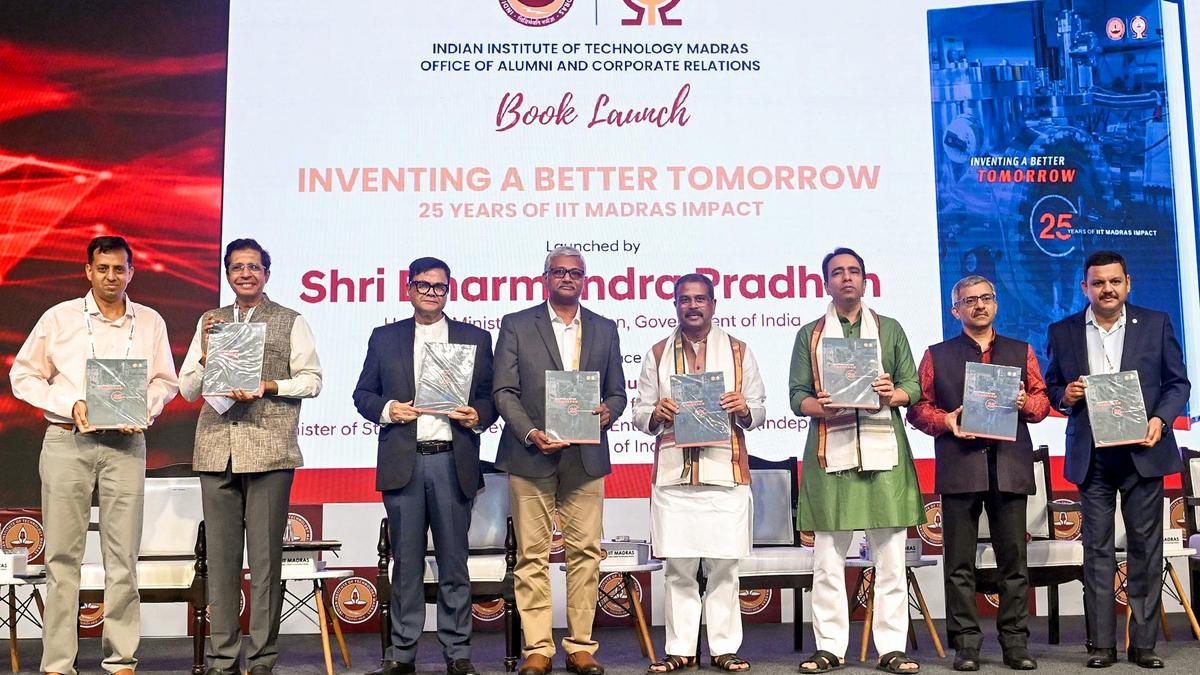
India's Tech Repatriation: Who Really Wins the Return
The $100,000 H-1B fee is pushing Indian engineers home, but the real beneficiary isn't Bengaluru's startups — it's the multinational GCC.
On September 19, 2025, Donald Trump signed Proclamation 10973 imposing a $100,000 fee on every new H-1B petition — a 40-fold jump that, in practice, closed the mass-hiring pipeline that has moved Indian software engineers to the United States for three decades. Ten months on, the "reverse brain drain" that Delhi is celebrating is real but misread: the returnees are not rebuilding India's startup economy so much as re-staffing the Bengaluru back offices of the same American multinationals that could no longer sponsor them onshore. The winners are the Global Capability Centres — and, quietly, the Big Tech firms that own them.
That is the thesis. What follows is the evidence, the counter-view, and the dates that will decide whether it holds.
The proclamation and its chilling effect
The White House framed the $100,000 fee as an anti-abuse measure aimed at IT services firms it accused of using the H-1B to "artificially suppress wages," according to the text of the proclamation published in the Federal Register on September 24, 2025. Indians held 71% of new H-1B petitions in FY2024, per
USCIS data cited by the Council on Foreign Relations — making them the policy's default target regardless of intent.
The chilling effect was immediate. As of February 15, 2026, US Citizenship and Immigration Services had received just 85 payments of the $100,000 fee, Al Jazeera reported from court filings — a de facto shutdown of the visa for anyone outside a handful of top-tier engineers at cash-rich firms. On June 8, 2026, US District Judge Leo Sorokin in Boston struck down the fee as an unlawful tax Congress never authorised, citing the Supreme Court's February ruling against Trump's emergency tariffs. The White House is appealing. A parallel
US Chamber of Commerce lawsuit, filed on October 16, 2025, is also live on appeal after a Washington DC judge sided with the administration in December — the rare instance of Corporate America publicly breaking with Trump this cycle.
The legal outcome matters less than the market signal already sent. Even at the previous $9,000-per-worker cost, the largest Indian outsourcing firms had already halved their US visa use between 2021 and 2024. Infosys, which employed more than 15,000 H-1B staff in the United States in 2010, was down to fewer than 2,000 by 2024, RAND analyst Krishna Kumar wrote in a September 2025 commentary. RAND's calculation is the number that gives the story its stakes: at 85,000 visas a year, employers would collectively pay $60 billion to bring Indian engineers onshore in FY2026 — half of India's entire $120 billion in software exports to the United States in 2024. The math cannot survive.
Delhi's opportunistic pitch
India's response has been rhetorical maximalism paired with modest concrete policy. The Ministry of External Affairs warned on September 20, 2025 that the fee would carry "humanitarian consequences" by disrupting families — a diplomatic protest that also, conveniently, laid the groundwork for a repatriation pitch. Nasscom warned that the abrupt rollout would destabilise ongoing onshore projects and produce "ripple effects" on the US innovation ecosystem.
The government has since layered incentive schemes onto older re-entry fellowships that have quietly repatriated scientists for two decades. On November 3, 2025, Prime Minister Narendra Modi launched a ₹1 lakh crore (roughly $12 billion) Research, Development and Innovation Fund, with the first Second-Level Fund Manager approvals going to the Technology Development Board and BIRAC — according to a Ministry of Science and Technology briefing. At the Emerging Science, Technology & Innovation Conclave the same month,
Modi announced 10,000 additional Prime Minister's Research Fellowships over five years and framed the entire push as an extension of "Jai Anusandhan" — a slogan grafted onto the Nehruvian "Jai Jawan, Jai Kisan."
The historical parallel matters. India first tried to reverse brain drain in 2006-07 with the Ramalingaswami Re-entry Fellowship in life sciences; over a decade, it received 1,492 applications, offered 396 fellowships and repatriated 280 scientists to Indian labs, according to the Press Information Bureau. Those are useful numbers but small ones — measured against a diaspora of tens of thousands of STEM PhDs abroad, the older schemes barely moved the needle. The Modi government's calculation is that a coercive external shock — closed US doors — can succeed where domestic pull failed.
The pitch is aimed at a demographic already softening. Nithin Hassan, who runs the Bengaluru relocation consultancy B2I after returning himself, told the BBC that inquiries have tripled since Trump's second term began, with more than 200 non-resident Indians reaching out in six months. Shivani Desai, chief executive of BDO Executive Search, told the same outlet that Indian students at Ivy League schools looking to return post-graduation are up 30% this season.
But sentiment is not migration. The Carnegie Endowment's 2026 Indian American Attitudes Survey found that among Indian Americans who have contemplated leaving the United States, only one in four named India as their preferred destination. Sixty-two percent named some other country — often Canada, the United Kingdom, or Germany, which raised its skilled-worker visa allocation for Indians from 20,000 to 90,000 last year. Two-thirds of the same respondents oppose the $100,000 fee. Yet 62% would still advise a hypothetical Indian colleague to take a US work visa over staying home.
Where the returnees actually land
The critical fact is where the returnees are landing. It is not Indian startups. It is the Global Capability Centres — the offshore captive units of Amazon, Google, Goldman Sachs, Tesco, Walmart and roughly 2,100 other multinationals.
The Nasscom-Zinnov 2026 report cited by the Observer Research Foundation places India's GCC ecosystem at more than 2,100 centres, employing over 2.3 million professionals and generating close to $100 billion in annual revenue. This is a near-tripling from 1,300 centres and $33.8 billion in 2020. Over 1,200 of these centres now host AI and machine-learning capabilities, with 250 running dedicated centres of excellence — precisely the high-skill work the $100,000 fee is pricing out of the United States. The Economist noted in May 2024 that American multinationals' R&D spending in India had already risen from $1.7 billion in 2010 to
$5.5 billion by 2021, citing US Bureau of Economic Analysis data. The visa shock accelerates a decade-long trend.
The GCC's advantage over Indian startups is stark: US-trained returnees expect US-adjacent salaries. The Bay Area returnee who joins Amazon's Bengaluru unit lands at roughly a third of her prior compensation but retains the brand, the stock plan, and the manager she reported to in Seattle. The same engineer joining a domestic SaaS startup takes a steeper cut for equity of uncertain value. Ajay Srivastava, founder of the Global Trade Research Initiative, told Al Jazeera that the "$100,000 H-1B fee makes onsite deployment prohibitively expensive, so Indian IT firms will double down on offshore and remote delivery." US postings, he predicted, "will be reserved only for mission-critical roles, while the bulk of hiring and project execution shifts to India."
An Observer Research Foundation working paper published in February 2026 sharpens the point that returnees are complements, not lead entrepreneurs. Analysing a hand-collected dataset of 596 Indian high-tech startups founded between 2016 and 2023, the authors found that startups founded by purely domestic teams outperformed returnee-founded firms on funding, valuation and revenue, contradicting a decade of prevailing wisdom. Returnees, the paper argues, "add value in complementary and increasingly specialised roles" — think heads of AI at Flipkart, not founders of the next Zomato. That is a corporate-employee profile, not a Schumpeterian one, and it is exactly what GCCs are engineered to absorb.
The counter-current: India's own job problem
The comforting narrative — Indian tech absorbs its returning diaspora, Silicon Valley's loss is Bengaluru's gain — collides with a domestic labour shock the government would prefer not to discuss.
Tata Consultancy Services announced in mid-2025 it would cut more than 12,000 middle- and senior-management jobs, roughly 2% of its half-million-person workforce. Indian IT majors that once absorbed 600,000 fresh graduates a year now take about 150,000, according to TeamLease Digital data reported by the BBC. Some 50,000 Indian IT workers lost their jobs in 2024, and net employee additions at India's top six IT services firms fell 72% year-on-year. Nasscom estimates India needs a million AI professionals by 2026 but that fewer than 20% of current IT staff are AI-skilled. A National Bureau of Economic Research working paper published in November 2025
documented that roughly 24% of Indian H-1B holders already leave the US after six years — "brain circulation" that helped build Indian IT in the first place, and which is now colliding with an AI-driven contraction on both sides.
For US firms, this is also a bad deal — not just for the engineers being turned away. RAND's calculation of the median H-1B computer scientist earning $99,000 in 2023 shows the fee exceeds the entire first-year salary of the very workers it targets. The Economist's assessment was blunt: the "perverse consequence" is that offshoring accelerates and the innovation premium of physically clustering talent in Silicon Valley erodes. The Council on Foreign Relations noted that Germany, Canada, South Korea and the United Kingdom are all moving to attract precisely the workers America is shedding, and China launched a new K visa for STEM graduates on October 1, 2025.
Diplomat View
The $100,000 fee will likely be struck down on appeal — Sorokin's June 8 ruling drew directly on the Supreme Court's February tariff logic, and that is a hard precedent for the Trump administration to dodge. But the mistake is treating the litigation as the story. It is not. The corporate hiring pivot is already permanent: Amazon, Microsoft and Meta will not rebuild the volume H-1B pipelines they spent 2024 optimising away from.
The falsifiable call: by end-2027, India's GCC headcount will cross 3 million and its share of US multinationals' engineering R&D spend will exceed 20%, while Indian-founded US-based unicorns per year will remain below the 2021 peak. India's tech repatriation will look, on paper, like a triumph — but the returnees will overwhelmingly be badge-carrying employees of American firms operating on Indian soil, not founders of Indian ones. That is a fine outcome for India's balance of payments and a fine one for Redmond's cost line. It is a poor proxy for the sovereign tech capacity Modi's speeches invoke.
What would change the forecast: an Indian court or tax authority restricting GCC repatriation of intellectual property to parent firms; a US-India bilateral mobility deal that restores visa flow on tighter terms; or a domestic breakout in AI or deep-tech from a returnee-founded firm on the scale of a Zoho or Flipkart. Absent any of those, the geometry holds — India becomes the world's back office for AI the way it became the world's back office for code, on rented terms.
What to watch
- Federal Circuit ruling on the Sorokin decision — expected in Q3 2026; a reversal reactivates the fee for the March 2027 lottery cycle.
- Nasscom Technology Sector Strategic Review 2026-27 — the first post-shock hiring data, due February 2026.
- India's AI Impact Summit, February 16-20, 2026 — Delhi's platform to convert diaspora rhetoric into named diaspora commitments.
The Bottom Line
Trump's $100,000 H-1B fee did not repatriate Indian tech talent to India — it repatriated the work. The engineers who come home are landing in the Bengaluru offices of American multinationals, not building Indian firms, and the balance sheet that benefits most sits in Seattle, not in Nasscom's members list. India's reverse brain drain is real; the sovereignty dividend it promises is not. *
Discover more

India
India-South Korea $50B Trade Expansion Plan
India and South Korea target $50 billion in bilateral trade by 2030, focusing on industrial cooperation and strategic alignment amid US pressures.
India
Modi's Women’s Convention in Varanasi
Modi's Varanasi rally frames women's reservation as a national mission, targeting the 2027 Uttar Pradesh elections with a strategic narrative.
India
Women’s Reservation Bill 2026
The Constitution (131st Amendment) Bill, 2026 was defeated in Lok Sabha, revealing deeper political conflicts over women's reservation and delimitation.

Conflict & Security
Drone Warfare Killing Aid Workers at Unprec
Over 1,000 humanitarian workers killed in three years as cheap armed drones collapse legal protections. Gaza, Sudan, Ukraine, and DRC see deliberate targeting of aid convoys and hospitals with zero prosecutions.