India's Drug Bust Exposes Pharma Smuggling
A significant shift in India's approach to drug trafficking
Model Diplomat2 min readAsia

India’s Drug Bust Points to a Bigger Pharma Smuggling Map
Five arrests matter less than the network behind them: Indian police appear to be moving from a retail seizure to a cross-border trafficking probe.
Indian police hold the leverage for now. A seizure that led to five arrests has, according to the seed report in The Indian Express, helped unravel an international trafficking operation involving banned prescription drugs.[Latest News - Page 6 - The Indian Express] That changes the case’s significance. A street-level bust removes couriers; a network case exposes suppliers, financiers, and shipment routes.
Why this matters beyond one arrest
The evidence points to a broader enforcement shift in India: authorities are increasingly treating pharmaceutical diversion as a transnational logistics problem, not just a local narcotics case. The Narcotics Control Bureau’s new Operation WIPE was launched specifically to target online drug trafficking, and it has already identified 122 trafficking instances involving 62 substances while sending notices to online platforms.[NCB launches ‘Operation WIPE’ to crack down on online drug trafficking networks]
There is a clear precedent. In an earlier multi-agency case, Indian authorities said a routine Delhi seizure of 3.70 kg of tramadol tablets opened up a cartel active across four continents, involving at least 50 international consignments and contacts in 10 countries; eight people were arrested as investigators followed the trail through India, the United States, Australia and Europe.[Drug cartel active across four continents busted in multi-agency operation] The pattern is the same: one physical seizure becomes an intelligence node.
That matters for anyone tracking India and wider
international criminal flows. Prescription-drug trafficking is harder to disrupt than conventional narcotics because it can hide inside legal supply chains, courier networks, e-commerce channels and small wholesalers.
Who gains, who loses
Police and central narcotics agencies gain if they can turn this seizure into a document-and-device case: call records, payment trails, shipping labels and supplier contacts are more valuable than the drugs themselves. Trafficking brokers and upstream wholesalers lose first, because once investigators map procurement and dispatch points, the network’s redundancy shrinks.
Recent regional cases show why. In Nepal, police arrested an Indian national from Bihar and seized 50,000 tramadol capsules and 9,520 dicyclomine capsules, underscoring how cross-border prescription-drug routes can run through India’s immediate neighborhood.[Indian national arrested in Nepal for possessing prescription drug in large quantity] That does not prove the current case is linked to Nepal, but it does show the market is regional, mobile and sustained.
What to watch next
The next decision point is whether this stays a local police case or is folded into a larger NCB-led or multi-agency investigation. Watch for three signals: disclosure of the specific drug, evidence of online or export-linked sales, and any reference to foreign counterparts or interstate suppliers. If investigators start naming logistics channels rather than just the five accused, this will no longer be a crime brief. It will be a supply-chain crackdown.
Discover more
India
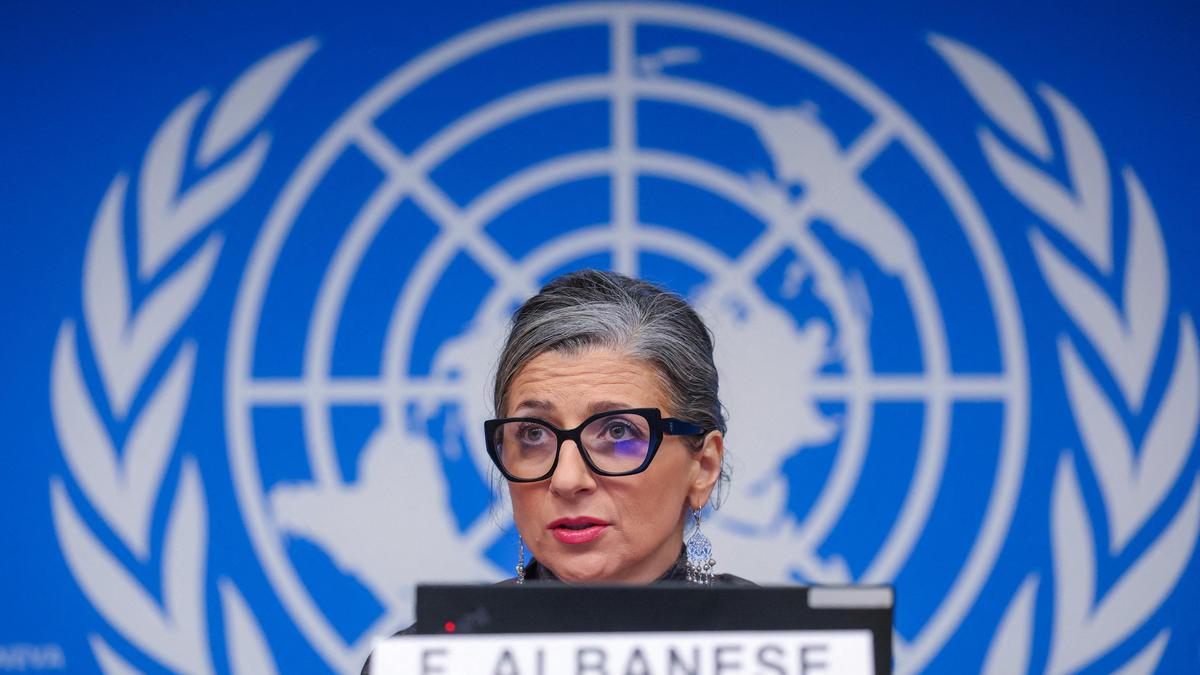
UN Expert Albanese: India Violates Law
UN Rapporteur Francesca Albanese accuses India of breaching international law, spotlighting human rights concerns in Kashmir and prompting diplomatic pushback.

India
India-South Korea $50B Trade Expansion Plan
India and South Korea target $50 billion in bilateral trade by 2030, focusing on industrial cooperation and strategic alignment amid US pressures.

Global Politics
US Seizes Iranian Ship, Tensions Surge
The US seizure of the Iranian ship Touska highlights a shift in control over the Strait of Hormuz, favoring Iran's strategic position.

Conflict & Security
Drone Warfare Killing Aid Workers at Unprec
Over 1,000 humanitarian workers killed in three years as cheap armed drones collapse legal protections. Gaza, Sudan, Ukraine, and DRC see deliberate targeting of aid convoys and hospitals with zero prosecutions.