Cotton Duty Cut Would Shift Costs From Mills to Farmers
India’s government is weighing an 11% cotton import duty removal, a move that would ease pressure on mills but reopen a familiar fight over farm prices and trade policy.
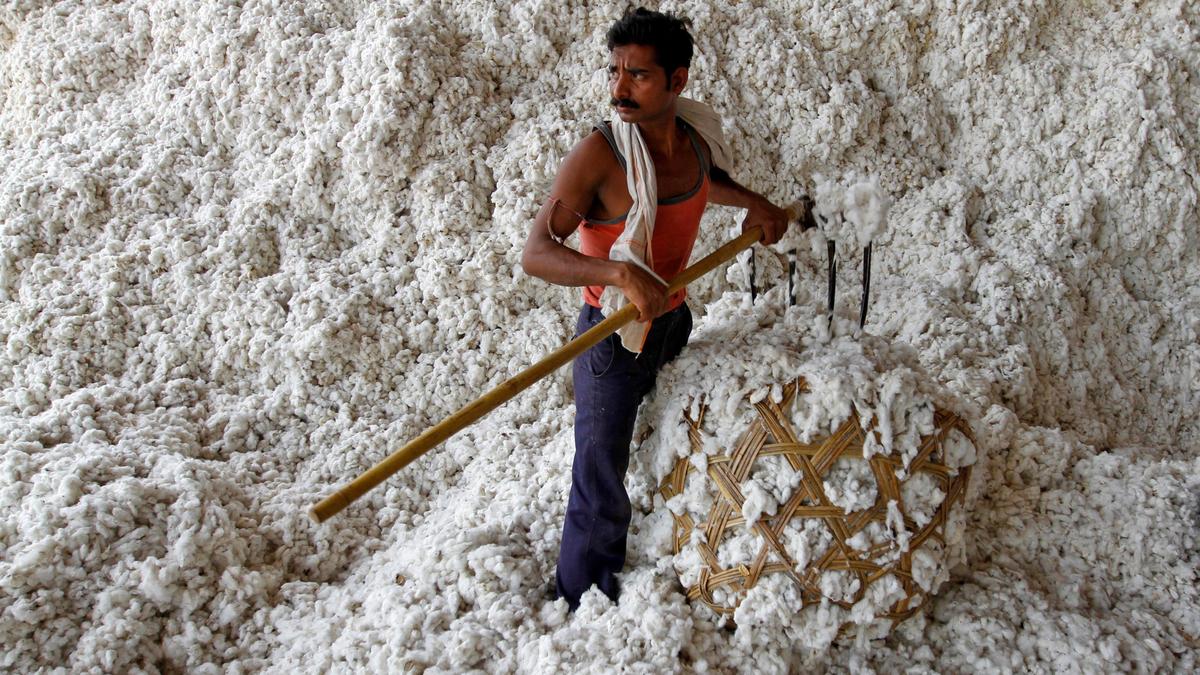
The government is in an advanced stage of consultation on whether to remove the 11% customs duty on raw cotton imports, a senior official told  The Hindu on Saturday. The consultation involves the Finance, Textiles and Agriculture ministries, and the official said a decision is expected soon. The industry wants the duty scrapped to blunt high input costs and ease pressure on spinning mills and downstream manufacturers.
Why the leverage sits with Finance and Agriculture
This is not just a textiles story; it is a negotiation over who absorbs the pain of tighter cotton economics. The industry’s case is simple: it says domestic demand for the current year is about 337 lakh bales, while The Hindu reports 2025-26 arrivals at 292.15 lakh bales, leaving a gap of nearly 45 lakh bales. If policymakers accept that framing, mills get cheaper imported cotton and exporters get some relief on margins.
But the opposing logic is just as clear. Removing the duty would make imported cotton cheaper, which helps industry immediately but risks putting downward pressure on domestic prices when farmers are already sensitive to procurement signals. That is why Agriculture matters here: it is the ministry that will press for protection of farm incomes, while Finance will weigh the revenue loss and the precedent of lowering a trade barrier after industry lobbying. For a broader policy lens, see  India and the trade-offs that run through International.
The winners are exporters; the losers are distributed
The biggest immediate beneficiaries would be apparel exporters, spinning mills and large integrated textile firms that buy cotton at scale. A  New Indian Express report said a delegation led by A. Sakthivel met Commerce Minister Piyush Goyal, Agriculture Minister Shivraj Singh Chouhan and Textiles Minister Giriraj Singh, and then sought out Vice President C.P. Radhakrishnan to press the same demand. That tells you the industry is widening the political surface area: it is not waiting for a technical ministry-level review, it is trying to build cross-government momentum.
The industry argument is also becoming more structural.  Technical Textiles Today reported that exporters say India is losing competitiveness because rival textile producers can source cotton more cheaply. That matters because India’s export ambitions depend not only on trade agreements, but on whether domestic input costs let firms price competitively. In other words, the duty is now being cast as an export-policy obstacle, not just a customs line item.
What to watch next
The key decision point is whether the Finance Ministry moves from consultation to notification, or whether Agriculture slows the file over farm-price concerns. If the duty is cut, mills and exporters gain quickly; if it is held, the government is signaling that cotton farmers still outrank textile margins in the policy hierarchy. The next move will show whether New Delhi is prioritizing industrial competitiveness now, or preserving room to manage rural politics later.