India Naval Edge: Three Ships Commissioned
Modi boosts naval self-reliance with new warships.
Model Diplomat3 min readAsia
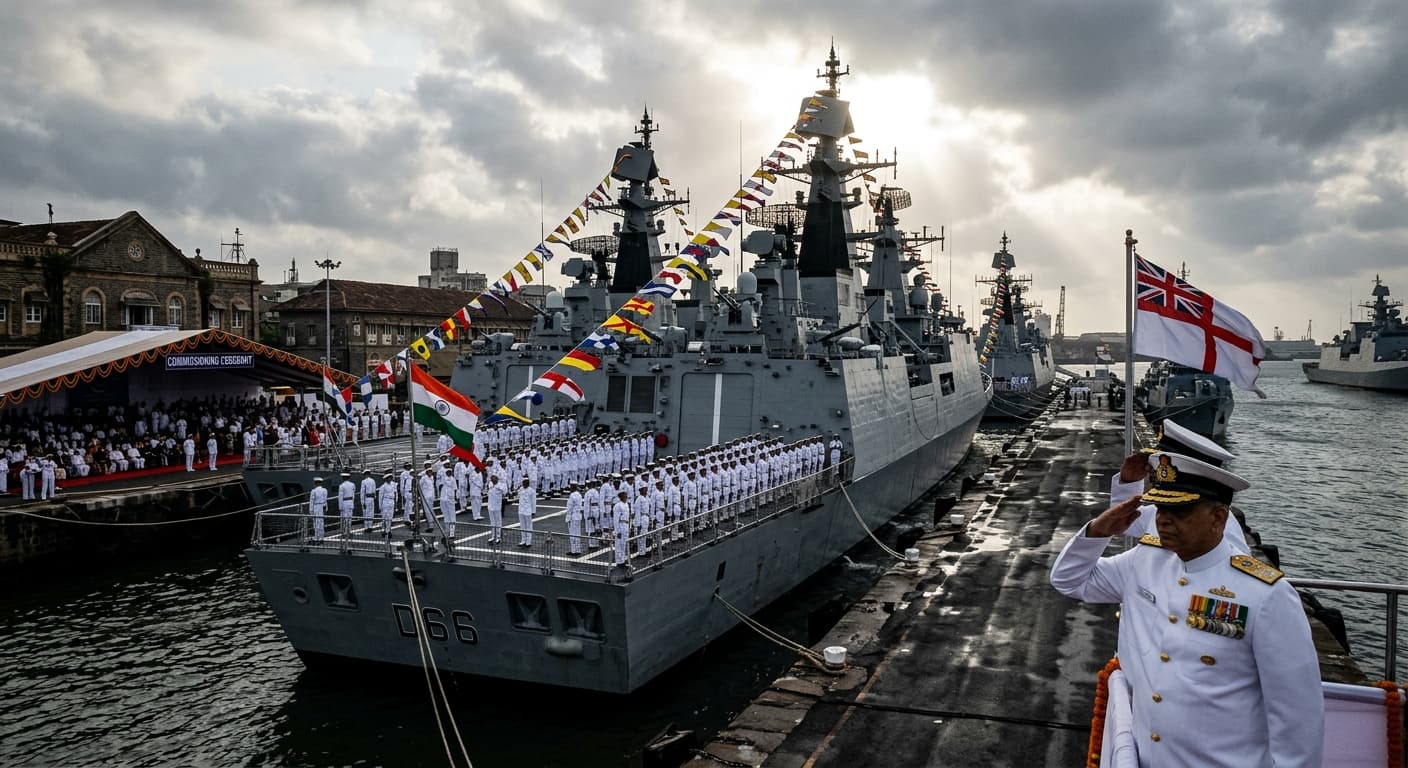
India Launches Domestic Naval Edge With Three Ships
Modi commissions INS Dunagiri, Sandhayak, and Agray in Kolkata—75% indigenous content marks strategic push toward defense self-sufficiency.
On June 21, 2026, Prime Minister Narendra Modi commissioned three indigenously built warships at Garden Reach Shipbuilders and Engineers (GRSE) in Kolkata: INS Dunagiri (a Project 17A stealth frigate), INS Sandhayak (a hydrographic survey vessel), and INS Agray (an anti-submarine warfare craft). The NDTV report indicates all three vessels were designed by the Indian Navy's Warship Design Bureau with more than 75 percent indigenous content. This triple commissioning marks the latest milestone in India's Aatmanirbhar Bharat (self-reliant India) defense manufacturing program and reflects a deliberate tilt toward operational dominance in the Indian Ocean Region.
The Strategic Calculus
Timing this ceremony to coincide with Modi's Kolkata visit signals New Delhi's intent to make naval self-reliance a centerpiece of national identity and electoral messaging. According to DD News, the government broadcaster, the Prime Minister framed the event as central to India's vision of a "developed nation," linking maritime power explicitly to economic competitiveness, control of critical sea lanes, and strategic influence. Modi announced that defense production has grown from ₹40,000 crore in 2014 to ₹1.8 lakh crore today, and defense exports have risen from ₹700 crore to approximately ₹4,000 crore—concrete metrics designed to demonstrate defense industrial capacity.
The three ships themselves address distinct operational gaps. INS Dunagiri, fitted with BrahMos supersonic cruise missiles and advanced stealth features, closes India's shortage of modern frigates capable of contested blue-water operations. INS Agray, with advanced sonar and anti-submarine torpedoes, targets submarine activity in coastal waters—a direct response to increased submarine deployments in the Indian Ocean by Pakistan and, tactically, by Chinese vessels. INS Sandhayak extends India's ability to conduct hydrographic surveys of contested maritime zones, creating strategic claims over seabed mapping and exclusive economic zone definitions in a region where China already operates extensively.
The Industrial Leverage
The real play is not the ships—it is the domestic supply chain. According to Daijiworld's reporting, the three vessels represent the second major simultaneous commissioning in recent years, following a destroyer, frigate, and submarine induction in January 2025. Modi's explicit statement that no future naval vessel will be built abroad consolidates state control over India's entire shipbuilding ecosystem and signals to defense contractors that India is closing the door on foreign suppliers. This locks in hundreds of small and medium enterprises (MSMEs) into a protected domestic network and makes Indian naval modernization contingent on domestic political will—a lever New Delhi now holds exclusively over its own acquisition timeline.
Two separate shipyards delivered these vessels, underlining that the government is institutionalizing redundancy and competition across GRSE (Kolkata) and similar facilities, reducing single-point failure in the supply chain.
What to Watch Next
The next visible decision point is the delivery schedule for the remaining Project 17A frigates. Four more of this class are under construction; if India delivers them on schedule with similar indigenous content ratios, the Navy will have closed a critical capability gap against regional competitors within 36 months. Second, watch whether independent maritime states in the Indian Ocean—Sri Lanka, Mauritius, Maldives, Indonesia—adopt Indian-built or Indian-designed hulls for their own navies. A successful regional export of Indian warships would signal that India's defense industrial ambition is no longer domestic but is becoming a tool of regional geopolitical leverage. Third, monitor whether this domestic-build commitment stretches India's financing and shipyard capacity; accelerating multiple ship programs simultaneously often produces cost overruns and schedule slips. If GRSE or other yards struggle, Modi's self-reliance narrative fractures and India reverts to foreign procurement—a political loss he cannot afford.
Discover more

India
India-South Korea $50B Trade Expansion Plan
India and South Korea target $50 billion in bilateral trade by 2030, focusing on industrial cooperation and strategic alignment amid US pressures.
India
Rajnath Singh's Durga Squad for 2026 Polls
Rajnath Singh's Durga Squad promised women's safety in Bengal but has since disappeared from the agenda, revealing BJP's true priorities.
India
Modi's Women’s Convention in Varanasi
Modi's Varanasi rally frames women's reservation as a national mission, targeting the 2027 Uttar Pradesh elections with a strategic narrative.

Conflict & Security
Drone Warfare Killing Aid Workers at Unprec
Over 1,000 humanitarian workers killed in three years as cheap armed drones collapse legal protections. Gaza, Sudan, Ukraine, and DRC see deliberate targeting of aid convoys and hospitals with zero prosecutions.