IEA's Montreal Pivot: Efficiency Meets Oil
A split-screen redefines global energy security post-Hormuz shock.
Model Diplomat8 min readNorth America
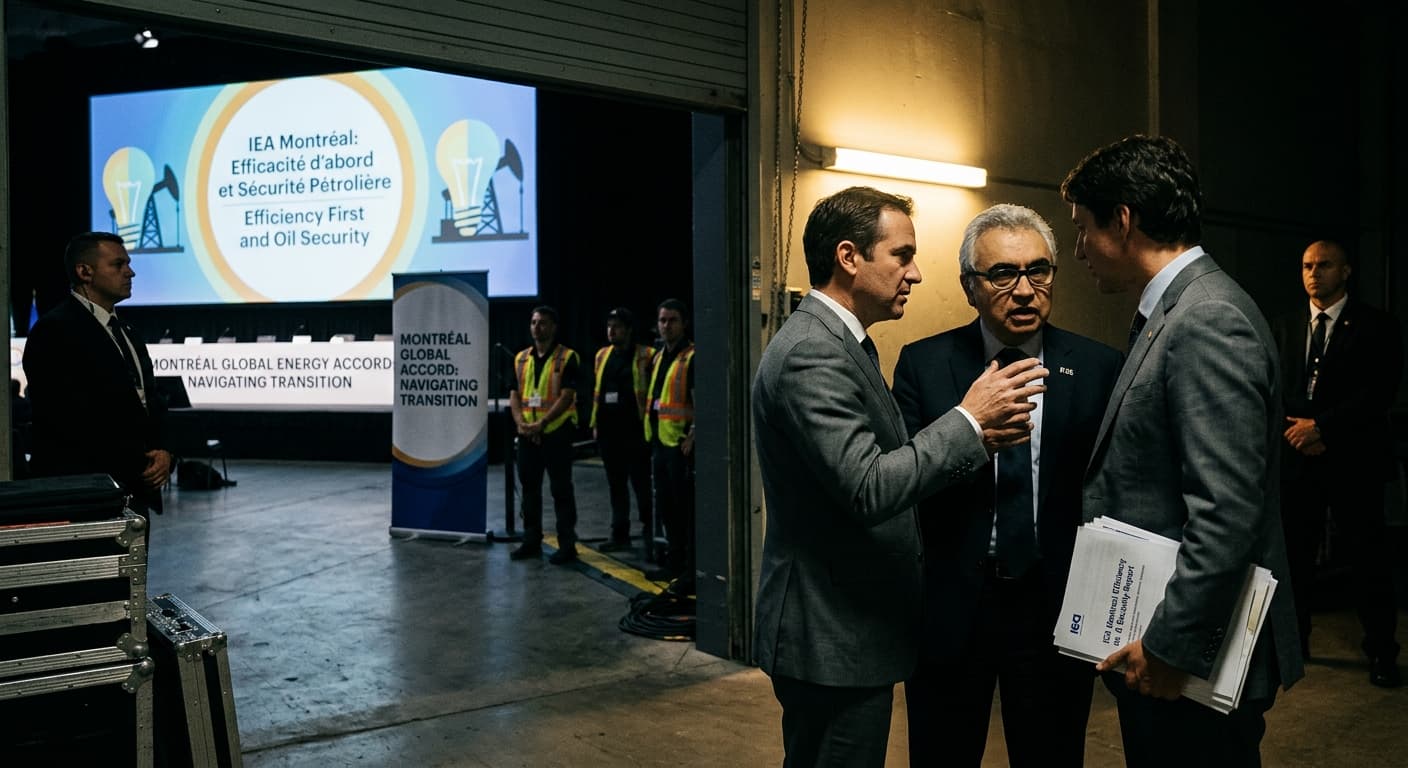
IEA's Montreal Pivot: Efficiency Meets a Hormuz-Era Oil Push
The IEA's 11th Energy Efficiency Conference in Montreal doubled as a Canadian oil pitch — a split-screen that redefines global energy security after the Hormuz shock.
Roughly three dozen governments signed the Montreal Action Plan on June 30, 2026, pledging to make energy efficiency "the cornerstone" of national energy policy while, in the corridors of the same convention hall, the host country pitched itself as the free world's next long-haul crude supplier. The dissonance is the point. With Iran's near-closure of the Strait of Hormuz still throttling global oil flows, the International Energy Agency (IEA) has quietly abandoned the tidy energy-transition story of 2023–24 and reverted to the twin-track posture it was invented for in 1974: squeeze demand and diversify supply — at the same time, from the same podium. The clearest winner of that pivot is Canada, whose prime minister used the week to lock in a one-million-barrel-per-day pipeline to the Pacific.
What Montreal actually pledged
The IEA's 11th Annual Global Conference on Energy Efficiency, co-hosted by the Government of Canada on June 29–30, drew about 600 delegates from 60 countries and roughly 25 ministers, according to a conference readout by veteran efficiency analyst Rod Janssen. The published joint statement,
republished in full by Mirage News, is unusually blunt about the trigger:
"This year, the conflict in the Middle East caused a near halt in shipping traffic through the Strait of Hormuz, leading to the largest supply disruption in the history of the global oil market… We recognise this crisis demands historic action by governments and that energy efficiency is central to this response."
Signatories reaffirmed the COP28 goal of doubling the global annual rate of efficiency improvement by 2030 and committed to putting "energy efficiency first" in policy and finance decisions. The framing is defensive, not climate-forward: efficiency as macroprudential insurance against the next Hormuz. The Montreal text singles out vulnerable households and small businesses as the priority beneficiaries of "structural energy efficiency improvements, and sufficiency measures where appropriate" — language borrowed nearly verbatim from the IEA's 2022 post-Ukraine playbook, when Fatih Birol told the BBC the world faced "the greatest global energy security threat in history."
The historical parallel matters. The Montreal statement explicitly notes that after the 1973 oil shock, efficiency policies introduced by shocked importers meant "global energy demand would have been twice as high today." That is the analytical spine of the entire document: the agency is treating 2026 as a second 1973 — and telling governments to legislate accordingly.
The split screen: efficiency plenary, oil-and-gas panel
The reason Montreal reads as split-screen is that the plenary text was drafted alongside a very different set of side events. According to The Energy Mix, panel discourse foregrounded Canada as a "preferred supplier" of oil and gas to allies looking to de-risk from the Gulf. That framing was not accidental. Two days after the conference closed, Prime Minister Mark Carney flew to Calgary and, as
Al Jazeera reported on July 3, secured a deal with British Columbia to permit a new one-million-barrel-per-day pipeline from Bruderheim, Alberta, to the southern BC coast — a shadow Trans Mountain built explicitly for Asia.
Carney's stated goal is to double Canada's non-US exports within a decade. The pipeline, a partnership between the federally owned Trans Mountain Corporation, the Alberta government and Calgary's Pembina Pipeline, is the operational answer. Montreal was the diplomatic one. Alberta Premier Danielle Smith, standing beside Carney, said "the world is asking Canada to step up and provide stable, democratic and reliable energy supply" — a line that could have been ghost-written by the Montreal panel moderators. Smith wants Alberta to double provincial output to 8 million bpd within 10 to 15 years.
The politics behind the pivot is domestic as much as geopolitical. A November 2025 memorandum of understanding between Ottawa and Alberta scrapped the planned emissions cap on the oil and gas sector and dropped clean-electricity rules, in exchange for stronger provincial industrial carbon pricing and a carbon-capture project. Alberta is holding a public vote this fall on whether to hold a full independence referendum, and Carney's Liberals are visibly buying peace. The pipeline is the price. The Montreal Action Plan is the ideological cover — proof that Ottawa is still doing "the transition" even as it approves 1 mb/d of new bitumen egress.
The efficiency pledge and the pipeline are not in tension in Ottawa's logic. They are the two halves of the IEA's original 1974 mandate — coordinating "collective responses to major oil supply disruptions," as the agency described itself in its May 29 joint statement. That statement warned that global oil inventories were being "drawn down at a record pace" ahead of peak Northern Hemisphere summer demand.
The Hormuz shock is bigger than markets have priced
The scale of the disruption is what makes the Montreal messaging coherent. In its April Oil Market Report, carried by Al Jazeera, the IEA said Iran's chokehold on the strait cost the market 10.1 million barrels per day in March 2026 — the largest supply loss it has ever recorded — and cut its 2026 demand forecast to an annual contraction of 80,000 bpd, against a previously projected increase of 640,000 bpd. The last time global oil demand shrank at that scale was the pandemic. The IEA warned of a projected 1.5 million bpd cut in oil consumption — the deepest since Covid — and said, in its own words, "resuming flows through the Strait of Hormuz remains the single most important variable in easing the pressure on energy supplies, prices and the global economy."
The macro damage is being coordinated at IFI level. In an April 1 joint statement, the IEA, IMF and World Bank formalised a "high-level coordination group" to manage energy and fiscal spillovers, warning of tighter monetary stances and weaker growth in emerging economies whose currencies are being pummelled by the oil-and-fertiliser shock. The
WTO joined that grouping on May 28, a rare four-way IGO coordination that echoes the ad hoc mechanisms of the 1970s. NATO, for its part, hosted Birol and EU Energy Commissioner Dan Jørgensen at the North Atlantic Council on February 19, 2025 — one of the first signs the alliance was folding energy directly into its
"wartime mindset", in Secretary General Mark Rutte's phrase. Efficiency is now a defence brief, not just a climate one.
The efficiency numbers do not add up — and everyone in Montreal knows it
The Montreal Action Plan restates the COP28 target of doubling annual efficiency improvement by 2030 — meaning roughly 4% per year globally, up from the 2.2% achieved in 2022, the Financial Times noted. To hit that pace, annual investment would need to triple from about $600 billion to $1.8 trillion. The gap has widened since. The IEA's own
World Energy Investment 2025, cited verbatim in Commission Recommendation (EU) 2026/537, found that "policy and financing support has rolled back" since 2023, that EU efficiency investment fell 2% in 2024, and that "the current annual rate of investments in energy efficiency and electrification has to be tripled."
The World Bank's June 2025 report, Power More With Less, makes the geopolitical case in plain language: efficiency is "no longer optional" for countries seeking affordable, reliable energy — and, crucially, is the single largest source of energy employment worldwide, with nearly
11 million jobs in 2022. The Commission's
own assessment of Member State climate plans is starker still: primary energy consumption in the EU sits 22% above the 2030 target, final consumption 17% above it, and Brussels calculates that "every 1% of improvement in energy efficiency translates into a 2.6% reduction in gas imports." That is the number that ties Montreal to Ottawa: efficiency is a supply-security lever priced in cubic metres of gas the EU does not have to buy from anyone.
Who wins, who loses
The immediate winner is Canada. Montreal delivered the diplomatic legitimation for a pipeline that had been politically impossible under Justin Trudeau, whose Northern Gateway rejection remains the totemic case. The Trans Mountain expansion opened through the BC southern coast in 2024 and now sends two-thirds to three-quarters of its cargo to Asia; the new project effectively doubles that egress. Carney's Paris remarks that Canadian crude is "low risk, low cost and low carbon" — even after the US seizure of Nicolás Maduro — are now the government's operating slogan.
The losers are quieter. EU efficiency budgets face a cliff-edge in 2026 when the Recovery and Resilience Facility ends, threatening to widen the gap the Commission just identified. Emerging-market importers are absorbing the fertiliser and fuel bill of the Hormuz war with the least fiscal room, as the IEA-IMF-WBG-WTO coordination group explicitly warned. And the COP28 doubling target itself — the headline commitment the Montreal signatories just reaffirmed — is drifting further out of reach with every quarter that private investment lags.
Diplomat View
Montreal marks the moment the IEA officially stopped pretending its efficiency agenda and its oil-security agenda are separate stories. They are the same story, and they have been since 1974. The bet is that Canadian barrels can plug the Gulf hole while efficiency policy blunts long-run demand — a hedge against both a prolonged Hormuz closure and a future decarbonisation snapback. The forecast: expect the West Coast pipeline to receive federal fast-tracking within twelve months, expect European efficiency spending to be re-badged as "security infrastructure" to survive the RRF sunset, and expect COP30 in Belém to be dominated by supply-security language that would have been unthinkable at COP28. The call is falsifiable in three ways: if Hormuz flows normalise by Q4 2026 and Brent settles below $70, the pipeline politics collapse; if Alberta's fall referendum vote passes decisively, the federal leverage in Montreal-style diplomacy evaporates; if EU efficiency investment falls a second consecutive year in 2026 data, the "doubling by 2030" pledge is dead in all but name.
What to watch next
- Fall 2026 — Alberta's public vote on whether to trigger an independence referendum; the political ceiling on Carney's pipeline diplomacy.
- November 2026 — COP30 in Belém, where the COP28 doubling target gets its first real progress report and the IEA's High-Level Energy Transition Dialogue delivers its Belém outcomes.
- End-2026 — Sunset of the EU Recovery and Resilience Facility, the single biggest source of European efficiency financing; watch whether Brussels replaces it or lets the €170 billion annual gap widen.
- Ongoing — Iranian conduct in the Strait of Hormuz following the US blockade of Iranian ports; any sustained reopening would recut the entire Montreal framing.
The Bottom Line
The Montreal Action Plan is not a climate document dressed up as security policy — it is a security document dressed up as climate policy, and the tell is that its host country walked out of the conference and signed a one-million-barrel-a-day pipeline to Asia. The IEA's split-screen is deliberate: efficiency for the long run, Canadian crude for the Hormuz-shaped hole in the short run. If the pipeline gets built and the doubling target does not, Montreal will be remembered as the moment the energy transition was formally subordinated to energy security — with Ottawa, not Brussels or Beijing, writing the new rulebook.
Discover more

US Politics
US Launches $166B Tariff Refund Portal
The US is launching a $166 billion tariff refund portal to aid importers hit by Trump-era tariffs, with major implications for trade and supply costs.
India
Women's Reservation Bill 2026: A Political Sh
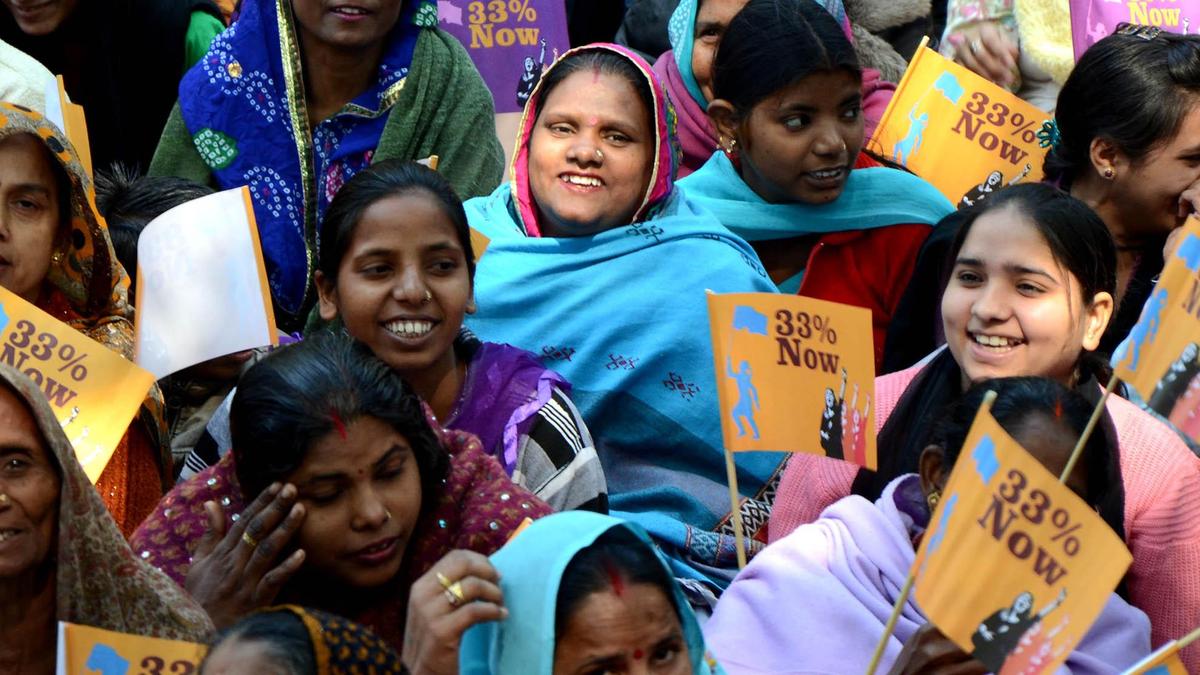
India's Lok Sabha rejected the Women's Reservation Bill, exposing a political maneuver to redraw electoral maps favoring the north over the south.
International Relations
Venezuela Protests Demand Economic Reforms
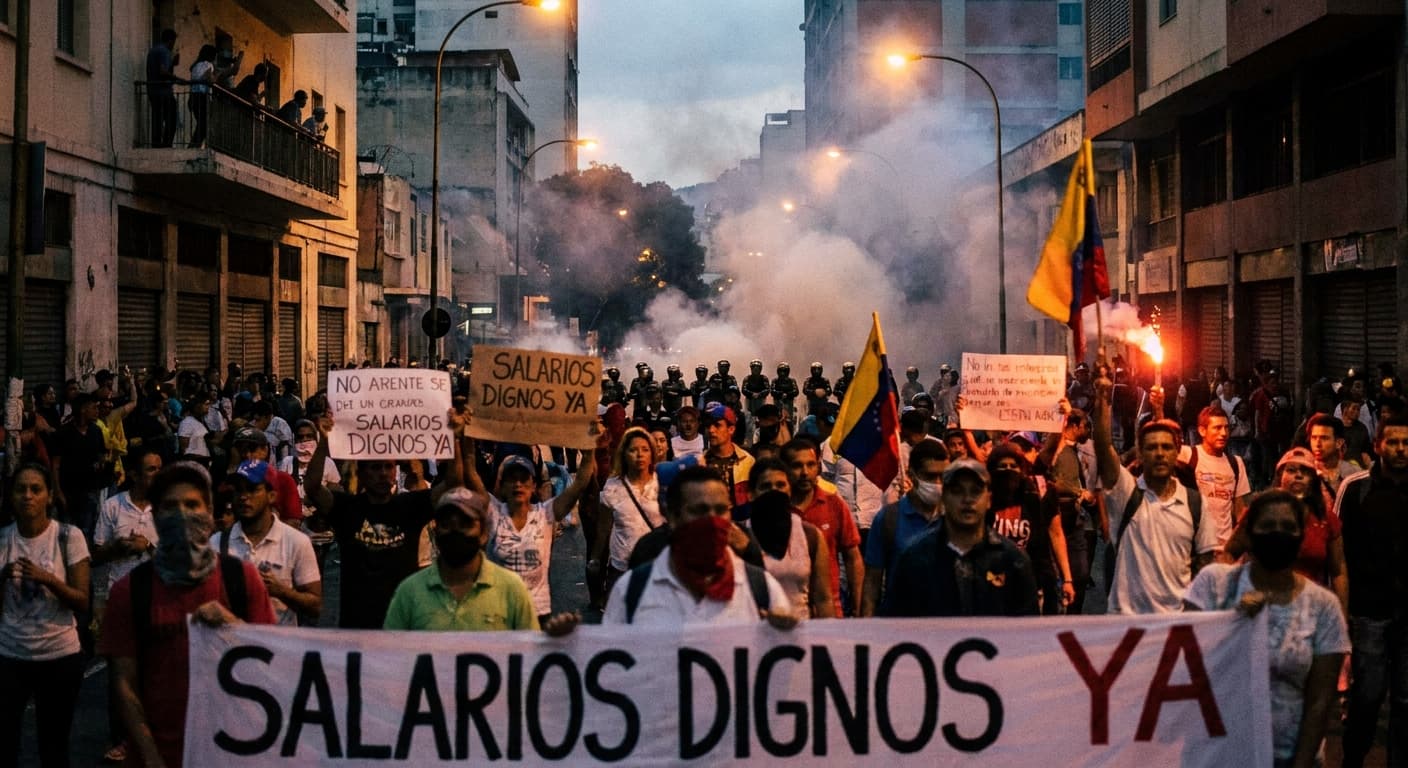
Protests across Venezuela spotlighted deepening economic hardship under Maduro as workers demanded higher wages and pensions amid growing public discontent.

Conflict & Security
Drone Warfare Killing Aid Workers at Unprec
Over 1,000 humanitarian workers killed in three years as cheap armed drones collapse legal protections. Gaza, Sudan, Ukraine, and DRC see deliberate targeting of aid convoys and hospitals with zero prosecutions.