IAEA Chief: US-Iran Nuclear Deal an Illusion
Rafael Grossi emphasizes IAEA's vital role in nuclear agreements.
Model Diplomat3 min readMiddle East
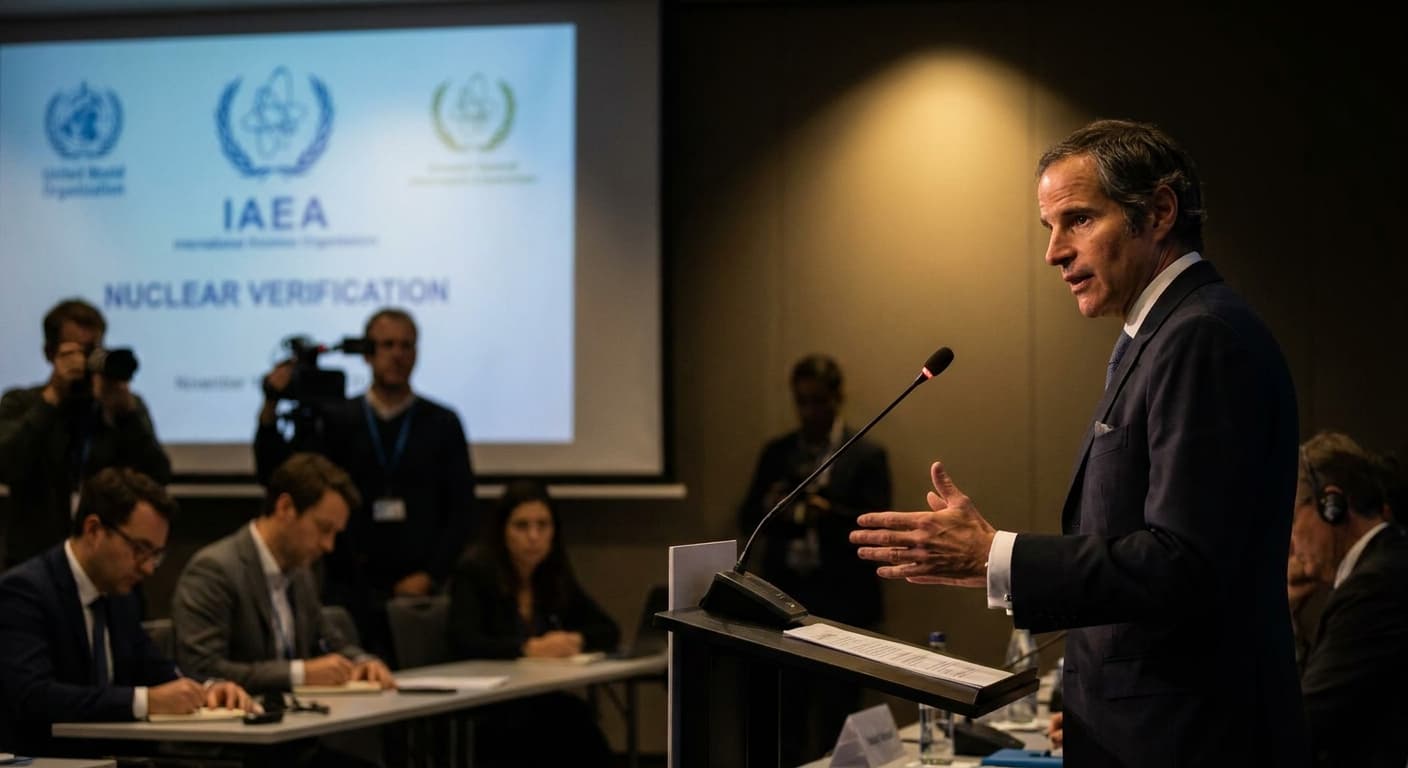
UN Nuclear Agency Chief: US-Iran Nuclear Deal Without IAEA Is an “Illusion”
IAEA Director General Rafael Grossi warned that any U.S.-Iran nuclear agreement lacking the IAEA’s verification would be practically meaningless, highlighting the agency’s indispensable role in nuclear diplomacy.
The head of the International Atomic Energy Agency (IAEA), Rafael Grossi, delivered a blunt message on April 17, 2026: any nuclear agreement between the United States and Iran that excludes the IAEA’s involvement is nothing more than an illusion. His comments come amid ongoing but faltering efforts to revive the 2015 Iran nuclear deal—the Joint Comprehensive Plan of Action (JCPOA). The remark underscores the IAEA’s crucial authority as the international watchdog responsible for verifying Iran’s nuclear activities and enforcing transparency standards.
Why This Matters
The 2015 JCPOA linked Iran’s ability to advance its nuclear program with stringent inspections and monitoring by the IAEA. The Trump administration’s 2018 unilateral withdrawal from the deal undercut that framework and led to Iran reducing cooperation with the agency. Since then, efforts to resurrect the pact through diplomatic channels have repeatedly hit snags, with verification and compliance issues at the heart of disputes.
Grossi’s statement emphasizes that any bilateral deal between the U.S. and Iran—no matter how politically expedient—cannot supersede the IAEA’s independent inspections and enforcement. Without the agency’s ability to monitor Iran’s nuclear facilities, such an agreement risks becoming a political gesture rather than a credible nonproliferation measure. This invalidates the possibility of meaningful verification, which is the cornerstone of international trust in any nuclear accord.
This moment is a reminder of the limits of bilateral diplomacy in controlling nuclear risks when multilateral institutions like the IAEA are sidelined or weakened. The agency functions as the global community’s objective overseer, verifying Iran’s declarations on uranium enrichment and nuclear material storage. As history shows—from North Korea to Iran—the absence of credible verification mechanisms invites ambiguity and escalates regional and global security risks.
Iran’s recent restrictions on IAEA access have fueled concerns that it is racing toward nuclear breakout capabilities. Meanwhile, the U.S. and European members insist any path forward must revolve around full Iranian compliance with the IAEA’s protocols as a baseline.
What to Watch Next
-
IAEA Access Negotiations: Iran’s willingness to restore IAEA inspectors’ access to key sites will be a litmus test. The agency’s confidence in Iran’s transparency dictates whether meaningful diplomacy can resume.
-
U.S. Policy Signals: The U.S. administration must clarify if it values agency involvement as non-negotiable or tries to cut a deal sidelining the IAEA to avoid what it sees as delays or obstacles.
-
European and Regional Actors: European powers and Middle Eastern stakeholders like Israel and Gulf States remain wary. Their support or resistance to any interim deal without IAEA backing will shape diplomatic possibilities.
In any case, this is a pivotal moment for nonproliferation diplomacy. The IAEA’s centrality is not a bureaucratic detail—the agency is the backbone of credible nuclear oversight. Ignoring or marginalizing it weakens the international system’s ability to prevent proliferation and maintain regional stability.
For more about the broader US-Iran relationship, see our United States and
Global Politics insight pages.
AP News: UN Nuclear Agency Chief Says Any US-Iran Agreement Without IAEA Input Would Be an Illusion
Discover more
Global Politics
Iran's Fragile Ceasefire
With Iran's ceasefire nearing its end, uncertainty mounts over stalled US-Iran negotiations and the fragile prospects for lasting Middle East stability ahead.

Global Politics
Iran Warns US Naval Blockade Threatens Cease
Iran warned the US that its naval blockade risks collapsing the fragile Middle East ceasefire, signaling a dangerous path toward renewed regional escalation.
Global Politics
Iran's Warning
Iran warns a U.S. blockade in the Strait of Hormuz could collapse a fragile ceasefire, threatening regional stability and the security of global oil supplies.

Economics
Fed's Amex AML order puts correspondent banking on notice
Federal Reserve's Amex AML order requires board-level controls and a 90-day plan; OCC fined the bank $350 million over enterprise-wide deficiencies.