House Rules Committee Advances FISA, Farm, &
Three critical bills face challenges on the House floor.
Model Diplomat3 min readNorth America

House Rules Panel Advances Three Bills — But the Floor Is a Minefield
The Rules Committee cleared FISA 702, the farm bill, and DHS/ICE funding in one session — yet each faces a distinct coalition problem on the floor.
The House Rules Committee advanced three high-stakes legislative packages on April 29, setting up floor votes on a FISA Section 702 reauthorization, the long-stalled farm bill with an ethanol compromise, and a DHS/ICE funding bill — all in a single marathon session. The trifecta signals Speaker Mike Johnson's effort to clear a clogged legislative calendar in one burst. Whether the floor cooperates is a different question.
Three Bills, Three Fault Lines
FISA 702 is the most politically explosive. The program — which allows NSA collection on foreign targets but can sweep up Americans' communications incidentally — has divided the GOP since early April. A 10-day emergency extension passed the House on April 17, expiring April 30, making a floor vote today effectively mandatory. The White House and CIA Director John Ratcliffe have pressed for a clean 18-month renewal; Rep. Andy Biggs and a bloc of conservative privacy hawks are demanding warrant requirements for querying Americans' data. That bloc has already killed one leadership-backed version on the floor this month. Johnson cannot afford another collapse with the clock at zero.
ICE and DHS funding carries its own landmines. A 42-day DHS partial shutdown — the longest in history — has been grinding since March after House Republicans rejected a bipartisan Senate deal as insufficiently tough on immigration. The House version restores border and ICE appropriations but excludes broader DHS funding the Senate wants, keeping the TSA staffing crisis live. Speaker Johnson needs near-unanimous Republican support to pass it; Freedom Caucus members remain publicly skeptical that any deal without guaranteed immigration enforcement triggers is acceptable.
The farm bill is the sleeper fight. Leadership is attaching a year-round E15 ethanol sales provision as a sweetener — critical to locking in votes from the Iowa and Midwest delegations whose commodity farmers have been squeezed by low prices and trade uncertainty. But E15 expansion has historically stalled on environmental and oil-industry objections, and a January House vote on the measure already failed once, settling instead for a study commission that farm groups called a deliberate delay. Repackaging it inside the farm bill is a second bite at a contested apple.
Why the Bundling Strategy Is a Gamble
Johnson's logic is straightforward: link three must-pass items to create cross-caucus pressure. Members unwilling to let FISA expire or who want ICE funded may swallow a farm bill they'd otherwise balk at. But the inverse is equally true — a single defection bloc (privacy hawks on FISA, fiscal conservatives on farm subsidies, Senate holdouts on DHS) can collapse any one of the three and create floor chaos that poisons all of them. The narrow House Republican majority offers almost no margin for error.
What to Watch
April 30 is the hard deadline — FISA 702 expires at midnight. That date collapses Johnson's negotiating space to hours, not days. Watch whether Ratcliffe or Stephen Miller make a last public push to peel off privacy-hawk holdouts before the floor vote opens. On DHS, the Senate's posture after any House passage matters more than the House vote itself — Majority Leader John Thune has shown no appetite to accept the House's ICE-heavy version. The farm bill's ethanol rider is the one to watch for procedural stripping on the floor.
If FISA fails again, expect an emergency executive order claim from the Trump administration — and a constitutional confrontation that makes the legislative deadlock look manageable by comparison. Follow developments on US Politics.
Discover more
US Politics
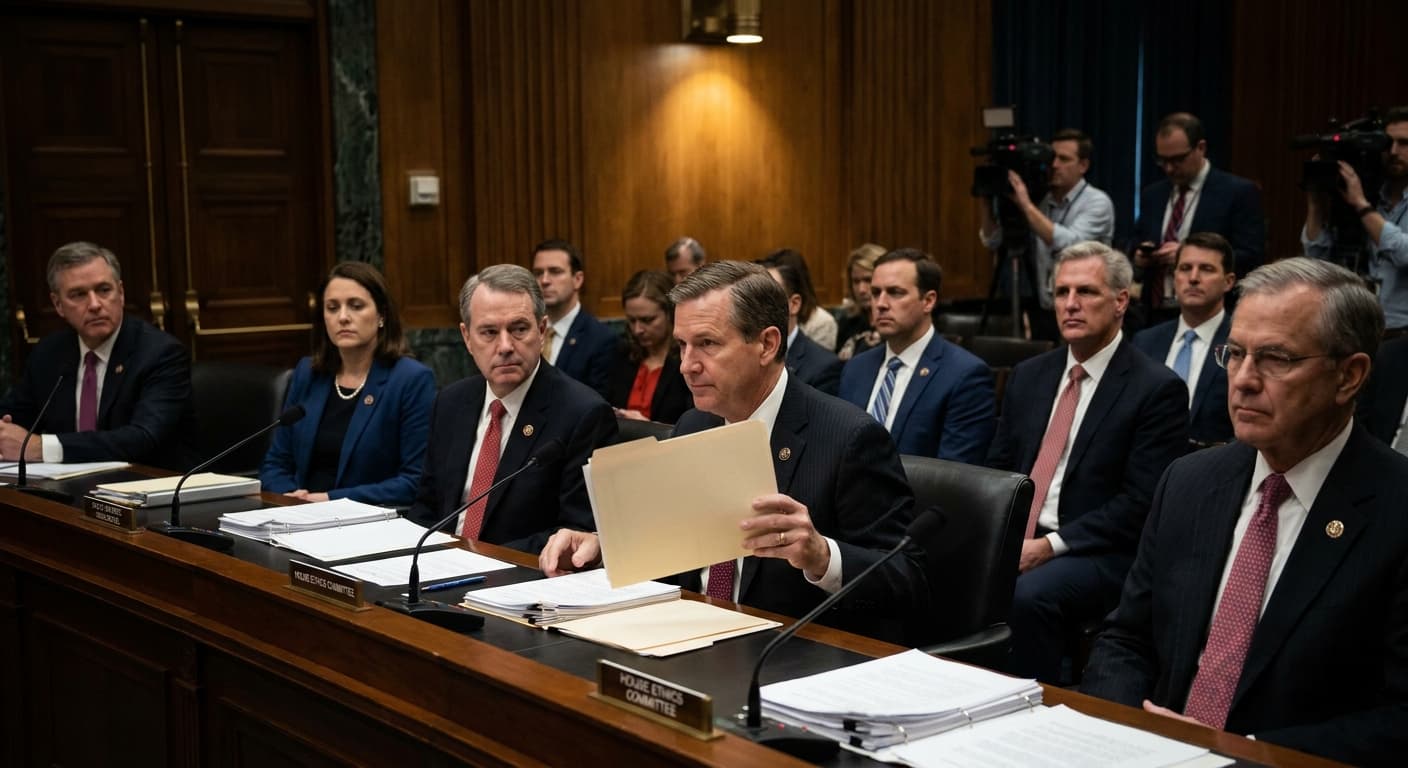
House Ethics Committee Pushes Sexual Miscond.
The House Ethics Committee has shifted responsibility for sexual harassment settlement records to the Office of Congressional Workplace Rights, complicating disclosure efforts.

Conflict & Security
Drone Warfare Killing Aid Workers at Unprec
Over 1,000 humanitarian workers killed in three years as cheap armed drones collapse legal protections. Gaza, Sudan, Ukraine, and DRC see deliberate targeting of aid convoys and hospitals with zero prosecutions.
Global
World Normalises Taliban as Afghan Women Eras
UN data shows Afghan women erased from public life as Russia recognises the Taliban, EU hosts officials in Brussels, and ICC warrants for gender persecution go unenforced.
Conflict & Security
West Africa Food Crisis: Three Shocks in 2026
Conflict, climate extremes, and the Strait of Hormuz closure drive a severe food crisis in West and Central Africa, with fertilizer prices surging 80% and millions displaced.