House Democrats Launch Anti-Corruption Task
Democrats aim to spotlight ethics reforms to counter Trump.
Model Diplomat3 min readUnited States
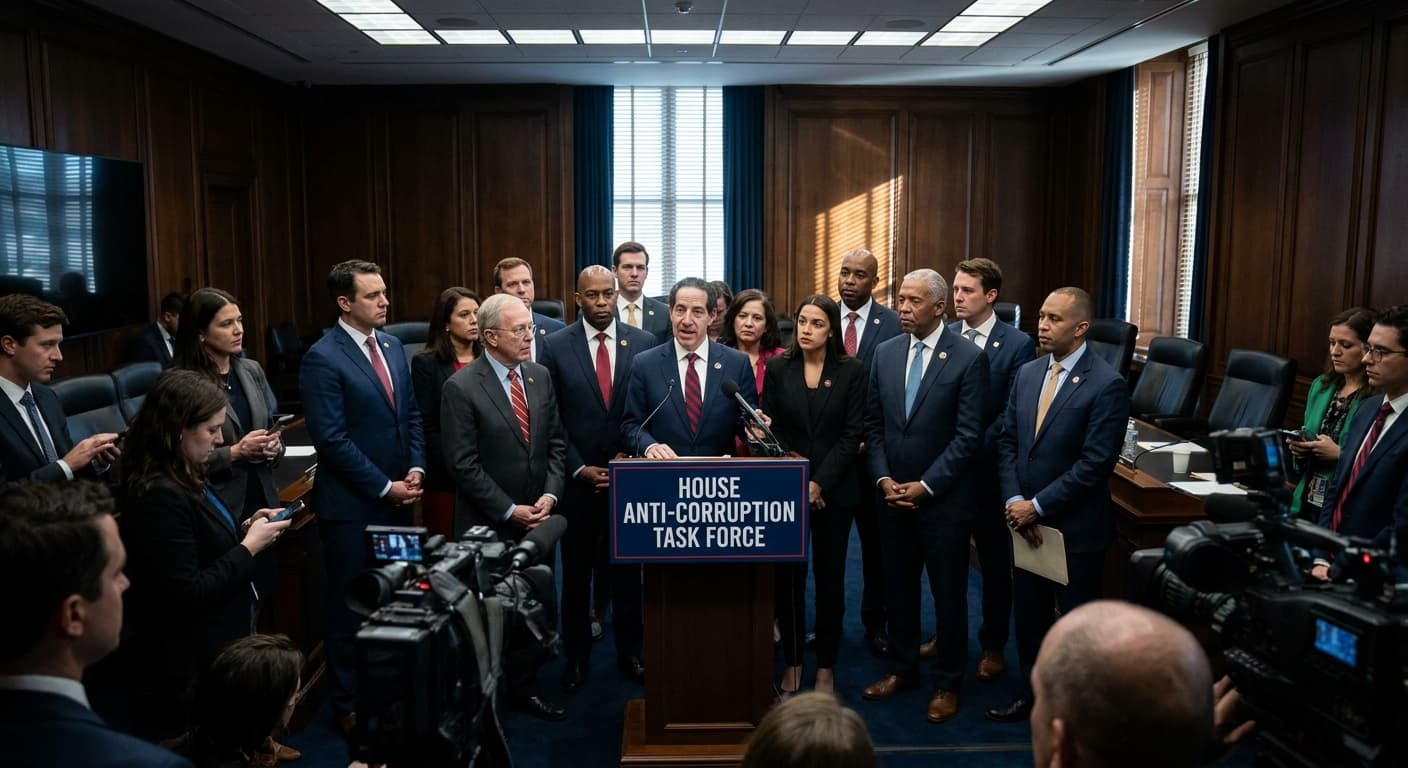
House Democrats Push Anti-Corruption Message to Counter Trump Ahead of Midterms
Democrats in the House hope a cross-ideological anti-corruption task force can spotlight ethics reforms and draw a stark contrast with Trump’s reputation as they head toward the 2026 midterm elections.
House Democrats are betting on a new strategy: championing an anti-corruption message by launching a bipartisan task force focused on government ethics and integrity. This move is a direct response to President Donald Trump's continued influence over the Republican base and his own record, which Democrats argue is marred by conflicts of interest and ethical controversies.
Why Anti-Corruption? Context and Stakes
This push comes amid ongoing debates about ethics in Washington, where public trust in government institutions remains low. Democrats see an opening to rally voters around clean governance, especially given Trump’s high-profile legal challenges and the lasting perception that his administration relaxed ethical standards.
The task force aims to develop concrete policy proposals, including broad ethics reforms that would tighten rules on conflicts of interest, lobbying, and the use of government resources. By framing ethics as a unifying issue that cuts across party lines, House Democrats hope to attract moderate voters and disillusioned independents who are fatigued by partisan gridlock but care about honest government.
The year 2026 midterms will be critical for Democrats, who currently hold a slim majority in the House. Using corruption and ethics as a wedge separates them sharply from Republicans, especially with Trump as the GOP’s de facto leader, despite his defeat in 2024. The comparison is clear: Democrats want to define their party as defenders of integrity, and Trump’s Republicans as cynical manipulators of power.
This strategy echoes past successful political efforts, notably the 1994 Republican Revolution when the GOP framed Democrats as corrupt and out of touch with "new ethical standards." Now that roles are reversed, Democrats seek similar leverage by spotlighting what they consider Republican backsliding on norms and legal boundaries.
What to Watch Next
Key will be the task force’s ability to deliver tangible proposals and push them through Congress or at least embed them in the midterm campaign narrative. Their success depends on how they manage internal party divisions—House Democrats include both progressives eager for sweeping reforms and centrists who may prefer incremental change.
The Republicans’ response will also be critical. If GOP leaders double down on loyalty to Trump and dismiss ethics concerns as partisan attacks, the stark contrast Democrats aim to highlight will sharpen. Conversely, if some Republicans embrace ethics reforms to distance themselves from Trump’s controversies, it could blunt Democratic messaging.
Finally, voter reception in swing districts will determine if this anti-corruption thrust can translate into electoral gains. This campaign focuses on a less-explored battlefield of trust and governance quality, which could resonate amid economic uncertainty and geopolitical challenges.
Democrats are playing a long game, reminding voters that governance isn’t just about policies but how you wield power. For more on U.S. politics and election strategies, see our United States politics section.
House Democrats unify on anti-corruption message to challenge Trump
Global Politics |
United States
Discover more

US Politics
GOP Promotes Trump's Tax Savings on Deadline
On tax filing day, the GOP touts savings from Trump's tax bill to lift midterm prospects, even as critics raise concerns about fairness and equity in the law.

India
INDIA Bloc Opposes Delimitation Bill 2029
The INDIA bloc united in rejecting the Delimitation Bill, signaling its electoral strategy and battle lines as parties gear up for the 2029 general elections.

US Politics
House Republicans vs Senate
House Republicans split over DHS funding, pushing a narrow ICE and Border Patrol focus while the Senate backs a broader approach to immigration and security.

Economics
Fed's Amex AML order puts correspondent banking on notice
Federal Reserve's Amex AML order requires board-level controls and a 90-day plan; OCC fined the bank $350 million over enterprise-wide deficiencies.