Hegseth's Congress Hearing on Iran War
GOP lawmakers question Trump's authority amid ongoing Iran conflict.
Model Diplomat3 min readNorth America
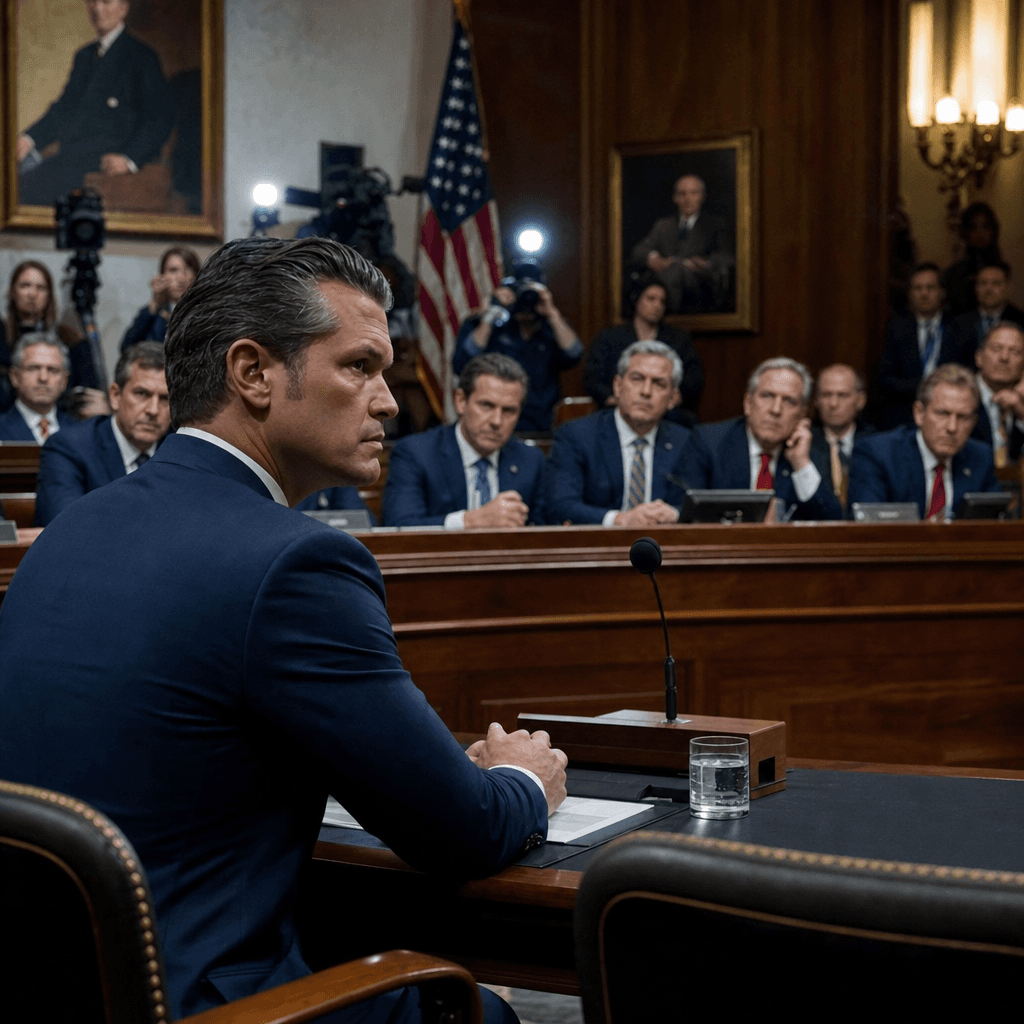
Hegseth Faces Congress as Iran War Tests GOP Loyalty
Pete Hegseth returns to Capitol Hill with the Iran war, War Powers deadlines and Republican unease turning into a test of Trump’s grip on Congress.
Defense Secretary Pete Hegseth is heading back to lawmakers Tuesday with the Iran war still unfinished and Republicans now asking whether the White House can keep sidestepping Congress. According to the Washington Post, the hearing will include GOP members concerned about how long the conflict has dragged on and why it began without congressional approval. That matters because the administration’s strongest defense is no longer military success; it is political inertia on Capitol Hill.
Congress is probing for a real constraint
The immediate leverage point is the War Powers framework. Reuters, in a report carried by CBC News, said Trump told congressional leaders the ceasefire had “terminated” hostilities and argued that the 60-day clock no longer applies. Democrats reject that reading, and some Republicans are not fully convinced either. That legal fight is more than procedural: if Congress accepts the administration’s ceasefire argument, it gives Trump a template for stretching future strikes without an authorization vote.
Hegseth’s task is to keep lawmakers focused on the battlefield and away from the constitutional question. In the April hearing covered by the AP and republished by The Washington Post, Pentagon officials said the war had already cost $25 billion and that replenishing munitions could push the eventual bill much higher. That is a political problem for Republicans, not just a budget line: a war sold as strength is now competing with inflation, gas prices and depleted stockpiles.
The real pressure is coming from Republicans
Democrats want the obvious prize: a vote that would force Trump either to seek authorization or to admit he is governing around Congress. But the more consequential pressure is inside Hegseth’s own coalition. The AP said some Republicans have raised concerns about the length of the conflict and the lack of approval. That is the only reason this hearing matters. Democrats alone cannot stop the war; a few GOP defections can make Trump’s legal and political position much harder to defend.
There is also a separate institutional cost. Hegseth has already faced scrutiny over the removal of senior officers and the strain on U.S. munitions, issues that weaken confidence in the Pentagon’s management even among lawmakers who support the Iran operation. For the administration, the danger is not one bad hearing. It is a slow loss of trust in U.S. politics, where Congress begins to see war powers as a live check rather than a dead letter.
What to watch next
The next decision point is simple: whether House and Senate Republicans hold the line when the War Powers deadline comes back into view. If even a small bloc starts demanding authorization, Trump’s room to keep the Iran campaign on autopilot shrinks fast. Watch for two things this week: whether Hegseth gives a clearer legal justification for the ceasefire pause, and whether GOP lawmakers turn that hearing into a warning shot rather than a show of support.
Discover more
Global Politics
Trump's Conflicting Messages on Iran War
Trump's mixed messages on Iran reflect a strategy of audience management, benefiting Tehran amid a complex geopolitical landscape.

Conflict & Security
Drone Warfare Killing Aid Workers at Unprec
Over 1,000 humanitarian workers killed in three years as cheap armed drones collapse legal protections. Gaza, Sudan, Ukraine, and DRC see deliberate targeting of aid convoys and hospitals with zero prosecutions.

Global
World Normalises Taliban as Afghan Women Eras
UN data shows Afghan women erased from public life as Russia recognises the Taliban, EU hosts officials in Brussels, and ICC warrants for gender persecution go unenforced.
Conflict & Security
West Africa Food Crisis: Three Shocks in 2026
Conflict, climate extremes, and the Strait of Hormuz closure drive a severe food crisis in West and Central Africa, with fertilizer prices surging 80% and millions displaced.