Goyal’s Canada Visit Is a Test of the Reset
Piyush Goyal leads a business delegation to Canada for trade talks.
Model Diplomat3 min readNorth America
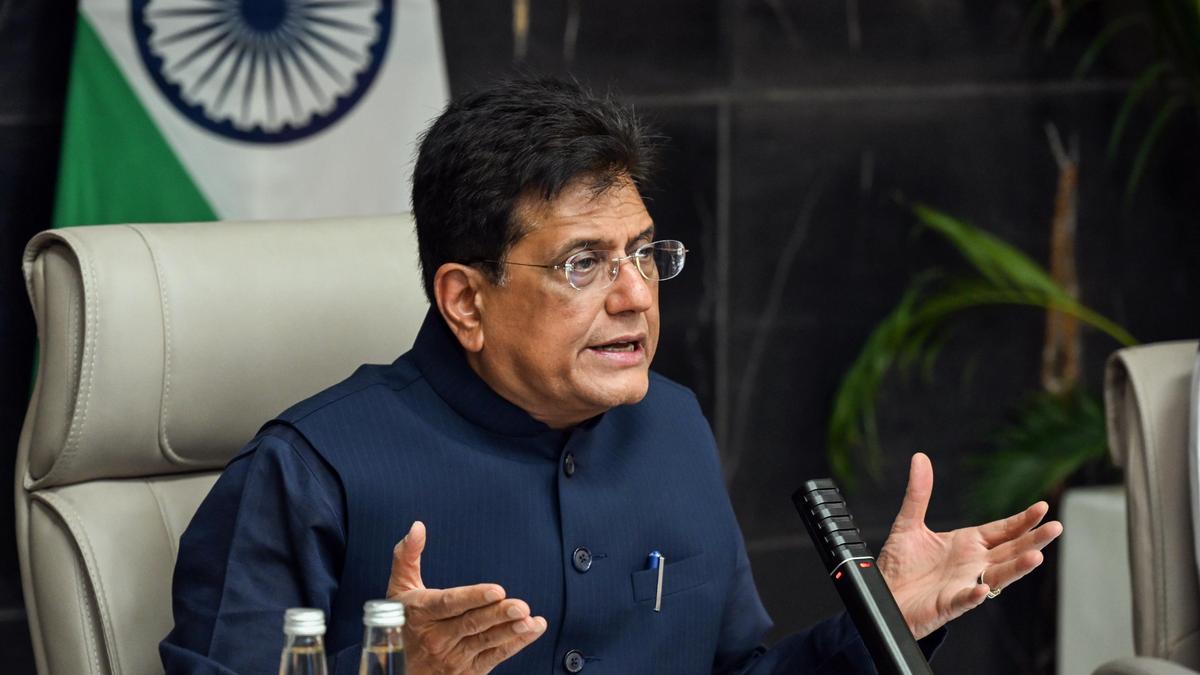
Goyal’s Canada Visit Is a Test of the Reset
Piyush Goyal is taking 150 business leaders to Canada to push CEPA talks, but the real leverage is capital, energy and market access.
Commerce and Industry Minister Piyush Goyal said he will visit Canada from May 25–27 with a business delegation of more than 150 members to press investment opportunities and give fresh momentum to the proposed trade deal, with meetings scheduled in Ottawa and Toronto, including with Prime Minister Mark Carney and Trade Minister Maninder Sidhu. The Hindu
What New Delhi is really after
This is not just a protocol trip. India wants Canada’s large pools of patient capital and a faster lane into a market where bilateral trade is still small relative to the political ambition. Goyal said trade was only $8.66 billion in 2024–25, while the target is $50 billion over the next five years; he also said about 600 Canadian companies already operate in India and New Delhi wants that number to rise to 1,000. The Hindu /
Reuters
The leverage is asymmetric. Canada needs growth partners beyond the US, while India wants long-term investment into sectors where Canadian funds already have scale — Goyal said Canadian pension funds and companies have invested nearly $100 billion in India. That is why this trip is as much about capital formation as trade liberalization. For readers tracking the broader diplomacy, the move sits squarely inside India’s effort to rebuild commercial ties without reopening old political wounds.
Why Ottawa has reason to engage
Ottawa has a strong commercial incentive to keep the reset moving. Reuters reported that India and Canada revived economic engagement after diplomatic tensions slowed trade talks, and that the March visit by Carney to New Delhi produced terms of reference for negotiations on a Comprehensive Economic Partnership Agreement, with discussions now centering on energy, critical minerals, technology, food processing and clean energy. Reuters
The Canadian side also gets a hedge against overdependence on the US. BBC reported that Carney and Modi used the March reset to push a broader economic partnership, alongside a long-term uranium supply deal and cooperation on clean energy, critical minerals and higher education. BBC News That matters because Ottawa is not just selling into India; it is trying to diversify where Canadian firms, energy exporters and pension managers place risk. In that sense, the winners are Canadian institutional investors and Indian manufacturers that want better access. The losers are anyone betting that the diplomatic freeze would keep economic engagement frozen.
What to watch next
The immediate test is whether the May 25–29 talks in Ottawa produce a timetable for CEPA or only another statement of intent. Reuters says the next round of negotiations will run during Goyal’s visit, which means the minister will be pressed to show movement beyond general pledges. Reuters
Watch for three things: whether India and Canada name specific sectors for early wins; whether Canadian pension funds commit fresh capital; and whether both governments reaffirm a 2026 deadline for a broader deal. If those pieces do not land, this will still be a useful political reset — but not yet a commercial breakthrough.
Discover more

India
India-South Korea $50B Trade Expansion Plan
India and South Korea target $50 billion in bilateral trade by 2030, focusing on industrial cooperation and strategic alignment amid US pressures.

Economics
Fed's Amex AML order puts correspondent banking on notice
Federal Reserve's Amex AML order requires board-level controls and a 90-day plan; OCC fined the bank $350 million over enterprise-wide deficiencies.

Conflict & Security
Guatemala: El Niño 2026–27 becomes regional security test
UNICEF: 25.8M children face El Niño risks in Latin America; Guatemala maps 188 municipalities for drought and food insecurity amid regional security test.

Economics
Fed's stress-test overhaul is a capital-smoothing exercise
Federal Reserve finalized stress-test overhaul: two-year averaging for bank capital buffers and public input, expected to halve volatility.