GOP Approval Plummets
Republicans face historic lows while Democrats lack voter enthusiasm.
Model Diplomat3 min readUnited States

The GOP Is Sinking — But Democrats Aren't the Life Raft
Republicans face a historic approval collapse ahead of 2026 midterms, yet Democrats' own brand crisis means voters are rejecting both parties simultaneously.
Trump's approval has cratered to 37% — a personal low since returning to office — according to a NBC News Decision Desk poll of over 32,000 adults conducted March 30–April 13. Independent support has fallen to a record-low ~26%, driven primarily by cost-of-living anxiety and deep disapproval of his handling of the Iran conflict, where 67% disapprove of his management of the war. On the economy, disapproval hits 68%, with 52% strongly disapproving. These are not soft negatives — they're structural warnings for a party heading into a midterm cycle.
The conventional expectation in Washington: Republican pain equals Democratic gain. That equation is breaking down.
A Brand Problem, Not Just a Ballot Problem
Democrats hold a 6-point edge on the generic congressional ballot — comparable to their position before the 2018 blue wave — but the underlying architecture is fragile. CNN/SSRS polling finds Democratic favorability sitting at just 28%, leaving the party 28 points underwater on brand perception even as it leads in seat projections. Republicans poll at 32% favorability — hardly a number to celebrate, but measurably better than the opposition.
The structural anomaly: roughly one-quarter of the electorate are "double haters" — voters holding unfavorable views of both parties. Among them, Democrats lead by 31 points, but that lead is driven by opposition to Republicans, not enthusiasm for Democrats. That's a thin foundation for a durable majority. The 2016 and 2022 cycles showed how quickly double-hater coalitions can fracture when voting day dynamics shift from protest to preference.
This is the core problem for US Politics heading into the fall: the Democrats' midterm opportunity is real but borrowed. They are the beneficiary of Republican collapse rather than the architects of their own revival.
Who Holds the Cards
Republicans face the steeper cliff — a president at 37% approval, a war abroad producing 67% disapproval, and an economy message that has completely misfired. The 95% base retention is a floor, not a ceiling; it means almost all the marginal damage has already been absorbed by the party, and there's limited room to recover lost independents before November.
Democrats, led by a caucus still lacking a unifying national figure, are running as "not them." That worked in 2018 — it produced a 40-seat House gain. But 2018 Democrats had a 37-point favorability advantage over Republicans at this stage; today's Democrats are 4 points worse than the party they're trying to displace.
The International dimension adds pressure: the Iran conflict is bleeding Republican support among national security conservatives, but Democrats have yet to offer a coherent counter-position that consolidates those voters.
What to Watch Next
The primary season is the first real test. If Democratic primaries surface sharp internal divisions — particularly over the Iran war posture — the generic ballot lead narrows. Watch August filing deadlines in competitive House districts for candidate quality signals. The second inflection point: if inflation data prints above expectation through Q2, the "cost of living" attack that's already eroding Trump hardens into a headwind that even a weak Democratic brand can exploit. A 6-point generic ballot lead held through September is historically sufficient for a wave — but right now, it's held together by Republican failure, not Democratic strength.
Discover more

US Politics
Next Generation Republicans
A leaked survey shows 39% of Republicans under 30 do not identify as MAGA, revealing a split in the GOP's future leadership.

Conflict & Security
Drone Warfare Killing Aid Workers at Unprec
Over 1,000 humanitarian workers killed in three years as cheap armed drones collapse legal protections. Gaza, Sudan, Ukraine, and DRC see deliberate targeting of aid convoys and hospitals with zero prosecutions.

Global
World Normalises Taliban as Afghan Women Eras
UN data shows Afghan women erased from public life as Russia recognises the Taliban, EU hosts officials in Brussels, and ICC warrants for gender persecution go unenforced.
Conflict & Security
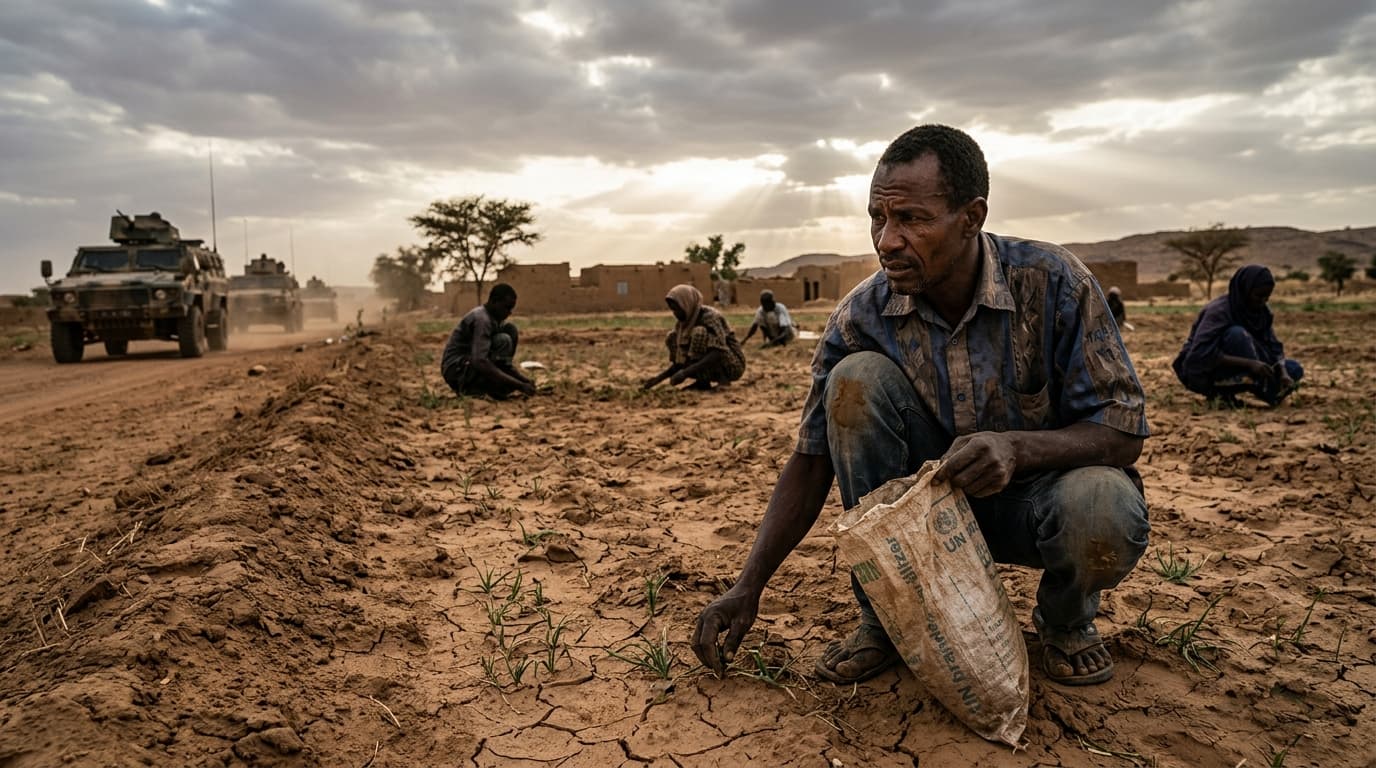
West Africa Food Crisis: Three Shocks in 2026
Conflict, climate extremes, and the Strait of Hormuz closure drive a severe food crisis in West and Central Africa, with fertilizer prices surging 80% and millions displaced.