Gaza Doctor's Case Tests Israeli Law
A pediatrician's ordeal raises questions on detention laws.
Model Diplomat7 min readMiddle East
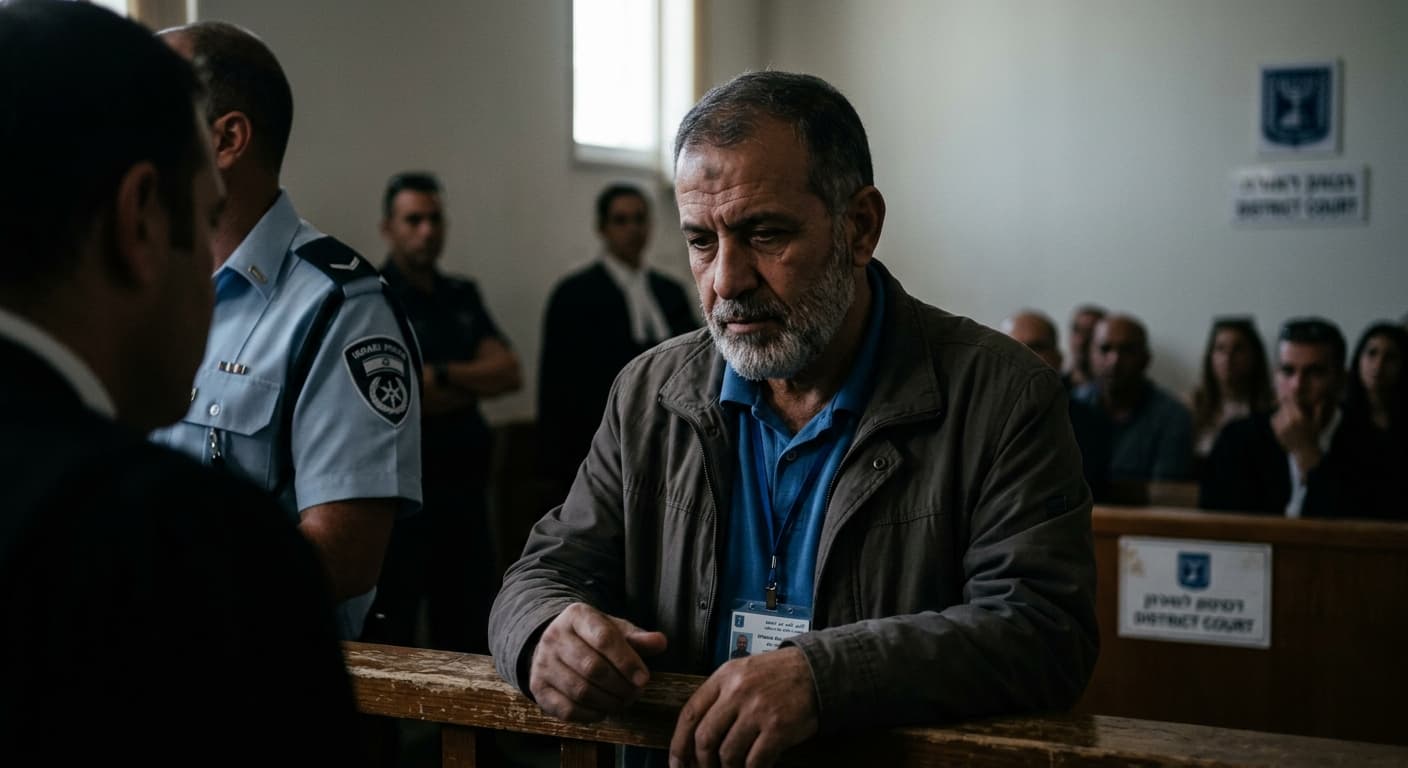
Abu Safiya beating turns Gaza doctor's case into a treaty-body test of Israeli law
A UN atrocity-adjacent finding, a Supreme Court deadline, and a beaten pediatrician: how Hussam Abu Safiya's detention became the stress test for Israel's Unlawful Combatants Law.
The July 2 beating of Dr. Hussam Abu Safiya inside Israel's Rakefet interrogation facility does more than escalate one detainee's ordeal. It converts his case into the first concrete test — after 558 days without charge — of whether Israel's 2002 Unlawful Combatants Law can survive collision with a binding UN treaty-body finding that has now labelled the whole apparatus a probable "widespread or systematic practice of arbitrary detention." The lawyer's account of hammers and batons landed one week after the UN Working Group on Arbitrary Detention ordered Abu Safiya's release and reparations, and one day before Israel's Supreme Court demanded the government explain his life-threatening condition. The collision is now unavoidable.
What the lawyer saw, and what the state says
Abu Safiya's counsel, Nasser Odeh, told the BBC that when he visited the Kamal Adwan Hospital director at Rakefet on July 2, he "had difficulty recognising his features," describing bruises across the face, eyes, ears and neck, and a client who "nearly lost consciousness several times" during their meeting, according to the BBC. Odeh said Abu Safiya was assaulted by more than five guards with "hands, batons and hammers" after a June appeal hearing, and had received no medical treatment since.
Physicians for Human Rights-Israel (PHRI), which represents him, said Abu Safiya was brought to the July 2 visit shackled hand and foot, ringed by masked officers, and told his lawyer he believed his captors would kill him. The group's Naji Abbas called the testimony "among the most shocking we have heard since the beginning of the war," as reported by Al Jazeera.
The Israel Prison Service denies the allegations and says all detainees are held lawfully and receive care under Ministry of Health guidelines. The IDF maintains Abu Safiya was seized on suspicion of "terrorist activities" and holding a colonel's rank in the health department of Gaza's Hamas-run interior ministry — an agency that delivered medical services to police and their families — a claim first put on the record when Israel confirmed his custody in January 2025, according to an earlier BBC report. No charges have been filed. No indictment. No public evidence.
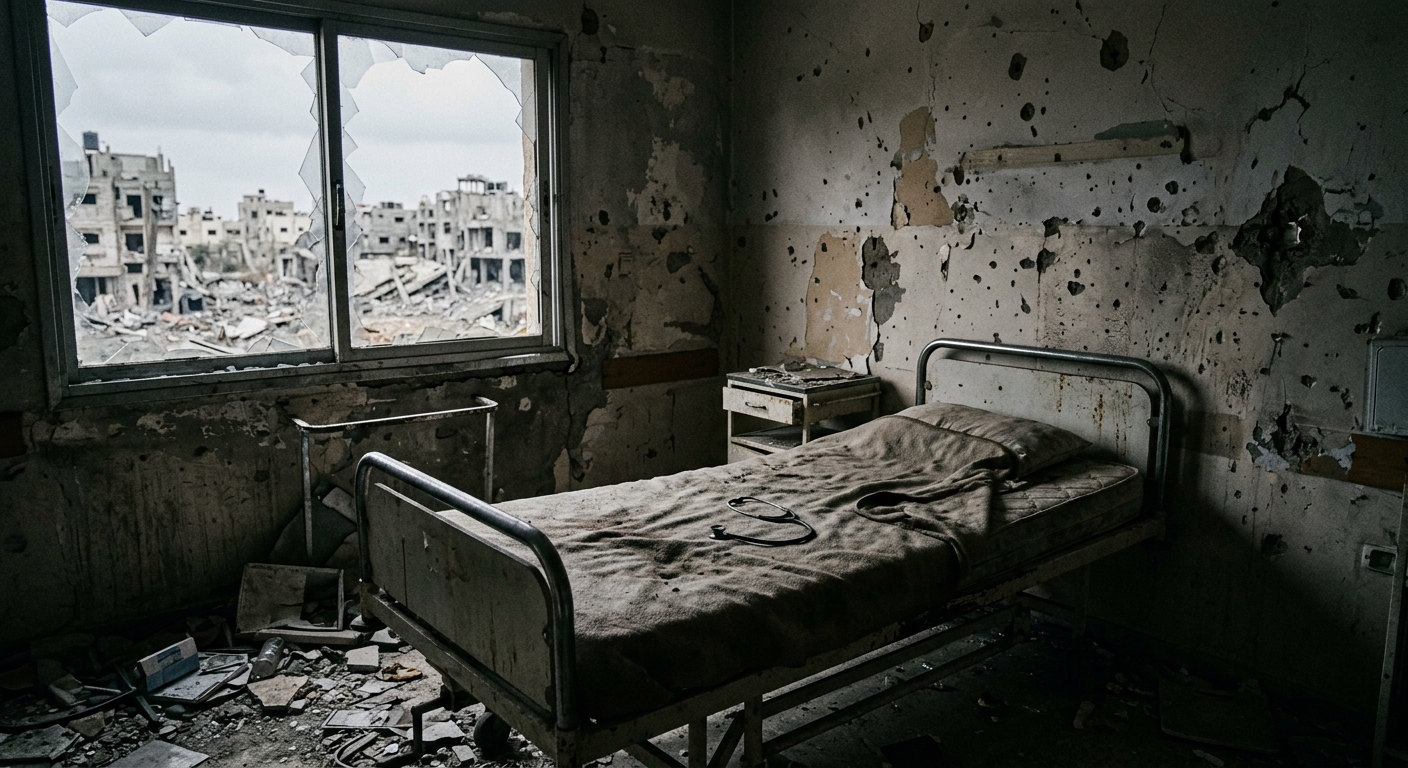
The law that makes the case possible
The statute doing the load-bearing work is Israel's Incarceration of Unlawful Combatants Law, 5762-2002, amended in 2008 to authorise expanded detention powers whenever the government declares "wide-scale hostilities." Under it, the IDF Chief of Staff — or a delegated major-general — may order indefinite, renewable detention based on classified evidence the detainee never sees, with the state exempted from Third Geneva Convention protections that would otherwise apply to a captured combatant, according to Amnesty International's briefing to the UN Committee against Torture.
Drafted originally to keep two Lebanese detainees in Israeli hands after the Supreme Court ordered their release in 2000, the law was a niche instrument until October 2023. It is now the primary vehicle for holding Gaza detainees.
Submissions to the UN Working Group place 1,747 people under the statute in the Israel Prison Service in April 2025, with more than 3,500 held under it a month earlier once military facilities are counted — a scale of use without precedent in the law's 23-year history, per the UN Working Group's advance edited opinion. Total "security" inmates in IPS custody stood near 9,792 the same month.
What Opinion 14/2026 actually says
The document that reframes Abu Safiya's case is not a press release but Opinion No. 14/2026 of the UN Working Group on Arbitrary Detention, adopted at its 105th session and dated June 3, 2026. Israel did not reply to the Working Group's communication.
The Working Group found the detention arbitrary under three of the five categories in its jurisprudence: Category I (no legal basis capable of being invoked), Category III (fair-trial violations so grave they render the detention arbitrary) and Category V (discrimination). It concluded that Israel breached articles 3, 5, 6, 7, 8, 9, 10 and 11 of the Universal Declaration of Human Rights, and articles 2, 7, 9, 10, 14, 16 and 26 of the International Covenant on Civil and Political Rights, to which Israel is a state party.
The remedy language is unusually direct. Israel must:
release [Abu Safiya] immediately and accord him an enforceable right to compensation and other reparations, in accordance with international law.
The Working Group added — and this is the sentence that turns the opinion from casework into a systemic finding — that Abu Safiya's case "may indicate a widespread or systematic practice of arbitrary detention" in Israel, according to Al Jazeera's summary of the ruling. That phrasing tracks the language treaty bodies use before atrocity-crime jurisprudence gets triggered elsewhere in the UN system.
Treaty body pressure, converging
The Working Group's opinion does not sit alone. In November 2025, the UN Committee against Torture — reviewing Israel's sixth periodic report — issued concluding observations documenting shackling at all times, denial of medical care, forced weight loss "which, in some cases, has contributed to their death in custody," and specific findings on Sde Teiman detention centre where "patient detainees are blindfolded at all times, shackled and handcuffed to beds, fed through a straw and forced to wear incontinence garments," in the language of the Committee's own report (CAT/C/ISR/CO/6).
The UN Independent International Commission of Inquiry, in its third report to the General Assembly (A/79/232), had already concluded in September 2024 that the treatment of detainees and attacks on medical facilities constituted crimes against humanity and violations of the Convention against Torture, per the UN's own posting of the report.
Physicians for Human Rights-Israel has counted at least 94 Palestinian deaths in Israeli custody between October 2023 and November 2025 — 68 from Gaza — citing physical violence, medical neglect and starvation as leading causes, according to Al Jazeera's write-up of the PHRI report. B'Tselem, in a January 2026 report, documented 84 deaths with names and facilities and characterised the system as "torture camps," as
Al Jazeera reported.
Why the case matters beyond one doctor
Three implications shape what happens next.
First, doctrine. The Working Group's finding that a Category V discrimination ground applies signals that arbitrariness is being read into the design of the Unlawful Combatants Law itself, not just its application. Category V has historically been the Working Group's tool for cases where the legal machinery treats a defined population differently by law — precisely the two-tier architecture Human Rights Watch has long argued the statute produces, per its 2023 explainer on detention.
Second, evidence. Abu Safiya is the highest-profile Gaza medic in custody but only one of 14 doctors named in the PHRI Supreme Court petition filed in April 2026, alongside pediatricians, orthopedic specialists and surgeons, as reported by Al Jazeera. The Working Group's submission places the number of Palestinian health workers killed at 1,402 and detained at 362 through mid-April 2025 — figures that convert individual advocacy into a pattern claim.
Third, forum shopping is closing. Israel's Supreme Court rejected Abu Safiya's own appeal on June 16, 2026, endorsing continued indefinite detention, according to Al Jazeera. The July 6 order to the government to answer for his condition, reported by
Haaretz, is a life-safety intervention, not a re-opening of the detention question. That leaves international mechanisms — the Working Group, CAT, the Commission of Inquiry, and the ICC's pending Rome Statute processes on the situation in the State of Palestine — as the venues where the law itself, rather than any individual detention order, is now on trial.
The information the state has not produced
Israel says Abu Safiya was a colonel in Hamas's interior-ministry health directorate. In more than 18 months, no charge has been filed, no indictment served, no evidence disclosed, no court asked to test the underlying claim. The Working Group made specific note that Israel did not respond to its communication of July 30, 2025 — a procedural default that, under the Working Group's methods, allowed it to accept the source's factual account. Abu Safiya's brother told Reuters, via Al Jazeera, that he had lost 40 kg (88 lb) and suffered four fractured ribs.
The pediatrician who led a funeral prayer for his 15-year-old son in the courtyard of the hospital he refused to abandon has now told his lawyer, according to Amnesty International as relayed by The Journal, that "this is the last time you'll see me."
What to watch
- The Israeli government's response to the Supreme Court following the July 7 order — the state must account for Abu Safiya's condition and the legal basis for continued detention of the 14 doctors named in the PHRI petition.
- Follow-up under Working Group methods: Israel and the source have six months from the June 3 opinion to report on implementation. That window closes December 3, 2026, and non-compliance feeds into the Human Rights Council's next annual review cycle.
- CAT follow-up: The Committee against Torture requested detailed information from Israel on prosecutions and disciplinary proceedings tied to detainee abuse — including the case of Major General Yifat Tomer-Yerushalmi — with a one-year reporting deadline running from the November 2025 concluding observations.
- ICC processes on the situation in the State of Palestine: the pattern findings in Opinion 14/2026 and CAT/C/ISR/CO/6 are the kind of treaty-body corroboration prosecutors typically integrate before charging decisions in occupation contexts.
The Bottom Line
Abu Safiya's beating is not the story; the alignment behind it is. A binding UN opinion, a Committee against Torture finding, an Independent Commission of Inquiry, and two Israeli human-rights organisations now describe the same architecture in the same language — arbitrary, systematic, discriminatory — and point at the same statute. The Unlawful Combatants Law, drafted for two Lebanese prisoners in 2002, is now the legal instrument holding thousands from Gaza and has become the specific object of a treaty-body finding of possible systematic practice. Whether Israel produces Abu Safiya alive is the immediate question. Whether the law survives contact with the international human-rights record now assembled against it is the larger one.
Discover more
Global Politics
Xi Jinping Calls China-Russia Ties 'Precious'
Xi Jinping's description of China-Russia ties as 'precious' reflects a strategic imbalance, with Beijing dictating terms in the partnership.

US Politics
US Launches $166B Tariff Refund Portal
The US is launching a $166 billion tariff refund portal to aid importers hit by Trump-era tariffs, with major implications for trade and supply costs.
India
UN Expert Albanese: India Violates Law
UN Rapporteur Francesca Albanese accuses India of breaching international law, spotlighting human rights concerns in Kashmir and prompting diplomatic pushback.

Conflict & Security
Drone Warfare Killing Aid Workers at Unprec
Over 1,000 humanitarian workers killed in three years as cheap armed drones collapse legal protections. Gaza, Sudan, Ukraine, and DRC see deliberate targeting of aid convoys and hospitals with zero prosecutions.