Charles Alloncle's Attack on French Media
A parliamentary report targets public broadcasters in France.
Model Diplomat7 min readEurope
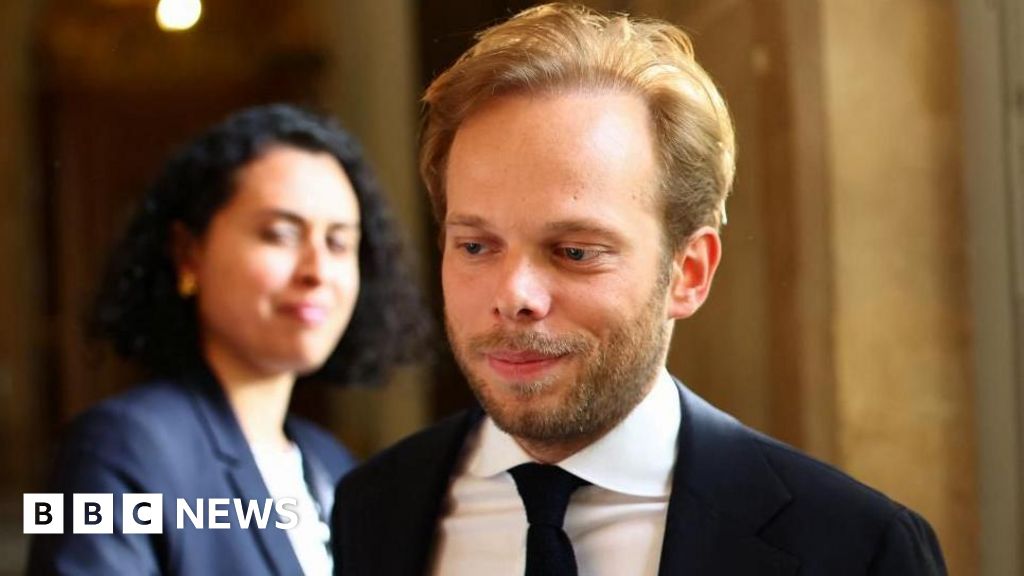
Alloncle's €1 Billion Attack on French Public Media
Charles Alloncle's parliamentary report proposes a 25% cut to France Télévisions and Radio France. The real target is 2027 — and Vincent Bolloré is the beneficiary.
A 32-year-old French deputy nobody had heard of a year ago has just handed the far right its clearest weapon yet for the 2027 presidential campaign: a 551-page National Assembly report demanding €1 billion in annual cuts to France Télévisions, Radio France and France Médias Monde, and the merger or closure of six channels. Charles Alloncle's inquiry is not really about waste at public broadcasters — it is a pre-privatisation prospectus for a sector Marine Le Pen and Jordan Bardella have vowed to dismantle if they win power, and the private media empire best positioned to profit is Vincent Bolloré's.
The report, published by the Assemblée nationale on April 28, 2026, closed six months of hearings that the BBC described as "at times acrimonious" and that critics compared to Britain's decade-long right-wing siege of the BBC. Alloncle, an MP for Éric Ciotti's small Union of the Right for the Republic (UDR) and an ally of RN president Jordan Bardella, tabled 69 recommendations. They include closing the youth channel France 4, the digital brand Slash and radio station Mouv', cutting the public sports budget by a third, and merging France 2 with France 5 and France 24 with France Info.
The immediate reaction from government was cold. Prime Minister Sébastien Lecornu said the report "unfortunately avoids the essential" and called it "a missed opportunity," according to the BBC. France Télévisions president Delphine Ernotte was blunter: "It's become a kind of political trial, where everyone is trying to impose their own ideological interpretation on a public service." Even the committee's own centrist chair, Jérémie Patrier-Leitus, publicly accused his rapporteur of running "a political project" aimed at "weakening public broadcasting with a view to its privatisation,"
France 24 reported.
The playbook: import the anti-BBC template
What makes the Alloncle report significant is not the accounting — it is the strategy. France's public audiovisual system costs the state close to €4 billion a year, a figure the Institut Montaigne has long placed in line with the BBC's roughly €4.1 billion and well below Germany's €7.8 billion. The waste dossiers Alloncle brandishes — outsourcing to production companies fronted by on-payroll stars, a €3.8 million tab and €110,000 in hotel fees at the 2024 Cannes coverage — are real, but they are also a rerun of grievances the Cour des Comptes itself flagged over a decade ago at Radio France, when a
previous review documented a 27.5% cost increase between 2004 and 2013 with no audience growth.
The novelty is the political packaging. Alloncle bypassed the wonkish register of past reports and ran the hearings as television. He grilled star presenters, isolated viral moments — a €60,000 fee to actress Virginie Efira for hosting the Cannes opening ceremony, an off-camera slur by editorialist Nathalie Saint-Cricq against Éric Ciotti, an intercepted conversation between two commentators plotting to derail Rachida Dati's mayoral bid — and let Bolloré's ecosystem amplify the rest. France 24 noted the parallel explicitly: this is the template British Eurosceptics used against the BBC before and after Brexit, aimed at eroding institutional trust ahead of a decisive vote.
That vote is 2027. The National Rally's own petition, quoted by the BBC, already frames public broadcasting as "no longer a space of impartial information, but a tool of influence in the service of a particular camp." Alloncle's report gives that slogan a costed policy.
Who benefits: the Bolloré geometry
Follow the ownership map and the beneficiary comes into focus. Vincent Bolloré's Vivendi group won European Commission clearance in June 2023 to acquire Lagardère — a deal formally cleared in decision M.10433 — bringing Europe 1, Le Journal du Dimanche and Paris Match under the same roof as Canal+, CNews, Prisma Media and the Havas advertising arm. The EU General Court in
Vivendi/Commission and Lagardère/Commission has since ruled on the Commission's parallel probe into whether Vivendi exerted "decisive influence" over Lagardère before formal completion — a proceeding that details, in Brussels' own language, Bolloré-linked interventions in Europe 1's programming grid and editorial choices at Lagardère titles.
CEPR researcher Julia Cagé has argued in a voxEU essay that the Bolloré group's expansion has already tipped French media pluralism toward crisis, with CNews functioning as the local Fox News and Bolloré titles amplifying far-right candidates including Éric Zemmour. A privatised or shrunken public service would not compete with those outlets for advertising, audience or editorial standing. It would concede the terrain.
That is why the second scandal around Alloncle matters more than the first. Over the weekend before publication, a judicial complaint alleged that Alloncle had been fed hostile questions by the Lagardère News holding — the JDD/Europe 1 axis inside Vivendi. France 24 quoted committee chair Patrier-Leitus confirming: "It was a clear case of interference, and I told them to stop." A separate criminal complaint, reported by The Telegraph via Yahoo, targets Alloncle over the funding-cut proposal itself. Alloncle has called the accusations "yet another diversion." Testifying before the same committee earlier this year, Bolloré denied any coordination: "I had never seen him before today. But he seems very likeable — and very effective."

The privatisation architecture nobody voted for
The Alloncle report matters because it converts a diffuse culture-war grievance into a concrete legislative offer. Its 69 recommendations map neatly onto three privatisation-ready assets: a slimmed France Télévisions (with children's and youth brands stripped out, easing an eventual sale of France 2), a consolidated news function (France 24 folded into France Info reduces the international broadcasting footprint), and a weakened Radio France (with Mouv' shut and orchestras thinned — the same terrain past Cour des Comptes reviews had already softened).
France's public broadcasters are not immune to legitimate reform arguments. The Institut Montaigne has pointed out that France Télévisions devotes only about 3% of funding to digital content against 12% for the BBC. A
Reuters Institute study hosted on SSRN found French public media significantly weaker online than Finnish Yle or the BBC, and highlighted the absence of multi-year funding agreements and insulation from political influence as key structural weaknesses.
Alloncle's report does not fix those. It magnifies them. The proposed switch away from stable, ring-fenced financing — the licence fee was scrapped in 2022, replaced by an earmarked slice of VAT — leaves the sector permanently exposed to annual budget fights. Every €1 billion demanded in Alloncle's report can be recycled in Le Pen's 2027 manifesto as a "found" saving. The Reuters/SSRN research is explicit: "insulation from direct political influence and greater certainty through multi-year agreements" is one of the four external conditions that separate high-performing public broadcasters from struggling ones.
The European backdrop nobody in Paris mentions
The domestic French debate has largely ignored the European framework that now hovers over any attempt to reshape a national public broadcaster. The European Media Freedom Act — Regulation (EU) 2024/1083 — entered into force in 2024 and applies from August 2025. Its Article 5, cited in the European Parliament's own February 2026 resolution on Lithuania's public broadcaster LRT, protects the independence of public-service media management and imposes procedural guarantees on funding and dismissal decisions.
Brussels' 2022 legislative proposal that led to that regulation explicitly cited threats to public broadcasters' editorial independence and to media pluralism as justifying EU-level intervention. The 2021 European Parliament report on
democracy, media freedom and pluralism named financial pressure on public broadcasters as a vector of political capture. Any French bill enacting the Alloncle recommendations would face immediate compatibility scrutiny — and the RN's own MEPs, who have
challenged the Commission over its silence on the withdrawal of C8's terrestrial frequency in 2025, would suddenly find themselves defending the opposite principle at home.
What to watch
Three moments will determine whether Alloncle's report becomes policy or petition:
- Autumn 2026 budget debate: The government's finance bill for 2027 is the first legislative slot in which the €1 billion figure can be tested. Watch whether the Bayrou-Lecornu bloc adopts even a scaled-down version — the smaller the number, the more mainstream the frame becomes.
- The judicial complaints: The Paris prosecutor's decision on the Lagardère-questions complaint and on the funding-cut complaint against Alloncle himself will either neutralise the report as a "political trial" or embolden its authors. Ernotte's framing has already positioned the sector for the former.
- 2027 presidential platforms: If Bardella integrates Alloncle's numbers into the RN manifesto — and if Bruno Retailleau's Republicans follow — public broadcasting privatisation moves from fringe to consensus, in the same trajectory as pension reform did between 2010 and 2023.
Diplomat View
The Alloncle report is best read not as a policy document but as a positioning paper for a post-Macron media order. Its arithmetic is contestable and its judicial standing precarious, but its function is already accomplished: it has made a 25% cut to France's public broadcasters sayable, then arguable, then negotiable. The RN did not need to win 2027 for this to matter — it needed only to move the Overton window, and by publishing 551 pages under the seal of the National Assembly it has.
The falsifiable call: if, by the 2027 budget cycle, a mainstream government (centrist or centre-right) adopts even €300–500 million of Alloncle's cuts without a matching pluralism guarantee, the report will have succeeded strategically regardless of whether Bardella enters the Élysée. The forecast would revise if the Paris prosecutor validates the Lagardère-interference complaint and criminal proceedings expose sustained coordination with Bolloré-owned outlets — that would collapse the report's political legitimacy and reset the debate at the reformist, not privatising, end of the spectrum. Watch the prosecutor, watch the budget, and watch which Bolloré title breaks ranks first.
Related coverage on this beat: Global Politics.
Discover more
India
Romanian Coalition Party Demands PM Resign
Romania's Social Democrats withdrew from coalition, joining far-right AUR to topple PM Bolojan, risking €10 billion in EU funds by August 2026.
US Politics
Next Generation Republicans
A leaked survey shows 39% of Republicans under 30 do not identify as MAGA, revealing a split in the GOP's future leadership.
US Politics
Congress Targets AI Chatbot Access for Terror
The House passed the Generative AI Terrorism Risk Assessment Act, focusing on AI's role in terrorism and potential surveillance implications.

Conflict & Security
Drone Warfare Killing Aid Workers at Unprec
Over 1,000 humanitarian workers killed in three years as cheap armed drones collapse legal protections. Gaza, Sudan, Ukraine, and DRC see deliberate targeting of aid convoys and hospitals with zero prosecutions.